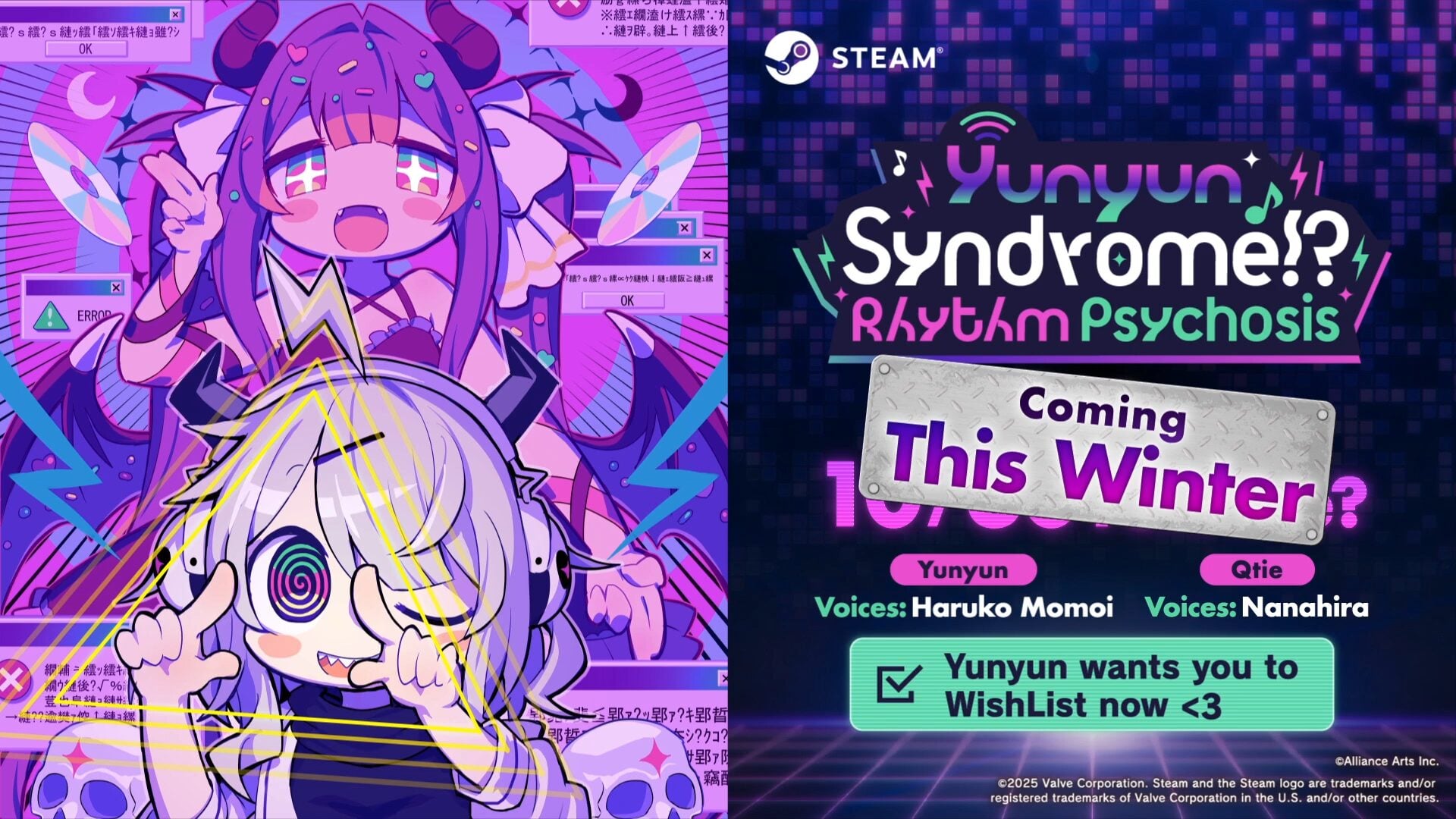
Yunyun Syndrome!? Rhythm Psychosis Delayed to Winter: An In-Depth Look at the Shift and What It Means for Fans
The rhythm game community has been buzzing with anticipation for Yunyun Syndrome!?, a title that promised to redefine the genre with its unique mechanics and captivating aesthetic. However, recent news has cast a shadow over these expectations: the game, developed by WHO YOU and published by both WSS Playground and Alliance Arts, has been delayed to winter. This announcement, while undoubtedly disappointing for eager players, presents an opportunity to delve deeper into the game’s potential, the reasons behind such delays in the gaming industry, and what this extended development cycle might signify for the final product. At Gaming News, we believe that understanding the intricacies of game development, especially for titles with ambitious goals like Yunyun Syndrome!?, is crucial for appreciating the art and effort involved.
The rhythm game genre, while seemingly straightforward, requires an extraordinary level of precision and polish. A delay, particularly one announced as a shift to a broader season like winter, often signals a commitment to refining core gameplay loops, enhancing visual fidelity, and ensuring a robust and bug-free experience. For a game like Yunyun Syndrome!?, which reportedly features innovative gameplay mechanics and a distinct visual style, this extended period is likely being utilized to perfect every note, every visual cue, and every interactive element.
Understanding the Nuances of Rhythm Game Development
Developing a truly exceptional rhythm game is a delicate balancing act. It’s not merely about syncing music to on-screen prompts. It involves creating a symbiotic relationship between the player, the music, and the visual feedback. This synergy is paramount to achieving that elusive feeling of flow and satisfaction that defines the genre’s most beloved titles.
The Technical Demands of Precision
At its core, a rhythm game relies on unwavering technical accuracy. Input latency, even by a few milliseconds, can render a perfectly timed press into a missed note. This means that developers must meticulously optimize for a wide range of hardware, operating systems, and display refresh rates. For Yunyun Syndrome!?, with its promise of intricate patterns and rapid sequences, ensuring sub-millisecond responsiveness across diverse platforms would be a monumental task. This delay likely stems from intensive work on input handling, audio synchronization, and overall engine performance to guarantee that every player, regardless of their setup, experiences the game as intended.
Audio-Visual Synchronization: The Unseen Backbone
The audio-visual synchronization is arguably the most critical, and often the most challenging, aspect of rhythm game development. The visual cues – be they falling notes, expanding hit zones, or character animations – must align perfectly with the musical beats and melodies. This isn’t just about the primary beat; it encompasses subtle nuances, off-beats, and instrumental flourishes. Achieving this perfect harmony requires not only talented musicians and composers but also skilled programmers and sound engineers who can precisely map and synchronize every audio element with its corresponding visual representation. The development team behind Yunyun Syndrome!? is likely dedicating significant time to ensuring that the visual feedback not only matches the music but also enhances the player’s understanding and enjoyment of the track.
Crafting Engaging Gameplay Mechanics
Beyond the foundational elements, a standout rhythm game needs innovative and engaging gameplay mechanics. Yunyun Syndrome!?, as hinted by its title and the whispers surrounding its development, appears to be aiming for a fresh approach. This could involve unique note types, novel interaction methods, or a system that dynamically adapts to player performance. Developing and iterating on such mechanics is a rigorous process. It requires extensive playtesting, data analysis, and player feedback to ensure that new ideas are not only creative but also fun, challenging, and intuitive. A delay allows ample time for this iterative design process, ensuring that the core gameplay loop is as compelling as possible.
Balancing Difficulty and Accessibility
A successful rhythm game must cater to a broad spectrum of players, from newcomers to seasoned veterans. This means implementing a well-structured difficulty curve that gradually introduces complexity without overwhelming beginners, while still offering substantial challenges for experts. For Yunyun Syndrome!?, this might involve designing multiple difficulty settings for each song, introducing new mechanics progressively, and providing robust tutorial systems. The extended development period offers the opportunity to thoroughly playtest and balance these difficulty levels, ensuring that the game is both accessible and rewarding for everyone.
The Publisher and Developer Collaboration: WSS Playground, Alliance Arts, and WHO YOU
The involvement of multiple entities – publisher WSS Playground, publisher Alliance Arts, and developer WHO YOU – suggests a collaborative effort to bring Yunyun Syndrome!? to fruition. This multi-party involvement can bring diverse expertise and resources, but it also necessitates meticulous coordination and communication.
Synergies in Development and Publishing
Working with multiple publishers can mean access to broader marketing channels, diverse distribution networks, and increased financial backing. WSS Playground and Alliance Arts, by pooling their resources and expertise, can significantly amplify the reach and impact of Yunyun Syndrome!?. For the developer, WHO YOU, this collaboration can provide the necessary support to focus on the creative and technical aspects of game creation, unburdened by some of the commercial pressures. This partnership, while requiring careful management, has the potential to create a truly polished and high-quality product that benefits from the strengths of each contributing party.
Navigating Development Challenges with a Team Approach
Despite the advantages, multi-party development can also present unique challenges. Aligning visions, managing expectations, and ensuring cohesive decision-making across different organizations requires exceptional project management. A delay can sometimes be an indicator of the team working through these logistical hurdles to ensure that all parties are in agreement on the game’s direction and quality standards. The extended timeline allows for this harmonization of efforts, ensuring that the final release is a testament to the successful collaboration between WSS Playground, Alliance Arts, and WHO YOU.
What “Winter” Delay Implies for the Final Product
Shifting a release to a broader season like winter is more than just a change of dates; it’s a statement of intent. It suggests that the development team is not simply looking to meet an arbitrary deadline but is committed to delivering a game that meets their highest standards and the community’s expectations.
Deepening the Content and Features
A few extra months in development can translate into significantly more content. This could mean additional songs, new gameplay modes, more intricate visual effects, or even expanded story elements if Yunyun Syndrome!? incorporates narrative. The delay provides the crucial time needed to flesh out these aspects, ensuring that the game offers a rich and substantial experience for players. This is particularly important in the rhythm game genre, where replayability often hinges on the breadth of available tracks and the depth of gameplay.
Refining the User Experience (UX) and User Interface (UI)
Beyond core gameplay and content, the user experience (UX) and user interface (UI) are critical for player enjoyment. A clean, intuitive menu system, clear feedback mechanisms, and a visually appealing interface can significantly enhance how players interact with the game. The delay is likely being used to meticulously refine the UI and UX elements, ensuring that navigating menus, understanding game modes, and interpreting on-screen information is as seamless and pleasant as possible. This attention to detail in the player interface can make a significant difference in overall player satisfaction.
Extensive Quality Assurance and Bug Fixing
The final stages of game development are heavily dedicated to quality assurance (QA) and bug fixing. This is where the game is put through its paces by dedicated testers to identify and resolve any glitches, performance issues, or unintended behaviors. For a rhythm game, where precision is key, even minor bugs can be game-breaking. A winter release window indicates that the development team is prioritizing a thorough QA process, allowing ample time to squash bugs and ensure a stable and polished gaming experience across all target platforms.
Addressing Player Feedback and Community Input
The most effective game development cycles often incorporate community feedback. While specific details about Yunyun Syndrome!?’s development haven’t been extensively shared, it’s plausible that the delay is partly to incorporate valuable insights gathered from early playtesting or community discussions. This responsive approach ensures that the final product is not only technically sound but also resonates with what players are looking for in a rhythm game. The shift to winter suggests a willingness to listen and adapt, creating a game that truly connects with its audience.
The Anticipation for Yunyun Syndrome!? Intensifies
While the delay of Yunyun Syndrome!?’s release is a setback for immediate gratification, it serves as a potent signal of the development team’s commitment to quality. The collaborative efforts of WSS Playground, Alliance Arts, and WHO YOU, coupled with the strategic decision to aim for a winter launch, indicate a meticulous and dedicated approach.
The rhythm game landscape is one that thrives on precision, immersion, and innovation. By taking this extra time, the developers are not merely postponing a release; they are actively investing in the potential of *Yunyun Syndrome!?. *This extended period is likely being leveraged to refine every aspect of the game, from the absolute accuracy of its input detection and audio-visual sync to the depth of its gameplay mechanics and the polish of its user interface.
For players, this delay means that when Yunyun Syndrome!?’ finally arrives in winter, they can anticipate a more robust, refined, and ultimately more satisfying experience. The patience required now will likely be rewarded with a rhythm game that not only meets but potentially exceeds the high expectations that have been building. At Gaming News, we will continue to monitor developments and bring you the latest information as this highly anticipated title approaches its new release window, confident that the extra development time will culminate in a truly exceptional addition to the rhythm game genre. The promise of innovative rhythm gameplay is worth the wait, and we believe the collaboration between WSS Playground, Alliance Arts, and WHO YOU is poised to deliver just that.