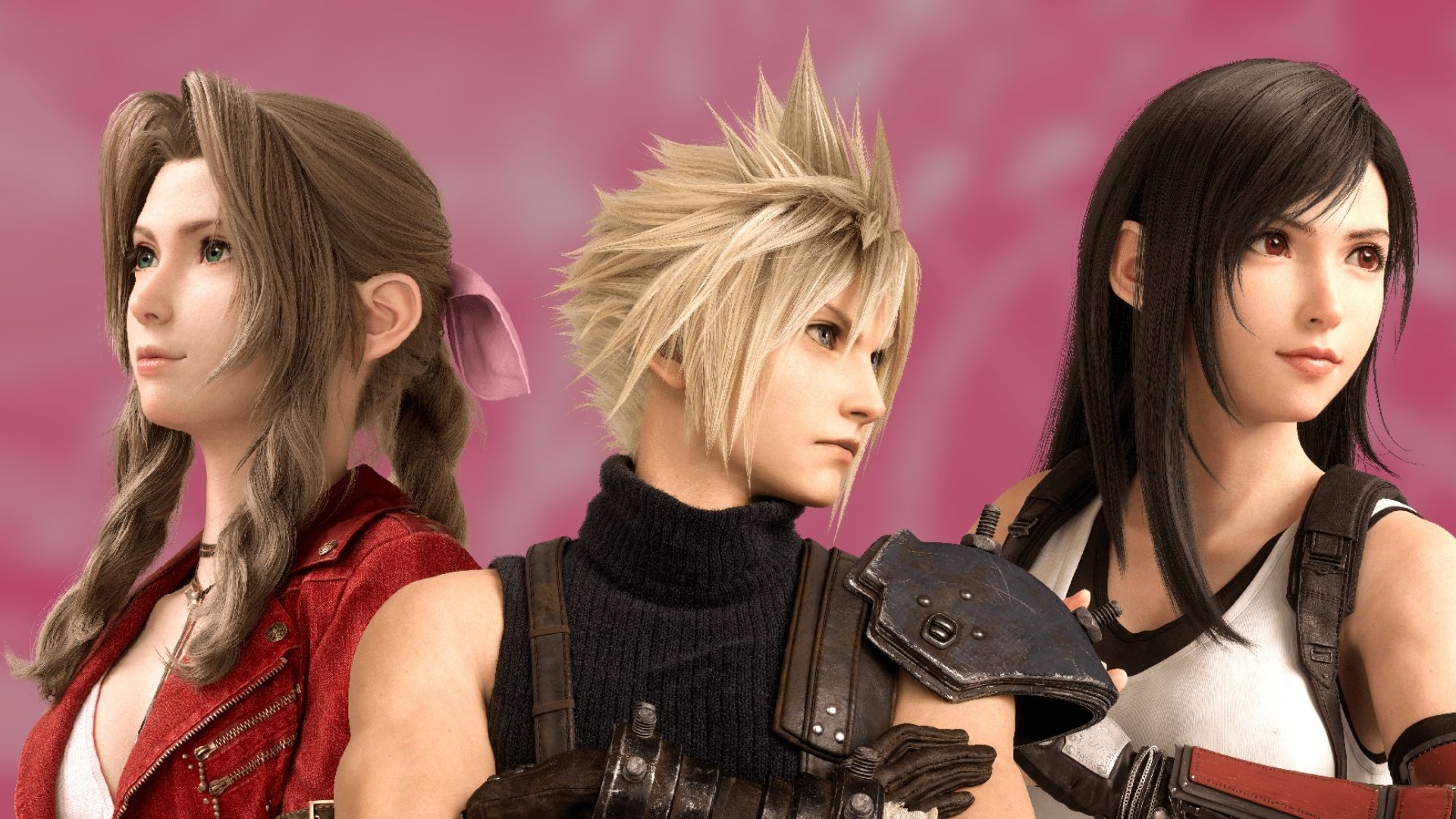
Why Final Fantasy 7 Remake’s Director Defies the Cloud Strife Love Triangle Debate
The intricate narrative tapestry of Final Fantasy 7 Remake weaves many threads, but few are as persistently debated and emotionally charged as the love triangle involving its protagonist, Cloud Strife. The complex relationships with both Tifa Lockhart and Aerith Gainsborough have been a cornerstone of the original game’s enduring appeal, and their re-imagining in the modern era of the Remake project has only amplified this fascination. Yet, when confronted with the seemingly straightforward question of which of these two iconic women Cloud truly loves, the game’s director, Tetsuya Nomura, consistently offers an answer that is both frustratingly elusive and profoundly insightful: he absolutely cannot answer it. This refusal is not born of indecision or evasion, but rather a deliberate directorial choice that respects the depth of the characters and the player’s own evolving connection to their journey.
The Enduring Appeal of the Cloud Strife Love Triangle
From the moment Final Fantasy VII first graced our screens in 1997, the dynamic between Cloud, Tifa, and Aerith captivated players. It presented a scenario rarely seen in video game narratives at the time: a protagonist torn between two distinct, yet equally compelling, romantic interests. Tifa, the childhood friend and fellow eco-terrorist, embodies familiarity, comfort, and a shared history. She represents a grounded emotional anchor, someone who understands Cloud’s past and struggles intimately. Her affection is often portrayed as steady, unwavering, and deeply rooted in their mutual experiences in Nibelheim.
Aerith, on the other hand, introduces an element of the mystical and the fated. As the last of the Cetra, her connection to Cloud transcends the mundane. She is enigmatic, possessing a spiritual depth and a playful, yet profound, wisdom that draws Cloud in. Her love for Cloud is intertwined with the fate of the Planet, adding a layer of cosmic significance to their burgeoning bond. This juxtaposition of grounded, personal affection with a more cosmic, destined connection creates a powerful duality that resonates with players on multiple levels.
The genius of this narrative construct lies in its ambiguity. Square Enix, through the original game and now its Remake, has masterfully crafted scenarios where both Tifa and Aerith have genuine, believable claims on Cloud’s heart. The player, embodying Cloud’s perspective, often finds themselves drawn to both characters for different reasons, mirroring the complexities of real-life relationships where emotional needs can be met by different individuals. This narrative choice fosters deep player engagement, prompting endless discussions and fervent debates within the fan community, a testament to the enduring power of the storytelling.
Director Nomura’s Unwavering Stance: A Deliberate Choice
Tetsuya Nomura, a pivotal figure in the Final Fantasy franchise and the creative force behind the Remake project, has repeatedly been pressed on this very issue. His consistent response, the assertion that he absolutely cannot answer which woman Cloud truly loves, is not a cop-out but a strategic and philosophically grounded artistic decision. He understands that imposing a singular, definitive answer would diminish the richness of the narrative and invalidate the player’s personal journey.
Nomura’s approach acknowledges that Cloud’s affections are not static or easily quantifiable. Cloud is a character grappling with immense trauma, identity issues, and the weight of immense responsibility. His emotional landscape is fractured, and his relationships are a reflection of his internal struggles and his gradual process of healing and self-discovery. To declare definitively that he favors one over the other would oversimplify his complex psyche and the evolution of his bonds.
Furthermore, the Remake project aims to not just replicate the original but to expand upon it, delving deeper into the characters’ psyches and motivations. This expansion allows for even more nuanced portrayals of Cloud’s feelings, making the question of his ultimate romantic preference even more intricate. Nomura’s refusal to pick a side ensures that this complexity is preserved, allowing players to project their own interpretations and experiences onto Cloud’s journey.
The Nuance of Character: Tifa’s Steadfast Support vs. Aerith’s Profound Connection
Examining the characters of Tifa Lockhart and Aerith Gainsborough reveals the distinct yet equally compelling aspects of their relationships with Cloud, further justifying the director’s stance.
Tifa Lockhart represents the anchor to Cloud’s past and his present stability. As his childhood friend and a fellow resident of the now-destroyed Nibelheim, she possesses an intimate understanding of the person Cloud claims to be and, more importantly, the person he truly is underneath his mercenary facade. Tifa’s loyalty is unwavering. She stands by Cloud through thick and thin, offering emotional support, encouragement, and a safe harbor in the storm of their chaotic lives. Her affection is often expressed through quiet gestures, gentle smiles, and a comforting presence. In the Remake, Tifa’s inner turmoil and her own burgeoning feelings for Cloud are explored with greater depth. We witness her wrestling with her past trauma, her role in Cloud’s fractured identity, and her hopes for a future together. Her love is tangible, built on shared experiences and a deep-seated trust. She sees the pain Cloud carries and offers solace, a stark contrast to the overwhelming burdens he faces. Her presence grounds him, reminding him of the life and connections he fought for.
Aerith Gainsborough, conversely, embodies a connection that transcends the ordinary, a fated encounter with a spiritual resonance. As the last of the Cetra, Aerith carries the weight of the Planet’s future, and her destiny is inextricably linked with Cloud’s. Her relationship with him is characterized by an almost immediate, intuitive understanding. She is drawn to his hidden vulnerability and the gentleness that lies beneath his hardened exterior. Aerith’s love is often expressed through playful banter, insightful observations, and a profound empathy that seems to penetrate Cloud’s defenses. In the Remake, this connection is amplified. Aerith’s interactions with Cloud are filled with a sense of knowing, a gentle pushing and pulling that suggests a deeper, perhaps preordained, bond. She challenges Cloud in ways Tifa does not, forcing him to confront his own identity and the true nature of his memories. Her affection for him is intertwined with her mission to save the Planet, adding a layer of cosmic significance to their relationship. The moments they share often feel charged with destiny, hinting at a love that is meant to be, even if the path to it is fraught with peril.
The Player’s Agency and the Power of Interpretation
A core tenet of the Final Fantasy 7 Remake experience, and indeed much of modern gaming, is player agency. The narrative is designed to be interactive, allowing players to shape their understanding of the characters and their relationships through their choices, observations, and emotional investment. Nomura’s refusal to dictate Cloud’s romantic preference is a direct acknowledgment of this principle.
By leaving the question open-ended, the director empowers players to form their own conclusions. Some players might gravitate towards Tifa, drawn by her steadfast loyalty and the comfort of a familiar love. Others might find themselves captivated by Aerith’s enigmatic nature and her cosmic connection to Cloud. The game itself, through subtle dialogue choices, character interactions, and even subtle environmental cues, can lean in different directions depending on the player’s focus and their perceived affinity for one character over the other. This ambiguity ensures that the love triangle remains a dynamic and engaging aspect of the game, fostering continued discussion and personal interpretation long after the credits roll.
This approach aligns with the evolving landscape of video game storytelling, where nuanced character development and player-driven narratives are increasingly valued. The Remake doesn’t just present a story; it invites players to actively participate in its unfolding, to empathize with the characters’ struggles, and to project their own understanding of love and connection onto the narrative. Nomura’s unwillingness to provide a definitive answer is, therefore, a testament to his respect for the player’s role in experiencing and interpreting the story.
Beyond Romance: Shared Trauma and Mutual Growth
It is crucial to recognize that Cloud’s relationships with both Tifa and Aerith extend far beyond simple romantic entanglements. They are deeply intertwined with themes of shared trauma, fractured identities, and mutual growth.
Tifa’s connection with Cloud is forged in the crucible of Nibelheim’s destruction. They are survivors of a cataclysmic event that shattered their lives and irrevocably altered their futures. Tifa is acutely aware of the trauma Cloud carries, the burden of the memories that are not entirely his own. Her desire to protect him, to help him reclaim his true self, is a driving force in her actions. Her love is not just about romantic attraction but about a profound commitment to his well-being and recovery. She is his confidante, his confidante, and his unwavering supporter in his battle against his own internal demons. The Remake allows us to see this dynamic amplified, with Tifa actively seeking to understand Cloud’s fragmented memories and to help him piece together his shattered sense of self. Her support is vital to his journey of self-discovery.
Aerith, in her own unique way, also becomes a conduit for Cloud’s healing. While their connection might seem more ethereal, it is no less impactful. Aerith, with her inherent empathy and wisdom, sees through Cloud’s carefully constructed persona. She recognizes the loneliness and the pain he attempts to conceal. Her interactions with him are often therapeutic, providing moments of genuine connection and understanding that chip away at his emotional armor. Her presence encourages him to confront his true feelings and to embrace his own identity, independent of the fabricated persona he presents to the world. The Remake further emphasizes this, with Aerith often being the one to subtly guide Cloud towards self-awareness, her gentle nudges and insightful remarks pushing him towards a more authentic existence. Their bond, while potentially romantic, is also deeply spiritual and transformative.
The Future of Final Fantasy 7 Remake and the Unanswered Question
As the Final Fantasy 7 Remake project continues its ambitious journey with subsequent installments, the question of Cloud’s ultimate romantic preference will undoubtedly persist. However, Tetsuya Nomura’s steadfast refusal to provide a definitive answer suggests that this will remain a deliberate narrative choice, rather than an oversight.
The directors and writers are not interested in providing a simple, binary solution to a complex emotional equation. Instead, they are committed to exploring the multifaceted nature of love, connection, and identity. The beauty of the Cloud Strife love triangle lies precisely in its ambiguity, its capacity to evoke strong emotions and personal interpretations from each player.
By refusing to choose between Tifa and Aerith, Nomura honors the legacy of Final Fantasy VII while simultaneously pushing the boundaries of its storytelling. He understands that the most compelling narratives are often those that reflect the complexities of the human experience, and in the realm of love and relationships, there are rarely easy answers. The ongoing saga of Cloud, Tifa, and Aerith will continue to captivate and divide fans, not because the answer is hidden, but because the question itself is a testament to the profound emotional depth that Final Fantasy 7 Remake strives to achieve. The absolute cannot answer response is, in fact, the most accurate and resonant answer the director can give, as it allows the player to truly inhabit Cloud’s world and experience the full spectrum of his emotional journey. The power of the narrative resides in this very openness, allowing each individual to forge their own understanding of Cloud’s heart and the bonds that truly define him. The enduring appeal of Final Fantasy 7 Remake hinges on this very delicate balance, this masterful refusal to simplify, and this profound respect for the player’s role in completing the emotional arc of their beloved characters. The love interests of Cloud Strife are not merely plot devices; they are integral to his character development and the thematic core of the Final Fantasy 7 Remake experience.