Grand Theft Auto in London: The Gun Control Conundrum That Kept Liberty City in the Driving Seat
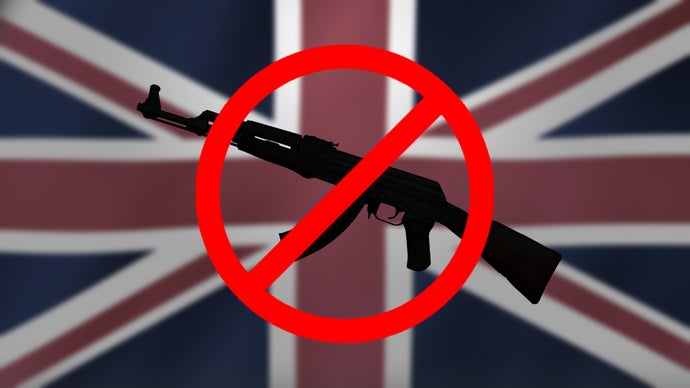
The sprawling, chaotic metropolises that have become synonymous with the Grand Theft Auto franchise – Liberty City, Vice City, Los Santos – are etched into the minds of gamers worldwide. These vibrant, albeit often morally bankrupt, playgrounds have consistently captured the imagination, offering unparalleled freedom within meticulously crafted, Americana-infused worlds. Yet, for a significant portion of its dedicated fanbase, a tantalizing “what if” has lingered: why did Grand Theft Auto never return to London as a full-fledged setting, beyond the groundbreaking yet brief foray of Grand Theft Auto: London 1969 and Grand Theft Auto: London 1961? While creative choices, market saturation, and evolving development philosophies undoubtedly play a role, one of the most significant, and often overlooked, reasons for the franchise’s sustained absence from the British capital lies in a fundamental societal difference: the stricter gun control laws prevalent in the United Kingdom.
The Allure of London: A Setting Ripe for Mayhem
It’s easy to see the inherent appeal of London as a Grand Theft Auto setting. Imagine the iconic red double-decker buses as getaway vehicles, the labyrinthine alleyways of Soho offering thrilling chases, or the stately grandeur of Westminster becoming the backdrop for audacious heists. London, with its rich history, diverse culture, and distinctive architecture, presents a canvas brimming with potential for the kind of dark satire and over-the-top action that defines Grand Theft Auto. The original Grand Theft Auto: London 1969 and its prequel 1961 proved this point effectively, transplanting the franchise’s signature gameplay into a distinctly British milieu. Players navigated the city in boxy sedans, engaged in street brawls with a more visceral, less firearm-dependent feel, and experienced a narrative infused with a uniquely British brand of cynicism and dark humor. The experience, while limited by the technology of its time, was a resounding success, hinting at a vast, untapped potential for future explorations of this iconic city.
The charm of London in the late 1960s, as depicted in those early titles, was its grittiness and its nascent swing. It was a city on the cusp of significant cultural change, a perfect melting pot for the kind of emergent criminality that Grand Theft Auto excels at portraying. However, the core gameplay loop of Grand Theft Auto, particularly in its modern iterations, has become intrinsically linked to the widespread availability and visceral use of firearms. The ability to engage in intense shootouts, acquire a vast arsenal of weaponry, and witness the explosive consequences of gun violence is a cornerstone of the series’ appeal and its controversial reputation.
The American Dream vs. The British Reality: A Firearms Divide
The fundamental difference between the United States and the United Kingdom, when it comes to firearms, is stark and profoundly impactful. In the US, the Second Amendment guarantees the right to bear arms, leading to a cultural landscape where gun ownership, while debated, is a widely accepted and legally protected aspect of society. This has, in turn, shaped the American narrative and its portrayal in media, including video games. Grand Theft Auto’s settings in fictional American cities – Liberty City (New York), Vice City (Miami), Los Santos (Los Angeles) – mirror this reality. Players can readily acquire an arsenal of pistols, shotguns, assault rifles, and heavy weaponry, engaging in shootouts with law enforcement and rival gangs. This freedom to wield and utilize a vast array of firearms is a defining characteristic of the Grand Theft Auto experience.
Conversely, the UK has historically maintained significantly stricter gun control laws. Following tragic events, legislation has progressively tightened, making firearm ownership by civilians exceptionally difficult and rare. The average Briton’s interaction with firearms is largely confined to controlled environments like shooting ranges or through law enforcement and military contexts. This societal norm creates a significant disconnect with the core gameplay mechanics that have become central to the Grand Theft Auto franchise.
Gameplay Mechanics and the Gun Control Conundrum
For Rockstar Games, the developers behind Grand Theft Auto, the choice of setting is not merely an aesthetic decision; it’s a foundational element that influences gameplay mechanics, narrative possibilities, and the overall player experience. The franchise’s evolution has seen an increasing emphasis on dynamic combat, intricate chase sequences, and the chaotic freedom that comes with wielding a diverse arsenal. If Grand Theft Auto were to be set in London today, or even in a modern-day interpretation of its past, the developers would face a significant challenge in reconciling their established gameplay loop with the realities of British firearms legislation.
Weapon Acquisition and Availability
In Grand Theft Auto titles set in the US, players can readily purchase firearms from stores like Ammu-Nation, find them in enemy hands, or loot them from fallen adversaries. This easy access is crucial for the game’s progression and its open-ended sandbox nature. A London setting, however, would necessitate a radical reimagining of weapon acquisition. The clandestine nature of illegal firearms would need to be emphasized, perhaps limiting the player’s arsenal to rudimentary weapons, improvised tools, or a very scarce supply of black-market firearms. This limitation could fundamentally alter the pacing and the combat intensity of the game, potentially diminishing the “Grand Theft Auto” feel that players expect.
Combat Encounters and Law Enforcement Response
The high-octane shootouts and explosive police chases are hallmarks of the Grand Theft Auto series. In American settings, the prevalence of firearms among both criminals and law enforcement officers justifies these intense confrontations. The police, themselves often armed with lethal force, are a formidable threat that players must overcome. In London, however, the approach of the Metropolitan Police, while certainly capable of employing force, is generally characterized by a less overtly militarized and firearm-centric approach compared to their American counterparts. While shootouts can and do occur, they are far less commonplace and are treated with far greater public and official scrutiny. A game that hinges on constant, large-scale gun battles would feel incongruous with the societal reality of London.
Narrative and Satire
Grand Theft Auto has always been a vehicle for sharp social commentary and satire, often highlighting the excesses and absurdities of American culture. While London has its own rich tapestry of social issues and subcultures ripe for satirization, the focus on gun violence as a central thematic element would be difficult to maintain authentically. The very act of wielding and using firearms in a British context, outside of specific criminal enterprises, is a more taboo subject. Rockstar’s ability to push boundaries and provoke discussion through its controversial portrayal of violence would be significantly curtailed if the gameplay mechanics were forced to conform to a less firearm-heavy reality.
The Early London Experiments: A Glimpse of What Could Be
The success of Grand Theft Auto: London 1969 and 1961 demonstrated that the Grand Theft Auto formula could be successfully adapted to a non-American setting. These titles offered a unique experience, focusing more on melee combat, carjacking, and the thrill of evasion rather than large-scale firearm engagements. Players learned to rely on their wits, their driving skills, and the occasional use of more rudimentary weaponry. The dialogue and the cultural references were distinctly British, offering a refreshing change of pace from the usual American-centric narratives. The characters, the fashion, and the general atmosphere all contributed to a charmingly retro, yet undeniably Grand Theft Auto, experience.
However, it’s crucial to remember the context of these releases. They were expansion packs for a top-down 2D game. The technological limitations of the era meant that the complexity of the gameplay and the depth of the combat mechanics were inherently constrained. As the Grand Theft Auto series evolved into the 3D era with Grand Theft Auto III, the emphasis shifted dramatically towards more sophisticated combat, detailed environments, and a more immersive, interactive world. This evolution, while immensely popular, also solidified the franchise’s reliance on certain gameplay pillars that are deeply intertwined with American gun culture.
The Economic and Developmental Realities
Beyond the thematic and mechanical considerations, there are also significant economic and developmental factors at play. Rockstar Games invests enormous resources into creating each new Grand Theft Auto title. They aim for mass appeal, and the American market, with its massive gaming demographic and cultural affinity for the themes explored in the series, represents a substantial portion of their revenue. Creating a Grand Theft Auto game set in London would require extensive research, meticulous environmental design to capture the city’s authenticity, and a significant effort to adapt or reimagine core gameplay mechanics.
Market Appeal and Player Expectations
While a Grand Theft Auto game set in London would undoubtedly be met with enthusiasm by a segment of the fanbase, particularly those in the UK, it might not resonate as strongly with the broader, global audience that has come to expect a certain type of experience from the franchise. The iconic American cities have become as much a part of the Grand Theft Auto brand as the gameplay itself. Deviating too far from this established identity could risk alienating a significant portion of their established player base. The allure of Liberty City, Vice City, and Los Santos is not just about the gameplay; it’s about the cultural touchstones and the familiar, albeit exaggerated, tropes of American life that the series masterfully deconstructs.
Developmental Hurdles and Costs
Replicating the intricate detail and scale of a modern Grand Theft Auto city is a monumental task. For London, this would involve capturing the nuances of its distinct boroughs, its iconic landmarks, and its unique urban sprawl. Furthermore, as previously discussed, the significant challenge of integrating gameplay mechanics that align with British gun control laws would necessitate considerable innovation and potentially a departure from the series’ established combat systems. This could lead to increased development costs and a higher risk of the final product not meeting player expectations.
Could a Compromise Be Found?
The question remains: is it impossible for Grand Theft Auto to ever return to London? While the challenges are significant, particularly concerning firearms, it’s not entirely inconceivable that Rockstar Games could find a way to adapt.
Focusing on Alternative Criminal Enterprises
Future Grand Theft Auto titles could potentially shift the focus away from large-scale shootouts and towards other forms of criminal activity that are more prevalent or culturally significant in the UK. This could include:
- Sophisticated Heists: Elaborate bank robberies, art thefts, or jewel heists that rely more on planning, stealth, and intricate mechanics rather than open combat.
- Organized Crime Narratives: Exploring the world of organized crime, where firearms might be present but not the sole or primary tool of engagement. The emphasis could be on intimidation, negotiation, and strategic maneuvering.
- Vehicle-Centric Gameplay: Leaning even more heavily into the series’ roots with a greater emphasis on high-speed chases, intricate driving maneuvers, and the thrill of carjacking, perhaps with a focus on classic British vehicles.
- Subculture Exploration: Diving deep into specific British subcultures, from football hooliganism to underground music scenes, using these as backdrops for criminal endeavors that don’t necessarily revolve around gun violence.
A “What If” Scenario: Alternate History or Stylized Reality
Another possibility is that a future London setting could exist in an alternate history or a more stylized, fantastical version of the city where the rules of gun ownership are slightly different, or where the narrative specifically addresses the scarcity of firearms and the player’s unique position as someone who can access them. This would allow Rockstar to maintain some of their established gameplay mechanics while still acknowledging the real-world context.
The Evolution of the Franchise
Ultimately, the Grand Theft Auto franchise has a history of evolving and surprising its audience. While the presence of firearms has been a constant, the way they are utilized and integrated into the gameplay has also seen development. It’s possible that future installments will find innovative ways to deliver the signature Grand Theft Auto experience, even in a setting with more restrictive gun laws. The developers might find that focusing on the unique social dynamics, the distinct urban landscape, and the rich cultural tapestry of London can provide more than enough material for another compelling and controversial installment.
However, until such a shift occurs, the lingering shadow of the stricter gun control laws in the UK remains one of the most prominent reasons why the revolutionary freedom of Grand Theft Auto has, for the most part, been confined to the concrete jungles of America. The very essence of what makes Grand Theft Auto a global phenomenon is inextricably linked to its embrace of a certain level of mayhem, a level that is profoundly influenced by the societal attitudes and legal frameworks surrounding firearms. While the dream of a fully realized Grand Theft Auto: London persists in the hearts of many, the practicalities of its development in a world with a vastly different relationship with guns present a formidable, and perhaps insurmountable, barrier. The allure of London is undeniable, but the chilling reality of its gun laws has, for now, kept Liberty City firmly in the driving seat.