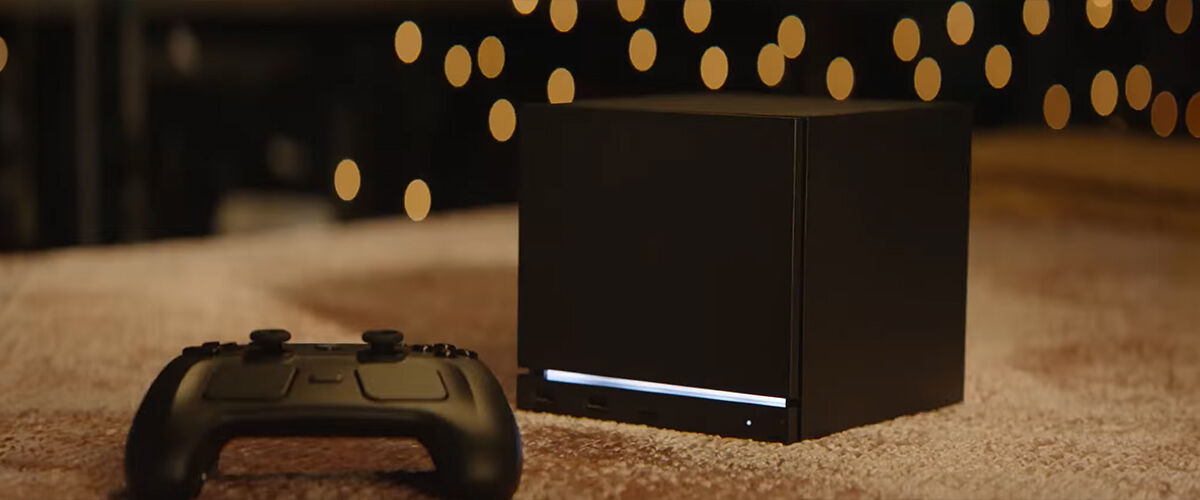
Valve’s Bold Resurgence: The Next-Generation Steam Machine and Evolved Steam Controller Redefine PC Gaming’s Hybrid Future
The landscape of PC gaming is on the cusp of a seismic shift, as Valve, the undisputed titan of digital distribution and hardware innovation, signals a powerful revival of its ambitious Steam Machine initiative. This isn’t merely a nostalgic nod to the past; it’s a strategic re-engineering of what a hybrid gaming console can and should be. We are witnessing the dawn of a new era, characterized by a next-generation Steam Machine boasting an astonishing six times the power of the acclaimed Steam Deck, coupled with a radically upgraded Steam Controller, poised to revolutionize input methods and usher in an unparalleled PC gaming experience in the living room and beyond. This comprehensive reimagining from Valve isn’t just about hardware; it’s a declarative statement on the future of accessible, high-fidelity PC gaming, blurring the lines between dedicated console ecosystems and the boundless potential of the personal computer.
The original Steam Machine project, launched in 2015, represented a bold but ultimately premature attempt to bring PC gaming to the living room in a console-like format. While the concept was sound, the execution faced numerous hurdles, including fragmented hardware configurations, inconsistent performance, and a market not yet fully prepared for its unique proposition. Fast forward to today, and the gaming world is a vastly different place. The rise of Game Pass has normalized subscription-based gaming, cloud streaming has demonstrated the viability of accessing high-end experiences on less powerful hardware, and critically, the Steam Deck itself has proven the immense consumer appetite for a portable, powerful PC gaming device. Valve has clearly learned invaluable lessons from its previous foray, meticulously analyzing market trends, consumer demands, and technological advancements to forge a product that is not only technologically superior but also strategically positioned for dominant market penetration.
The Herculean Leap in Power: A Six-Fold Increase Over the Steam Deck
The most staggering revelation is the sheer computational might promised by the new Steam Machine. Boasting an incredible six times the raw power of the Steam Deck, this new hardware is not simply an iterative upgrade; it’s a quantum leap forward. To put this into perspective, the Steam Deck, while a marvel of portable PC engineering, operates within certain performance envelopes to maintain its form factor and battery life. A six-fold increase signifies a device capable of not just running current-generation PC titles at their highest settings with smooth frame rates, but also of future-proofing for years to come. This level of performance opens the door to experiences previously confined to high-end desktop PCs, bringing AAA titles with ray tracing, uncompromising graphical fidelity, and complex simulations directly into the living room, controlled with the familiar comfort of a gamepad.
This substantial power increase suggests Valve has invested heavily in cutting-edge silicon. We can anticipate the integration of next-generation AMD APUs, potentially featuring significantly more potent RDNA graphics architecture and Zen CPU cores than those found in the Steam Deck. The thermal management systems will undoubtedly need to be re-engineered from the ground up to accommodate this increased power draw and heat dissipation, likely incorporating more robust cooling solutions that balance performance with audible noise levels. Furthermore, this power surge implies a parallel increase in system RAM, likely DDR5 or even newer memory technologies, to feed the insatiable demands of modern game engines. The potential for high-resolution output, perhaps supporting 4K gaming at playable frame rates or 1440p with high refresh rates, is now a tangible reality, offering a true console-like experience without sacrificing the vast library and open ecosystem of PC gaming.
Unlocking True AAA Performance for the Living Room
The implications of this power surplus are profound. For the first time, a dedicated hybrid console experience powered by Steam will be able to run games like Cyberpunk 2077 with full ray tracing enabled, Elden Ring at a consistent 60 FPS with all graphical settings maxed out, and even push the boundaries of future releases with their demanding graphical requirements. This moves beyond simply playing games; it’s about experiencing them as the developers intended, with breathtaking visuals and seamless gameplay. The Steam Machine will no longer be a compromise; it will be a premium gaming platform that delivers the pinnacle of PC gaming performance in a user-friendly, living-room-centric package. This addresses a long-standing desire among PC gamers to enjoy their extensive libraries on their primary entertainment hub without the complexities of a traditional desktop setup.
The Evolved Steam Controller: A Revolution in Input Reimagined
Complementing the raw power of the new Steam Machine is a radically upgraded Steam Controller. The original Steam Controller, while innovative with its dual trackpads and customizable inputs, was a polarizing device. Some lauded its versatility, while others found its learning curve steep. Valve has clearly taken this feedback to heart, and the next-generation Steam Controller promises to address past criticisms while building upon its foundational strengths. We anticipate a significant overhaul, focusing on enhanced ergonomics, improved haptic feedback, and more intuitive control schemes. The goal is undoubtedly to create an input device that is as universally appealing as a traditional gamepad, while retaining the unmatched configurability that made the original a favorite among PC gaming enthusiasts.
Key to this evolution will likely be the refinement of the trackpad technology. We might see the introduction of capacitive touch surfaces with improved precision, variable resistance, and more nuanced pressure sensitivity. The integration of advanced haptic actuators, similar to those found in modern smartphones and premium gamepads, could provide highly detailed tactile feedback, making actions feel more impactful and immersive. The aim is to bridge the gap between the precision of a mouse and keyboard and the comfort of a controller, offering a seamless transition for a wider range of game genres. Imagine games that traditionally required a mouse, such as real-time strategy titles or intricate simulation games, becoming genuinely playable and enjoyable with this new controller.
Ergonomics and Accessibility: A Controller for Everyone
Beyond technological advancements, ergonomic redesign will be paramount. We expect a controller that feels more natural in the hand, with improved grip textures, re-thought button placement, and potentially adjustable components to cater to a wider variety of hand sizes. The inclusion of dynamic input mapping that intelligently adapts to different game genres and player preferences could also be a significant development. This means the controller could intelligently reconfigure itself for a first-person shooter, a racing game, or a strategy title, offering an optimized experience out of the box. This focus on accessibility is crucial for broadening the appeal of the Steam Machine, making it a viable option for gamers who may not be accustomed to the complexities of PC gaming peripherals.
Revisiting the Trackpads: Precision Meets Tactility
The trackpads, the most distinctive feature of the original, will likely undergo a significant transformation. We envision high-resolution, multi-touch capacitive surfaces that offer superior accuracy for precise aiming and menu navigation. The addition of localized haptic feedback directly on the trackpads could simulate textures, button clicks, and even the subtle rumble of in-game events, providing a much richer sensory experience. Furthermore, Valve might explore dynamic surface textures that can change based on the context of the game, offering a tactile guide for different actions. This evolution aims to retain the unique input capabilities while making them more intuitive and responsive for a broader audience.
The Return of Traditional Inputs, Enhanced
While the trackpads will be central, we also anticipate the thoughtful integration and enhancement of traditional gamepad inputs. Expect ultra-responsive analog sticks with improved centering mechanisms and adjustable tension, alongside high-quality digital buttons and triggers that offer satisfying actuation and durability. The potential for adaptive triggers, similar to those seen on PlayStation’s DualSense controller, could add another layer of immersion, dynamically altering resistance to simulate in-game actions like drawing a bow or accelerating a vehicle. The marriage of these refined traditional inputs with the innovative trackpad technology creates a truly versatile and powerful input solution.
The Steam Ecosystem: Unifying PC Gaming in the Living Room
The Steam Machine is more than just a piece of hardware; it’s the tangible embodiment of Valve’s commitment to the open PC gaming ecosystem. Unlike closed console ecosystems, the Steam Machine will grant access to the entire Steam library, a vast and ever-growing collection of games spanning every genre and era. This is a monumental advantage, offering users immediate access to thousands of titles they may already own, without the need for re-purchasing. The SteamOS, which has been continuously refined and improved, will undoubtedly serve as the operating system, providing a seamless, console-like interface optimized for Big Picture Mode.
The SteamOS is crucial to the success of this endeavor. It must provide an intuitive and user-friendly experience for navigating the Steam store, managing game libraries, downloading updates, and connecting with friends. The Big Picture Mode interface, designed specifically for television displays, will be the primary gateway, ensuring that players can easily access and launch their games from a comfortable distance. Furthermore, the Steam Deck’s success has demonstrated the viability of Proton, Valve’s compatibility layer that allows Windows games to run on Linux. This means that the vast majority of the PC gaming library will be playable on the new Steam Machine, a feat unmatched by any other hybrid console on the market.
Leveraging Steam Cloud and Community Features
The Steam ecosystem also encompasses powerful cloud-based features that will enhance the Steam Machine experience. Steam Cloud saves will allow players to seamlessly switch between their PC and their Steam Machine, picking up exactly where they left off. Steam Workshop integration will provide easy access to community-created mods, maps, and content, further extending the life and replayability of games. The robust Steam Community features, including friends lists, chat, achievements, and user reviews, will remain fully integrated, ensuring that the social aspect of gaming is not lost in the transition to a console-like environment.
An Open Platform for Modding and Customization
One of the most compelling aspects of PC gaming is the freedom to mod and customize games. The Steam Machine, by virtue of its PC architecture and the open nature of SteamOS, will retain this crucial advantage. Players will have the ability to install and manage mods directly through the Steam interface or via more advanced tools, unlocking a level of personalization and replayability that is rarely seen on traditional consoles. This caters to a dedicated segment of the PC gaming community that values the ability to tweak and enhance their gaming experiences.
The Hybrid Revolution: Bridging the Gap Between PC and Console
The concept of a hybrid console is not new, but Valve’s approach with the Steam Machine and Steam Controller promises to be the most compelling realization to date. It’s about offering the best of both worlds: the uncompromising power and expansive game library of PC gaming, combined with the convenience, plug-and-play simplicity, and living-room-friendly interface of a console. This duality is what sets the Steam Machine apart. It’s not just for existing PC gamers looking for a second screen; it’s designed to be an attractive proposition for console gamers seeking greater choice, access to a wider variety of titles, and the unparalleled freedom of the PC platform.
The marketing and positioning of this new Steam Machine will be critical. Valve has the opportunity to clearly articulate the benefits of this hybrid approach, emphasizing the superior performance, the vastness of the Steam library, and the cost-effectiveness of not having to repurchase games. The upgraded Steam Controller will be key to making this accessible to a wider audience, demystifying the transition from traditional gamepads. By providing a powerful, user-friendly, and versatile gaming solution, Valve is poised to capture a significant share of the market and redefine the expectations for what a hybrid gaming console can achieve.
Addressing the Market: A New Paradigm for Gaming
The Gaming News team believes that the timing for this resurgence is impeccable. The industry has seen a growing desire for more flexible gaming options. Gamers are no longer content with being locked into a single ecosystem. The success of devices like the Nintendo Switch has demonstrated the immense appeal of hybrid gaming. Valve’s new Steam Machine, with its vastly superior power and refined input, offers a more premium and performance-oriented take on this hybrid model, targeting a segment of the market that craves high-fidelity gaming experiences without the traditional barriers of PC ownership. This strategic move by Valve could very well establish a new paradigm for gaming, where the lines between dedicated consoles and the PC are further dissolved, offering consumers more choice and power than ever before.
The Future of Living Room Gaming is Here
This renewed push into the hybrid console market signifies Valve’s enduring belief in the power of PC gaming. By merging the raw capabilities of desktop hardware with a console-like user experience and an incredibly versatile controller, they are not just reviving a product line; they are revolutionizing how we play. The next-generation Steam Machine, powered by its incredible six-fold performance leap over the Steam Deck and complemented by the intuitive evolved Steam Controller, is poised to become the ultimate gateway to the vast universe of PC gaming, offering an unparalleled experience for enthusiasts and newcomers alike. The era of compromise in living room PC gaming is officially over.