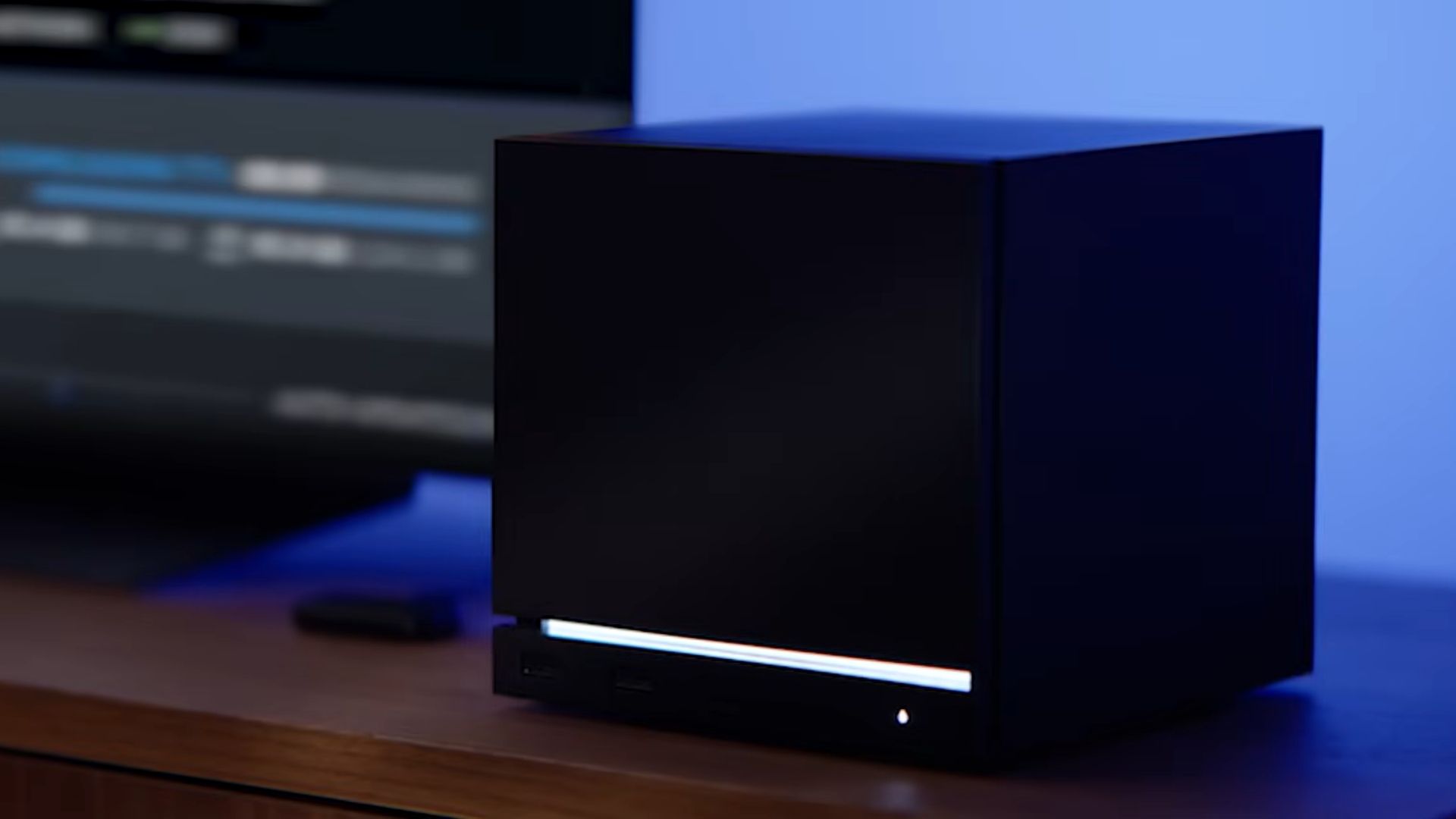
Valve Unveils Next-Generation Gaming Machine: A New Frontier in Handheld-to-Desktop Power
At Gaming News, we’ve been privy to whispers and rumors for months, but today marks a monumental shift in the gaming hardware landscape. Valve, the enigmatic titan behind Steam and the revolutionary Steam Deck, has officially pulled back the curtain on a new console that promises to redefine expectations. This isn’t merely an iteration; it’s a quantum leap. Billed as six times more powerful than the acclaimed Steam Deck, this upcoming device positions itself not just as a portable powerhouse, but as a legitimate contender against mid-range PC builds, offering an unprecedented fusion of flexibility and raw performance for the discerning gamer.
The implications of this announcement are far-reaching. For years, the discussion around portable gaming has often been tethered to compromises – sacrificing graphical fidelity or frame rates for the luxury of untethered play. The Steam Deck, in its own right, shattered many of those limitations, bringing a substantial portion of PC gaming to the palm of our hands. However, Valve’s latest offering appears poised to obliterate those boundaries entirely. The claim of being six times more powerful isn’t hyperbole; it signifies a complete re-evaluation of what a handheld or even a compact gaming device can achieve. This level of performance suggests a device capable of not just running the latest AAA titles, but running them with settings and resolutions that were previously the exclusive domain of dedicated desktop PCs.
Unpacking the “Six Times More Powerful” Claim: What It Means for Gaming Performance
The sheer magnitude of the “six times more powerful” statement necessitates a deep dive into the technological underpinnings that enable such a dramatic uplift. While Valve remains characteristically tight-lipped on the exact specifications of the new console, we can extrapolate based on industry trends and the significant performance gap implied.
Processor and Graphics Architecture: The Heart of the Beast
At the core of any gaming device’s power lies its central processing unit (CPU) and graphics processing unit (GPU). For the Steam Deck, Valve opted for a custom AMD APU (Accelerated Processing Unit) that cleverly integrates both CPU and GPU cores. This approach is highly efficient for portable devices, balancing performance with power consumption and thermal management. To achieve a six-times performance increase, the new console will undoubtedly feature a significantly more advanced APU.
We anticipate a move towards newer CPU architectures, likely leveraging AMD’s Zen 4 or even Zen 5 core designs, offering substantial improvements in clock speeds, core counts, and IPC (Instructions Per Cycle). This would translate to faster game loading times, smoother simulation of complex game worlds, and the ability to handle more demanding AI and physics.
The GPU is where the most dramatic improvements will likely be observed. The jump from the Steam Deck’s RDNA 2-based GPU to a more modern RDNA 3 or even RDNA 4 architecture would unlock a new echelon of graphical capabilities. This means support for advanced rendering technologies like hardware-accelerated ray tracing, which can produce incredibly realistic lighting, reflections, and shadows. It also implies a significant increase in raw shader power, enabling higher texture resolutions, more intricate geometric detail, and more complex visual effects. The notion of playing graphically intensive PC games at native resolutions with high refresh rates on a portable device, or even a compact desktop, suddenly becomes a tangible reality.
Ray Tracing and Advanced Visuals
The inclusion of dedicated ray tracing hardware is a crucial indicator of this console’s ambitions. While the Steam Deck can technically run games that feature ray tracing, the performance penalty is often too severe for enjoyable gameplay. A device six times more powerful would likely feature RT cores capable of handling these computationally intensive calculations with far greater efficiency, unlocking a level of visual immersion previously confined to high-end gaming PCs. Imagine experiencing games like Cyberpunk 2077 or Alan Wake 2 with all their stunning, realistic lighting effects, not just as a distant possibility, but as a standard feature.
Memory Bandwidth and Storage Speed: The Unsung Heroes
Beyond raw processing power, the performance of a gaming system is heavily influenced by its memory subsystem. The Steam Deck utilizes LPDDR5 RAM, a fast and power-efficient memory type. To feed the hungry new APU, Valve will likely implement faster LPDDR5X or even GDDR6 memory, with significantly increased bandwidth. This allows the CPU and GPU to access game data more quickly, reducing bottlenecks and enabling higher resolutions and frame rates.
Furthermore, storage speed is paramount. The Steam Deck’s NVMe SSD ensures quick game loading, but for a device aiming to rival mid-range PCs, we expect even faster NVMe SSDs, potentially PCIe Gen 5, further slashing load times and improving asset streaming within games. This means less waiting and more playing, with a seamless transition between game menus, gameplay, and even fast travel sequences.
Bridging the Gap: A True Mid-Range PC Rival in Portable Form
The most revolutionary aspect of Valve’s announcement is the explicit positioning of this new console as a mid-range PC rival. This isn’t just a powerful handheld; it’s a device that fundamentally challenges the traditional desktop PC paradigm for a significant segment of the gaming market.
Versatility: Handheld, Docked, and Beyond
The Steam Deck’s inherent versatility was a key selling point, allowing users to seamlessly transition between handheld play and a docked desktop experience. Valve’s new machine is expected to amplify this flexibility to an unprecedented degree. The promise of six times the power implies that when docked, this device could output resolutions like 1440p or even 4K at playable frame rates, rivaling the capabilities of many popular gaming desktops.
Docking Station Capabilities: A Desktop Experience on Demand
We anticipate a revamped docking station that goes beyond simply providing HDMI output and USB ports. Expect enhanced connectivity options, potentially including higher bandwidth USB-C ports for faster external storage and peripherals, as well as more robust display output capabilities to support higher refresh rates and resolutions. The dream of a single, powerful device that serves as both your primary portable gaming companion and your desktop gaming rig is closer than ever. Imagine playing a demanding PC title on your large living room display with a controller, then unplugging the device and continuing your game on a train with the same fidelity and performance.
Beyond Gaming: Productivity and Media Consumption
While gaming is undoubtedly the primary focus, the increased power of this new console opens doors to broader applications. With a robust operating system (likely a further refined version of SteamOS) and the ability to run desktop applications, this device could become a formidable tool for light productivity tasks, web browsing, video editing, and extensive media consumption. The raw processing power would make multitasking a far more fluid and responsive experience, further blurring the lines between dedicated gaming hardware and general-purpose computing devices.
Targeting the Modern Gamer: Who Benefits Most?
Valve’s strategic move with this new console is clearly aimed at a diverse and evolving gamer demographic. The mid-range PC build market, in particular, is a rich target.
The Discerning PC Gamer Seeking Portability
For years, PC gamers have been accustomed to making significant investments in powerful desktop hardware to achieve the best possible gaming experience. However, the desire for portability often meant compromising with less powerful laptops or sacrificing gaming on the go altogether. This new console directly addresses that desire, offering a way to experience their favorite PC titles with high graphical settings without being tethered to a desk. It’s an opportunity to play demanding games in bed, on a commute, or at a friend’s house with the same graphical fidelity they’ve come to expect from their desktop.
Budget-Conscious Gamers Opting for Value
Building a mid-range PC capable of running modern games at high settings can still represent a substantial financial outlay. When factoring in the cost of a monitor, keyboard, and mouse, the total investment can quickly climb. Valve’s new console, by offering performance that rivals such builds, could present a far more cost-effective solution. The integrated nature of the hardware, coupled with Valve’s established ecosystem, could lead to a significantly lower entry price point for a truly powerful gaming experience. This makes high-fidelity gaming accessible to a broader audience than ever before.
The Enthusiast Seeking Ultimate Flexibility
Beyond the mainstream, the new console will undoubtedly appeal to enthusiasts who crave flexibility and cutting-edge technology. The ability to run PC games anywhere, at any time, with near-desktop performance, opens up a world of possibilities for how and where people game. It’s a device that doesn’t force a choice between portability and power; it offers both in abundance.
Software and Ecosystem: The Power of Steam Continues
The hardware is only one piece of the puzzle. The true strength of any Valve gaming device lies in its robust software ecosystem and the unparalleled reach of the Steam platform.
SteamOS Evolution: Optimized for High-Performance Gaming
While Valve hasn’t detailed the specific iteration of SteamOS that will power this new console, we can be confident that it will be heavily optimized for this new hardware. Expect enhanced support for the latest graphics APIs, improved compatibility with a wider range of PC games, and a refined user interface designed for both handheld and docked play. The goal will undoubtedly be to provide a seamless and intuitive experience that leverages the full potential of the hardware.
A Vast Library of PC Games: Unlocking Existing Investments
The most significant advantage this new console holds is its direct access to the massive Steam game library. Unlike proprietary consoles with exclusive titles, this device allows players to access and play the vast majority of games they already own on Steam. This instantly provides immense value and eliminates the need to repurchase games. The six-times performance increase means that games that were previously borderline unplayable on the Steam Deck due to performance constraints will now run beautifully, breathing new life into existing digital collections.
Proton and Compatibility Enhancements
Valve’s Proton compatibility layer has been instrumental in the success of the Steam Deck, allowing a vast number of Windows-native games to run on Linux-based SteamOS. With the increased power of the new hardware, we can anticipate even more robust compatibility and performance improvements through Proton. This means a wider selection of AAA titles will be playable with greater stability and fidelity, further solidifying the device’s status as a true PC gaming alternative.
Community and Features: The Steam Advantage
The Steam platform is more than just a storefront; it’s a vibrant community. Features like Steam Cloud saves, achievements, social interactions, and mod support are integral to the PC gaming experience, and they will all be present and accounted for on this new console. This ensures that players aren’t just getting powerful hardware, but also access to the rich social and functional layers that have made Steam the dominant PC gaming platform.
The Future of Gaming: A Blurring of Lines
Valve’s announcement of a new console that rivals mid-range PC builds with six times the power of the Steam Deck signifies a pivotal moment in the evolution of gaming hardware. It’s a testament to Valve’s commitment to innovation and their understanding of the modern gamer’s desire for flexibility, power, and value.
We are moving towards a future where the lines between dedicated consoles, portable devices, and traditional PCs are increasingly blurred. This new machine is not just a product; it’s a statement. It’s a declaration that high-fidelity, demanding PC gaming can be accessible, versatile, and untethered. At Gaming News, we believe this device has the potential to reshape the gaming landscape, offering a compelling alternative for millions of gamers worldwide and setting a new benchmark for what we can expect from portable and compact gaming solutions. The era of compromise in portable gaming is over; the era of true PC power, anytime, anywhere, has officially begun.