Unraveling the Dread: Top 5 Frictional Games Horror Masterpieces to Immerse Yourself In While Anticipating Hotel Samsara
The world of horror gaming is about to be electrified by the arrival of Hotel Samsara, a title that promises to push the boundaries of psychological terror and environmental storytelling. Developed by the acclaimed Frictional Games, known for their masterful ability to craft deeply unsettling experiences, the anticipation is palpable. However, the wait can often feel agonizingly long for fans eager to delve into new nightmares. Fortunately, Frictional Games has a rich legacy of delivering spine-chilling adventures that serve as perfect preparation – or perhaps, excellent distractions – for what’s to come. At Gaming News, we’ve meticulously explored their back catalog to bring you the definitive list of top 5 Frictional Games horror titles that will keep you on the edge of your seat and perfectly attuned to the unsettling atmosphere of their upcoming masterpiece. These are the games that have defined modern survival horror, emphasizing vulnerability, atmosphere, and a creeping dread that lingers long after the credits roll. Prepare to confront your deepest fears and discover why Frictional Games remains at the pinnacle of the horror genre.
A Legacy of Terror: Why Frictional Games Excels in Horror
Before we dive into the specific titles that will tide you over, it’s essential to understand what makes Frictional Games’ approach to horror so profoundly effective. Unlike many horror developers who rely on jump scares and overt gore, Frictional Games masterfully crafts their terror through oppressive atmosphere, environmental storytelling, and a profound sense of player vulnerability. They understand that true horror often stems from the unknown, the inexplicable, and the feeling of being utterly powerless against forces far beyond comprehension.
Their games are characterized by:
- Unflinching Psychological Horror: Frictional Games delves deep into the human psyche, exploring themes of madness, identity, and the breakdown of reality. The horror is not just external but deeply internal, forcing players to question their own sanity as much as the monstrous entities they encounter.
- Immersive Environments: From the desolate, rusting corridors of a subterranean research facility to the claustrophobic confines of an ancient, cursed castle, Frictional Games excels at creating tangible and believable worlds that are as much a character as any of the inhabitants. Every creak of a floorboard, every flickering light, every echoing whisper contributes to a suffocating sense of unease.
- Emphasis on Evasion Over Confrontation: In a Frictional Games title, you are rarely the hero equipped to fight back. Instead, your primary survival mechanism is stealth, cunning, and sheer, unadulterated flight. This deliberate design choice amplifies the feeling of powerlessness and makes every encounter with a hostile entity a heart-pounding test of nerve.
- Rich, Cryptic Narratives: The stories woven by Frictional Games are rarely straightforward. They are often fragmented, metaphorical, and open to interpretation, revealed through scattered notes, environmental clues, and haunting visions. This encourages player engagement and fosters a deeper, more personal connection to the unfolding dread.
- Masterful Sound Design: The auditory experience in Frictional Games titles is paramount. Ambient sounds, unsettling music, and the terrifying vocalizations of creatures work in concert to create a symphony of fear, heightening tension and drawing players deeper into the nightmarish worlds they inhabit.
By understanding these core tenets, we can better appreciate the enduring impact and chilling effectiveness of the games we are about to highlight, all of which serve as exceptional preludes to the immersive terror of Hotel Samsara.
1. Amnesia: The Dark Descent (2010) – The Quintessential Frictional Nightmare
No discussion of Frictional Games’ horror output would be complete without placing Amnesia: The Dark Descent at the very forefront. Released in 2010, this seminal title not only solidified Frictional Games’ reputation but also profoundly influenced the trajectory of the horror genre for years to come. It is the blueprint for modern first-person survival horror, emphasizing atmospheric dread, resource management, and a terrifyingly effective sanity mechanic.
#### Unveiling the Oppressive Atmosphere of Brennenburg Castle
Players awaken in the suffocating darkness of Brennenburg Castle, with no memory of who they are or how they arrived. The only clue is a cryptic note to themselves, urging them to descend into the castle’s depths and murder its master, Alexander. This initial premise immediately plunges the player into a state of disorientation and vulnerability. The castle itself is a character, a labyrinth of decaying grandeur and hidden horrors. Its architecture is a testament to masterful environmental design, with each dimly lit corridor, dusty chamber, and flooded cellar contributing to an overwhelming sense of dread. The very air feels heavy with a palpable sense of history and despair.
#### The Terrifying Impact of the Sanity Mechanic
One of Amnesia: The Dark Descent’s most groundbreaking contributions to horror gaming is its sanity system. As the player is exposed to darkness, witnesses disturbing events, or looks directly at the game’s monstrous inhabitants, their sanity meter depletes. Lower sanity results in visual and auditory hallucinations, making navigation more perilous and increasing the likelihood of attracting unwanted attention. This mechanic isn’t just a gimmick; it’s a core component of the gameplay that forces players to constantly manage their fear and make difficult decisions about how to proceed. Do you brave the darkness to conserve your precious oil for your lantern, or do you risk attracting attention by keeping the light burning? This constant balancing act is what makes the experience so nerve-wracking.
#### Encounters with the Unseen and the Grotesque
The true terror in Amnesia lies in its enemy design. The Gatherers, blind, monstrous entities that hunt by sound, are a constant, looming threat. The game masterfully utilizes sound design to build tension. The faintest creak of a floorboard, the distant echo of a guttural growl, or the shuffling of unseen feet can send shivers down your spine. The game’s brilliance lies in its refusal to show you its monsters too often. Instead, it relies on suggestion, auditory cues, and brief, terrifying glimpses to fuel your imagination, often proving far more effective than overt displays of horror. The psychological impact of hearing something terrifying just out of sight, knowing that any misstep could lead to your demise, is a testament to Frictional Games’ understanding of fear.
#### A Narrative of Amnesia and Existential Dread
Beyond the immediate scares, Amnesia: The Dark Descent weaves a compelling narrative that explores themes of memory, guilt, and the nature of humanity. As you collect scattered notes and journal entries, you piece together a tragic story of scientific ambition gone awry and the descent into unspeakable horrors. The narrative is delivered in a fragmented, non-linear fashion, rewarding player exploration and careful observation. The overarching mystery of Alexander and his diabolical experiments provides a compelling reason to push forward, even as every fiber of your being screams for you to flee. The chilling conclusion leaves players pondering profound questions about choice, consequence, and the darkness that can reside within us all. For anyone looking to understand the roots of Frictional Games’ horror prowess, Amnesia: The Dark Descent is an unmissable foundational experience.
2. Amnesia: Rebirth (2020) – A Descent into the Personal and the Cosmic
While Amnesia: The Dark Descent laid the groundwork, Amnesia: Rebirth demonstrated Frictional Games’ ability to evolve their formula and explore new frontiers of horror. Released a decade after its predecessor, Rebirth takes the core principles of atmospheric terror and player vulnerability and injects them with a more deeply personal narrative, exploring themes of loss, motherhood, and the terrifying vastness of the cosmos.
#### The Desolate Beauty of the Algerian Desert
Rebirth transports players to the harsh and unforgiving landscapes of the Algerian desert. You play as Anastasie “Tasi” Trianon, who awakens in a desolate cave after a plane crash, with no memory of the preceding days. The stark, alien beauty of the desert, coupled with the oppressive darkness of the subterranean environments you eventually explore, creates a unique and unsettling atmosphere. The environmental storytelling here is exceptional, with ancient ruins, forgotten laboratories, and otherworldly dimensions all contributing to a sense of deep, unfolding mystery. The juxtaposition of the natural world with the encroaching, unnatural horrors is a key element in building Rebirth’s pervasive sense of unease.
#### Tasi’s Journey Through Trauma and Terror
At its heart, Amnesia: Rebirth is a deeply personal and emotional story. Tasi is not just a survivor; she is a mother searching for her child, and her journey is intertwined with profound themes of grief, resilience, and the sacrifices we make for love. The game masterfully weaves Tasi’s internal struggles with the external horrors she faces. Her past traumas and anxieties manifest in unsettling ways, blurring the lines between reality and hallucination. This focus on character-driven horror makes the experience incredibly impactful, as players become invested in Tasi’s survival not just for the sake of the gameplay, but for her emotional journey as well.
#### Evolving the Gameplay: Resource Management and Puzzles
While retaining the core mechanics of stealth and evasion that defined Amnesia, Rebirth introduces some welcome evolutions. The game offers a more robust system for managing resources, including vital items for crafting and healing. The puzzle design is also more integrated into the narrative and environment, often requiring careful observation and thoughtful interaction with the world. The encounters with the game’s terrifying creatures, known as the “Preservers” and other entities, continue to rely on evasion and clever use of the environment, but with new twists and challenges that keep players on their toes. The game also introduces moments where Tasi must overcome her own fear to progress, adding another layer to the psychological horror.
#### A Cosmic Horror That Stretches Beyond Human Comprehension
Amnesia: Rebirth leans heavily into cosmic horror, exploring concepts that transcend human understanding. The narrative delves into ancient mysteries, alien artifacts, and the terrifying realization of humanity’s insignificance in the grand scheme of the universe. The game’s narrative, delivered through Tasi’s fragmented memories and the chilling lore discovered within the game world, paints a picture of a universe far stranger and more terrifying than we can possibly imagine. The existential dread that stems from these revelations is a hallmark of Frictional Games’ most potent horror. This blend of the personal and the cosmic makes Rebirth a profoundly unsettling and memorable experience, perfect for those preparing their minds for the depths of Hotel Samsara’s mysteries.
3. SOMA (2015) – Where Identity and Existence Blur into Terror
While not strictly a “monster-filled” horror game in the traditional sense, SOMA stands as a testament to Frictional Games’ ability to craft profoundly disturbing and thought-provoking horror through its philosophical themes and existential dread. Set in a submerged underwater research facility, SOMA masterfully blends science fiction with psychological horror, asking unsettling questions about consciousness, identity, and what it truly means to be human.
#### The Claustrophobic Depths of PATHOS II
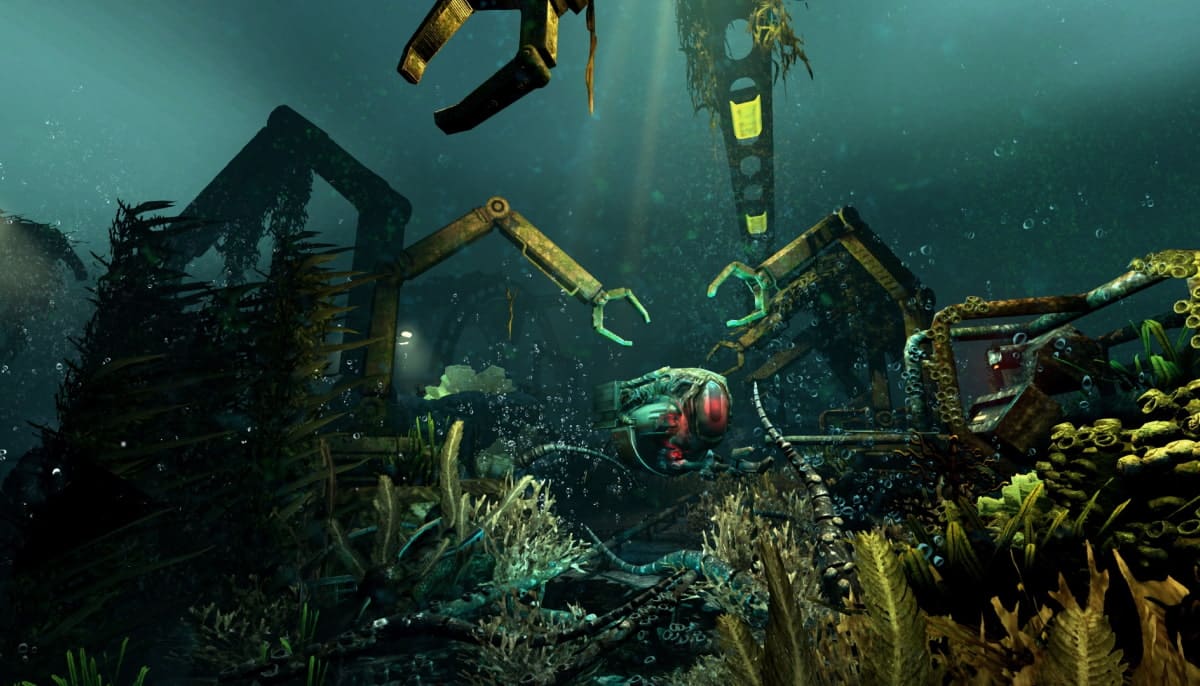
The setting of SOMA, the underwater research facility PATHOS II, is a character in itself. The claustrophobic environments, the constant hum of machinery, and the eerie silence broken only by the groans of the facility and the distant, unsettling noises create an incredibly oppressive and immersive atmosphere. The sense of isolation is paramount, as the player is stranded in a decaying technological tomb miles beneath the ocean’s surface. The meticulously detailed environments tell a story of a desperate, last-ditch effort to preserve humanity, a story that is both tragic and terrifying. The visual design of PATHOS II, with its blend of advanced technology and decay, is a masterclass in creating a world that feels both alien and disturbingly plausible.
#### Exploring the Terrifying Concepts of Consciousness and Identity
What truly sets SOMA apart is its deeply philosophical narrative. The game relentlessly probes questions about consciousness, artificial intelligence, and the nature of self. As the player character, Simon Jarrett, navigates the decaying facility and encounters the few remaining, and often monstrous, inhabitants, the game forces you to confront what it means to have a mind, to have a body, and to have an identity. The ethical dilemmas presented are not abstract; they are intensely personal and lead to some of the most disturbing and thought-provoking moments in modern gaming. The horror here is not just about what you see or hear, but about what you understand and the profound existential dread that understanding brings.
#### Encounters with Aberrant AI and Distorted Humanity
While SOMA emphasizes philosophical horror, it does not shy away from terrifying encounters. The creatures you will meet are not simply monsters to be avoided; they are often distorted echoes of humanity or rogue artificial intelligences, driven by corrupted programming or a warped sense of purpose. The game’s enemy design is unsettling, often featuring grotesque mutations or unsettling robotic entities. The gameplay loop involves stealth, puzzle-solving, and careful navigation through these dangerous environments. The threat of discovery is always present, and the encounters are designed to be tense and disorienting, forcing players to think on their feet and utilize the environment to survive. The absence of direct combat means that every confrontation is a desperate struggle for survival.
#### A Narrative That Will Haunt Your Thoughts
The narrative of SOMA is a slow-burn masterpiece, gradually revealing the terrifying truth behind the facility and Simon’s own existence. The story is delivered through environmental storytelling, audio logs, and unsettling visions. The game’s conclusion is particularly impactful, leaving players with a lingering sense of dread and a profound sense of the fragility of existence. SOMA is a game that demands your attention and rewards it with a truly unforgettable, and deeply unsettling, experience. It’s a perfect choice for those who appreciate horror that lingers in the mind long after the screen goes black, preparing you for the psychological depth that Hotel Samsara is sure to offer.
4. Penumbra: Overture (2007) – The Precursor to Modern Frictional Horror
Before Amnesia redefined survival horror, Frictional Games ventured into the shadows with the Penumbra series. Penumbra: Overture, the first installment, laid the groundwork for much of what would come to define their signature style of horror. While perhaps rougher around the edges than its successors, Overture offers a chilling glimpse into the studio’s early genius for crafting atmospheric dread and emphasizing player helplessness.
#### The Icy Isolation of a Greenlandic Mine
Penumbra: Overture places players in the shoes of Philip, who receives a cryptic letter from his estranged father, leading him to an abandoned mine in Greenland. The setting is immediately oppressive and isolating. The biting cold, the desolate wilderness, and the dark, winding tunnels of the mine create an overwhelming sense of vulnerability. The environmental design effectively conveys the feeling of being trapped and forgotten, a recurring theme in Frictional Games’ work. Every gust of wind, every distant rumble, and every shadow in the mine contributes to the growing sense of unease. The vast emptiness of the Greenlandic landscape surrounding the mine only amplifies the feeling of being utterly alone.
#### Innovative Physics-Based Interaction
One of Overture’s most distinctive features is its innovative physics-based interaction system. Players can pick up, throw, and manipulate objects in the environment with a degree of freedom that was uncommon for its time. This system is not just a gameplay mechanic; it’s integral to the horror. Fumbling with a key in a panicked moment, or using an object to barricade a door against an unseen threat, adds a visceral layer of realism and tension. The ability to physically interact with the world, however clumsily, heightens the player’s immersion and the stakes of every action. This physical interaction also extends to combat, where players can swing weapons or use environmental objects to fend off threats, albeit in a clumsy and often desperate manner.
#### Encounters with the Unknown and the Grotesque
The horrors that inhabit the mine in Overture are primal and disturbing. Players will encounter creatures that are bestial and terrifying, born from a dark, unexplained phenomenon. The game relies heavily on sound design and suggestion to build dread, with unsettling growls and the scuttling of unseen things lurking just beyond the edge of your vision. The combat, while clunky by modern standards, is tense and desperate. The focus is on survival and evasion, rather than direct confrontation. The feeling of being outmatched and vulnerable is ever-present, forcing players to think strategically about how to approach each encounter, or whether to confront it at all.
#### A Foundation for Future Masterpieces
While Penumbra: Overture may not have the polish of Frictional Games’ later titles, its pioneering spirit and commitment to atmospheric horror are undeniable. It established many of the core tenets that would define the studio: a focus on environmental storytelling, player vulnerability, and psychological dread. The narrative, which slowly unravels the mystery of the mine and its dark secrets, is intriguing and hints at the complex lore that Frictional Games would later explore. For those seeking to understand the evolution of Frictional Games’ horror, Overture is a fascinating and genuinely frightening starting point. It offers a raw and unadulterated taste of their early brand of terror, perfectly suited for a prelude to Hotel Samsara.
5. Penumbra: Black Plague (2008) – Refining the Formula of Fear
Building upon the foundations laid by Overture, Penumbra: Black Plague significantly refined Frictional Games’ horror formula, delivering a more focused, polished, and arguably even more terrifying experience. This sequel doubled down on the psychological horror, environmental puzzles, and the feeling of utter helplessness, solidifying the studio’s reputation for crafting truly nightmarish games.
#### Deepening the Mystery of the Forsaken Island
Black Plague picks up where Overture left off, with Philip continuing his investigation on a remote, forsaken island. The environments are more varied and intricate, ranging from dark, flooded tunnels to desolate scientific outposts. The sense of isolation and entrapment is amplified, as Philip finds himself caught in a web of scientific experiments gone awry and ancient, malevolent forces. The level design is exceptional, creating a palpable sense of dread and claustrophobia. Each new area presents new horrors and new environmental puzzles that demand careful observation and clever use of the game’s mechanics. The narrative unfolds through scattered notes, audio logs, and disturbing visions, slowly revealing the horrifying truth behind the island’s curse.
#### The Evolution of Stealth and Evasion
While Overture introduced the concept of evading enemies, Black Plague made it the central pillar of survival. The game effectively removed direct combat, forcing players to rely entirely on stealth, distraction, and environmental manipulation to survive. This design choice drastically increases the tension and fear. Knowing that you cannot fight back means that every encounter is a life-or-death situation where a single mistake can be fatal. The AI of the creatures is more sophisticated, making them more unpredictable and terrifying. The game masterfully uses sound and visual cues to alert you to their presence, but also to mislead you, creating moments of heart-pounding suspense. The feeling of being hunted is a constant companion.
#### Challenging Puzzles and Environmental Interaction
Penumbra: Black Plague excels in its challenging and integrated puzzle design. The puzzles are not arbitrary obstacles but are organically woven into the narrative and the environment. They often require players to think logically, utilize the physics engine, and carefully observe their surroundings. From manipulating machinery to finding hidden passages, the puzzles are satisfying to solve and contribute to the overall immersion. The ability to interact with the world in detailed ways, picking up objects, combining items, and using the environment to your advantage, is crucial for progression and survival. This emphasis on intellect over brute force is a hallmark of Frictional Games’ design philosophy.
#### A Masterclass in Atmospheric and Psychological Horror
Penumbra: Black Plague is a masterclass in atmospheric and psychological horror. The game excels at creating a persistent sense of dread through its oppressive atmosphere, unsettling sound design, and terrifying enemy encounters. The narrative, which delves into themes of scientific hubris and the darkness that lies beneath the surface of civilization, is both compelling and disturbing. The game’s ending is particularly memorable, leaving players with a sense of unease and a profound appreciation for Frictional Games’ ability to craft truly horrifying experiences. Black Plague stands as a testament to the studio’s early mastery of the genre and is an essential play for any horror enthusiast eagerly awaiting Hotel Samsara.
Preparing for the Unforeseen: The Enduring Impact of Frictional Games’ Horror
As we stand on the precipice of Hotel Samsara’s release, the legacy of Frictional Games’ previous works provides not only an excellent way to pass the time but also a vital preparation for the psychological and atmospheric terrors that await. Each of these top 5 Frictional Games horror titles offers a unique yet cohesive vision of what truly terrifying gaming can be. They are more than just games; they are experiences that burrow into your mind, forcing you to confront your deepest fears and question the very nature of reality.
Whether you’re navigating the crumbling halls of Brennenburg Castle, surviving the desolate expanses of Algeria, unraveling the existential dread of PATHOS II, or braving the icy isolation of Greenland, you are immersing yourself in the masterful craft of Frictional Games. They have consistently proven their ability to deliver unforgettable, deeply unsettling, and profoundly impactful horror experiences. By revisiting or discovering these masterpieces, you’ll not only be entertained but also finely tuned to the kind of meticulous atmosphere, relentless tension, and psychological depth that we can undoubtedly expect from Hotel Samsara. Prepare yourselves, for the nightmares are just beginning.