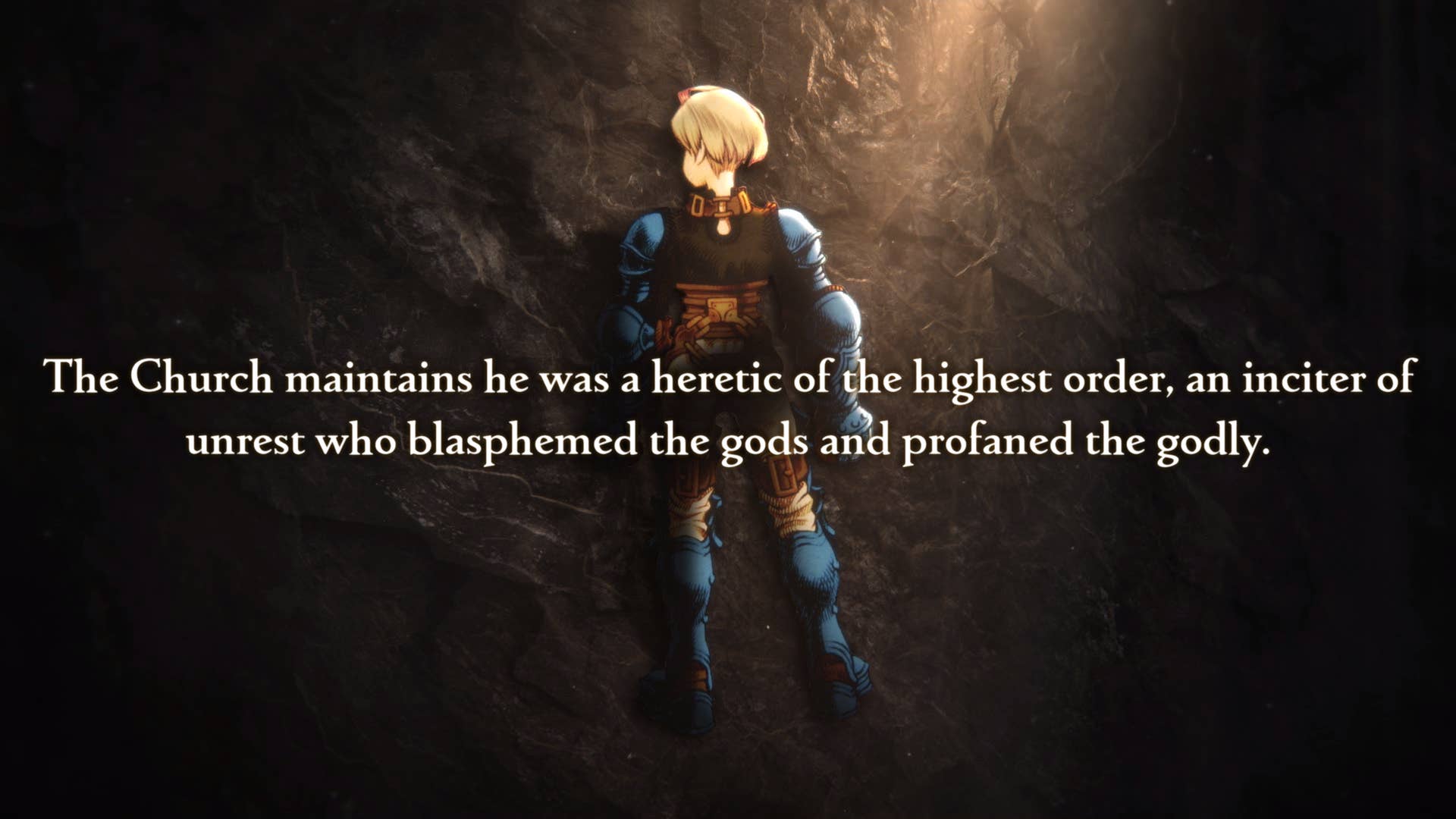
The Revolutionary Politics of Final Fantasy Tactics: Ramza Beoulve, A Hero for Our Times
Final Fantasy Tactics, a title that continues to resonate deeply within the gaming community nearly three decades after its initial release, is far more than a mere tactical role-playing game. Beneath its intricate battle system and rich character progression lies a narrative of profound political intrigue, social upheaval, and a radical reimagining of heroism. We at Gaming News believe that the enduring relevance of Final Fantasy Tactics stems from its complex portrayal of power, corruption, and the struggle for justice, personified by its protagonist, Ramza Beoulve. This is why we contend that Ramza is not just a character within a video game, but a hero for our times, embodying principles that are acutely pertinent to the societal challenges we face today.
The world of Ivalice, as depicted in Final Fantasy Tactics, is a land steeped in a history of conflict and veiled by the machinations of powerful factions. The War of the Lions, the central historical event that frames the game’s narrative, is not a simple clash of kingdoms but a complex web of succession disputes, assassination plots, and the ruthless pursuit of dominion by those who believe themselves entitled to rule. This backdrop of political instability and aristocratic decadence sets the stage for Ramza’s awakening to the harsh realities of his world. He is born into nobility, a privilege that initially shields him from the suffering of the common folk. However, as the game unfolds, he is forced to confront the hypocrisy and brutality that underpins the very social order he was raised to uphold.
Deconstructing the Feudal System of Ivalice: Power, Corruption, and the Seeds of Rebellion
The feudal society of Ivalice is meticulously crafted to showcase the inherent flaws of a system built on inherited privilege and unchecked authority. The ruling class, represented by the various noble houses and the secretive Germian Church, operates with a profound sense of entitlement. Their actions are driven by greed, ambition, and a twisted sense of divine right, often at the expense of the vast majority of the population. The commoners, the peasants and soldiers who form the backbone of Ivalice, are treated as pawns in the games of their overlords, their lives expendable in the pursuit of political gain.
This systemic oppression and exploitation are not merely background elements; they are the driving force behind the game’s central conflicts. We witness firsthand the devastating consequences of this power imbalance. Villages are razed, innocent lives are lost, and a pervasive sense of despair grips the land. The Germian Church, in particular, acts as a powerful enforcer of this status quo, wielding both spiritual and temporal influence to maintain its grip on power. Its pronouncements are law, and its interpretations of scripture are used to justify the actions of the corrupt elite. The Church’s deep entanglement with the political landscape, often blurring the lines between divine will and secular ambition, serves as a potent critique of how religious institutions can be manipulated for personal gain.
The Manipulative Influence of the Germian Church
The Germian Church in Final Fantasy Tactics is a masterclass in the depiction of institutional corruption. Far from being a beacon of spiritual guidance, it is a powerful, politically astute organization that prioritizes its own accumulation of wealth and influence. We see how its leaders, often cloaked in the guise of piety, engage in treacherous schemes and outright manipulation to further their agenda. Their doctrine is weaponized to justify the subjugation of the populace and to legitimize the actions of those who benefit from the existing power structure. The Oración, a powerful artifact controlled by the Church, becomes a symbol of this control, representing the potential for both immense good and terrifying destruction, depending on who wields it and for what purpose. The narrative masterfully illustrates how religious authority, when intertwined with secular power, can become a tool of tyranny and oppression.
The War of the Lions: A Facade for Deeper Societal Ills
The War of the Lions, the ostensible reason for the widespread conflict in Ivalice, is revealed to be a carefully orchestrated charade. While the public believes they are witnessing a legitimate struggle for the throne, the reality is far more sinister. A shadowy cabal, comprised of ambitious nobles and corrupt church officials, manipulates events from behind the scenes, orchestrating assassinations and framing innocent individuals to achieve their own selfish goals. This disguised power struggle highlights the pervasive nature of deceit within the ruling class, demonstrating that true power lies not in legitimate claim, but in the ability to control narratives and orchestrate events. Ramza’s journey begins with his involvement in this conflict, but his disillusionment with the true nature of the war propels him towards a much grander, and more dangerous, cause.
Ramza Beoulve: From Noble Scion to Revolutionary Icon
Ramza Beoulve’s trajectory is one of profound personal growth and moral awakening. Initially a loyal soldier, bound by duty and honor, he is gradually exposed to the atrocities committed by his own social class. His initial encounters with the suffering of the common people, particularly the tragic fate of his childhood friend Delita’s sister, serve as a brutal awakening. This formative experience shatters his naive belief in the inherent justice of the existing social order.
As Ramza witnesses more instances of unfettered cruelty and injustice, his loyalty shifts from his noble family to the oppressed masses. He begins to question the very foundations of the society he inhabits, recognizing that true honor lies not in upholding corrupt institutions, but in fighting for the fundamental rights of all individuals. His decision to abandon his noble lineage and embrace a life of rebellion is a powerful statement against inherited privilege and systemic inequality. He chooses to stand with the marginalized, the forgotten, and the abused, becoming their unlikely champion.
The Burden of a Noble Name: Ramza’s Internal Conflict
Ramza’s initial position within the Beoulve family, one of Ivalice’s most prominent noble houses, presents him with a unique and agonizing internal conflict. He is acutely aware of the privileges afforded to him by his birth, but he is also increasingly repulsed by the moral compromises and outright villainy that seem to be an inherent part of noble life. His father, a respected figure, is not immune to the political machinations of the era, and Ramza finds himself increasingly at odds with the values and actions of his own kin. This internal struggle between his duty to his family and his burgeoning sense of justice is a crucial element of his character development. He is not simply a hero born, but a hero forged in the crucible of moral dilemma.
The Tragic Impact of Teta Heiral: A Catalyst for Change
The brutal murder of Teta Heiral, Delita’s sister, by the machinations of the nobles is a pivotal moment that irrevocably alters Ramza’s worldview. This act of senseless violence, born from the petty squabbles of the elite, exposes the utter disregard for human life that permeates the ruling class. For Ramza, it is not just the death of an innocent; it is a stark demonstration of how the system he belongs to is capable of perpetuating immense suffering. This event ignites his disdain for the inherent injustice of inherited power and fuels his determination to dismantle the corrupt structures that allowed such a tragedy to occur.
Embracing the Outlaw: Ramza’s Rejection of Aristocracy
Ramza’s ultimate rejection of his noble status is a bold and revolutionary act. He understands that to truly fight for justice, he cannot be perceived as an extension of the very system he opposes. By becoming an outlaw, he renounces the privileges and protections afforded by his birthright, choosing instead to align himself with those who have nothing. This decision solidifies his role as a true rebel, a champion of the oppressed. He no longer fights for personal glory or familial honor, but for the fundamental right to live without fear and oppression. This radical act of self-sacrifice and solidarity is what elevates him to the status of a hero for our times.
Ramza’s Political Philosophy: Justice, Equality, and the Power of the People
Ramza’s actions and pronouncements throughout Final Fantasy Tactics reveal a political philosophy that is remarkably progressive and resonant with contemporary ideals. He doesn’t seek to simply replace one ruler with another, nor does he aim to seize power for himself. Instead, his focus is on challenging the very legitimacy of an unjust system. He champions the idea that true authority should stem from the consent of the governed, not from inherited titles or brute force.
His belief in the inherent worth of every individual, regardless of their social standing, is a cornerstone of his heroism. He sees the potential for greatness and agency within the common people, and his mission becomes one of empowering them to reclaim their destinies. This is a radical departure from the prevailing ethos of Ivalice, where the masses are seen as mere tools or obstacles. Ramza’s vision is one of a society where justice is blind, and opportunity is not dictated by birth.
The Unmasking of False Authority: Challenging the Status Quo
Ramza’s primary political act is the systematic dismantling of the facade of legitimacy that cloaks the ruling class. He exposes their hypocrisy, their greed, and their willingness to commit heinous acts in the name of power. By confronting the figures of authority, from corrupt knights to manipulative church officials, he reveals the hollow core of their claims to power. He demonstrates that true strength lies not in brute force or divine mandate, but in moral integrity and a genuine commitment to the welfare of the people. His journey is a powerful indictment of authoritarianism and the dangers of unchecked power.
The Unseen Hands: Exposing the Conspiracy
A significant aspect of Ramza’s political struggle involves unearthing the conspiratorial undercurrents that drive the War of the Lions. He diligently uncovers the schemes of secret societies and manipulative nobles who are pulling the strings from the shadows. This act of exposing hidden agendas is crucial to his fight for justice. It demonstrates that the conflicts people witness are often not organic disputes, but orchestrated events designed to maintain the power of a select few. His efforts to bring these conspiracies to light are a testament to his commitment to transparency and accountability in governance.
Championing the Commoner: A Vision of Inclusivity
Ramza’s most profound political statement is his unwavering commitment to the common people. He doesn’t see them as a faceless mob, but as individuals with their own hopes, dreams, and inherent dignity. He fights for their right to be heard, to be protected, and to have a say in their own governance. His alliance with characters from humble backgrounds, and his willingness to defend even those who have been manipulated by the ruling class, showcases a deep-seated belief in radical equality. This emphasis on the power and potential of the masses is a revolutionary concept within the context of Ivalice, and it resonates powerfully with modern calls for greater social justice and democratic participation.
The Power of Collective Action: Inspiring Hope
As Ramza’s legend grows, so does the hope and inspiration he ignites in the hearts of the oppressed. His defiance of the established order demonstrates that even a single individual, driven by conviction, can challenge seemingly insurmountable power structures. The narrative subtly suggests that Ramza’s actions empower others to question their own circumstances and to consider the possibility of collective action. This emphasis on the ripple effect of individual courage is a powerful testament to the idea that ordinary people can, and should, strive for a more just society. He becomes a symbol of what is possible when people refuse to accept injustice.
Why Ramza Beoulve is a Hero for Our Times: Enduring Relevance in the 21st Century
In an era marked by widening economic inequality, political polarization, and the pervasive influence of powerful institutions, Ramza Beoulve’s story and his character offer a compelling and timely blueprint for heroism. His willingness to challenge deeply entrenched systems of power, his unwavering commitment to justice for the marginalized, and his rejection of privilege in favor of principle are qualities that resonate profoundly with the struggles of today.
Ramza is not a perfect hero; he is flawed, he makes difficult choices, and he bears the immense weight of his convictions. This very imperfection makes him relatable and his triumphs all the more inspiring. He embodies the idea that true heroism lies not in the absence of fear, but in the courage to act in spite of it, and to stand for what is right even when it means confronting those closest to you.
Challenging the Concentration of Wealth and Power
The modern world, much like Ivalice, grapples with the unfettered concentration of wealth and power in the hands of a few. Ramza’s journey is a stark reminder of the dangers inherent in such systems, where the needs of the many are sacrificed for the benefit of the elite. His act of rejecting his own privileged position serves as a potent symbol for those who advocate for a more equitable distribution of resources and a more just distribution of power. His story encourages us to critically examine the structures that perpetuate inequality and to find the courage to challenge them.
The Fight for Truth in an Age of Disinformation
In an age where disinformation and manipulation of narratives are rampant, Ramza’s commitment to uncovering and exposing the truth is more important than ever. He navigates a world rife with deception, where powerful entities actively work to control public perception. His relentless pursuit of the real instigators behind the conflicts, and his willingness to speak truth to power, mirror the vital work of journalists, activists, and whistleblowers today who strive to illuminate the hidden machinations of those who seek to control society.
Inspiring Collective Action and Social Justice Movements
Ramza’s character inspires us to believe in the power of collective action and the pursuit of social justice. His story demonstrates that individual conviction, when coupled with the support of others who share a common goal, can lead to profound societal change. He is a figure who empowers us to question authority, to demand accountability, and to fight for a world where fundamental rights are upheld for all. His legacy is one of hope and empowerment, urging us to become active participants in shaping a better future, rather than passive observers of injustice.
The Enduring Legacy of a True Hero
Ultimately, Final Fantasy Tactics offers a narrative tapestry rich with political commentary, and at its heart stands Ramza Beoulve, a character whose struggles and triumphs continue to resonate. His journey from a conflicted noble to a revolutionary icon serves as a powerful reminder that true leadership is not about wielding power, but about serving justice. In a world that often feels defined by cynicism and division, Ramza’s unwavering commitment to a better, more equitable future makes him not just a beloved video game character, but a timeless hero for our times. His story at Gaming News continues to be a beacon for those who believe in the possibility of a more just and humane world.