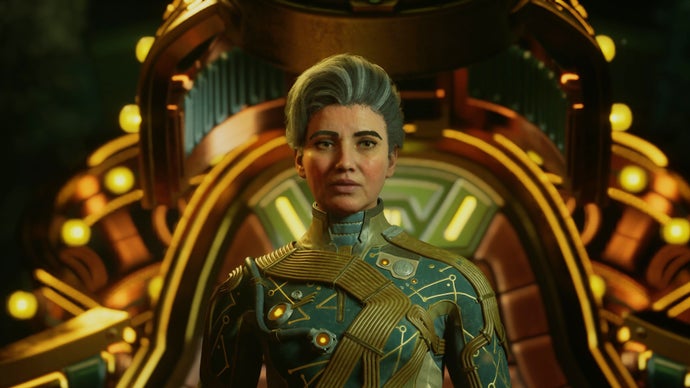
The Outer Worlds 2’s Faction System: A Missed Opportunity When Compared to Fallout: New Vegas’ Masterclass
When Obsidian Entertainment released Fallout: New Vegas in 2010, it didn’t just deliver another entry in a beloved post-apocalyptic franchise; it redefined what a player-driven RPG could be. Its intricate web of factions, each with distinct ideologies and tangible consequences for player choices, set a benchmark that few games have approached since. Now, with the development of The Outer Worlds 2 explicitly referencing Fallout: New Vegas as a “natural comparison” and a “touchstone,” we at Gaming News find ourselves examining the ambitious scope of Obsidian’s latest venture and, crucially, where it appears to fall short in replicating the profound impact of its predecessor’s faction writing. The success of any ambitious RPG hinges not only on its gameplay mechanics and narrative but, perhaps most importantly, on how it integrates and makes meaningful the interactions with the powerful entities that shape its world. This is where The Outer Worlds 2, despite its clear aspirations, stumbles when placed under the unforgiving gaze of Fallout: New Vegas.
Fallout: New Vegas’s Unrivaled Faction Interconnectivity: A Blueprint for Player Agency
The genius of Fallout: New Vegas lay in its deeply intertwined faction system. It wasn’t simply a matter of picking a side and receiving rewards; each major faction – the New California Republic (NCR), Caesar’s Legion, Mr. House, and the Yes Man (representing independent player choice) – possessed its own intricate lore, motivations, and, most importantly, interdependencies. Decisions made in favor of one faction invariably had repercussions for others, often in ways that were both surprising and intellectually stimulating.
The Nuance of Ideological Alignment in New Vegas
Fallout: New Vegas masterfully presented a spectrum of ideologies, forcing players to grapple with complex moral quandaries. The NCR, a sprawling, bureaucratic, and often corrupt democratic republic, represented a semblance of returning civilization, yet its expansionist policies and military overreach created significant unrest. Conversely, Caesar’s Legion offered a brutal, authoritarian, and slave-owning vision of order, built on a twisted interpretation of ancient Rome. While undeniably monstrous, the Legion provided a stark contrast to the NCR’s perceived failings, offering a grim but efficient form of societal control.
This duality allowed players to genuinely question which path, if any, was “right.” There was no single, unambiguous good or evil. Players could find merit in the NCR’s desire for order, even while recognizing its flaws, or be repulsed by the Legion’s barbarity yet acknowledge its effective suppression of chaos. This shades of gray were further complicated by Mr. House, the enigmatic techno-capitalist visionary whose focus on technological advancement and profit offered a third, more detached path. His ambition was to rebuild civilization through economic might and technological superiority, a vision starkly different from the militaristic or democratic approaches of the other factions.
Consequences That Reshaped the Wasteland
The true power of Fallout: New Vegas’s faction system was its demonstrable impact on the game world. Aligning with the NCR might see their patrols increase in certain areas, while supporting Caesar’s Legion could lead to the subjugation of independent settlements and the enslavement of their inhabitants. Actions against one faction could lead to open warfare, cutting off access to their quests, vendors, and unique rewards. Conversely, meticulous diplomatic maneuvering or clever quest resolution could allow for détente or even alliances between seemingly irreconcilable groups.
The ability to play multiple factions against each other, leveraging their rivalries for personal gain, was a cornerstone of the game’s replayability and emergent storytelling. For instance, one could undertake quests for the NCR to gain their trust, only to sabotage their efforts in favor of the Legion, leading to a dramatic shift in regional power. This level of dynamic world-building, where player choices had visible and lasting consequences, fostered an unparalleled sense of immersion and meaningful choice. The game actively rewarded players for understanding the intricate political landscape and exploiting it to their advantage.
Companion Relationships and Faction Loyalty
Furthermore, Fallout: New Vegas brilliantly wove companion characters into the faction system. Companions often had their own allegiances or strong opinions about the various factions, and player choices could strain or strengthen these relationships. Boone, a former NCR Ranger haunted by war crimes, would react viscerally to the Legion’s brutality. Veronica, a Brotherhood of Steel initiate, struggled with the organization’s isolationist tendencies and her own desire for broader engagement. These personal stakes added another layer of emotional depth to the political machinations, making the player’s decisions feel even more significant. The game understood that a player’s emotional investment in their companions was a powerful tool for reinforcing the weight of their choices.
The Outer Worlds 2’s Faction Landscape: Aspirations Versus Realization
The Outer Worlds 2, developed by Obsidian and drawing heavily from their pedigree, has clearly aimed to recapture the magic of Fallout: New Vegas. The studio’s acknowledgment of the former’s influence suggests a conscious effort to replicate its deep RPG systems and focus on factionalism. However, based on the glimpses we’ve had and the critical reception of its predecessor, The Outer Worlds 2 appears to be struggling to achieve the same level of factional depth and consequence.
Broad Strokes Instead of Fine Details: A Surface-Level Factionalism
In contrast to the granular complexity of New Vegas, the initial impressions of The Outer Worlds 2 suggest a more generalized approach to its factions. While there are indeed multiple corporations and groups vying for power in the Halcyon colony, the lines between them often feel less distinct, and their individual motivations less nuanced. The game seems to present a more binary choice between corporate dominance and the various forms of resistance or rebellion.
The primary corporations, such as Spacer’s Choice, Omni-Consumer Products (OCP), and others, often represent broadly defined corporate greed and exploitative capitalism. While this is a relevant theme, it lacks the ideological subtlety seen in New Vegas. The NCR wasn’t just “the government”; it was a flawed democracy struggling with its own identity. Caesar’s Legion wasn’t just “the bad guys”; it was a socio-political experiment with its own twisted logic. In The Outer Worlds 2, the overarching antagonists are often monoliths of corporate malfeasance, which, while understandable, can feel less like complex political entities and more like generalized obstacles.
Limited Impact of Player Choices on the Factional Landscape
A key area where The Outer Worlds 2 risks falling short is in the tangible impact of player choices on the factional ecosystem. In Fallout: New Vegas, siding with the Legion could lead to the destruction of NCR bases, the enslavement of populations, and a complete reshaping of the Mojave’s political map. The game visually and narratively reflected these seismic shifts.
The first The Outer Worlds game, and by extension the anticipated sequel, seems to offer a more contained experience. While players can gain or lose reputation with various factions and unlock unique questlines or gear, the overall state of the world doesn’t appear to undergo the same radical transformations. The game might present a scenario where a player chooses to support one corporation over another, but the fundamental power structures and the existence of other factions often remain largely intact. This can lead to a feeling of superficiality, where choices feel significant in the moment but don’t create lasting, systemic changes to the game’s world. The developers of The Outer Worlds 2 need to ensure that our actions don’t just alter dialogue or vendor prices but fundamentally shift the balance of power and the very fabric of the colonies we explore.
The Blandness of Ideological Conflict in Halcyon
The ideological debates in The Outer Worlds 2, while present, lack the provocative edge and depth found in Fallout: New Vegas. The exploration of corporate control and its human cost is a valid theme, but it’s often presented with less philosophical rigor. The game could benefit from exploring more complex ethical dilemmas, where no choice is truly “good,” and every path has significant drawbacks.
For example, in Fallout: New Vegas, players could be drawn to the Legion’s ruthless efficiency and order, even while abhorring its methods. They could see the appeal of Mr. House’s vision of a technologically advanced utopia, despite his cold, utilitarian approach to human life. These factions offered a genuine intellectual challenge, forcing players to confront their own values and consider difficult trade-offs. In The Outer Worlds 2, the distinctions between corporate entities and their opposition can sometimes feel less like nuanced ideological divides and more like variations on a theme of corporate dystopia. The struggle for the soul of Halcyon needs more than just corporate titans and their victims; it needs conflicting visions of society, each with its own compelling arguments and inherent flaws.
How The Outer Worlds 2 Can Learn from New Vegas’s Handling of Power
To truly outrank its inspirations and deliver on its promise, The Outer Worlds 2 must meticulously study and implement the lessons learned from Fallout: New Vegas, particularly in how it portrays and interacts with power. This means moving beyond superficial representations and delving into the intricate mechanics of factional influence, player-driven consequences, and the moral ambiguity of wielding significant authority.
Deepening the Mechanics of Factional Influence
The Outer Worlds 2 needs to introduce mechanics that demonstrate the tangible influence of its factions. This could involve:
- Territorial Control: Player actions could directly lead to one faction gaining control over specific regions or outposts, altering patrol routes, available resources, and the general atmosphere of that area. For instance, helping the Board consolidate power in a sector might lead to increased security patrols but also better infrastructure and access to advanced technology, while supporting a rebel group might lead to a more chaotic, but potentially freer, environment with limited resources.
- Economic Impact: Decisions should have a discernible effect on the galactic economy. Supporting a particular corporation could lead to that entity dominating certain markets, influencing the prices of goods and services across various colonies. Conversely, disrupting a faction’s supply lines could lead to shortages and increased desperation.
- Ideological Spread: Beyond mere territory, factions should have a visible impact on the populace. Player choices could influence the prevailing ideology in a region, leading to changes in NPC behavior, available quests, and even the visual aesthetic of settlements. If a faction promoting a specific philosophy gains prominence, the game should reflect that through its NPCs’ dialogue, their attire, and their general outlook on life.
- Dynamic Relationships: The interdependencies between factions in The Outer Worlds 2 need to be far more pronounced. A move that benefits one faction should inherently create a disadvantage or a challenge for another, forcing the player to constantly weigh their options and consider the ripple effects of their alliances. This could involve sabotaging one faction’s recruitment drive to benefit another, or brokering temporary truces between warring entities for a shared objective.
Ensuring Meaningful Consequences for Player Actions
The illusion of choice is a common pitfall in RPGs. The Outer Worlds 2 must avoid this by ensuring that player decisions have real and lasting consequences:
- Irreversible Decisions: Certain major choices should have irreversible outcomes. If a player decides to destroy a faction’s primary base of operations, that faction should be effectively removed from contention, or at least severely crippled, for the remainder of the game. This raises the stakes and makes each significant decision feel more impactful.
- Shifting Power Balances: The overall balance of power in the game’s universe should be fluid and responsive to player input. If the player consistently aids a particular faction, that faction should rise to prominence, potentially becoming the dominant force in Halcyon. This dynamic shift makes the player feel like a genuine agent of change.
- NPC Reactions and World State: The game world and its inhabitants should react dynamically to the player’s factional allegiances. NPCs should comment on the player’s known affiliations, and their dialogue and behavior should change accordingly. Settlements might celebrate or fear the player based on their chosen path, and even the landscape itself could reflect the dominant factional influence.
- Faction Collapse or Flourishing: Instead of factions merely existing in stasis, their fates should be tied to player actions. A faction that is consistently undermined by the player could collapse, leading to new power vacuums and emergent challenges. Conversely, a faction that the player champions could flourish, expanding its reach and influence throughout the game world.
Navigating the Moral and Ideological Complexities
The Outer Worlds 2 has a golden opportunity to present players with genuinely difficult ethical choices, mirroring the brilliance of Fallout: New Vegas:
- Ambiguous Morality: The game should resist the urge to paint any faction as purely good or evil. Each entity should possess a complex mix of admirable qualities and disturbing flaws. Players should be forced to choose between imperfect options, where supporting one faction means compromising on certain values or accepting negative consequences for others.
- Challenging Player Beliefs: The narrative should actively challenge the player’s preconceived notions. It should present situations where the “bad guys” have valid points, or where the “good guys” are hypocritical or incompetent. This intellectual engagement is what elevates RPGs beyond simple power fantasies.
- The Player as an Agent of Change (or Destruction): The player should be able to shape the very ideologies that drive the factions. Through their actions and dialogue, they could influence a faction’s direction, potentially steering it towards a more benevolent or a more tyrannical path. This level of player agency in shaping factional philosophy is a hallmark of truly exceptional RPG design.
The Key to Outranking: The Powerful and Their Portrayal
Ultimately, the success of The Outer Worlds 2 in capturing the magic of Fallout: New Vegas – and in outranking comparative articles – will hinge on how it handles The Powerful. This refers not just to the dominant factions themselves, but to the systems of power they represent, the individuals who wield it, and the profound consequences that player interaction with this power can unleash.
Fallout: New Vegas understood that true faction writing isn’t about creating distinct groups with unique colors; it’s about crafting living, breathing entities with competing desires, flawed logic, and the capacity to shape entire worlds based on the player’s engagement. It offered a tapestry of political intrigue where every thread mattered, and where the player, as the Courier, was the needle that could reweave the entire design.
If The Outer Worlds 2 is to truly honor its inspirations and ascend to the pantheon of great RPGs, it must demonstrate a similar mastery. It must ensure that the factions are not merely quest-givers or reputation meters, but complex, influential forces whose very existence and dominance are shaped by the player’s choices. The narrative and mechanical integration of power and its wielders will be the defining factor, dictating whether The Outer Worlds 2 becomes another admirable but ultimately derivative title, or a true successor that expands upon the legacy of Fallout: New Vegas and sets a new standard for player agency and factional depth in role-playing games. The potential is immense, but realizing it requires a commitment to the granular detail and profound impact that made Fallout: New Vegas an enduring masterpiece.