The Outer Worlds 2 and the Enduring Grip of Capitalism: Power’s Inevitable Abuse
The promise of The Outer Worlds 2 is not merely one of expanded galaxies and richer narratives, but a continuation and amplification of the incisive social commentary that defined its predecessor. Launched in 2019, the original The Outer Worlds masterfully wove a tapestry of satirical brilliance, dissecting the often-humorous, yet profoundly disturbing, ramifications of unfettered capitalistic ideals and the insidious ways market forces intertwine with those in positions of authority. As we eagerly anticipate the sequel’s arrival, it becomes abundantly clear that Obsidian Entertainment is not shying away from these potent themes. Instead, they are delving deeper, presenting us with a new frontier for exploration and exploitation. The introduction of a formidable governing trio vying for control over the nascent colony of Arcadia, with our protagonist, an Earth Directorate hero, inexplicably at the nexus of these power struggles, sets the stage for another compelling examination of humanity’s societal flaws, magnified under the cold, indifferent vacuum of space.
The Timeless Struggle: Power, Inequality, and The Outer Worlds 2’s Philosophical Core
The core message, encapsulated in the now-famous adage, “People who have power tend to abuse the people who don’t,” is not a fleeting observation but a foundational pillar of Obsidian’s narrative design. As Creative Director Leonard Boyarsky wryly notes, the persistence of these issues is, sadly, a constant. He expresses a sarcastic shock that these fundamental societal problems have not, by some miracle, resolved themselves. This sentiment underscores the developers’ deliberate approach to crafting resonant narratives: by focusing on universal and timeless themes, they ensure their critiques remain relevant and impactful, transcending the ephemeral nature of current events. The exploration of power dynamics and the precarious balance thereof has been a hallmark of Obsidian’s work, and it is central to the experience of the The Outer Worlds universe. Whether confronting the overt authoritarianism of the Protectorate, a regime that makes no pretense of its dictatorial nature, or navigating the more insidious propaganda of Auntie’s Choice, which artfully spins the illusion of self-determination while ultimately serving corporate interests, players are constantly confronted with the stark reality that those who possess power will inevitably seek to leverage it, often at the expense of the disenfranchised. This enduring principle, observed across millennia of human history, forms the bedrock upon which The Outer Worlds 2 builds its expansive new world.
Arcadia Under Siege: A New Triumvirate of Control
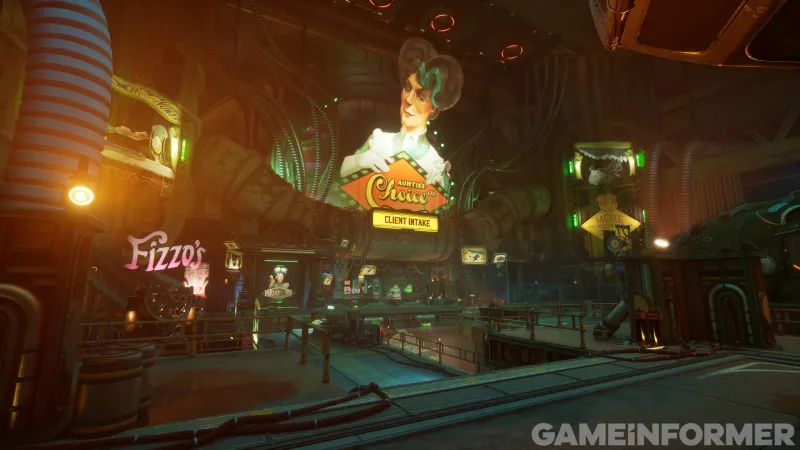
In The Outer Worlds 2, the colonial landscape of Arcadia has become the battleground for a new, potent triumvirate of competing factions. This stark reality is further complicated by the unexpected merger of two previously dominant entities from the first game: the consumer-focused Spacer’s Choice and the healthcare and pharmaceutical giant Auntie Cleo’s. This strategic consolidation has birthed the formidable entity known as Auntie’s Choice. This powerful merchant conglomerate now stands alongside the regal authority of the Monarchy (represented by the Protectorate) and the spiritual dominion of the Church (the Order of the Ascendant), forming a complex and volatile ecosystem of control. The implications of this merger are profound, creating a unified commercial force with potentially vast resources and influence.
The genesis of this merger, as revealed by Boyarsky, stemmed from a collaborative effort by narrative designers who had previously contributed to the original game. Despite their subsequent departure from the company, their vision for this organizational amalgamation proved prescient. Boyarsky highlights that the union of Spacer’s Choice and Auntie Cleo’s was a logical and almost inevitable evolution within the narrative. These two corporations, he asserts, possessed the most significant and pervasive presence across the various colonies. Their combined strength, therefore, represented a “no-brainer” move to consolidate power and market dominance. This merging not only streamlines the corporate landscape but also creates a more concentrated and potent force that players will need to contend with. Game Director Brandon Adler further teases that the player’s journey will involve navigating the intricate machinations of Auntie’s Choice and understanding how this new, merged entity wields its considerable influence within the overarching power struggle for Arcadia’s future. The very structure of power in this new setting has been reshaped, offering fresh challenges and deeper narrative possibilities.
Beyond Timeliness: The Universal Truths of Corporate Governance
When questioned about the potential influence of real-world shifts in capitalistic thought on the development of The Outer Worlds 2, Obsidian maintains a deliberate distance from temporal specificity. Boyarsky emphasizes that their focus remains on universal themes. The reasoning behind this approach is pragmatic: grounding the narrative too closely to contemporary issues risks rendering it quickly dated. History, both ancient and recent, provides an ample and consistent wellspring of material for exploring the enduring nature of power and its inherent corruptibility.
The core tenet that “people who have power tend to abuse the people who don’t” is presented not as a commentary on a specific economic climate, but as a fundamental observation of human behavior that has manifested repeatedly throughout recorded history. This philosophical stance allows Obsidian to craft narratives that resonate across generations, touching upon the innate struggles between the powerful and the powerless, regardless of the prevailing economic system. This commitment to timeless themes ensures that The Outer Worlds 2 will offer a critique of capitalism that is as relevant and sharp as its predecessor, even as the specific machinations of corporate greed and political maneuvering evolve. The developers are less concerned with reflecting the current zeitgeist and more invested in dissecting the perennial flaws in societal structures that manifest under any system where power is concentrated.
The Economic Ecosystem of Arcadia: A Closer Look at the Factions
The colonial society of Arcadia, as depicted in The Outer Worlds 2, is intricately structured around a delicate, and often volatile, balance of power between three dominant factions. Understanding the distinct ideologies and operational methodologies of each is crucial to grasping the overarching narrative and the player’s role within it.
Auntie’s Choice: The Merchant Conglomerate’s Iron Fist in a Velvet Glove
The formation of Auntie’s Choice represents a significant shift in the game’s economic and political landscape. This merger between Spacer’s Choice and Auntie Cleo’s creates a colossal entity that embodies the modern, multifaceted corporation. Spacer’s Choice, known for its ubiquitous presence and focus on mass-marketed products and services, often with a questionable emphasis on quality and ethical sourcing, now joins forces with Auntie Cleo’s, a powerful entity primarily associated with pharmaceuticals, medical supplies, and a seemingly benevolent corporate façade.
The fusion allows Auntie’s Choice to exert influence across a broader spectrum of the colonial economy and populace. Their primary objective, much like their constituent parts, is profit maximization. However, their methods are likely to be more sophisticated and far-reaching due to their consolidated power. We can anticipate Auntie’s Choice employing aggressive marketing campaigns, leveraging their combined resources to control supply chains, and potentially engaging in price gouging or the creation of artificial scarcity to drive demand and profit. The narrative implications are significant: this entity likely employs a blend of public relations and manipulative tactics to maintain an image of helpfulness and necessity, all while pursuing its core capitalistic agenda. The player may find themselves entangled in scenarios involving unfair labor practices, exploitative consumer contracts, or the manipulation of essential resources to their benefit. Their aim is not necessarily overt oppression, but a subtle, pervasive control exerted through economic leverage.
The Illusion of Choice and the Reality of Control
A key aspect of Auntie’s Choice’s appeal will likely be its ability to present a veneer of providing solutions and improving lives. Spacer’s Choice always prided itself on making goods accessible, and Auntie Cleo’s ostensibly focused on well-being. United, they can offer a comprehensive package of “essential” goods and services, fostering a sense of dependency. This creates a narrative where citizens believe they are making free choices by patronizing Auntie’s Choice, unaware of the extent to which the corporation shapes their options and dictates their economic reality. The “better way of spinning things so you feel like you’re working for yourself” that Boyarsky alluded to is likely the central persuasive tactic of this merged entity. Players will need to discern the true nature of Auntie’s Choice’s offerings and challenge the illusion of fair dealing.
The Protectorate: The Legacy of Authoritarian Rule
The Protectorate represents a more direct and historically familiar form of governance – a clear-cut authoritarian regime. In the first The Outer Worlds, this faction was characterized by its rigid hierarchical structure, its unwavering loyalty to the Halcyon Corporate Assembly, and its willingness to enforce its will through strict control and suppression. In The Outer Worlds 2, the Protectorate likely continues this legacy, embodying the dangers of centralized, unchecked power.
Their methods are likely to be overt and forceful. Expect to encounter strict regulations, heavy surveillance, and swift, often brutal, punishment for dissent or non-compliance. The Protectorate’s ultimate goal is likely the maintenance of order and stability, as they define it, ensuring the smooth operation of their controlled territories, often at the expense of individual liberties. This faction provides a stark contrast to the more nuanced economic manipulations of Auntie’s Choice, offering a direct confrontation with the realities of tyranny. Players may find themselves caught between the oppressive hand of the Protectorate and the manipulative grasp of the corporations, forced to make difficult choices about which form of control they can best navigate or resist.
The Dictatorship’s Shadow
The Protectorate’s defining characteristic, as Boyarsky states, is its unapologetic nature as a complete dictatorship. This means decisions are made from the top down with little to no input from the general populace. Their authority is absolute, and their actions are dictated by the perceived needs of the state, which invariably aligns with the interests of those in power. This can manifest in various ways, from forced labor conscription to the suppression of information and the curtailment of movement. Engaging with the Protectorate will likely involve navigating a landscape of fear and obedience, where the slightest infraction can have severe consequences. Their presence serves as a constant reminder of the direct human cost of unchecked political power.
The Order of the Ascendant: The Spiritual Arm of Control
The Order of the Ascendant, representing the religious or spiritual element within Arcadia’s power structure, offers a different, yet equally potent, form of influence. While the Protectorate wields the sword and Auntie’s Choice manipulates the purse strings, the Order likely operates on the level of belief, ideology, and the manipulation of faith. In many societies, religious institutions have historically held significant sway, shaping moral codes, influencing public opinion, and providing a framework for societal order.
The Order of the Ascendant can be expected to leverage its spiritual authority to maintain control. This might involve promoting doctrines that emphasize obedience to authority, discourage questioning, and promote the virtues of sacrifice and subservience, particularly for the masses. They could offer solace and hope to the downtrodden, but this solace might be contingent upon unwavering faith and adherence to the Order’s teachings, which may, in turn, serve the interests of the other power factions. Their influence is often more subtle, operating on the psychological and emotional needs of individuals. Players might encounter situations where they must navigate religious dogma, challenge spiritual manipulation, or even forge alliances with elements within the Order who question its current trajectory.
The Perils of Dogma and Faith
The Order of the Ascendant’s influence highlights the dangers of unchecked dogma. When faith becomes a tool for control rather than genuine spiritual guidance, it can be used to justify oppression, stifle critical thinking, and maintain existing power structures. The player’s interaction with this faction could involve uncovering hypocrisy within its ranks, exposing manipulative practices, or seeking to awaken a populace lulled into compliance by spiritual rhetoric. The Order’s power lies in its ability to shape the hearts and minds of the people, making it a formidable, albeit less visible, force in the struggle for Arcadia.
The Developer’s Intent: Crafting a Resonant Social Commentary
Obsidian Entertainment’s deliberate approach to thematic development, as articulated by Leonard Boyarsky, is a testament to their commitment to creating games that offer more than just escapism. Their consistent focus on universal themes of power, exploitation, and the inherent inequalities within societal structures ensures that The Outer Worlds 2 will resonate deeply with players on an intellectual and emotional level.
The Unchanging Nature of Power Dynamics
Boyarsky’s pointed observation that “these are kind of unfortunately timeless themes that we have to deal with” is a critical insight into the game’s enduring appeal. The cyclical nature of power and its abuse is not a recent phenomenon, nor is it exclusive to any single political or economic system. By focusing on these fundamental aspects of the human condition, Obsidian avoids the trap of creating a narrative that is relevant only for a fleeting moment. Instead, they craft a story that speaks to the persistent struggles of humanity, making The Outer Worlds 2 a commentary that can be appreciated and dissected for years to come. The developers are not merely reflecting the current state of the world; they are excavating the foundational truths that have shaped it and will continue to shape it.
A Mirror to History, Not Just the Present
The decision to avoid being overly timely is a strategic one. While current events can inspire, tethering a narrative too closely to them risks its rapid obsolescence. In contrast, by drawing from the vast wellspring of historical patterns of power and abuse, Obsidian ensures that their critique of capitalism remains potent and relevant. The rise and fall of empires, the struggles of the working class against the aristocracy, the manipulation of the masses by religious or political leaders – these are all recurring motifs that The Outer Worlds 2 can tap into. This timeless quality is what allows for a deeper, more meaningful engagement with the game’s themes, prompting players to consider how these dynamics play out not just in a fictional galaxy, but in their own world as well.
Obsidian’s Journey: Microsoft Acquisition and Narrative Integrity
The acquisition of Obsidian Entertainment by Microsoft, and its subsequent integration into Xbox Game Studios, is a significant development that often raises questions about creative control and narrative direction. However, both Leonard Boyarsky and Brandon Adler have indicated that this transition had no discernible impact on the core messaging or thematic direction of The Outer Worlds 2. This assertion is crucial, as it reassures players and observers that Obsidian’s commitment to sharp social commentary remains uncompromised.
The developers’ consistent focus on the inherent flaws within power structures, regardless of the entity wielding that power, suggests a core philosophical commitment that transcends corporate ownership. Whether operating as an independent studio or as part of a larger conglomerate, Obsidian’s narrative compass appears firmly set on exploring the complexities of human ambition, greed, and the perpetual struggle for balance between those who lead and those who follow. The fact that their messaging remains intact post-acquisition is a testament to the strength of their vision and the studio’s ability to maintain its artistic integrity.
Looking Ahead: The Player’s Role in Arcadia’s Destiny
As players prepare to embark on their journey in The Outer Worlds 2, they will be thrust into a colonial system rife with corruption, manipulation, and overt oppression. The intricate web woven by Auntie’s Choice, the Protectorate, and the Order of the Ascendant presents a multifaceted challenge. The choices players make, the alliances they forge, and the information they uncover will undoubtedly shape the destiny of Arcadia.
Will they find a way to break the cycle of power abuse, or will they become another cog in the machinery of exploitation? The enduring relevance of the themes explored by Obsidian Entertainment suggests that The Outer Worlds 2 will offer a thought-provoking and engaging experience, one that compels players to question the systems of power that govern not only fictional universes but also our own. The narrative promises to be a deep dive into the perpetual human struggle for fairness and autonomy in the face of overwhelming authority, a struggle that, as the developers themselves acknowledge, shows no signs of abating. The anticipation for this release is not just about exploring a new world, but about confronting timeless truths within a meticulously crafted and critically sharp satirical landscape.