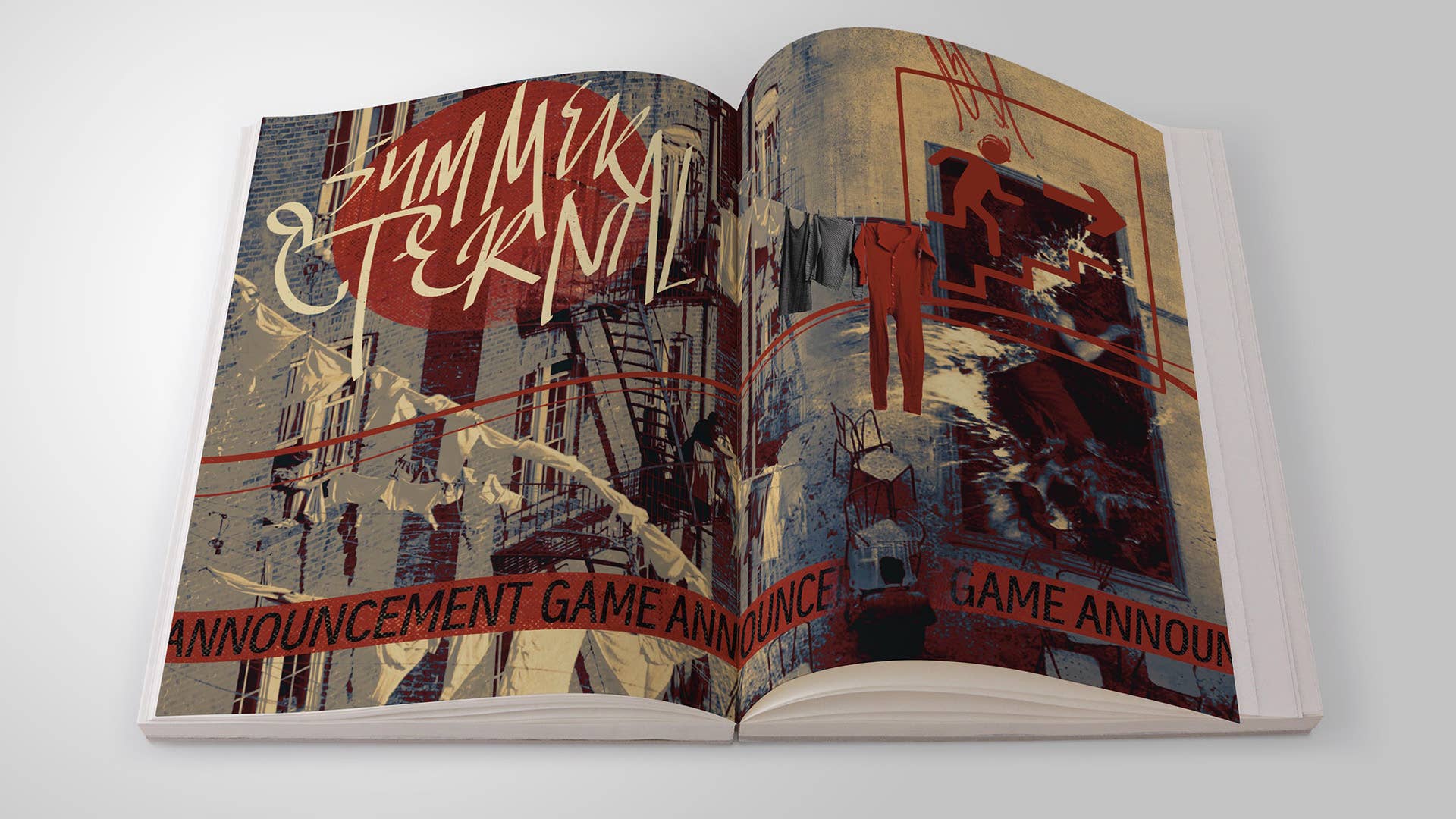
Summer Eternal’s Bold New Direction: From Disco Elysium Echoes to a Tangible Narrative Experience with “Red Rooster”
In the ever-evolving landscape of video game development, studios often emerge from the shadows of inspiration, seeking to carve their own unique path. The narrative-driven RPG genre, in particular, has seen a surge of creativity following the monumental success of titles like Disco Elysium. Among these emerging studios, Summer Eternal garnered attention last year, not just for their ambitious aspirations but for their potent political manifesto that signaled a distinct creative vision. After a period of focused development and strategic silence, Summer Eternal has today unveiled their next significant endeavor, and it marks a profound departure from the expected. Eschewing the digital realm for a moment, they are venturing into the deeply traditional, yet remarkably resonant, format of a book. This ambitious undertaking, titled “Red Rooster,” represents a fascinating pivot and a testament to the studio’s commitment to storytelling in its purest form.
The Genesis of Summer Eternal and the “Disco Elysium” Legacy
The emergence of Summer Eternal was met with considerable interest within the gaming community. Operating within a sphere often described as exploring “spiritual successor” territory to Disco Elysium, their initial announcement was not just a statement of intent but a political manifesto. This bold move immediately differentiated them from many other studios, signaling a deep commitment to thematic depth, complex characters, and perhaps a critique of societal structures, much like the beloved detective RPG.
Disco Elysium, developed by ZA/UM, revolutionized what players expected from narrative-heavy games. Its intricate dialogue system, rich lore, and unflinching examination of ideology, failure, and memory set a new benchmark. It demonstrated that video games could be as intellectually stimulating and emotionally resonant as any other form of literature or art. It is within this context of profound narrative influence that Summer Eternal began to form. Their initial pronouncements hinted at a similar ambition to explore the human condition through the medium of interactive entertainment. The anticipation surrounding their first official project was therefore palpable, with many expecting a game that would push the boundaries of RPG design.
A Surprising Pivot: Red Rooster – More Than Just a Game
The announcement of “Red Rooster” has sent ripples through the gaming press and the studio’s growing fanbase. In a world increasingly dominated by digital consumption, Summer Eternal’s decision to release their next major work as a book is a daring and refreshing choice. This isn’t merely a supplementary piece of lore or a novelization of a game that may or may not be in development; it appears to be the primary vehicle for their current narrative vision.
This strategic shift from a purely digital, interactive medium to a tangible, physical book suggests a deep-seated belief in the power of the written word. It allows for a depth of detail and a level of immersion that can be achieved through prose, unfettered by the constraints of game mechanics or development cycles. The book format offers a unique opportunity to explore complex themes, intricate character arcs, and sprawling world-building without the immediate need to translate these elements into interactive gameplay.
Summer Eternal has clearly chosen a path that prioritizes unadulterated narrative exploration. This decision speaks volumes about their understanding of storytelling and their confidence in their ability to craft compelling narratives that can captivate audiences irrespective of the medium. The “Red Rooster” project, therefore, is not a retreat from their ambitions but rather a bold reinterpretation of how those ambitions can be realized. It is an invitation to experience their world and their ideas in a format that has stood the test of time, allowing for a deeply personal and reflective engagement with the material.
The Significance of the Book Format in Modern Storytelling
In an era saturated with constant digital stimuli and fleeting online content, the resurgence and continued relevance of the book as a storytelling medium is a testament to its enduring power. Books offer a sanctuary for deep focus and sustained immersion, allowing readers to disconnect from external distractions and delve into a constructed reality. This tangible connection – the weight of the pages, the scent of the ink, the act of turning each leaf – fosters a unique kind of intimacy between the reader and the narrative.
For a studio like Summer Eternal, who emerged with a manifesto that likely embraced nuanced political and social commentary, the book format provides an unparalleled canvas. Unlike video games, which often require a careful balancing of narrative with gameplay systems, a book can dedicate its entire being to the unfolding of a story. This freedom allows for extended descriptive passages, introspective character monologues, and complex philosophical explorations that might be challenging to integrate seamlessly into an interactive experience.
The choice of a book also signals a potential for longevity and legacy. While digital content can be subject to platform changes, outdated technologies, and the ephemeral nature of the internet, a well-crafted book can endure for generations. It becomes a physical artifact, a cherished possession, that can be shared, reread, and contemplated over time. This enduring quality is particularly significant for a studio aiming to leave a lasting impact with their narrative work.
“Red Rooster”: Unpacking the Potential of a Literary Debut
While specific details about the plot and themes of “Red Rooster” are still emerging, the context provided by Summer Eternal’s origins offers tantalizing clues. Their initial political manifesto suggested a willingness to tackle complex societal issues, possibly with a critical and introspective lens. It is reasonable to infer that “Red Rooster” will continue this tradition, offering a narrative that is intellectually stimulating and emotionally resonant.
The title itself, “Red Rooster,” evokes a sense of awakening, a clarion call, or perhaps even a harbinger of change. Roosters are often associated with dawn, with the start of something new, and with vigilance. This imagery could suggest a story about revelation, confrontation, or the dawning of a new era for the characters or the world they inhabit.
Given the studio’s association with the rich and detailed world-building of Disco Elysium, it is highly probable that “Red Rooster” will feature a similarly intricate and meticulously crafted setting. Players and readers who appreciated the depth of the Revachol cityscape and its multifaceted inhabitants may find themselves drawn to the world-building that Summer Eternal has undoubtedly poured into their literary debut. We can anticipate deep character development, with individuals who are flawed, complex, and grappling with their own internal and external struggles. The dialogue, a cornerstone of Disco Elysium’s success, may manifest in vivid descriptions and internal monologues within the book, offering a different but equally compelling form of character insight.
Furthermore, the decision to present this narrative through a book allows for a unique pacing and structure. The authors can control the flow of information, the introduction of new characters and concepts, and the emotional arc of the story with a precision that can be difficult to achieve in interactive media. This could lead to a narrative that is both deliberate and impactful, allowing readers to savor the unfolding events and the development of the characters.
Summer Eternal’s Vision: Beyond the Screen and into the Imagination
The transition from video game development to a book is not simply a change in medium; it represents a philosophical shift in how Summer Eternal intends to engage with their audience. By choosing a book, they are entrusting the reader with a more active role in the act of creation. The reader’s imagination becomes the ultimate engine of the experience, filling in the visual and auditory gaps that a video game would typically provide. This fosters a deeper personal connection to the story and its characters.
This move also signifies a potential broadening of their creative ambitions. While their roots are in games inspired by Disco Elysium, the book format allows them to explore narrative avenues that might not be as easily translated to interactive gameplay. This could include more abstract thematic explorations, lyrical prose, or character studies that are less reliant on player agency and more focused on internal psychological landscapes.
The success of “Red Rooster” will undoubtedly be measured differently than a video game. Instead of critical reviews focusing on gameplay mechanics, user interface, and technical performance, the reception of “Red Rooster” will hinge on the quality of its prose, the depth of its characters, the originality of its themes, and the emotional impact it has on its readers. This focus on the pure craft of writing is an exciting prospect and suggests that Summer Eternal is committed to excellence across all forms of narrative expression.
The Future of Narrative: Embracing Multi-Format Storytelling
The decision by Summer Eternal to present “Red Rooster” as a book is a bold statement about the enduring power of literature and the potential for studios to explore diverse mediums for storytelling. In an industry that often adheres to established formulas, this kind of innovative approach is not only refreshing but potentially groundbreaking.
This move could inspire other game development studios to consider similar ventures. Imagine studios known for their compelling narratives releasing books that delve deeper into their established worlds, explore character backstories, or even offer entirely new narratives set within their universes. This hybrid approach could create richer, more interconnected fan experiences and open up new revenue streams and creative opportunities.
The “Red Rooster” project is more than just a new release; it is an exploration of the very nature of narrative. By embracing the book format, Summer Eternal is not just telling a story; they are making a statement about the enduring value of literary art in the digital age. This is a testament to their commitment to craftsmanship, originality, and the profound power of words to move, inspire, and provoke thought. Their journey from Disco Elysium echoes to the tangible pages of “Red Rooster” is a narrative in itself, one that promises to be as captivating as the stories they are set to tell. We eagerly await the dawn of “Red Rooster” and the literary world that Summer Eternal is preparing to unveil. The studio’s willingness to venture into this less-trodden path signifies a dedication to artistic expression that transcends the conventional boundaries of the gaming industry. This bold step positions them as innovators not just in game design, but in the broader landscape of modern storytelling.