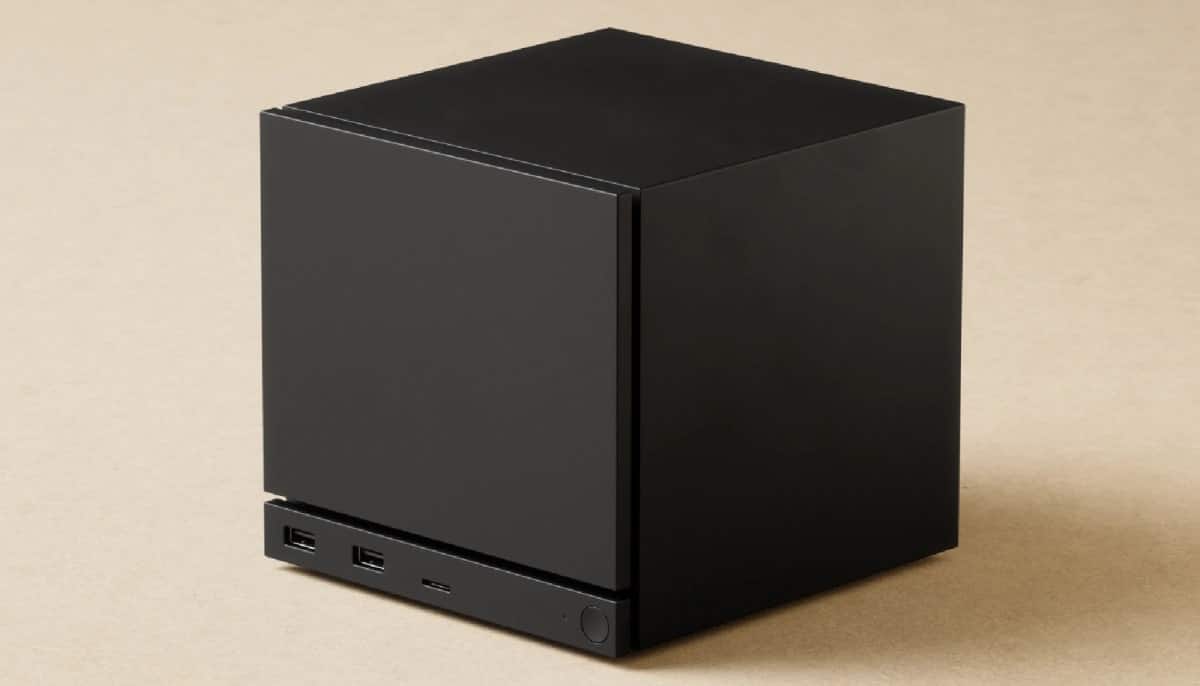
Steam Machine: Unveiling the Future of PC Gaming on Your TV – Expected Release, Price, Power, and Specifications Deep Dive
The landscape of PC gaming has always been defined by its flexibility, its raw power, and its boundless potential. Yet, for many, the dream of experiencing this ultimate gaming freedom hasn’t fully translated to the comfort of their living room. While consoles have long dominated the television screen, a persistent whisper has echoed through the gaming community: the desire for a more seamless, powerful, and PC-centric entertainment hub. This is where the Steam Machine concept, and its potential resurgence, ignites our imagination. At Gaming News, we are diving deep into what a modern Steam Machine could represent, exploring its expected release date, meticulously analyzing price predictions, dissecting its power potential, and forecasting its specifications, all to paint a comprehensive picture of this exciting, yet still somewhat elusive, gaming revolution.
For years, the initial foray into the Steam Machine market, spearheaded by Valve, promised a convergence of PC gaming’s depth and breadth with the accessibility and social nature of console gaming. While that initial push didn’t fully capture the mainstream imagination, the underlying desire for such a device remains potent. The burgeoning market for small form factor PCs, the increasing power of mobile chipsets, and the continued dominance of Steam as the premier PC gaming platform all point towards fertile ground for a revived Steam Machine. We envision a device that doesn’t just play games, but is the gateway to the entire Steam ecosystem, offering an unparalleled entertainment experience without compromise.
The Evolving Promise of the Steam Machine: From Past to Present Potential
The original Steam Machine initiative, launched around 2015, was an ambitious undertaking. Valve partnered with various hardware manufacturers to create a range of pre-built PCs designed to run SteamOS, a Linux-based operating system, and to be controlled with the unique Steam Controller. The goal was clear: to bring PC gaming, with its vast library and customization options, to the living room in a user-friendly, console-like package.
However, the market was not entirely ready. The limitations of SteamOS at the time, particularly regarding game compatibility, and the price points of some of the early models, meant that the Steam Machine didn’t achieve widespread adoption. Many users opted for traditional gaming PCs or continued to use existing consoles. Yet, the core idea – a dedicated, powerful, and accessible PC gaming device for the living room – has never truly faded.
In the years since, the PC gaming landscape has evolved dramatically. The rise of 4K gaming, the widespread adoption of SSDs for rapid loading times, and the ever-increasing graphical fidelity of AAA titles have pushed the boundaries of what’s possible. Furthermore, Valve’s continued development of SteamOS, now powered by the Arch Linux-based Steam Deck operating system, has made significant strides in game compatibility through tools like Proton. This technological maturation, combined with a renewed focus on user experience, sets the stage for a potential comeback of the Steam Machine concept, this time with a much stronger foundation.
Expected Release Date: Navigating the Hype and the Horizon
Predicting the expected release date for a modern Steam Machine is a speculative endeavor, but one grounded in industry trends and Valve’s demonstrated commitment to hardware innovation. Valve’s success with the Steam Deck has undeniably revitalized interest in dedicated PC gaming hardware outside of the traditional desktop tower. This success has likely provided Valve with invaluable experience in manufacturing, distribution, and software optimization for a mass-market gaming device.
While there have been no official announcements regarding a new Steam Machine line from Valve, the persistent demand and the logical next step following the Steam Deck’s triumph suggest that such a product is not outside the realm of possibility. We can infer potential release windows by observing Valve’s typical product development cycles and the broader industry landscape.
If a new Steam Machine were to be announced, it would likely follow a similar announcement and reveal strategy to the Steam Deck. This would involve a period of initial teasers, followed by a full reveal, and then a staggered release based on production capacity and regional availability. Given the current global supply chain challenges and the complexities of launching a new hardware product, a realistic expected release date for a fully realized Steam Machine, should it materialize, would likely be in the late 2025 to early 2026 timeframe. This would allow ample time for research and development, manufacturing ramp-up, and extensive beta testing to ensure a robust and polished product. However, it’s crucial to remember that this is an educated estimation, and Valve has a history of keeping its hardware development close to its chest. The success of the Steam Deck has undoubtedly provided a blueprint and a strong incentive for Valve to explore further dedicated hardware solutions.
Price Predictions: Balancing Power and Accessibility
The price predictions for a modern Steam Machine are intrinsically linked to its specifications and intended market positioning. The original Steam Machine offerings spanned a wide price range, from budget-friendly options to high-end gaming powerhouses. For a new iteration to succeed, it needs to strike a delicate balance between offering compelling performance and remaining accessible to a broad segment of PC gamers.
Considering the current market for pre-built gaming PCs and the capabilities of modern PC hardware, we can anticipate a tiered approach to pricing. A base model Steam Machine, designed to handle most popular PC titles at 1080p resolution with good settings, might start in the $799 to $999 range. This would likely feature a mid-range AMD APU or a combination of a lower-tier Intel CPU and an entry-level dedicated GPU.
A more powerful, mid-tier Steam Machine, capable of 1440p gaming and higher frame rates, could be priced between $1,199 and $1,499. This tier would likely include a more potent CPU, a mid-range to high-end dedicated GPU, and faster RAM and storage.
For enthusiasts seeking the ultimate living room PC gaming experience, a premium Steam Machine pushing into 4K gaming and ray tracing capabilities could command prices upwards of $1,799 to $2,499, or even higher, depending on the inclusion of top-tier components. These configurations would rival many custom-built gaming desktops.
The success of the Steam Deck has demonstrated that Valve is willing to absorb some upfront costs to build a strong user base. Therefore, it’s plausible that Valve might price the entry-level Steam Machine models competitively, aiming for volume and to solidify the platform’s presence. Furthermore, the availability of Steam’s extensive library, often featuring deep discounts and sales, would enhance the overall value proposition, making the initial hardware investment feel more justified over time. The inclusion of the Steam Controller or a similar innovative input device could also influence the final pricing, adding to the device’s unique appeal.
Power Potential: Charting the Performance Frontier
The power potential of a modern Steam Machine is arguably its most critical defining characteristic. To truly compete with both consoles and traditional gaming PCs, it must offer substantial performance capabilities. Leveraging the advancements in CPU and GPU technology, a new Steam Machine could deliver an exceptional gaming experience.
At the heart of a modern Steam Machine would likely be a powerful AMD APU (Accelerated Processing Unit) or a dedicated AMD or NVIDIA GPU. AMD’s APUs, like those found in the Steam Deck, have shown remarkable prowess in integrating CPU and GPU cores onto a single chip, offering impressive performance-per-watt. For a living room device, this integration is particularly attractive for its potential for smaller form factors and efficient power consumption.
We envision a base model Steam Machine utilizing a recent AMD Ryzen APU, perhaps an 8000 or 9000 series, with a strong integrated RDNA 3 or RDNA 4 graphics core. This would be sufficient to drive modern games at 1080p resolution with solid frame rates, especially when combined with efficient settings.
For a more robust performance tier, a dedicated GPU would be essential. This could range from an AMD Radeon RX 7600 or NVIDIA GeForce RTX 4060 for a mid-range machine, capable of handling 1440p gaming and even entry-level 4K. Higher-end configurations could feature an AMD Radeon RX 7800 XT or NVIDIA GeForce RTX 4070, pushing into serious 4K gaming territory with ray tracing capabilities enabled.
The power potential extends beyond raw graphical horsepower. Fast DDR5 RAM and NVMe SSD storage would be crucial for rapid game loading times and overall system responsiveness, mirroring the experience users expect from high-end gaming PCs and the latest consoles. The thermal management within the Steam Machine chassis will be paramount. Achieving high performance in a compact, quiet form factor requires sophisticated cooling solutions, likely involving custom heatsinks and efficient fan designs. Valve’s experience with the Steam Deck’s cooling system will undoubtedly inform these design choices, ensuring sustained performance without thermal throttling. The potential for efficient power management, allowing for lower TDP (Thermal Design Power) configurations without sacrificing significant performance, would also be a key advantage for a living room device.
Specifications: A Blueprint for the Ultimate Living Room PC
Delving into the detailed specifications of a potential new Steam Machine allows us to construct a comprehensive blueprint for this future gaming powerhouse. Based on current technological advancements and market trends, we can extrapolate a range of configurations that would satisfy diverse gaming needs.
Processor (CPU)
- Base Model: AMD Ryzen 5 7640HS or equivalent Intel Core i5. These offer a strong balance of multi-core performance for multitasking and gaming.
- Mid-Range: AMD Ryzen 7 7840HS or equivalent Intel Core i7. Providing enhanced processing power for more demanding titles and future-proofing.
- High-End: AMD Ryzen 9 7940HS or equivalent Intel Core i9. For enthusiasts seeking the absolute best CPU performance for gaming and creative workloads.
Graphics (GPU)
- Base Model: Integrated AMD RDNA 3 graphics (e.g., Radeon 780M) or an entry-level dedicated GPU like an NVIDIA GeForce RTX 3050 or AMD Radeon RX 6500 XT.
- Mid-Range: Dedicated AMD Radeon RX 7600 XT or NVIDIA GeForce RTX 4060. These GPUs are well-suited for 1440p gaming with higher settings.
- High-End: Dedicated AMD Radeon RX 7800 XT or NVIDIA GeForce RTX 4070. Capable of handling 4K gaming and demanding ray tracing effects.
Memory (RAM)
- Base Model: 16GB DDR5 RAM. This is the minimum required for a smooth modern gaming experience.
- Mid-Range: 32GB DDR5 RAM. Recommended for higher resolutions, complex textures, and multitasking.
- High-End: 32GB or 64GB DDR5 RAM. For users who push the boundaries of gaming and other demanding applications.
Storage
- Base Model: 512GB NVMe SSD. Essential for fast boot times and game loading.
- Mid-Range: 1TB NVMe SSD. Offers ample space for a substantial game library.
- High-End: 2TB NVMe SSD or a combination of SSD and a larger capacity HDD for bulk storage.
Operating System
- SteamOS (Linux-based): Optimized for gaming and the Steam ecosystem, leveraging Proton for broad Windows game compatibility. The advancements made with Steam Deck’s SteamOS are a strong indicator of its potential.
Connectivity
- Ports: Multiple USB-A ports (USB 3.2 Gen 2 or higher), USB-C ports (supporting DisplayPort Alt Mode and Power Delivery), HDMI 2.1 (for 4K@120Hz output), Ethernet port (Gigabit or 2.5GbE), Wi-Fi 6E, Bluetooth 5.3.
- Wireless: Integrated Wi-Fi 6E and Bluetooth 5.3 for fast, reliable wireless connectivity.
Form Factor and Design
- Compact and Quiet: A design that is aesthetically pleasing for a living room environment, prioritizing low noise levels and efficient cooling. This could range from a small form factor desktop tower to a more console-like box.
- Integrated Lighting and Customization: Potential for subtle RGB lighting and customizable cosmetic elements to match user preferences.
Input Devices
- Steam Controller 2.0 or Equivalent: A refined version of the innovative Steam Controller, or a new input solution specifically designed for the Steam Machine experience, offering unparalleled control for a wide range of game genres.
- Support for Standard Peripherals: Full compatibility with existing keyboards, mice, and gamepads.
These detailed specifications paint a picture of a versatile and powerful device, capable of delivering a premium PC gaming experience directly to the television. The ability to customize and upgrade certain components, where feasible, would further enhance its appeal to the PC gaming community.
The Steam Ecosystem Integration: More Than Just a Machine
The true power of a Steam Machine lies not just in its hardware but in its seamless integration with the vast and vibrant Steam ecosystem. This is where a modern Steam Machine can truly differentiate itself from consoles and other living room PC solutions.
Vast Game Library and Access
With direct access to the entirety of the Steam store, users would have at their fingertips hundreds of thousands of games, from the latest AAA blockbusters to indie darlings, classic titles, and everything in between. This unparalleled selection dwarfs any console’s exclusive library. The ongoing improvements to Proton have dramatically increased the compatibility of Windows games on SteamOS, meaning that the vast majority of the Steam library would be playable out of the box or with minimal configuration.
Steam Big Picture Mode Enhanced
Valve’s Big Picture Mode is already designed with living room use in mind, offering a controller-friendly interface for navigating Steam. A new Steam Machine would likely feature an even more refined and optimized version of Big Picture Mode, potentially with new features tailored for a dedicated hardware device. This would ensure intuitive navigation, easy game launching, and seamless access to community features.
Social Features and Community
Steam is more than just a storefront; it’s a thriving social platform. A Steam Machine would naturally inherit all of Steam’s social features, including friends lists, chat, profiles, game achievements, and community hubs. This allows for a shared gaming experience with friends, whether they are on the same Steam Machine, a gaming PC, or even a laptop. The potential for local multiplayer features and shared experiences on the couch is immense.
Cloud Saves and Cross-Platform Play
Steam Cloud synchronization would ensure that game progress is saved and accessible across multiple devices. This means a player could start a game on their Steam Machine and seamlessly continue their progress on a gaming PC or even a Steam Deck. Furthermore, where supported by individual games, cross-platform play with PC players would further expand the player pool and the longevity of multiplayer titles.
User Customization and Flexibility
Unlike closed console ecosystems, a Steam Machine offers a degree of customization and flexibility that PC gamers have come to expect. While pre-built, the underlying SteamOS provides access to the Linux command line for advanced users who wish to tweak settings, install additional software, or even dual-boot with Windows if hardware configurations allow. This adaptability is a core tenet of the PC gaming experience and would be a significant draw for a dedicated living room PC.
Beyond Gaming: Media and Entertainment Hub
A powerful Steam Machine wouldn’t be limited to just gaming. With SteamOS, users could install a wide range of other applications, turning it into a complete home entertainment hub. This could include media players, web browsers, streaming services, and even productivity software. The ability to seamlessly switch between gaming and other entertainment tasks within a single, elegantly designed device would be a major selling point.
The Future of Living Room PC Gaming: A Steam Machine Renaissance?
The resurgence of the Steam Machine concept, especially in the wake of the Steam Deck’s success, represents a significant opportunity to redefine PC gaming in the living room. By combining cutting-edge hardware, a vast software library, and the robust social infrastructure of Steam, a new Steam Machine could finally deliver on the promise of a truly seamless and powerful PC gaming experience for the television.
We at Gaming News believe that the convergence of market demand, technological advancement, and Valve’s demonstrated commitment to hardware innovation positions the Steam Machine for a potential comeback. The expected release date, price predictions, power potential, and detailed specifications we’ve outlined paint a compelling picture of a device that could finally bridge the gap between the ultimate flexibility of PC gaming and the comfortable, social experience of console gaming. While official announcements remain elusive, the signs are certainly encouraging for a future where the living room becomes a true bastion of PC gaming power. The advent of a well-executed Steam Machine would not only be a boon for gamers but a testament to the enduring evolution of personal computing and entertainment.