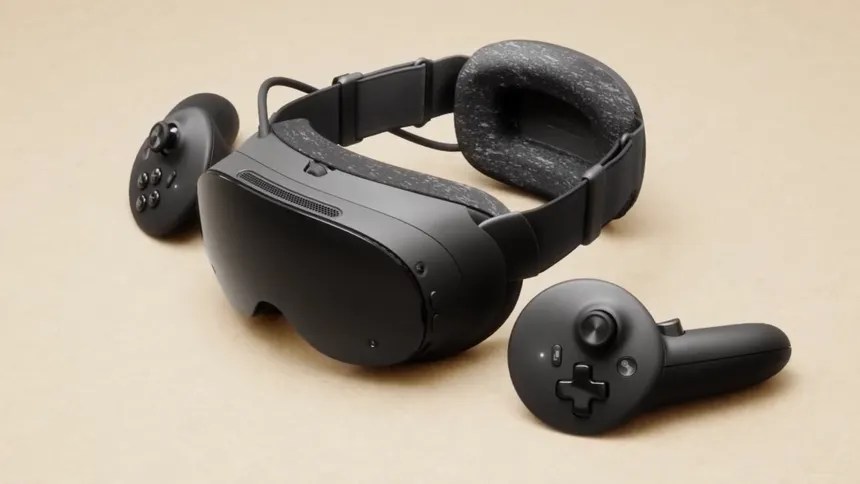
Steam Frame is Valve’s New Standalone VR Headset, Launching Early 2026: A Deep Dive into the Future of Immersive Gaming
The virtual reality landscape is on the cusp of a seismic shift. After years of anticipation and industry speculation, Valve, the titans behind the ubiquitous Steam platform, have officially unveiled their latest and most ambitious foray into immersive technology: the Steam Frame. This groundbreaking standalone VR headset, slated for a launch in early 2026, promises to redefine the boundaries of what’s possible in virtual entertainment, blending unparalleled high-end specs, excellent performance, and compatibility for desktop VR games into a single, elegant package. At Gaming News, we’ve delved deep into the forthcoming details, and what we’ve uncovered suggests that the Steam Frame is not just another VR headset; it’s a statement of intent, a clear indication that Valve is poised to reclaim its position at the forefront of virtual reality innovation.
The journey of VR has been a fascinating one, marked by rapid advancements and a persistent quest for accessibility and fidelity. From the early days of clunky prototypes to the sophisticated devices of today, the evolution has been driven by a desire to create experiences that are not merely viewed but truly lived. Valve, having been instrumental in the development of the original HTC Vive and later the PC-dependent Valve Index, understands the intricacies of delivering compelling VR. The Steam Frame represents a significant departure, embracing the freedom of a standalone VR headset while retaining the raw power that PC-powered VR enthusiasts have come to expect. This dual-pronged approach addresses a key challenge in the VR market: bridging the gap between the convenience of untethered experiences and the graphical prowess of high-fidelity desktop gaming.
The Dawn of a New Era: Steam Frame’s Standalone Prowess and Desktop Integration
The most striking aspect of the Steam Frame is its bold commitment to being a fully standalone VR headset. This means users will no longer be tethered to a powerful gaming PC to experience the most immersive virtual worlds. The implications are profound. Gone are the days of wrestling with cumbersome cables, limiting movement and detracting from the sense of presence. The Steam Frame is engineered for unfettered freedom, allowing players to explore virtual environments with a natural fluidity that has long been the aspiration of the VR industry. This standalone capability is not a compromise on power, however. Valve has integrated a custom-designed, high-performance mobile chipset that is reportedly capable of rendering complex scenes with impressive detail and smooth frame rates, even without a direct PC connection.
But Valve’s vision for the Steam Frame extends beyond its standalone capabilities. A cornerstone of its appeal will be its seamless compatibility for desktop VR games. This is a crucial differentiator that sets it apart from many of its standalone contemporaries. Through an advanced wireless streaming technology, reminiscent of Steam Link but optimized for VR, the Steam Frame will be able to access and run the vast library of VR titles available on the Steam platform. This means users can enjoy the rich, visually demanding games that are typically reserved for high-end PCs, all without the need for a physical connection. This hybrid approach offers the best of both worlds: the convenience of wireless, standalone play for less demanding experiences and the full power of PC VR for those who crave the ultimate visual fidelity.
Unveiling the Specifications: High-End Hardware for Unrivaled Immersion
The success of any VR headset hinges on its underlying hardware, and the Steam Frame is no exception. Valve has clearly spared no expense in equipping its new device with cutting-edge technology. While precise specifications are still emerging, leaked information and industry analysis point towards a truly high-end VR experience.
Display Technology: Visual Fidelity Beyond Compare
At the heart of the visual experience lie the displays. The Steam Frame is rumored to feature dual micro-OLED panels, each offering a resolution significantly higher than current market leaders. This translates to an incredibly sharp and detailed image, effectively eliminating the “screen door effect” that has plagued earlier VR generations. Expect vivid colors, deep blacks, and exceptional contrast, bringing virtual worlds to life with a realism previously unseen in a standalone form factor. Furthermore, a high refresh rate, likely exceeding 120Hz, will be crucial for buttery-smooth motion, minimizing cybersickness and enhancing the sense of presence. The field of view (FOV) is also expected to be considerably wider than conventional headsets, providing a more natural and encompassing perspective that draws the user deeper into the virtual environment.
Optics and Lenses: Clarity and Comfort for Extended Play
The quality of the lenses plays an equally vital role in delivering a clear and comfortable VR experience. The Steam Frame is anticipated to employ advanced pancake lens technology. These lenses are not only more compact, allowing for a slimmer and lighter headset profile, but they also offer superior edge-to-edge clarity and reduced god rays and chromatic aberration. This means that from the center of your vision to the periphery, the image will remain sharp and free from distracting visual artifacts, crucial for long gaming sessions. The interpupillary distance (IPD) adjustment will also be precise and easily configurable, ensuring that every user can achieve the optimal visual alignment for their eyes, further enhancing comfort and reducing eye strain.
Processing Power: The Engine of Standalone Brilliance
The ability to run complex VR applications and games directly on the headset requires significant processing power. Valve has reportedly partnered with a leading mobile silicon manufacturer to develop a custom System on a Chip (SoC) specifically for the Steam Frame. This bespoke processor is designed to deliver desktop-class performance in a power-efficient package, handling demanding graphical rendering, advanced AI for tracking and interactions, and complex physics simulations without breaking a sweat. This custom SoC is the key to unlocking the standalone VR headset’s full potential, enabling richer environments and more interactive gameplay than previously thought possible in a wireless device.
Tracking and Input: Intuitive Interaction at Its Finest
Immersive VR is as much about how you interact with the virtual world as it is about what you see. The Steam Frame is expected to feature an advanced inside-out tracking system utilizing multiple high-resolution cameras. This system will provide sub-millimeter accuracy for both head and controller tracking, ensuring that your movements in the real world are translated seamlessly and faithfully into the virtual space. The included controllers will likely incorporate advanced haptic feedback, offering nuanced sensations that correspond to in-game actions, further blurring the line between the real and the virtual. Support for hand tracking is also highly probable, offering an even more natural and intuitive way to interact with menus and objects within VR.
Performance Redefined: Delivering an Excellent VR Experience
The term “excellent performance” is not merely a buzzword for the Steam Frame; it’s a fundamental design principle. Valve’s deep understanding of what makes VR compelling translates into a headset that prioritizes fluid gameplay, responsiveness, and a profound sense of immersion.
Frame Rate and Latency: The Pillars of Smooth VR
In virtual reality, high frame rates and low latency are paramount. Any perceptible delay between your physical movements and the corresponding on-screen action can quickly shatter immersion and induce motion sickness. The Steam Frame is engineered to deliver consistently high frame rates, likely targeting 90Hz or even 120Hz for its native applications. Crucially, its wireless streaming technology for desktop VR games is also optimized for minimal latency, employing advanced compression and prediction algorithms to ensure that the experience feels as responsive as if you were directly connected to a PC. This dedication to smooth performance will be a major draw for both new and seasoned VR users.
Graphical Fidelity: Bridging Standalone and PC Power
The ability to run desktop VR games on a standalone VR headset is a game-changer. While native standalone applications will undoubtedly push the boundaries of what’s possible on mobile hardware, the Steam Frame’s true brilliance lies in its ability to leverage the power of a connected PC. Through its proprietary streaming technology, users will be able to experience the full visual fidelity of their PC VR library, including ultra-high graphical settings, advanced lighting effects, and complex geometric detail, all streamed wirelessly to the headset. This means that demanding titles like Half-Life: Alyx or Microsoft Flight Simulator can be enjoyed with the freedom of a standalone device, without any significant visual compromise. This seamless integration of power and portability is what elevates the Steam Frame beyond mere convenience.
Thermal Management: Sustaining Performance Over Time
Pushing high-end components in a compact, standalone device presents significant thermal challenges. Valve has invested heavily in advanced thermal management solutions for the Steam Frame. This includes innovative heatsink designs, efficient fan systems, and intelligent power management to ensure that the headset can sustain its excellent performance during extended gaming sessions without overheating or experiencing performance throttling. This attention to detail is critical for delivering a consistent and enjoyable user experience, especially for longer playtimes.
Compatibility for Desktop VR Games: Unleashing the Steam Library
The Steam platform is home to one of the largest and most diverse libraries of virtual reality content in the world. The Steam Frame’s compatibility for desktop VR games is, therefore, a monumental feature. This is not simply a case of being able to run a few select titles; it signifies a commitment to unlocking the full potential of the existing Steam VR ecosystem.
Seamless Wireless Streaming: The Technological Marvel
The technology enabling the Steam Frame to stream desktop VR games wirelessly is a testament to Valve’s engineering prowess. Building upon the lessons learned from Steam Link and Virtual Desktop, this system will likely utilize a combination of Wi-Fi 6E or even Wi-Fi 7, along with sophisticated video encoding and decoding. The goal is to achieve a near-lossless visual experience with minimal latency, making the wireless stream indistinguishable from a wired connection for most users. The integration will be deeply embedded within the Steam ecosystem, allowing users to launch their PC VR games directly from the headset’s interface with minimal setup.
An Expansive VR Library at Your Fingertips
Imagine diving into the intricate worlds of Cyberpunk 2077 (with its VR mod), exploring vast open worlds in No Man’s Sky VR, or engaging in intense multiplayer battles in Pavlov VR, all without being tethered to your PC. The Steam Frame makes this a reality. The sheer breadth of titles available on Steam VR, from AAA blockbusters to indie gems, will be accessible to users in an unprecedented way. This not only benefits existing PC VR owners but also presents an incredibly attractive proposition for those who have been hesitant to invest in a dedicated VR PC.
Future-Proofing Your VR Investment
By ensuring robust compatibility for desktop VR games, Valve is future-proofing the Steam Frame. As new and more demanding VR titles are released on Steam, users will be able to leverage their existing PC hardware to experience them on the Steam Frame. This longevity of content access is a crucial factor in the long-term appeal and value proposition of any VR headset.
Ergonomics and Design: Comfort Meets Cutting-Edge Aesthetics
Beyond the raw specifications, Valve has also placed a significant emphasis on the ergonomics and design of the Steam Frame. A comfortable headset is essential for extended use, and Valve’s approach appears to be one of meticulous refinement.
Lightweight Construction: Reducing Fatigue
The lightweight nature of the Steam Frame is a key design objective. Utilizing advanced materials and an optimized internal layout, Valve aims to distribute the weight evenly across the user’s head, minimizing pressure points and reducing neck fatigue. This focus on a lightweight standalone VR headset is crucial for ensuring that users can remain immersed for longer periods without discomfort.
Balanced Weight Distribution: A Comfortable Fit
Achieving a balanced weight distribution is as important as the overall weight itself. The Steam Frame’s design is expected to feature a cleverly engineered strap system and a rear-mounted battery pack (or a well-integrated front-heavy design with counterbalancing) to ensure that the headset feels secure and comfortable, even during active gameplay. The goal is a “barely there” feel, allowing the user to forget they are wearing a device and simply get lost in the virtual world.
Premium Materials and Build Quality: A Tactile Experience
Valve is known for its commitment to quality, and the Steam Frame is expected to be no exception. Expect premium materials, a sleek, modern aesthetic, and robust build quality that conveys durability and sophistication. The tactile feel of the headset and controllers will contribute to the overall premium experience.
Adjustability and Customization: A Personalized Fit
Recognizing that every user’s head shape and size are unique, the Steam Frame will incorporate a high degree of adjustability. This includes the aforementioned IPD adjustment, but also likely features like adjustable head straps and facial interfaces that can be easily swapped or modified to achieve a personalized and comfortable fit.
The Future of Gaming: Steam Frame’s Impact on the Industry
The Steam Frame is more than just a new piece of hardware; it’s a catalyst for change within the VR industry. Its arrival in early 2026 is poised to have a ripple effect, influencing both consumer expectations and developer strategies.
Raising the Bar for Standalone VR
By combining high-end specs and excellent performance with the freedom of a standalone VR headset, Valve is significantly raising the bar for what consumers can expect from untethered virtual reality. This will likely spur other manufacturers to innovate and compete, ultimately benefiting the entire VR ecosystem.
Expanding the VR Audience
The Steam Frame’s ability to offer both standalone convenience and access to a vast library of PC VR games makes it an incredibly attractive proposition for a wider audience. It lowers the barrier to entry for those intimidated by PC VR setups, while still offering the ultimate experience for enthusiasts. This democratization of high-fidelity VR could lead to a significant expansion of the VR user base.
A New Platform for Developers
With Valve’s backing and the immense reach of the Steam platform, the Steam Frame represents a significant new opportunity for VR developers. The ability to target a large, unified audience with a device capable of delivering both standalone and high-fidelity PC VR experiences will undoubtedly inspire the creation of even more ambitious and immersive games.
The Convergence of PC and Standalone VR
The Steam Frame’s hybrid approach signals a potential convergence of PC VR and standalone VR. It demonstrates that the limitations of standalone hardware do not have to mean a compromise in quality. This blurring of lines could lead to a future where the distinction between PC VR and standalone VR becomes increasingly irrelevant, with devices seamlessly adapting to the user’s needs and available computing power.
Conclusion: Valve’s Bold Leap into the Future of VR
The Steam Frame is poised to be a monumental release in the world of virtual reality. Valve’s decision to reenter the VR market with a lightweight standalone VR headset boasting high-end specs, excellent performance, and comprehensive compatibility for desktop VR games, launching in early 2026, signals a clear intent to lead the next generation of immersive entertainment. This device promises to deliver an unparalleled level of freedom, fidelity, and accessibility, setting a new benchmark for the industry. For gamers and tech enthusiasts alike, the anticipation for the Steam Frame is palpable. We at Gaming News will be closely monitoring every development, ready to bring you the most comprehensive coverage of this revolutionary piece of technology as it shapes the future of how we play, connect, and experience virtual worlds. The dawn of truly immersive, untethered, and powerful VR is upon us, and its harbinger is the Steam Frame.