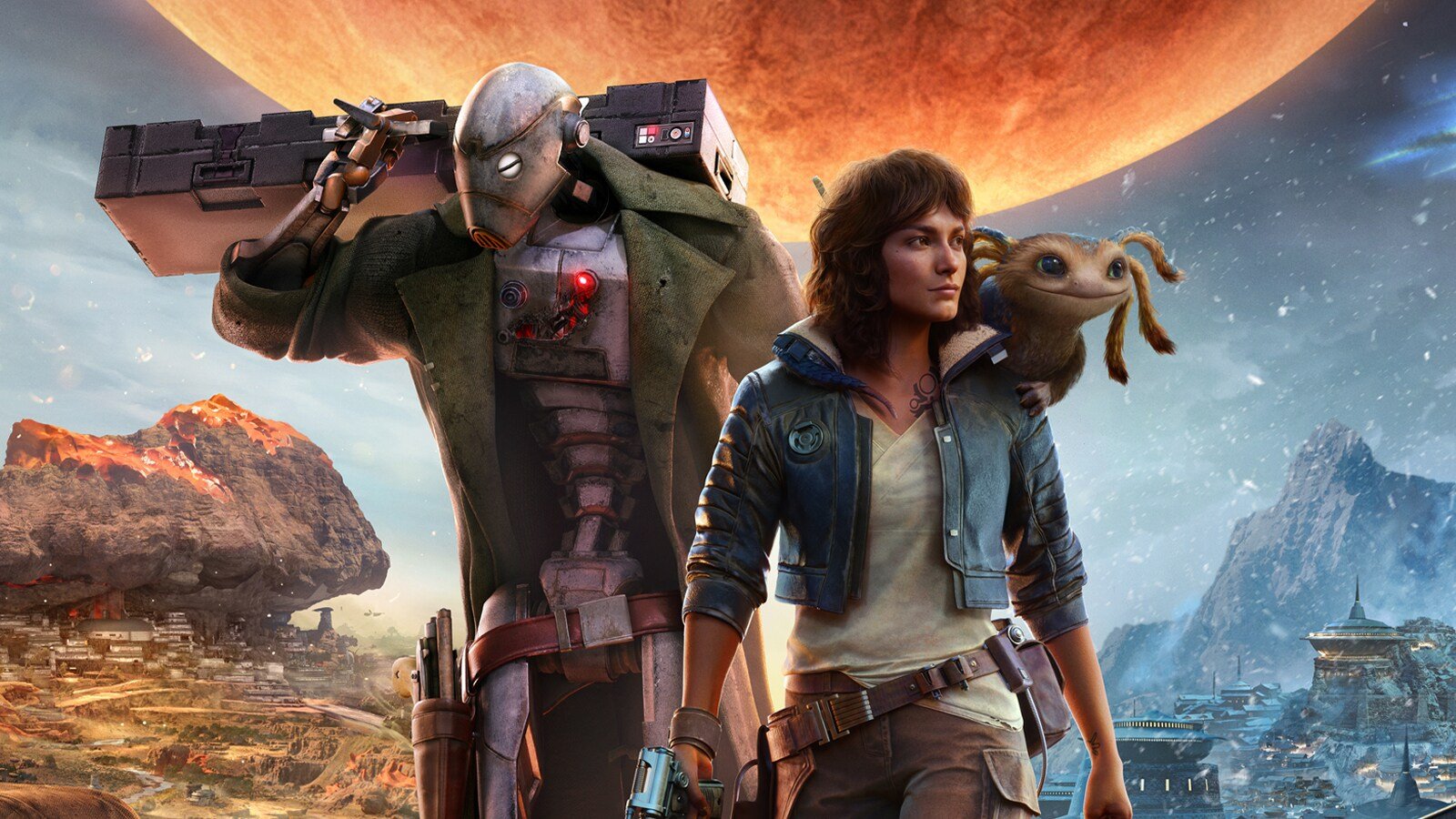
Star Wars Outlaws on Switch 2: Storage Speed, Not Cost, Dictates Game-Key Card Necessity
The recent unveiling of Star Wars Outlaws has ignited considerable excitement within the gaming community, promising an expansive open-world adventure set between the events of The Empire Strikes Back and Return of the Jedi. As anticipation builds for its multi-platform release, a particular point of discussion has emerged surrounding its potential availability on the upcoming Nintendo Switch 2. Specifically, a statement from the development team at Massive Entertainment, the studio behind the ambitious title, has clarified a crucial aspect of how games might be distributed on Nintendo’s next-generation console. Contrary to popular speculation that cost might be the primary driver for using game-key cards on the Switch 2, developers have emphasized that storage speed is the true determining factor. This distinction is vital for understanding the technical realities of modern game development and the evolving landscape of console hardware.
The Evolving Landscape of Game Distribution
Historically, physical game media has taken various forms. From the cartridges of early consoles to the optical discs of the CD and DVD eras, and now to Blu-ray discs for current-generation systems, the physical medium has always been an integral part of the gaming experience for many. However, the digital revolution has undeniably reshaped how we acquire and play games. Digital storefronts have become dominant, offering instant access and eliminating the need for physical media. Yet, physical releases still hold significant appeal for collectors, those with limited internet bandwidth, or individuals who prefer tangible ownership of their games.
The discussion around Star Wars Outlaws and the Switch 2 touches upon a potential hybrid approach, where physical releases might not contain the full game data directly on the cartridge or disc. Instead, they could serve as a key to unlock a digital download, a model that has seen some prevalence on the Nintendo Switch itself with larger titles. This practice has often been met with mixed reactions, with some players feeling it diminishes the value of a physical purchase. However, the reasoning behind this approach is not always about cutting corners on manufacturing costs. In many cases, it’s a pragmatic solution to overcome hardware limitations.
Nintendo’s Hardware Evolution and Storage Bottlenecks
Nintendo has a rich history of innovating with its hardware, often prioritizing unique gameplay experiences and accessibility over raw graphical power. The original Nintendo Switch, for instance, revolutionized handheld and home console gaming by seamlessly blending these two paradigms. However, its internal storage, while expandable via microSD cards, has always been a point of consideration for players installing numerous digital titles or large game updates. Physical cartridges for the Switch, while convenient, also have inherent storage limitations compared to optical discs used by competing consoles.
The forthcoming Switch 2 is widely expected to address some of these limitations, with rumors and industry whispers pointing towards a significant leap in processing power and, crucially, faster storage solutions. The architecture of a console’s storage system has a profound impact on game loading times, asset streaming, and overall performance. For developers, optimizing games to run smoothly requires efficient access to the game’s data. When the internal storage or the physical media cannot facilitate the necessary data transfer speeds, developers are forced to seek alternative solutions.
Understanding the Crucial Role of Storage Speed
Storage speed refers to how quickly data can be read from or written to a storage device. This includes the internal hard drive or SSD of a console, external storage devices, and the media used for physical game releases, such as cartridges or discs. In modern, graphically intensive games like Star Wars Outlaws, vast amounts of data are constantly being loaded and streamed. This includes high-resolution textures, complex 3D models, intricate environmental details, and elaborate audio files.
If the storage medium cannot deliver this data to the console’s processor quickly enough, it leads to noticeable performance issues. Players might experience:
- Long Loading Times: Waiting for a game to load from the main menu or after dying can be frustrating.
- Texture Pop-in: Environments and objects appearing at lower detail and then suddenly snapping into their full fidelity as the player approaches.
- Asset Streaming Stuttering: When the game struggles to load new assets as the player moves through the world, causing visual hiccups or temporary freezes.
- Overall Slower Performance: The console’s ability to render frames and manage complex game logic can be hampered if it’s constantly waiting for data.
The development team behind Star Wars Outlaws has made it clear that the decision regarding game-key cards for the Switch 2 is directly linked to mitigating these potential bottlenecks. They are aiming to deliver an experience that is as close as possible to the versions released on more powerful hardware, and this requires ensuring that the game’s data can be accessed at a speed that supports seamless gameplay.
Why Cost is Not the Primary Driver
The statement, “I don’t recall the cost of the cards ever entering the discussion,” is a pivotal piece of information. It directly refutes the common assumption that developers opt for game-key card models primarily to reduce the manufacturing cost of physical media. While it’s true that cartridge production can be expensive, especially for higher capacities, the cost of manufacturing a game-key card (which essentially involves a piece of plastic with a download code) is generally lower than producing a fully loaded cartridge or disc. However, this cost-saving argument is overshadowed by the technical necessity.
If the Switch 2’s cartridge technology, or its internal storage, cannot meet the data throughput demands of a game like Star Wars Outlaws, then providing a physical product that requires such rapid data access would be technically unfeasible or would result in a significantly degraded player experience. In such a scenario, a game-key card becomes the most logical solution. It allows the developer to ensure that the player receives a complete, uncompromised version of the game, downloaded directly from servers that can handle high-speed data delivery.
This approach ensures that players who opt for a physical edition are still getting the full game, albeit delivered through a two-step process: obtaining the physical “key” and then downloading the digital data. The focus shifts from the physical medium containing the entire game to the physical medium serving as proof of purchase and a gateway to the full digital experience.
Implications for Star Wars Outlaws on Switch 2
For Star Wars Outlaws specifically, this means that if a physical release is planned for the Switch 2, it is highly probable that it will indeed be a game-key card. This decision would be driven by the game’s technical requirements and the capabilities of the Switch 2’s storage infrastructure, rather than any desire to cut manufacturing expenses. The developers are committed to delivering a high-fidelity experience, and this necessitates bypassing any potential storage speed limitations of the physical media itself.
This also suggests that the Switch 2’s physical media might have inherent limitations in terms of storage capacity or read speeds compared to the Blu-ray discs used for PlayStation 5 and Xbox Series X/S, or even the potentially faster SSDs integrated into those consoles. While the Switch 2 is expected to be a significant upgrade over its predecessor, it’s clear that developers are already anticipating its technical boundaries when it comes to games with demanding asset requirements.
The Advantages of Faster Storage for Modern Games
The benefits of faster storage solutions extend far beyond just reducing loading times. For a game as ambitious as Star Wars Outlaws, which features a vast open world, numerous NPCs, dynamic weather systems, and fast-paced combat, rapid data access is paramount for a smooth and immersive experience.
- Seamless World Exploration: With faster storage, the developers can implement more detailed and expansive environments without the fear of encountering constant stuttering or visual pop-in. Players can traverse the sprawling galaxy of Star Wars Outlaws with a greater sense of fluidity and immersion.
- Dynamic and Responsive Gameplay: Combat encounters often require split-second reactions. If the game’s data can be accessed instantaneously, it allows for more responsive controls, quicker animations, and more fluid transitions between different gameplay mechanics.
- Rich Detail and Fidelity: High-resolution textures and detailed models are essential for bringing the iconic Star Wars universe to life. Faster storage enables these assets to be loaded and displayed quickly, maintaining a high level of visual fidelity throughout the game.
- Reduced Installation and Patching Times: While not directly related to in-game performance, faster storage also significantly speeds up the initial installation process of a game and the application of updates or patches, which are becoming increasingly common and substantial for modern titles.
Developer Priorities and Player Expectations
Massive Entertainment’s focus on storage speed underscores a key priority for AAA game developers: delivering the best possible version of their game on each platform, within the technical constraints of that platform. This involves a deep understanding of the hardware and a willingness to employ solutions that might not be immediately intuitive to consumers.
For players, this clarification is important for managing expectations. While many will be thrilled at the prospect of Star Wars Outlaws making its way to the Switch 2, understanding the technical rationale behind its distribution model can help foster a more informed perspective. It highlights that the developers are not compromising on the game’s core experience due to cost-cutting measures, but rather are actively working to overcome potential technical hurdles to ensure a satisfactory gameplay experience.
The Future of Physical Media in a Digital Age
The situation with Star Wars Outlaws on the Switch 2 serves as a microcosm of the broader conversation surrounding the future of physical game media. As games become more data-intensive and digital downloads become the norm, physical releases may continue to evolve. We might see:
- Increased reliance on game-key cards: For large, graphically demanding titles on consoles with storage limitations.
- Bundled physical extras: Discs that contain soundtracks, art books, or other collectibles alongside a download code for the game itself.
- Niche physical releases: Limited edition physical copies aimed at collectors, which may still contain the full game on disc but at a premium price.
- Focus on the “collector’s item” aspect: Physical editions may increasingly be viewed as merchandise or collector’s items rather than the primary means of game access.
Navigating the Switch 2’s Technical Specifications
While official details about the Switch 2’s specifications are scarce, industry analysis and developer statements provide valuable clues. The emphasis on storage speed by the Star Wars Outlaws development team strongly suggests that the Switch 2’s storage subsystem, whether internal or via its physical media, may not be capable of the sustained high throughput required by cutting-edge AAA titles without some form of compromise.
This does not necessarily imply that the Switch 2 will be a weak console. Nintendo often finds ways to optimize games for its hardware, allowing them to run remarkably well despite not matching the raw power of competitors. However, for a game designed with scalability across multiple platforms, including the more powerful PS5 and Xbox Series X/S, developers must plan for the most restrictive common denominators in terms of data delivery.
The developers at Massive Entertainment are undoubtedly working closely with Nintendo to understand the Switch 2’s capabilities and limitations. Their proactive communication about the game-key card necessity for Star Wars Outlaws indicates a commitment to transparency and a desire to set accurate expectations for players.
Conclusion: A Pragmatic Approach to a Galaxy Far, Far Away
In conclusion, the decision to potentially distribute Star Wars Outlaws on the Nintendo Switch 2 via a game-key card is a testament to the technical realities of modern game development and the evolving capabilities of console hardware. The driving force behind this approach is not the cost of physical media, but the critical need for storage speed to ensure a high-quality, immersive gaming experience. As Star Wars Outlaws aims to bring the iconic Star Wars universe to life on Nintendo’s next-generation console, developers are prioritizing the efficient delivery of game data, opting for a solution that bypasses potential bottlenecks in physical media read speeds. This pragmatic approach allows them to deliver the expansive adventure players expect, regardless of the platform, while managing the technical constraints effectively. The focus remains on the player’s enjoyment of the game, ensuring that whether acquired digitally or physically, the experience of playing Star Wars Outlaws on the Switch 2 is as seamless and engaging as intended.