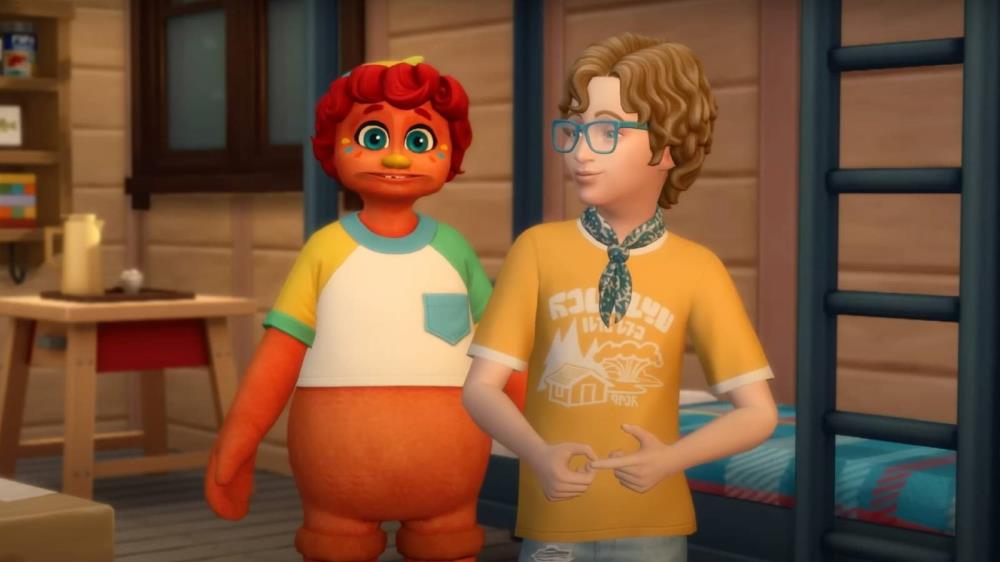
Sims 4’s Imaginary Friends: A Nostalgic Return with a Spooky Twist
The Sims 4 has consistently surprised and delighted players with its diverse range of expansions, game packs, and stuff packs. However, few additions have struck such a unique chord as the return of Imaginary Friends. Long-time Simmers remember these whimsical companions from previous iterations of the game, and their reappearance promises a potent blend of nostalgia and fresh gameplay. But this isn’t just a rehash of a beloved feature; The Sims 4’s Imaginary Friends come with a distinctly unsettling edge, particularly when the sun goes down. Prepare to dive into a world where childhood innocence collides with unexpected creepiness.
Imaginary Friends Reimagined: More Than Just Playmates
Imaginary Friends in The Sims 4 aren’t simply passive entities that exist solely for the amusement of child Sims. They’re integral parts of the child’s development, influencing their social skills, creativity, and overall well-being. These spectral companions provide much-needed social interaction, especially for Sims who are introverted or lack other playmates. When a child Sim receives the “Imaginary Friend” doll through the mail, or crafts it via the toy box, a relationship begins that can shape their entire childhood.
Forming the Bond: Building a Relationship with Your Imaginary Friend
The initial interaction with the Imaginary Friend is crucial. Naming the doll is the first step towards personification. From there, child Sims can interact with their Imaginary Friend in numerous ways: playing games, having conversations, sharing secrets, and even engaging in playful arguments. The more a child Sim interacts with their Imaginary Friend, the stronger their bond becomes.
- Social Development: Imaginary Friends help children develop vital social skills by offering a safe space to practice communication and conflict resolution.
- Emotional Support: These ethereal companions provide emotional support during times of stress or loneliness.
- Creative Outlet: They encourage imaginative play, allowing children to explore their creativity and develop their storytelling abilities.
The Transformation: From Doll to Playmate
As the relationship deepens, the Imaginary Friend can transform from a simple doll into a fully realized Sim. This transformation is triggered by the child Sim using a special interaction and believing in their Imaginary Friend. Once transformed, the Imaginary Friend gains the ability to walk, talk, and interact with the world around them.
- Unique Appearances: Each Imaginary Friend boasts a unique appearance, reflecting the personality and imagination of their creator. They often sport vibrant colors, unusual hairstyles, and quirky outfits.
- Distinct Personalities: Imaginary Friends possess unique personality traits that influence their behavior and interactions with other Sims. Some may be playful and mischievous, while others are shy and reserved.
- Special Abilities: Transformed Imaginary Friends have special abilities, such as the ability to teleport short distances or to play pranks on other Sims.
The Dark Side of Playtime: When Imaginary Friends Get Quirky at Night
While Imaginary Friends provide companionship and support during the day, their behavior takes a turn after dark. The initial charm of a spectral playmate can quickly morph into something more unsettling. It is during these late hours that the true nature of these entities becomes more apparent, adding a layer of complexity, and sometimes, terror, to the game.
Unexplained Phenomenon: Strange Occurrences in the Night
As night falls, Sims may witness a series of unexplained phenomenon associated with their Imaginary Friends. These include:
- Whispers and Murmurs: Child Sims may hear faint whispers or murmurs coming from their Imaginary Friends, even when they are not actively interacting.
- Moving Objects: Objects in the child’s room may move or levitate inexplicably, seemingly controlled by the Imaginary Friend.
- Sudden Temperature Drops: A noticeable drop in temperature can occur in the vicinity of the Imaginary Friend, creating an eerie atmosphere.
- Glow-in-the-Dark Eyes: The Imaginary Friend’s eyes may begin to glow in the dark, adding to their unsettling appearance.
Behavioral Shifts: From Playful to Possessive
The personality of the Imaginary Friend can also undergo a significant shift at night. The playful and supportive companion may become possessive, jealous, or even aggressive.
- Jealousy: The Imaginary Friend may become jealous of other Sims who interact with the child, attempting to sabotage their relationships.
- Possessiveness: They may become overly attached to the child, demanding their constant attention and discouraging them from interacting with others.
- Aggression: In extreme cases, the Imaginary Friend may exhibit aggressive behavior, lashing out at other Sims or causing damage to the environment.
Nightmarish Visions: Disturbing Dreams and Hallucinations
The most disturbing aspect of Imaginary Friends at night is their ability to induce nightmarish visions and hallucinations. Child Sims may experience:
- Terrifying Dreams: They may have vivid and disturbing dreams featuring their Imaginary Friend in a monstrous or threatening form.
- Hallucinations: They may see their Imaginary Friend morph into grotesque creatures or perceive them performing unsettling actions.
- Paranoia: They may develop a sense of paranoia, feeling as though they are being watched or followed by their Imaginary Friend.
Managing the Darkness: Protecting Your Sim from the Nightmare
Dealing with the nocturnal antics of Imaginary Friends requires careful management and a proactive approach. There are several strategies that players can employ to mitigate the negative effects of these spectral companions.
Strengthening the Bond: Fostering a Positive Relationship
The most effective way to prevent Imaginary Friends from turning malevolent is to foster a strong and positive relationship with them during the day. This involves:
- Regular Interaction: Dedicate time each day to interact with the Imaginary Friend, playing games, having conversations, and engaging in other activities.
- Positive Reinforcement: Praise and reward the Imaginary Friend for good behavior, reinforcing positive interactions.
- Addressing Needs: Pay attention to the Imaginary Friend’s needs and desires, ensuring that they feel valued and appreciated.
Setting Boundaries: Establishing Limits and Expectations
It is also important to establish clear boundaries and expectations for the Imaginary Friend. This involves:
- Disciplining Bad Behavior: Correct the Imaginary Friend when they misbehave, using gentle but firm discipline.
- Setting Rules: Establish rules for the Imaginary Friend to follow, such as no interrupting adult conversations or causing damage to the house.
- Enforcing Consequences: Enforce consequences for breaking the rules, such as time-outs or restrictions on playtime.
Seeking External Help: Turning to Adults for Support
If the Imaginary Friend’s behavior becomes too difficult to manage, it may be necessary to seek external help from adult Sims. This involves:
- Talking to Parents: Parents can provide guidance and support in managing the Imaginary Friend’s behavior.
- Consulting a Therapist: A therapist can help the child Sim process their emotions and develop coping mechanisms for dealing with the Imaginary Friend.
- Using Special Potions: Certain potions can be crafted or purchased that can temporarily or permanently alter the Imaginary Friend’s behavior.
The Imaginary Friend Solution: Permanent Changes
The most drastic solution involves using a special potion to turn the Imaginary Friend into a real Sim or back into a doll permanently.
- Imaginary Friend Metamorphium: This potion, available once the child has completed the aspiration, permanently turns the Imaginary Friend into a controllable Sim in the household. This allows for a normal, albeit potentially still quirky, Sim life.
- Imaginary Friend No More: This potion reverts the Imaginary Friend back into its doll form permanently, ending the relationship but also eliminating the potential for nighttime scares.
The Allure of the Unknown: Why the Spooky Twist Works
The decision to incorporate a spooky element into the Imaginary Friend mechanic is a stroke of genius. It elevates the gameplay experience by:
Adding Depth and Complexity:
The dual nature of Imaginary Friends, both comforting and terrifying, adds depth and complexity to the game. Players are forced to grapple with the ethical implications of nurturing a relationship with an entity that may ultimately turn against them.
Creating Suspense and Intrigue:
The unpredictable behavior of Imaginary Friends at night creates suspense and intrigue, keeping players on the edge of their seats. They never know what to expect when the sun goes down, adding an element of surprise to each playthrough.
Exploring Psychological Themes:
The game touches on themes of childhood anxieties, the power of imagination, and the blurred lines between reality and fantasy. This allows players to engage with the game on a deeper, more meaningful level.
Conclusion: A Welcome Addition with a Dark Secret
The return of Imaginary Friends in The Sims 4 is a welcome addition to the game. While the initial charm of these spectral playmates is undeniable, it is the dark secret they harbor that truly sets them apart. The combination of nostalgia, suspense, and psychological depth makes this feature a must-try for any Sims 4 player looking for a unique and unsettling gameplay experience. So, embrace the whimsy, but be prepared for the nightmare that awaits when the lights go out. The Imaginary Friends are back, and they’re quirkier—and creepier—than ever before.