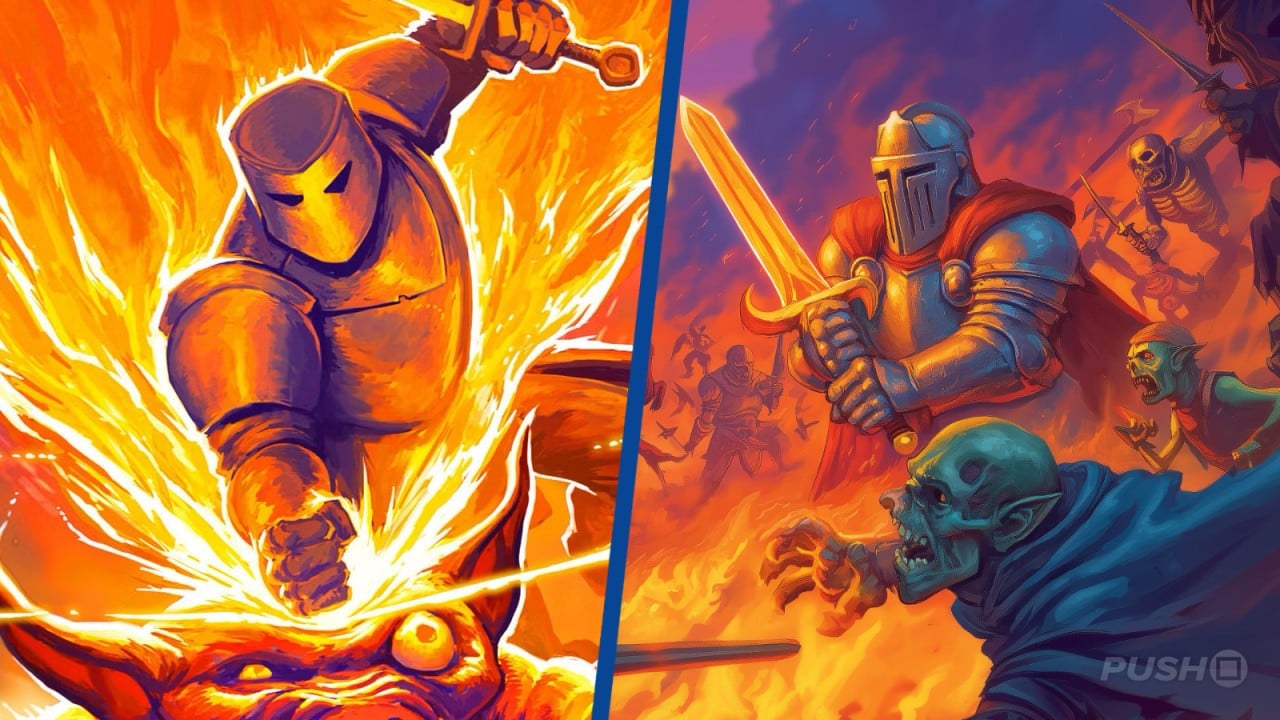
Shameless Clones of Viral Hit Games Like Megabonk Continue to Plague the PlayStation Store
The Persistent Problem of Low-Effort Knock-offs on the PlayStation Store
The digital marketplace for video games, while a boon for accessibility and discovery, is not without its persistent blemishes. One such enduring issue, particularly evident on the PlayStation Store, is the continuous influx of shameless clones of viral hit games. These low-effort imitators, often indistinguishable from their inspirations at first glance, not only dilute the marketplace but also present a frustrating experience for consumers actively seeking quality entertainment. While various platforms grapple with this phenomenon, the PS Store has, unfortunately, become a recurring battleground where copycat games flourish, leveraging the success of legitimate titles to their own dubious advantage. This trend is not new, but its persistence, especially with the emergence of high-profile indie successes, demands a closer examination of its impact and the underlying reasons for its continued presence.
The recent surge in popularity of games with unique mechanics and compelling gameplay loops invariably sparks a predictable reaction from a segment of developers focused on rapid replication rather than innovation. Instead of exploring new frontiers or building upon existing foundations with genuine creativity, these developers opt for a shortcut: cloning. They meticulously dissect successful titles, identifying their core appeal, and then produce a near-identical product, often with minimal changes and a significantly lower level of polish. This strategy, while ethically questionable, can sometimes prove financially lucrative in the short term, especially when targeting platforms with vast user bases like the PlayStation Store, where discovery can be a challenge even for well-intentioned titles.
Megabonk: A Case Study in the Rise of 3D Horde Survival Clones
A prime example illustrating this persistent problem is the emergence of Megabonk and its ilk. Launched initially on PC, Megabonk quickly garnered attention for its embrace of the horde survival genre. What sets Megabonk apart, and indeed what makes it a compelling example for this discussion, is its adaptation of the hugely successful Vampire Survivors-esque formula into a full 3D environment. While this shift in dimensionality presents a fresh perspective, the underlying gameplay loop – surviving overwhelming waves of enemies, collecting experience, and unlocking powerful upgrades – is undeniably rooted in the mechanics popularized by indie darlings.
The success of Vampire Survivors, with its deceptively simple yet incredibly addictive gameplay, created a blueprint that many have sought to replicate. Megabonk, by translating this core experience into three dimensions, offers a visually distinct take. Players are thrust into intense battles against relentless hordes, their survival hinging on strategic movement, timely upgrades, and the careful selection of their arsenal. The visual spectacle of mowing down vast numbers of enemies in a 3D space, coupled with the familiar dopamine rush of progression and power scaling, proved to be a potent combination. However, it is precisely this potent combination, refined and popularized by Megabonk and its progenitors, that has led to a proliferation of similar titles.
The transition to 3D in this genre is not merely cosmetic; it alters the player’s perception of space, enemy positioning, and the overall intensity of the encounters. Dodging projectiles, weaving through enemy formations, and utilizing environmental advantages become more tactically significant. This added layer of complexity, when executed well, can elevate the genre beyond its 2D origins. Yet, for many developers aiming to capitalize on the trend, the 3D aspect is often a superficial addition, masking an otherwise derivative core. The risk is that players seeking the innovative 3D evolution of the horde survival genre might instead find themselves encountering experiences that are little more than reskinned 2D gameplay in a volumetric package.
The PlayStation Store: A Fertile Ground for Game Clones
The PlayStation Store, with its massive global audience and established storefront infrastructure, presents an attractive target for developers looking to distribute their creations. However, the sheer volume of content available, coupled with the inherent challenges of content moderation and curation on such a large scale, can inadvertently create an environment where low-quality clones can slip through the cracks and gain visibility. The algorithms that drive discovery, while designed to highlight popular and relevant titles, can also be exploited by games that mimic the metadata and visual cues of successful titles, leading to misleading search results and accidental purchases.
One of the primary reasons the PS Store, and digital storefronts in general, struggle to effectively combat the proliferation of clones lies in the subjective nature of “originality” and the difficulty in definitively proving outright plagiarism. While some clones are blatant and easily identifiable, others employ a more subtle approach, borrowing heavily from a successful game’s mechanics, art style, and even promotional materials without directly copying assets. This makes it challenging for platform holders to draw a clear line and take decisive action. The legal and technical hurdles involved in proving copyright infringement or unfair competition can be significant, often requiring extensive investigation and evidence.
Furthermore, the economic realities of game development play a role. For independent studios with limited resources, the temptation to leverage a proven formula rather than invest in groundbreaking, high-risk innovation can be substantial. The goal is often to achieve a degree of financial stability, and in a competitive market, adhering to successful trends can seem like the most pragmatic path. This leads to a cyclical problem: success breeds imitation, and imitation, when unchecked, can stifle genuine innovation by saturating the market with derivative content, making it harder for truly novel ideas to gain traction.
Identifying and Avoiding Shameless Clones on the PS Store
For consumers navigating the vast landscape of the PlayStation Store, discerning genuine innovation from shameless clones can be a daunting task. The visual presentation of a game, particularly its store page imagery and trailers, is often carefully crafted to evoke the feeling of a popular title. Developers of clones will often mirror the art style, color palettes, and even the types of action depicted in the promotional materials of the games they are imitating. This can create a powerful sense of familiarity, encouraging impulse buys from unsuspecting players.
However, a more critical examination of game descriptions, user reviews, and gameplay footage can often reveal the superficiality of these imitations. Key indicators to watch out for include:
- Vague or generic descriptions: Cloned games often rely on buzzwords and general descriptions that fail to articulate unique selling points or specific gameplay mechanics beyond broad genre classifications.
- Repetitive or uninspired gameplay loops: While Megabonk successfully evolved the horde survival formula into 3D, many clones might simply offer a less refined or a visually different iteration of the same core loop without adding any meaningful new elements. This can manifest as repetitive enemy wave designs, predictable upgrade paths, or a lack of strategic depth.
- Poorly translated or nonsensical text: A common sign of low-effort development is the presence of grammatical errors, awkward phrasing, or outright nonsensical text in the game’s descriptions, menus, or dialogue. This often stems from a reliance on machine translation or a lack of native English speakers involved in the development process.
- Overwhelmingly negative or suspiciously positive reviews: User reviews are an invaluable resource. While some clones might have a few positive reviews, often these are from early purchasers who were initially fooled by the presentation. A significant number of negative reviews that consistently point out the derivative nature, lack of polish, or poor gameplay is a strong red flag. Conversely, an unnatural surge of identical, glowing reviews can also be a sign of artificial inflation.
- Lack of developer information or history: Legitimate developers, especially those who have produced successful titles, will usually have a traceable online presence, a dedicated website, and a history of releases. Cloned games are often from new, obscure developers with little to no prior track record, making it difficult to assess their commitment to quality.
- Inconsistent or low-quality visuals and audio: While the art style might be similar to a popular game, closer inspection of the actual in-game assets can reveal a significant drop in quality. This includes low-resolution textures, stiff animations, repetitive sound effects, and uninspired music.
By paying attention to these details, players can significantly increase their chances of avoiding the disappointment of purchasing a cheap knock-off and instead find titles that offer genuine entertainment and value.
The Impact on the Gaming Ecosystem and the Future of Innovation
The continued presence of shameless clones on platforms like the PS Store has a tangible negative impact on the broader gaming ecosystem. Firstly, it directly harms the sales and reputation of the original developers. When players accidentally purchase a clone, believing it to be the genuine article or a satisfactory alternative, they are less likely to invest in the actual game that inspired it. This can stunt the growth of innovative studios and discourage them from taking creative risks in the future.
Secondly, it creates a frustrating experience for consumers, leading to a loss of trust in digital storefronts. If players consistently find themselves disappointed by the quality and originality of the games they purchase, they may become more hesitant to explore new titles or even abandon the platform altogether in favor of more curated or trusted sources. This erodes the overall health and vibrancy of the gaming market.
Furthermore, the proliferation of clones can stifle true innovation. When the market becomes saturated with derivative content, it becomes harder for truly novel ideas to stand out and gain the attention they deserve. Developers who are focused on creating something new and unique might find it difficult to compete with the sheer volume of easily produced imitations that leverage established trends. This creates a disincentive for risk-taking and can lead to a homogenization of game design, where developers are pressured to stick to proven formulas rather than explore uncharted territory.
The challenge for platform holders like Sony is to find a more effective balance between open access to their digital store and robust content moderation. While a completely closed system would stifle indie developers, a completely open one allows these shameless clones to thrive. Solutions might involve:
- Stricter review processes: Implementing more rigorous checks on new submissions, focusing not just on technical functionality but also on originality and adherence to intellectual property guidelines.
- Enhanced user reporting tools: Making it easier for players to report suspected clones and providing a swift and effective response mechanism for such reports.
- Algorithm adjustments: Fine-tuning discovery algorithms to better distinguish between genuine innovation and imitative content, ensuring that popular trends don’t solely lead to a flood of copycats.
- Promoting originality: Actively highlighting and curating games that demonstrate significant innovation and creativity, thereby rewarding genuine effort and encouraging future groundbreaking titles.
The success of games like Megabonk in adapting the horde survival genre to a 3D environment showcases the potential for evolution within established game mechanics. However, this potential is undermined when the successes of such titles are met not with further innovation, but with a wave of uninspired imitations. The PlayStation Store, and indeed the entire gaming industry, benefits most when developers are encouraged to build upon successful foundations with their own unique visions, rather than simply replicating them. The fight against shameless clones is not just about protecting intellectual property; it’s about safeguarding the future of creativity and ensuring that players have access to the most diverse and exciting gaming experiences possible. We believe that by fostering an environment that values originality and provides clear pathways for genuine innovation to be discovered, the PlayStation Store can overcome this persistent problem and emerge as a true beacon for cutting-edge game development.
The ongoing struggle to curate a digital marketplace that champions originality while remaining accessible is a complex one. The allure of rapidly capitalizing on a viral trend, exemplified by the surge in Vampire Survivors-esque titles that Megabonk represents in its 3D iteration, presents a constant challenge. It is a testament to the ingenuity of developers like those behind Megabonk that they can take a successful formula and infuse it with enough unique elements – in this case, the transition to a full 3D perspective and the injection of their own stylistic flair – to create something that feels fresh and engaging. Yet, this very success becomes the siren song for those who prioritize imitation over inspiration.
The PlayStation Store, as a global platform with an immense reach, is unfortunately a prime target for such practices. The ease with which a game can be uploaded and potentially discovered, coupled with the vastness of the user base, makes it an ideal breeding ground for these derivative titles. While the intention behind such platforms is to democratize game distribution and give a voice to a wide array of developers, this openness can be exploited by those who seek to ride on the coattails of others’ hard-earned success. The result is a digital landscape that can quickly become cluttered with low-quality knock-offs, making it increasingly difficult for discerning players to find the genuine gems they are searching for.
Our commitment at Gaming News is to shed light on these trends, not merely to report on them, but to equip our readers with the knowledge to navigate these challenges. Understanding the hallmarks of a shameless clone, from its visual presentation to its gameplay mechanics and even the vagueness of its marketing, is crucial. As we’ve seen with the evolution of the horde survival genre, there’s a fine line between paying homage and outright plagiarism. While Megabonk’s leap into 3D demonstrates a genuine attempt to evolve a beloved concept, many other titles on the PS Store offer little more than a superficial coat of paint over a fundamentally uninspired core.
Ultimately, the health of the gaming industry relies on a continuous cycle of innovation. When copycat games are allowed to proliferate unchecked, this cycle is threatened. Developers who pour their passion and resources into creating truly novel experiences risk being drowned out by the sheer volume of derivative content. This not only impacts their bottom line but also discourages the bold experimentation that drives the medium forward. We believe that by fostering a community that is informed and vigilant, and by advocating for more robust curation and discovery mechanisms on platforms like the PlayStation Store, we can collectively work towards a future where original ideas are celebrated and rewarded, and where the digital shelves are filled with genuine experiences rather than shameless imitations. The journey of games like Megabonk, from their PC debut to potential console releases, serves as a valuable reminder of both the creative potential within established genres and the ever-present challenge of distinguishing true innovation from mere replication.