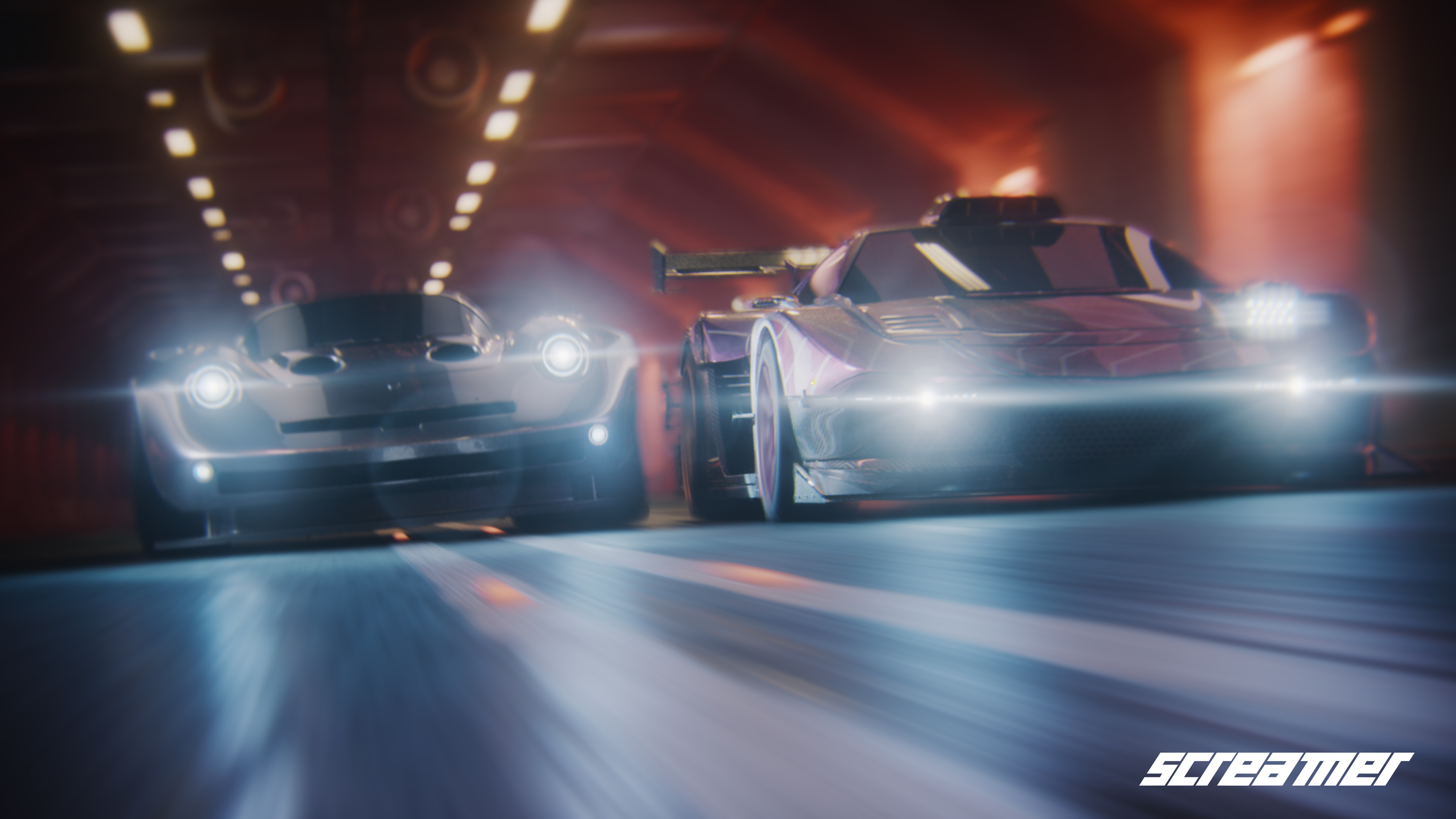
Screamer Devs Provide Breakdown of Core Gameplay Mechanics: A Deep Dive into the Echo System
Milestone has peeled back another layer of anticipation for their upcoming title, Screamer, with the release of the second installment of their developer video interview. Featuring Game Director Federico Cardini and Development and Creative Director Michele Caletti, this episode delves into the intricacies of the Echo System, the game’s central mechanic that seamlessly integrates narrative elements with high-octane racing action. At Gaming News, we break down this innovative system and what it means for the future of racing games.
Understanding the Echo System: The Heart of Screamer
The Echo System is more than just a collection of in-game mechanics; it’s the very lifeblood of Screamer, influencing both the moment-to-moment gameplay and the overall strategic depth. It revolves around two core resources: Sync and Entropy. These two elements are inextricably linked, creating a dynamic push-and-pull that forces players to make tactical decisions on the fly. Mastery of the Echo System is paramount to success, transforming each race into a complex dance of risk and reward.
Sync: The Foundation of Speed and Defense
Sync is the fundamental resource that fuels a player’s offensive and defensive capabilities. It accumulates through two primary methods: passive generation and Active Shifts. Understanding the nuances of each method is key to maximizing Sync accumulation.
Passive Sync Generation
Passive Sync generation occurs continuously throughout the race, rewarding players simply for participating. The rate of generation is likely influenced by several factors, such as:
- Track Position: Players in the lead may experience a slightly slower passive generation rate to prevent runaway victories, while those trailing behind might receive a boost to facilitate comebacks.
- Driving Style: Clean driving, characterized by precise turns, minimal collisions, and optimal racing line adherence, could yield a higher passive generation rate. Aggressive driving, even without Active Shifts, can also impact the generation rate.
- Character Abilities: Different characters likely possess unique traits that influence their passive Sync generation. Some characters might excel at accumulating Sync passively, while others might rely more heavily on Active Shifts.
Active Shifts: Mastering the Art of Timing
The Active Shift mechanic introduces a skill-based element to Sync generation. During races the cars features automatic transmission, and the Active Shift works together with the car. By performing perfectly timed upshifts in sync with the car’s automatic transmission, players can trigger an Active Shift, granting a significant burst of Sync. The developers emphasized the importance of precise timing, suggesting a narrow window of opportunity for executing a successful Active Shift. The rewards of mastering this technique are substantial:
- Significant Sync Burst: Active Shifts provide a dramatically larger amount of Sync compared to passive generation.
- Strategic Advantage: The ability to quickly accumulate Sync allows players to proactively utilize offensive and defensive maneuvers, dictating the flow of the race.
- Skill Expression: Mastering the timing of Active Shifts separates skilled players from casual racers, adding a competitive edge to the gameplay.
Sync Utilization: Speed Boosts and Defensive Shields
Once accumulated, Sync can be strategically expended to gain a competitive advantage. Players can utilize Sync in two primary ways:
- Speed Boosts: By consuming Sync, players can unleash a temporary burst of speed, allowing them to overtake opponents, navigate challenging sections of the track, or escape incoming attacks. The duration and intensity of the speed boost likely scale with the amount of Sync consumed, offering players granular control over their acceleration.
- Defensive Shields: Sync can also be used to activate a temporary shield, protecting the player’s vehicle from incoming attacks and collisions. The strength and duration of the shield likely depend on the amount of Sync spent, allowing players to strategically mitigate damage and maintain their momentum.
Entropy: Unleashing Offensive Power
While Sync provides the foundation for speed and defense, Entropy fuels the game’s aggressive maneuvers. Entropy is generated as a consequence of using Sync, creating a direct trade-off between defensive and offensive capabilities. Careful management of both resources is crucial for achieving victory.
Entropy Generation: The Price of Power
Every time a player utilizes Sync, whether for a speed boost or a defensive shield, they generate Entropy. The amount of Entropy generated is likely proportional to the amount of Sync consumed. This creates a strategic dilemma:
- Defensive Focus: Players who prioritize defense and speed boosts will accumulate Entropy more slowly, limiting their offensive potential.
- Offensive Focus: Conversely, players who conserve Sync to maximize Entropy generation will be more vulnerable to attacks.
Strike: The Devastating Short-Range Attack
Entropy empowers players to unleash two devastating offensive maneuvers: Strike and Overdrive. Strike is a short-range, high-impact attack designed to eliminate opponents from the race.
- Instant Elimination: A successful Strike can instantly destroy an opponent’s vehicle, removing them from the race entirely. This creates high-stakes encounters, where a single well-timed Strike can dramatically alter the course of the competition.
- Strategic Targeting: Players must carefully choose their targets, considering the opponent’s position, speed, and remaining health. A preemptive Strike can prevent an opponent from gaining the upper hand, while a well-timed ambush can catch them off guard.
- Risk-Reward Balance: While devastating, the Strike attack likely consumes a significant amount of Entropy, leaving the player vulnerable to counter-attacks.
Overdrive: The High-Risk, High-Reward State
Overdrive represents the ultimate expression of offensive power in Screamer. Activating Overdrive consumes all available Entropy and places the vehicle in a state of heightened performance, characterized by increased speed, enhanced shielding, and the ability to knock out rivals with ease. However, this immense power comes at a significant cost.
- Maximum Performance: Overdrive pushes the vehicle to its absolute limits, granting a substantial speed advantage and unparalleled offensive capabilities.
- Complete Entropy Consumption: Activating Overdrive drains all accumulated Entropy, leaving the player completely vulnerable once the effect wears off.
- Vulnerability on Crash: If the player crashes while in Overdrive, they suffer severe consequences, potentially leading to immediate elimination or significant damage.
Dynamic Races: The Ever-Evolving Battlefield
The interplay between Sync and Entropy ensures that races in Screamer are never static. The dynamic nature of the Echo System constantly reshapes the competitive landscape, forcing players to adapt their strategies on the fly.
Evolving Strategies
As players accumulate and expend Sync and Entropy, their racing lines, overtaking maneuvers, and defensive tactics will constantly evolve. No two laps will be the same, as players react to the actions of their opponents and the ever-changing resource landscape.
Unpredictable Outcomes
The combination of skill-based mechanics and dynamic resource management creates an element of unpredictability, ensuring that even the most skilled racers cannot afford to become complacent. A single mistake or a well-timed maneuver can dramatically alter the outcome of the race.
Character Abilities and Vehicle Handling: Unique Racing Styles
Screamer features a diverse roster of characters, each with unique abilities and vehicle handling characteristics. These differences add another layer of strategic depth to the gameplay, encouraging players to experiment with different playstyles and find the character that best suits their strengths.
Character-Specific Abilities
Each character in Screamer possesses a unique set of abilities that influence their gameplay. These abilities may affect:
- Sync Generation: Some characters may be more adept at accumulating Sync passively, while others may excel at executing Active Shifts.
- Entropy Generation: Certain characters may generate Entropy more efficiently, allowing them to unleash offensive maneuvers more frequently.
- Offensive Power: Characters may have unique variations on the Strike and Overdrive attacks, granting them specific advantages in combat.
- Defensive Capabilities: Some characters may possess enhanced shielding abilities or unique defensive maneuvers.
Vehicle Handling Differences
In addition to character-specific abilities, each vehicle in Screamer features distinct handling characteristics. These differences may affect:
- Acceleration: Some vehicles may excel at accelerating from a standstill, while others may struggle to gain speed.
- Top Speed: Vehicles may have varying top speeds, influencing their performance on long stretches of track.
- Handling: The responsiveness and stability of the vehicle will vary, affecting its ability to navigate tight corners and maintain control at high speeds.
- Durability: The vehicle’s ability to withstand damage will differ, influencing its survivability in collisions.
Solo and Online Play: Different Challenges, Same Excitement
Screamer offers both solo and online multiplayer experiences, each presenting unique challenges and opportunities.
Solo Campaign: Mastering the Echo System
The solo campaign allows players to hone their skills and master the intricacies of the Echo System at their own pace. Through a series of progressively challenging races and trials, players will learn to effectively manage Sync and Entropy, master the Active Shift mechanic, and utilize their character’s unique abilities to their full potential.
Online Multiplayer: Teamwork and Competition
Online multiplayer introduces another layer of complexity to the gameplay, requiring players to coordinate their strategies and cooperate with teammates to achieve victory.
Teamwork Dynamics
Teamwork is essential for success in online multiplayer. Players must communicate effectively, coordinate their attacks and defenses, and strategically utilize their individual strengths to complement their teammates.
Competitive Environment
Online multiplayer provides a highly competitive environment where players can test their skills against the best racers from around the world. The constant pressure and unpredictable nature of online races demand quick thinking, adaptability, and a deep understanding of the Echo System.
Release Date and Platforms
Screamer is scheduled for release in 2026 on PlayStation 5, Xbox Series X|S, and PC. The game’s innovative Echo System, diverse character roster, and dynamic racing mechanics promise to deliver a thrilling and engaging experience for racing fans. At Gaming News, we’ll continue to provide updates and in-depth coverage of Screamer as its release date approaches.