Routine Arrives December 4th: A Sci-Fi Horror Masterpiece Finally Emerges After 13 Years
The gaming world is abuzz with a revelation that has been years in the making. After a staggering 13-year journey from its initial announcement, the highly anticipated sci-fi horror game, Routine, has officially been given a release date of December 4th. This long-awaited title, developed by the ambitious minds at Lunar Software and published by Raw Fury, promises to deliver a chilling experience set against the backdrop of a desolate lunar base, blending the retro-futuristic aesthetics of the 1980s with modern survival horror sensibilities. For those who have followed its development, this announcement marks the triumphant culmination of a story filled with persistent dedication, creative reinvention, and the enduring hope for a groundbreaking gaming experience.
The Genesis of a Lunar Nightmare: Routine’s Ambitious Beginnings
Routine’s initial unveiling at Gamescom 2012 sparked considerable excitement. The game was envisioned as a first-person horror experience that would place players in the shoes of an astronaut tasked with investigating a mysteriously silent lunar facility. The premise was immediately captivating: an abandoned moon base, a palpable sense of isolation, and the unnerving implication that something had gone terribly wrong. The game’s striking visual style, a deliberate homage to the optimistic, yet often cautionary, vision of the future as imagined in the 1980s, set it apart from its contemporaries. This unique aesthetic, characterized by chunky interfaces, analogue controls, and a distinctly analogue approach to technology, promised a world both familiar and alien.
The initial target for Routine was a 2013 launch. However, as is often the case with ambitious indie projects, the path to completion proved to be far more arduous than anticipated. Over the subsequent years, the game’s visibility began to wane. Updates from Lunar Software became infrequent, and the once-prominent project slowly faded from public discourse. This prolonged silence led many to believe that Routine might have been relegated to the annals of vaporware, a victim of development hell. The silence was so profound that the game’s very existence became a subject of speculation and quiet longing among those who had been captivated by its early promise.
A Decade of Delays and Creative Rebirth: The Challenges of Routine’s Development
The protracted development cycle of Routine is a testament to the creative challenges faced by Lunar Software. As the studio approached what they believed to be the end of their initial development phase, a stark realization dawned upon them: the game, in its current state, did not meet their own stringent standards. In a candid blog post in 2022, Lunar Software revealed the difficult decision to essentially restart development. This wasn’t a simple matter of tweaking a few mechanics; it was a fundamental reevaluation of the game’s direction and its core experience.
“As we were approaching what we believed to be the end of development, we were finding more and more things that we weren’t happy with that negatively impacted the experience,” the studio explained. “We had worked on the project for 5 years at that point and simply couldn’t release it as it was.” This admission highlights a level of artistic integrity that is commendable, even if it meant prolonging the wait for players. The decision to scrap years of work to ensure a higher quality product speaks volumes about Lunar Software’s commitment to delivering a memorable and impactful horror game. This artistic introspection, while delaying the release, ultimately laid the groundwork for a more cohesive and terrifying vision.
Financial Hurdles and a Guiding Light: The Role of Raw Fury and Mick Gordon
Beyond the creative challenges, Lunar Software also navigated significant financial difficulties. The demanding nature of game development, especially for an independent studio, often means that resources are stretched thin. For Routine, these financial strains directly impacted the pace of production. The developers found themselves in a position where they could only dedicate part-time efforts to the game, taking on external projects to sustain the studio and keep their dream alive. This dual commitment undoubtedly added further complexity and time to an already intricate development process.
The turning point for Routine came in 2022 with the announcement of Raw Fury as its new publisher. The involvement of Raw Fury, a studio known for supporting and nurturing unique and ambitious indie titles, provided a much-needed lifeline. This partnership brought not only financial backing but also crucial industry experience and strategic guidance, helping to propel Routine towards its ultimate release.
Adding another layer of immense prestige to the project, the announcement also revealed that the acclaimed composer Mick Gordon had been enlisted to craft the game’s soundtrack. Gordon, renowned for his work on the recent Doom and Wolfenstein titles, has a remarkable talent for creating atmospheric and intense musical scores that elevate the gaming experience to new heights. His involvement in Routine signals a clear intent to deliver a truly immersive and sonically terrifying world, further amplifying the anticipation for the game. The synergy between Lunar Software’s vision, Raw Fury’s support, and Mick Gordon’s sonic artistry positions Routine as a project with immense potential.
Exploring the Silent Lunar Base: Gameplay Mechanics and Environmental Storytelling
At its core, Routine is a first-person survival horror game. Players will step into the role of an unnamed protagonist who awakens on a deserted lunar research station. The station, once a hub of activity, has fallen silent. The primary objective is to explore the sprawling, derelict facility, piecing together the events that led to its eerie quietude. This exploration will not be a passive experience; players will be equipped with a suite of specialized tools designed to investigate the environment and uncover clues. These tools, rather than direct combat options, emphasize the game’s focus on stealth, evasion, and resourcefulness.
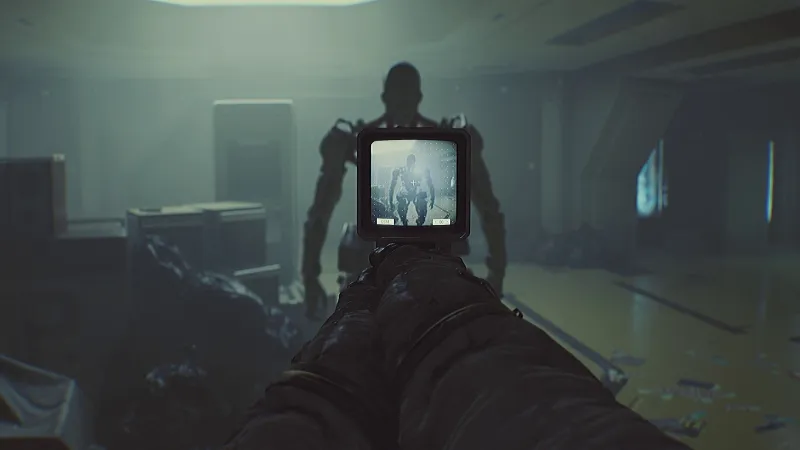
The environment of Routine is as much a character as the player or the lurking threats. The lunar base is a meticulously crafted space, brimming with the visual cues of an ’80s interpretation of futuristic technology. Expect flickering monitors, analogue control panels, and a pervasive sense of Cold War-era technological optimism tinged with an underlying dread. The environmental storytelling is paramount. Every discarded note, every malfunctioning piece of equipment, every bloodstain on the metallic floor will contribute to the narrative, painting a grim picture of the catastrophic events that have transpired.
Mechanical Menaces and the Art of Survival: Confronting the Robotic Threat
The true horror of Routine lies not just in the isolation and the unknown, but in the deadly machines that now roam the darkened corridors. The station is not merely abandoned; it is occupied by killer robots that pose a constant and immediate threat. These are not mindless drones; they are programmed, implacable pursuers, each with their own patrol patterns and detection capabilities.
Players will be forced to employ stealth tactics to survive. Sneaking, running, and hiding will be essential skills. The game eschews traditional combat encounters, emphasizing the vulnerability of the protagonist. This design choice aligns Routine with the “helpless protagonist” horror trope that gained significant traction in the early 2010s, popularized by titles like Amnesia: The Dark Descent. However, the unique ’80s sci-fi setting and the specific nature of the robotic adversaries promise a fresh take on this established formula. Players must learn the behaviours of these mechanical terrants, utilizing the environment to their advantage, ducking into ventilation shafts, or using the darkness as a cloak to evade their relentless pursuit. The tension will be palpable, as every creak of metal and every distant whirring sound could signal imminent danger.
The Enduring Appeal of Retro-Futurism in Horror
The decision to embrace an ’80s-era vision of the future is a significant contributor to Routine’s distinct identity. This aesthetic choice taps into a nostalgic vein for many, evoking a sense of analogue technology, tangible interfaces, and a certain brand of optimistic-yet-uneasy science fiction. In the context of horror, this retro-futurism can be incredibly effective. The technology, while advanced for its time, often feels clunky and less forgiving than its modern digital counterparts. This can heighten the sense of isolation and vulnerability. A broken piece of analogue equipment feels more impactful than a glitch in a digital system. The visual design of the robots themselves, likely inspired by the practical effects and design philosophies of 1980s sci-fi cinema, will contribute to a unique and unsettling form of mechanical menace.
This aesthetic also allows for a distinct visual language. The stark lighting, the utilitarian design of the lunar base, and the retro-futuristic interfaces all contribute to an atmosphere of unease. The world of Routine feels lived-in and functional, making the descent into terror all the more jarring. It’s a world that feels grounded in a specific, recognizable, albeit stylized, reality, which makes the intrusion of horror all the more potent.
Routine’s Place in the Modern Horror Landscape
The sci-fi horror genre has seen a resurgence in recent years, with numerous titles exploring themes of isolation, technological dread, and the fragility of the human psyche. Routine enters this landscape with a unique proposition: a decade of development culminating in a carefully curated experience that prioritizes atmosphere, narrative, and a distinct visual identity. The game’s long gestation period, while initially a source of concern, now positions it as a polished and potentially groundbreaking entry into the genre.
The “helpless protagonist” horror trend, while popular, can sometimes lead to formulaic experiences. However, Routine’s commitment to its specific retro-futuristic aesthetic and its focus on mechanical rather than supernatural threats could offer a fresh perspective. The psychological horror of facing intelligent, implacable machines designed for a purpose now turned sinister provides a compelling narrative hook. The exploration of why these machines have become a threat, and the underlying narrative of the lunar base’s downfall, will be key to its success.
The game’s launch on Xbox platforms and PC, with a day-one release on Xbox Game Pass, ensures that it will be accessible to a wide audience. This accessibility, coupled with the pedigree of its development team and its renowned composer, suggests that Routine is poised to make a significant impact. The prospect of experiencing Routine on December 4th, after such an extensive and arduous journey from its initial reveal, is truly a surreal and exciting development for fans of the genre.
Anticipating the December Release: What to Expect from Routine
As December 4th approaches, the anticipation for Routine reaches fever pitch. We are on the cusp of finally experiencing the fruits of Lunar Software’s unwavering dedication. The game promises a deep dive into a meticulously crafted world, where every shadow might conceal a threat and every piece of interactive technology holds a piece of the unfolding mystery. The interplay between the ’80s aesthetic and the brutal realities of survival horror is a captivating prospect.
Players can expect a game that values atmosphere and tension above all else. The absence of direct combat will necessitate a different kind of player engagement, one that rewards careful observation, strategic movement, and a keen understanding of the environment. The narrative will likely unfold through environmental clues, audio logs, and the emergent behaviour of the robotic antagonists. The haunting score by Mick Gordon will undoubtedly play a crucial role in amplifying the dread and immersing players in the chilling atmosphere of the lunar base.
The success of Routine will depend on its ability to deliver a cohesive and terrifying experience that justifies its long development cycle. The promise of a unique aesthetic, a compelling premise, and a focus on stealth and evasion positions it as a potentially standout title in the crowded horror genre. For those who have waited patiently for over a decade, December 4th represents not just a release date, but the arrival of a long-cherished dream, finally ready to haunt our nightmares. The wait is almost over, and the silent halls of the lunar base are about to echo with the sounds of survival, fear, and the chilling realization that the future, as imagined in the past, can be a terrifying place. Routine is more than just a game; it’s a testament to perseverance, artistic vision, and the enduring power of a well-crafted horror experience.