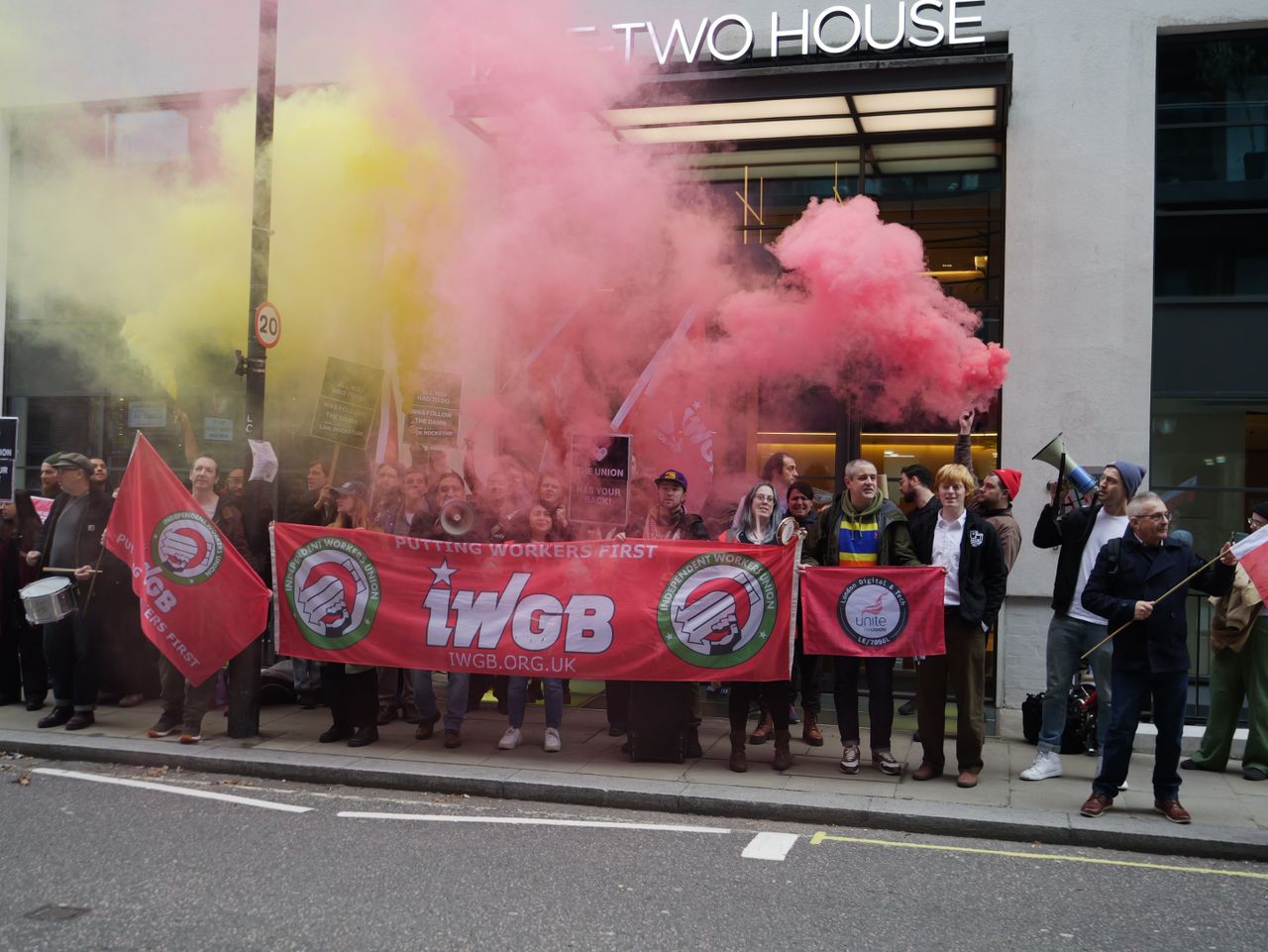
Rockstar Games Faces Legal Challenge: Union Alleges Unfair Dismissals and Union Busting Tactics
The video game industry, a sector renowned for its rapid innovation and colossal profits, is currently witnessing a significant legal confrontation. Rockstar Games, the acclaimed developer behind iconic franchises like Grand Theft Auto and Red Dead Redemption, finds itself at the center of a burgeoning legal dispute. This controversy stems from the company’s recent decision to terminate the employment of over 30 individuals last week, a move that has ignited the ire of the Independent Workers’ Union of Great Britain (IWGB). The union has publicly declared its intention to pursue legal action against Rockstar Games, citing allegations of union busting and unlawful dismissals. This escalating situation raises critical questions about labor rights within one of the world’s most lucrative entertainment industries and highlights the growing assertiveness of worker representation in the gaming sector.
The Core of the Controversy: Mass Firings and Union Allegations
Last week, the gaming world was abuzz with news that Rockstar Games had implemented a significant workforce reduction, impacting more than 30 employees. While companies in any industry sometimes undergo restructuring or layoffs, the IWGB’s swift and forceful response suggests a deeper issue at play. The union has explicitly accused Rockstar Games of engaging in union busting tactics, a serious allegation that, if proven, carries substantial legal and reputational ramifications.
The IWGB’s statement, in particular, is sharp and direct: “We are confident that what we’ve seen here is plain and simple union busting.” This is not a sentiment lightly expressed and indicates that the union believes Rockstar’s actions were deliberately aimed at undermining its organizing efforts or retaliating against union members. Such accusations often involve proving intent, which can be a complex legal undertaking but is crucial for establishing the severity of the alleged wrongdoing.
The union further asserts that Rockstar Games has refused to engage in meaningful dialogue with its representatives. According to the IWGB, the company has avoided or outright rejected requests to meet and negotiate on behalf of the affected employees. This refusal to negotiate is often a key component in union busting claims, as it suggests a deliberate attempt to circumvent the collective bargaining process and disregard the rights of employees to organize and be represented. The IWGB’s decision to escalate the matter to the courts underscores their belief that all avenues for direct negotiation have been exhausted or deliberately blocked by the company.
Understanding Union Busting in the Gaming Sector
Union busting is a term used to describe the deliberate and often aggressive actions taken by employers to prevent employees from forming or joining a union, or to weaken or destroy an existing union. In the context of the video game industry, where intense project deadlines, long working hours, and high-pressure environments are often prevalent, the desire for worker organization and collective bargaining has been growing.
Historically, the gaming industry has not been as heavily unionized as some other sectors, such as manufacturing or traditional media. However, in recent years, there has been a noticeable surge in organizing efforts. This has been driven by concerns over crunch time, job security, fair compensation, toxic work environments, and a general desire for a more equitable distribution of power between developers and management.
When a union accuses an employer of union busting, they typically point to specific actions that demonstrate anti-union animus. These can include:
- Targeted Firings: Disproportionately dismissing employees who are known union organizers or active participants in union activities.
- Threats and Intimidation: Warning employees about the negative consequences of unionizing, such as job losses, reduced benefits, or less favorable work assignments.
- Surveillance: Monitoring employees’ union-related activities, both inside and outside the workplace.
- Interrogation: Questioning employees about their union sympathies or activities.
- Bribes or Favors: Offering incentives to employees to discourage them from supporting or joining a union.
- Refusal to Bargain: Stonewalling or delaying negotiations with a newly formed or recognized union, with the intent of exhausting union resources or deterring further organizing.
- Misinformation Campaigns: Spreading false or misleading information about unions to create fear and distrust.
The IWGB’s statement strongly suggests that Rockstar Games’ recent actions fall into one or more of these categories. The mass firings, coupled with the alleged refusal to meet and negotiate, paint a picture that the union believes is designed to send a clear message to any Rockstar employees considering unionizing or currently involved with the IWGB.
The Role of the IWGB Union
The Independent Workers’ Union of Great Britain (IWGB) is a relatively young but increasingly influential union that has been making significant inroads in organizing workers in sectors often considered difficult to unionize, including precarious work, gig economy roles, and the tech and creative industries. Their approach often focuses on empowering marginalized workers and addressing the specific challenges faced by those in less traditional employment structures.
The IWGB’s involvement in the Rockstar Games situation signifies a strategic move to challenge established norms within the gaming industry. By taking a strong stance and being willing to pursue legal avenues, they are demonstrating their commitment to advocating for the rights of their members. The union’s confidence in their case, as expressed in their statement, suggests they have gathered evidence that they believe supports their allegations of illegal anti-union activity.
The IWGB’s primary objectives in this legal action would likely include:
- Reinstatement of Fired Employees: Arguing for the employees to be rehired by Rockstar Games.
- Compensation: Seeking damages for lost wages, benefits, and emotional distress suffered by the terminated workers.
- Recognition of the Union: Potentially aiming to force Rockstar Games to formally recognize the IWGB as the collective bargaining representative for its employees.
- Prevention of Future Retaliation: Establishing a legal precedent that discourages similar actions by Rockstar Games or other game developers in the future.
The union’s legal strategy will likely involve filing claims with relevant labor boards and potentially initiating lawsuits in the appropriate courts. This process can be lengthy and complex, requiring detailed evidence and legal arguments.
Legal Avenues and Potential Outcomes
When a union alleges union busting and unfair dismissal, they typically operate within a framework of labor laws designed to protect workers’ rights. In the UK, the Trade Union and Labour Relations (Consolidation) Act 1992 provides significant protections for employees involved in trade union activities. Key provisions relate to the right to organize, the right to collective bargaining, and prohibitions against dismissal or detrimental treatment due to union membership or activity.
The legal action initiated by the IWGB will likely hinge on proving that the dismissals were not for legitimate business reasons but were motivated by anti-union sentiment. This often involves presenting evidence such as:
- Timing of Firings: Demonstrating that the dismissals occurred shortly after the employees engaged in union activities or expressed union support.
- Differential Treatment: Showing that the laid-off employees were treated differently than non-union employees with similar roles or performance records.
- Management Statements: Presenting any documented or witness accounts of managers making anti-union remarks or threats.
- Lack of Objective Criteria: Arguing that the selection process for layoffs was arbitrary or lacked clear, objective business justifications.
If the IWGB can successfully prove their case, the potential outcomes for Rockstar Games could be severe. These may include:
- Mandatory Reinstatement: A court order compelling Rockstar Games to re-employ the dismissed workers, often with back pay.
- Significant Financial Penalties: Substantial fines and compensation awards to the affected employees, covering lost earnings, benefits, and potential reputational damage.
- Injunctions: Court orders prohibiting Rockstar Games from engaging in further union busting activities.
- Reputational Damage: The negative publicity associated with a finding of union busting can severely harm a company’s brand image, affecting recruitment, customer loyalty, and investor confidence.
- Forced Recognition: In some cases, legal rulings can lead to employers being compelled to recognize and negotiate with a union.
The legal process will involve Rockstar Games presenting its own defense, likely arguing that the dismissals were purely for economic reasons, restructuring, or performance-related issues, unrelated to any union activity. The burden of proof will be on the IWGB to demonstrate the employer’s anti-union motive.
Broader Implications for the Gaming Industry
The dispute between Rockstar Games and the IWGB is more than just an isolated labor issue; it has significant implications for the broader video game industry. For years, the industry has grappled with a reputation for demanding work cultures, often characterized by intense crunch periods, leading to burnout and a high turnover rate. While some studios have made efforts to improve working conditions, the underlying structures that perpetuate these issues often remain.
The growing momentum of unionization efforts within the gaming sector, supported by unions like the IWGB, represents a critical shift. It indicates that game developers and other staff are increasingly willing to organize and demand better treatment and more equitable working conditions. This legal challenge from the IWGB, if successful, could serve as a powerful catalyst, encouraging other workers in the industry to explore collective bargaining as a means of addressing their concerns.
Conversely, if Rockstar Games successfully defends against these allegations or if the legal process is protracted without a clear resolution favorable to the workers, it could embolden other companies to adopt similar tactics or resist unionization efforts more aggressively. This would likely lead to continued tension and conflict within the industry.
The eyes of the gaming community, labor advocates, and industry observers worldwide will be closely watching this legal battle. It has the potential to set new precedents for labor relations in the digital entertainment sphere and reshape the discourse around worker rights in the fast-paced and often demanding world of game development. The outcome could influence future organizing campaigns, corporate labor practices, and the overall landscape of employee representation in one of the world’s most influential cultural and economic sectors.
Rockstar Games’ History and Context
Rockstar Games, a subsidiary of Take-Two Interactive, has long been a titan in the gaming world, celebrated for its ambitious open-world games that push the boundaries of storytelling, design, and technical achievement. Their flagship titles, particularly the Grand Theft Auto series, have consistently achieved monumental commercial success, generating billions of dollars in revenue and influencing popular culture profoundly.
However, like many large and highly successful companies in demanding industries, Rockstar Games has not been immune to scrutiny regarding its internal operations and work culture. Reports and worker testimonies over the years have, at times, described environments characterized by significant pressure, extended working hours, and the challenges of meeting ambitious release schedules. While the company has publicly stated its commitment to employee well-being and has reportedly made efforts to address these issues, the current legal challenge suggests that underlying concerns persist for a segment of its workforce.
The IWGB’s specific allegation of union busting in response to these recent firings implies a belief that the company’s actions were not solely driven by business imperatives but were also motivated by a desire to suppress or retaliate against unionization. This is a critical distinction that will form the crux of the legal arguments. The union’s confidence suggests they believe they have evidence to demonstrate that the timing and nature of the dismissals were directly linked to the employees’ union activities or affiliations.
The IWGB’s Strategic Approach
The Independent Workers’ Union of Great Britain (IWGB) has carved a niche for itself by organizing workers in industries where traditional unionization has been historically low. Their success often stems from a proactive and combative approach, willing to leverage legal challenges and public campaigns to achieve their goals. In the context of Rockstar Games, their decision to take immediate legal action and their bold pronouncements signify a strategic intent to:
- Deter Future Anti-Union Activity: By pursuing legal avenues vigorously, the IWGB aims to send a clear message to Rockstar Games and other companies in the sector that such tactics will face significant opposition and potential legal consequences.
- Secure Justice for Affected Workers: The primary goal is to advocate for the rights and well-being of the employees who have been terminated, seeking reinstatement, compensation, and an assurance of fair treatment going forward.
- Promote Broader Unionization: A successful legal challenge can serve as a powerful example, bolstering confidence among other gaming industry workers and encouraging them to consider unionization as a viable path to improving their working conditions.
The union’s assertion that they are “confident” in their case implies that they have a solid foundation of evidence. This could include internal communications, witness testimonies, and a detailed analysis of the dismissal process that points towards discriminatory or retaliatory motives rather than legitimate business reasons.
The Legal Framework in the UK
In the United Kingdom, labor laws provide robust protections for employees and their right to organize. The Trade Union and Labour Relations (Consolidation) Act 1992 is the primary piece of legislation governing industrial relations. Key provisions relevant to this situation include:
- Protection Against Unfair Dismissal: Employees who have been dismissed for reasons related to their trade union membership or activities are protected. This protection is often available from day one of employment.
- Right to Organize and be Represented: Workers have the fundamental right to join a trade union and to be represented by that union in dealings with their employer.
- Prohibition of Employer Intimidation: Employers are legally prohibited from threatening, coercing, or discriminating against employees because of their union activities.
- Duty to Bargain Collectively: While not always an absolute legal requirement to reach an agreement, employers often have a legal duty to engage in collective bargaining with a recognized union. Refusal to meet or negotiate can be evidence of bad faith.
The IWGB’s legal action will likely involve filing claims at an Employment Tribunal. The tribunal will examine the evidence presented by both the union and Rockstar Games to determine whether the dismissals constituted unfair dismissal or a violation of trade union rights. The burden of proof typically rests with the employer to demonstrate that the dismissals were fair and for reasons unconnected to union activity.
Evidence and Arguments Expected
For the IWGB to succeed in their legal challenge, they will need to present compelling evidence to demonstrate that Rockstar Games’ actions constituted union busting. This could include:
- Timing of Dismissals: Presenting a clear timeline showing that the dismissals followed closely on the heels of union organizing activities, meetings, or the formation of a union presence at Rockstar.
- Targeted Individuals: Demonstrating that the individuals dismissed were key organizers, active participants, or vocal supporters of the union, while less active or non-union employees in similar roles were retained.
- Management Communications: Providing evidence, such as emails, internal memos, or witness accounts, of managers expressing negative views about the union, warning employees about unionizing, or threatening repercussions.
- Lack of Objective Criteria: Arguing that the stated reasons for the dismissals (e.g., redundancy, performance) were not supported by objective criteria or that the application of these criteria was inconsistent or discriminatory.
- Refusal to Engage: Documenting Rockstar Games’ refusal to meet with IWGB representatives to discuss the dismissals or negotiate on behalf of the affected employees, as this can be strong evidence of bad faith.
Rockstar Games, in its defense, will likely aim to prove that the dismissals were solely for legitimate business reasons, such as:
- Genuine Redundancy: The roles being eliminated due to restructuring, project cancellation, or economic downturn.
- Performance Issues: Demonstrating that the dismissed employees had documented performance deficiencies unrelated to their union activities.
- Skill Set Mismatch: Arguing that the company’s needs evolved, and the skills of the laid-off employees were no longer aligned with the company’s future direction.
The legal proceedings will involve a thorough examination of all evidence, potentially including sworn testimony from employees, managers, and union representatives. The decision of the Employment Tribunal will be crucial in determining the legality of Rockstar Games’ actions and setting a precedent for future labor disputes in the industry.
The Broader Landscape of Labor in Gaming
The video game industry has long been a subject of discussion regarding its demanding work culture. Phrases like “crunch time” have become ubiquitous, referring to periods of intense, prolonged working hours leading up to product launches. This often leads to burnout, health issues, and a high turnover rate among employees.
In recent years, there has been a growing movement for workers in the gaming industry to organize and seek collective bargaining to improve their working conditions. This has manifested in the formation of worker unions and committees at various studios, pushing for:
- Fairer Workloads and Compensation: Addressing issues of low pay, unpaid overtime, and the expectation of excessive working hours.
- Improved Health and Safety: Advocating for better mental and physical well-being support, including addressing the psychological toll of demanding work environments.
- Greater Transparency and Accountability: Seeking more open communication from management regarding project timelines, company decisions, and job security.
- Protection Against Harassment and Discrimination: Creating safer and more inclusive workplaces.
The IWGB’s action against Rockstar Games is a significant development within this broader trend. It demonstrates that unions are prepared to take on major industry players and utilize the legal system to protect workers’ rights. A successful outcome for the IWGB could embolden further unionization efforts across the industry, potentially leading to widespread improvements in labor standards. Conversely, a failure for the union could set back these efforts and signal to employers that they can resist such organizing drives with less fear of legal reprisal. The case is therefore being watched keenly by stakeholders across the gaming world.
Conclusion: A Crucial Juncture for Rockstar and the Industry
The legal action initiated by the IWGB against Rockstar Games represents a pivotal moment, not just for the company and its employees, but for the entire video game industry. The allegations of union busting and unfair dismissals highlight persistent issues regarding labor rights, working conditions, and the balance of power between employers and employees in this lucrative sector.
As the legal process unfolds, it will undoubtedly shed further light on the practices within Rockstar Games and, by extension, the broader industry. The IWGB’s commitment to pursuing this case through the courts signifies a determination to challenge what they perceive as unlawful and unethical behavior, aiming to secure justice for the affected employees and set a precedent for worker protections.
The outcome of this legal battle could have far reaching consequences, potentially influencing the trajectory of unionization, shaping labor relations, and prompting critical conversations about the ethical responsibilities of major entertainment companies. This is a developing story with significant implications for the future of work within the dynamic and influential world of video game development. The industry is at a crossroads, and the actions taken now will undoubtedly resonate for years to come.