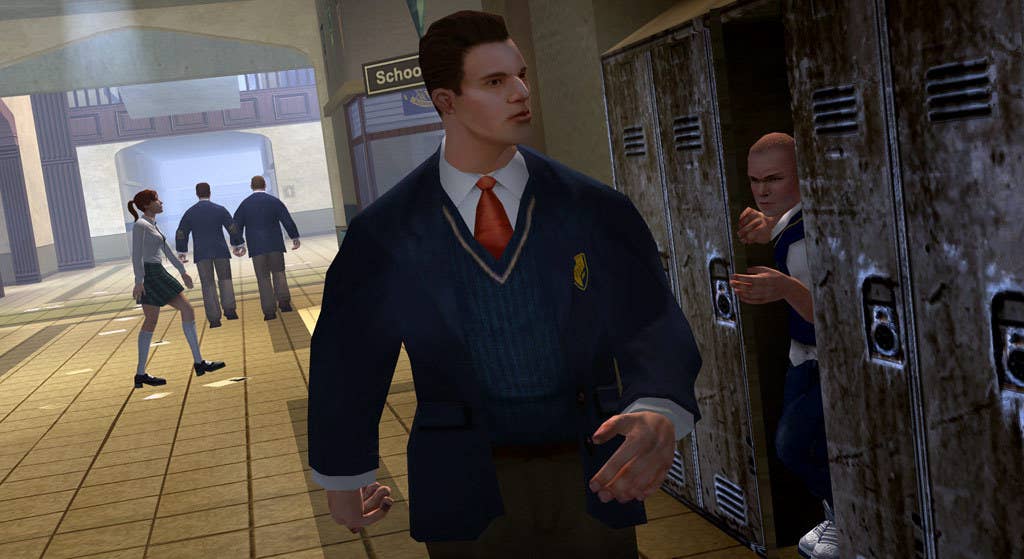
Bully 2: The Unfinished Symphony - Why Dan Houser’s Vision Remained a Dream
The whispers of a sequel to Rockstar Games’ cult classic, Bully, have echoed through the gaming community for years, fueling fervent speculation and desperate hope. While the original Bully, released in 2006, carved out a unique niche in the open-world genre by focusing on the trials and tribulations of student life at Bullworth Academy, the absence of a follow-up has always been a perplexing question. Now, insights from Dan Houser, a co-founder of Rockstar Games and the creative force behind many of their most iconic titles, shed crucial light on the complex realities that prevented Bully 2 from ever materializing. His candid reflections reveal a landscape where creative ambition often clashes with the overwhelming demands of game development, ultimately leading to the bittersweet realization that “you just can’t do all the projects you want.”
Our comprehensive investigation delves deep into the reasons behind the long-awaited sequel’s dormancy, exploring the multifaceted challenges that stood in its way. We will dissect the ambitious scope of what Bully 2 could have been, the inherent complexities of building upon the beloved foundation of its predecessor, and the strategic decisions that ultimately steered Rockstar’s resources towards other, perhaps more commercially viable or creatively manageable, ventures. This is not merely a recounting of missed opportunities, but an in-depth exploration of the intricate ecosystem of AAA game development, where visionary ideas are constantly weighed against practical limitations, market pressures, and the sheer scale of ambition.
The Enduring Legacy of Bully: A Unique Gaming Experience
Released in 2006, Bully (known as Canis Canem Edit in some regions) was a departure from the gritty realism and criminal underbelly that had defined Rockstar’s earlier successes like Grand Theft Auto. Instead, it placed players in the shoes of Jimmy Hopkins, a rebellious teenager navigating the treacherous social hierarchy of Bullworth Academy. The game was lauded for its innovative approach, offering a fresh perspective on adolescence, school life, and the universal struggle against bullying.
Core Gameplay Mechanics and Innovative Design
At its heart, Bully was a masterful blend of open-world exploration and character-driven narrative. Players were tasked with attending classes, completing assignments, and engaging in various mini-games, all while managing Jimmy’s social standing. The combat system, while not as visceral as other Rockstar titles, was uniquely tied to the schoolyard setting, featuring fistfights, slingshots, and a variety of pranks that became an integral part of the game’s charm. The intricate web of friendships and rivalries, the distinct personalities of the student body and faculty, and the ability to affect the school’s atmosphere created a deeply immersive and memorable experience.
Social Navigation and Character Development
A key element that set Bully apart was its emphasis on social navigation. Jimmy’s actions directly influenced his relationships with various cliques, from the jocks and the preppies to the nerds and the greasers. Gaining respect, making friends, or making enemies had tangible consequences, impacting how characters interacted with Jimmy and the opportunities available to him. This layer of social simulation, combined with Jimmy’s own growth and development throughout the story, resonated with players who saw reflections of their own school experiences, albeit in an exaggerated and often humorous light.
The Unfulfilled Promise of Bullworth Academy
The world of Bullworth Academy, with its distinct districts, secret passages, and recurring characters, felt remarkably alive. The game masterfully captured the essence of a boarding school environment, complete with its own set of rules, traditions, and underlying tensions. This rich tapestry of a setting, ripe with potential for further exploration and narrative expansion, laid the groundwork for what many believed would be a natural and highly anticipated sequel. The ending of Bully left many questions unanswered and hinted at future adventures for Jimmy, further solidifying the expectation of a continuation.
Dan Houser’s Revelation: The Burden of Ambition and Project Prioritization
The recent statements from Dan Houser offer a poignant glimpse into the decision-making processes at Rockstar Games, a studio renowned for its ambitious and meticulously crafted titles. Houser’s candid admission that “you just can’t do all the projects you want” encapsulates the harsh realities of running a studio at the forefront of the gaming industry, where the pursuit of excellence often requires difficult choices regarding resource allocation and creative focus.
The Scale of Rockstar’s Endeavors
Rockstar Games has consistently pushed the boundaries of what is possible in video games, developing sprawling, detailed worlds that demand immense amounts of time, talent, and financial investment. Titles like Grand Theft Auto V, with its colossal scope and ongoing live-service component, along with the critically acclaimed Red Dead Redemption 2, represent monumental undertakings. These projects, by their very nature, consume the lion’s share of a studio’s resources, leaving limited bandwidth for the development of entirely new IPs or ambitious sequels to established, but perhaps less commercially dominant, franchises.
Resource Allocation and Creative Bandwidth
The development of a modern AAA video game is an incredibly resource-intensive endeavor. From the hundreds of artists, programmers, designers, and writers required to bring a virtual world to life, to the extensive testing and marketing campaigns, the financial and human capital demands are astronomical. For a studio like Rockstar, known for its unwavering commitment to quality and polish, prioritizing projects becomes a strategic necessity. Pursuing a highly anticipated sequel like Bully 2 would have inevitably meant diverting resources and attention from ongoing development of other flagship titles or entirely new ventures that might have a broader market appeal or align more closely with the studio’s immediate strategic goals.
The “Can’t Do All Projects” Philosophy
Houser’s statement underscores a fundamental truth in creative industries: there are always more ideas than there are resources to execute them. The allure of returning to the beloved world of Bully must have been strong, but the practicalities of development likely presented an insurmountable hurdle. The sheer scale of commitment required to deliver a Bully 2 that would meet the high expectations of fans and the studio’s own exacting standards would have demanded a significant portion of their development capacity. This often leads to a difficult but necessary prioritization, where some projects, however desirable, are ultimately put on hold or shelved indefinitely in favor of others that are deemed more feasible or strategically advantageous at that particular time.
The Evolution of Game Development Demands
The gaming industry has evolved dramatically since Bully’s initial release. The technical complexity, graphical fidelity, and sheer scale of open-world games have increased exponentially. Developing a Bully 2 in today’s landscape would not simply be a matter of replicating the formula of the original; it would necessitate a complete overhaul of systems, a significant expansion of content, and a graphical leap that would rival the studio’s other contemporary offerings. This escalating demand for technical prowess and content depth further exacerbates the resource allocation challenges.
Technological Advancements and Expectations
The leap in hardware capabilities from the PlayStation 2 era to the current generation of consoles and PCs means that a modern Bully 2 would be expected to deliver a level of visual fidelity and environmental detail that was unimaginable in 2006. This requires cutting-edge engine technology, vast teams of artists and animators, and complex rendering techniques. The sheer technical undertaking alone would be a significant undertaking, demanding a substantial investment in research and development, as well as a skilled workforce capable of implementing these advanced technologies.
The Scope Creep of Modern Open Worlds
Modern open-world games are characterized by their immense scale and the sheer volume of content they offer. Players expect vast, interactive environments, a multitude of side activities, and intricate gameplay systems. Translating the relatively contained environment of Bullworth Academy into a modern, expansive open-world experience would require a significant expansion of the game’s scope, which in turn amplifies the development time, costs, and complexity. The original Bully thrived on its focused approach; a modern sequel would likely face pressure to broaden its horizons, a decision that would undoubtedly impact its development trajectory.
The Creative Road Not Taken: What Could Bully 2 Have Been?
While Bully 2 never saw the light of day, the speculative discussions and rumors that have circulated over the years offer tantalizing glimpses into what such a sequel might have entailed. The potential for expanding the narrative, introducing new gameplay mechanics, and further developing the unique world of Bullworth Academy was immense.
Expanding the Bullworth Universe
A Bully 2 would have had the opportunity to take players beyond the familiar confines of Bullworth Academy. Imagine exploring the surrounding town, interacting with a wider array of characters, and experiencing a more comprehensive portrayal of adolescent life. The potential for new social dynamics, different cliques, and even entirely new academic challenges presented a fertile ground for creative storytelling.
New Environments and Social Structures
The original Bully offered a microcosm of school life. A sequel could have expanded this to encompass the wider town of Bullworth, introducing new locations like a local arcade, a diner, a skate park, or even venturing into neighboring towns or rural areas. This expansion would allow for a richer tapestry of characters, including parents, local businesses, and a more diverse range of adolescent subcultures beyond those found within the school walls. The introduction of new social groups, rival gangs, or even differing community dynamics would have provided fresh avenues for Jimmy to navigate and influence.
Narrative Threads and Character Arcs
The ending of Bully left Jimmy’s future open-ended, hinting at further escapades. A sequel could have picked up Jimmy’s story, perhaps a few years later, as he navigates college or the early stages of adulthood, facing new challenges and continuing his quest for personal growth and justice. Alternatively, it could have introduced a new protagonist, allowing for a fresh perspective on the Bullworth experience. The potential for complex narratives, exploring themes of identity, consequence, and the enduring impact of one’s actions, remained a compelling prospect.
Innovations in Gameplay and Mechanics
Building upon the solid foundation of the original, Bully 2 could have introduced significant innovations in gameplay. The combat system, social mechanics, and academic elements could have been refined and expanded, offering a deeper and more engaging player experience.
Refined Combat and Prank Systems
The distinct combat system of Bully, characterized by its focus on non-lethal encounters and elaborate pranks, was a standout feature. A sequel could have introduced new weapons, more complex combat maneuvers, and an even wider array of creative pranks that could be used to outwit opponents or manipulate social situations. Imagine evolving the slingshot mechanics, incorporating environmental interactions for more elaborate traps, or even introducing team-based pranks that require strategic coordination.
Deeper Social Simulation and Relationship Dynamics
The social simulation in Bully was groundbreaking for its time. Bully 2 could have taken this even further, with more nuanced relationship systems, allowing for deeper friendships, more complex rivalries, and even romantic entanglements. The impact of Jimmy’s actions on his reputation and his relationships could have been more profound, leading to a truly dynamic social experience where player choices have lasting consequences. This could have included reputation systems that unlock new dialogue options, unique quests, or even alter the behavior of entire school cliques based on Jimmy’s standing within the social hierarchy.
Expanded Academic and Extracurricular Pursuits
The academic elements of Bully, while charming, could have been significantly expanded. A sequel might have introduced a wider variety of classes, more challenging mini-games, and even more involved extracurricular activities like sports teams, debate clubs, or drama productions. These pursuits could have offered players different ways to gain influence, develop skills, and unlock unique story branches, adding further depth and replayability to the game. Imagine a more robust sports system with league play, a functioning debate club where dialogue choices influence outcomes, or even a theatrical production where Jimmy’s performance impacts his standing.
The Strategic Decisions of Rockstar: Focus on Established Franchises
Ultimately, the decision to prioritize other projects over Bully 2 is a testament to Rockstar’s strategic acumen and its commitment to delivering flagship titles that resonate with a broad audience and secure long-term success. The immense success of franchises like Grand Theft Auto and Red Dead Redemption necessitates a significant focus on their continued development and expansion.
The Dominance of Grand Theft Auto and Red Dead Redemption
Rockstar’s flagship franchises, Grand Theft Auto and Red Dead Redemption, have achieved unparalleled commercial and critical success. The ongoing evolution of Grand Theft Auto Online, with its consistent updates and massive player base, represents a significant ongoing investment. Similarly, Red Dead Redemption 2’s critical acclaim and enduring popularity have solidified its place as a cornerstone of Rockstar’s portfolio. These titles demand a considerable portion of the studio’s resources, talent, and strategic attention.
Grand Theft Auto Online’s Enduring Appeal
The continued success of Grand Theft Auto Online is a testament to its expansive content, regular updates, and the immense player community it cultivates. Maintaining and evolving this massive online world requires a dedicated team and a constant stream of new content, features, and events. The commercial success of GTA Online, in particular, provides a powerful incentive for Rockstar to continue investing heavily in this franchise, as it represents a significant and reliable revenue stream.
Red Dead Redemption 2’s Critical and Commercial Impact
Red Dead Redemption 2 was a monumental achievement, lauded for its unparalleled attention to detail, its rich narrative, and its breathtaking open world. The game’s critical acclaim and commercial success solidified its status as one of the most important titles in modern gaming. Its ongoing sales and the continued engagement of its player base ensure that it remains a key focus for Rockstar, both in terms of potential future expansions and as a benchmark for their future endeavors.
The Unavoidable Trade-offs in AAA Development
The reality of AAA game development is that resources are finite. While the creative desire to develop a Bully 2 might have been present, the practical considerations of resource allocation and the strategic imperative to focus on proven revenue streams and critically acclaimed franchises likely led to the difficult decision to put the sequel on hold indefinitely. This is not a reflection of the potential quality of Bully 2, but rather an acknowledgment of the complex business and creative realities that govern the development of large-scale video games.
Financial Investment and Return on Investment
Developing games of Rockstar’s caliber involves enormous financial investment. The potential return on investment for projects like Grand Theft Auto and Red Dead Redemption is significantly higher and more predictable than for a niche sequel to a beloved but less commercially dominant title like Bully. This economic reality plays a significant role in shaping development priorities, as studios must ensure the financial viability of their ambitious undertakings.
Strategic Vision and Market Positioning
Rockstar Games has cultivated a reputation for delivering genre-defining experiences. Their strategic vision often involves focusing on projects that can push the boundaries of interactive entertainment and capture the attention of a global audience. While Bully holds a special place in the hearts of many, its market appeal might be considered more niche compared to the broad, universal themes explored in their flagship franchises. This strategic positioning influences the types of projects that receive the green light.
Conclusion: The Unfinished Symphony of Bully 2
The story of Bully 2 is, in many ways, a metaphor for the challenges and compromises inherent in the world of high-end game development. Dan Houser’s candid remarks offer a vital perspective, reminding us that even the most passionate creators face limitations. While the absence of a sequel to Bully is undoubtedly a disappointment for its dedicated fanbase, understanding the complex interplay of ambition, resources, and strategic decision-making provides a valuable insight into why this beloved title remained an “unfinished symphony.” The dream of revisiting Bullworth Academy with Jimmy Hopkins may persist, but the realities of Rockstar’s creative engine have steered their focus towards other monumental achievements. The legacy of Bully endures, a testament to its unique charm and innovative design, even as the possibilities of Bully 2 remain a tantalizing “what if” in the annals of gaming history.