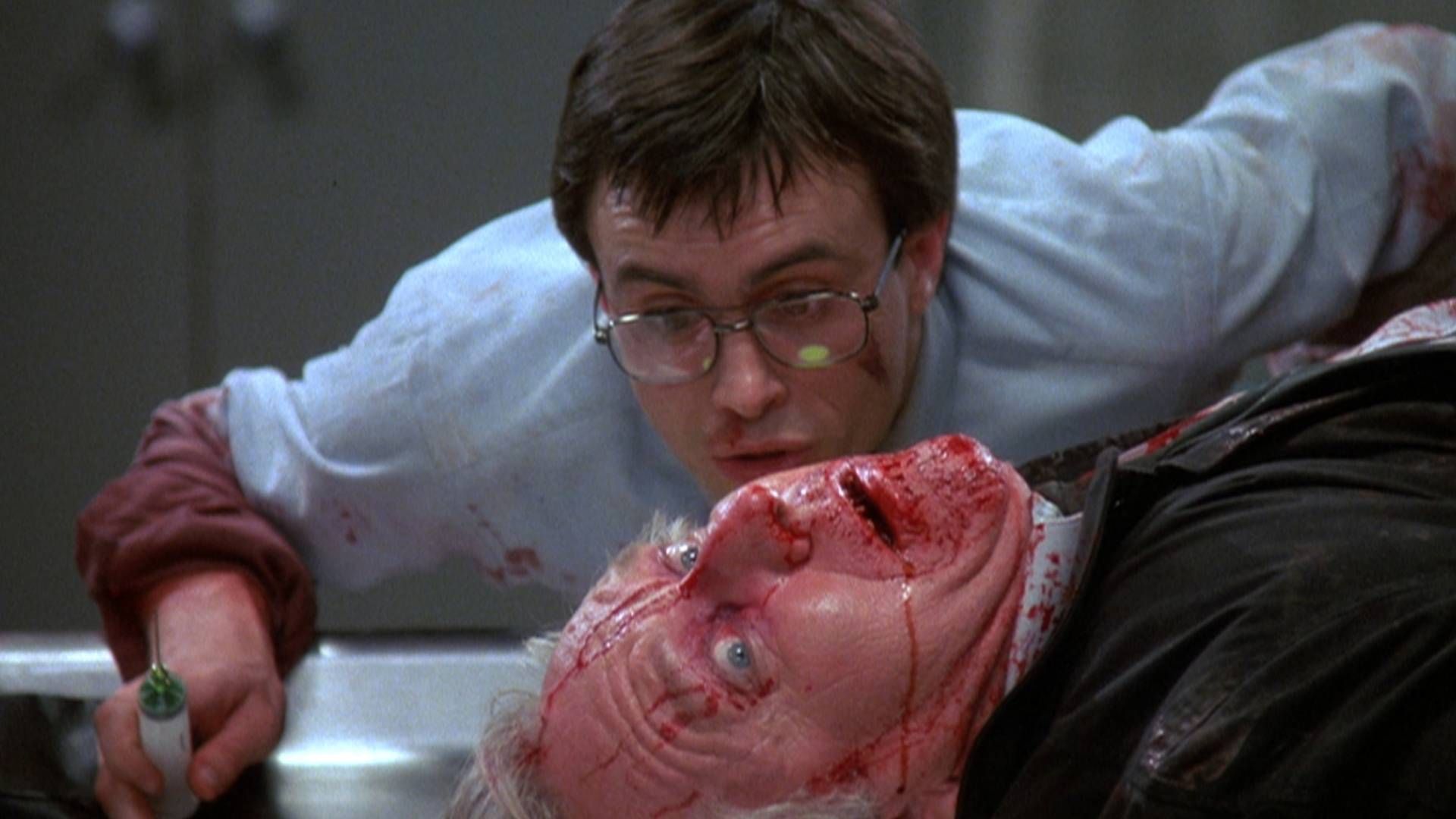
Re-Animator: The Quintessential Zombie B-Movie Masterpiece Streaming Free
When contemplating the pantheon of zombie B-movies, few films command as much reverence and enduring appeal as Stuart Gordon’s Re-Animator. This cinematic gem, a visceral and darkly comedic adaptation of H.P. Lovecraft’s story “Herbert West–Reanimator,” remains a benchmark for independent horror, celebrated for its cheap special effects, buckets of fake blood, and transgressive sexual behavior. It’s a film that doesn’t shy away from the grotesque, reveling in its own brand of madness, and its continued accessibility, particularly its free streaming availability, ensures its legacy as a foundational text in the horror genre. At Gaming News, we believe understanding the enduring power of such films is crucial, not just for horror aficionados, but for anyone appreciating innovative and audacious filmmaking.
The Enduring Allure of Re-Animator: A Genre-Defining B-Movie
Re-Animator is more than just a collection of shocking scenes; it’s a masterclass in how to craft compelling horror on a limited budget. Its brilliance lies in its ability to balance genuine scares with outrageous humor, a tightrope walk that many films attempt but few successfully navigate. The narrative centers on the brilliant but deranged Dr. Herbert West, a medical student obsessed with reanimating the dead. His methods are, to put it mildly, unorthodox, and his pursuit of scientific discovery often leads to catastrophic, and hilariously gory, consequences. The film’s dedication to practical effects, a hallmark of classic B-movies, imbues it with a raw, tangible horror that CGI often struggles to replicate. The sheer volume of fake blood used is legendary, creating a visual language of excess that perfectly complements the film’s unhinged tone.
A Legacy Forged in Lovecraftian Dread and Gothic Grandeur
While often pigeonholed as pure exploitation, Re-Animator’s roots are firmly planted in the literary soil of H.P. Lovecraft. Gordon and his co-writers, William J. Bilheimer and Dennis Paoli, masterfully distilled Lovecraft’s cosmic horror and scientific dread into a narrative that, while diverging significantly from the source material in tone and explicit content, captures the spirit of forbidden knowledge and its terrifying repercussions. The film takes the core concept of West’s obsession with death and life and amplifies it through a lens of modern grotesque. The isolated, gothic atmosphere of the Miskatonic University medical school, coupled with the increasingly bizarre experiments, creates a palpable sense of unease that underpins the film’s more outlandish moments. This blend of literary inspiration and B-movie bravado is a key reason for its lasting impact.
The Unforgettable Performances Fueling the Madness
Central to Re-Animator’s success are its iconic performances. Jeffrey Combs as Dr. Herbert West is nothing short of revelatory. He imbues West with a chilling, detached brilliance, a man so consumed by his singular goal that he views the ethical implications of his actions as mere inconveniences. Combs’s delivery of West’s deadpan pronouncements and his manic intensity are captivating, making him one of horror cinema’s most memorable villains, or perhaps more accurately, anti-heroes. Alongside him, Bruce Abbott as Dr. Dan Cain provides the audience’s entry point into the madness, a more conventionally heroic figure caught in West’s increasingly dangerous orbit. The chemistry between Combs and Abbott is crucial, oscillating between reluctant partnership and outright animosity. Barbara Crampton as Megan Halsey delivers a performance that is both vulnerable and surprisingly resilient, becoming an unwilling participant in West’s horrifying experiments, and later, a formidable force in her own right. Her character’s journey is pivotal, highlighting the film’s willingness to push boundaries even within its depiction of its female protagonist.
The Artistic Vision: Gordon’s Maestro of Macabre
Stuart Gordon’s direction in Re-Animator is a masterclass in independent filmmaking. Working with a modest budget, he achieves a visual dynamism and narrative momentum that many higher-budget films fail to capture. Gordon’s keen understanding of pacing allows the film to lurch from moments of intense dread to outright slapstick with remarkable fluidity. His embrace of the absurd, coupled with a genuine commitment to visceral horror, creates a viewing experience that is both exhilarating and disturbing. The film’s visual palette, often dominated by dark, shadowy interiors and bursts of lurid color, contributes significantly to its unsettling atmosphere. Gordon’s ability to wring maximum impact from his resources is a testament to his inventive spirit and his deep understanding of what makes a horror film truly effective.
The Signature Style: Cheap Effects, Abundant Gore, and Transgressive Themes
The phrase “cheap special effects” often carries a negative connotation, but in the context of Re-Animator, it signifies a deliberate aesthetic choice that enhances the film’s charm and impact. The practical effects, while sometimes rudimentary, possess a certain tactile quality that makes the gore all the more impactful. The iconic scene involving a severed head and a cat, or the various dismemberments and reanimations, are executed with a gleeful, no holds barred approach. This commitment to buckets of fake blood isn’t just for shock value; it’s integral to the film’s darkly comedic tone. The over-the-top gore becomes part of the spectacle, eliciting gasps and laughter in equal measure.
Furthermore, Re-Animator is notorious for its transgressive sexual behavior. This element, while controversial, is not gratuitous but rather a reflection of West’s complete disregard for societal norms and his utter obsession with conquering death, even at the expense of humanity. The film explores themes of bodily autonomy and the violation of the physical form in ways that were, and still are, shocking. This willingness to push boundaries, to delve into the uncomfortable and the taboo, is a defining characteristic of Re-Animator and a key reason for its cult status. It’s this unapologetic embrace of the extreme that sets it apart.
Re-Animator’s Enduring Impact on the Zombie and Horror Genres
The influence of Re-Animator on the zombie genre and horror cinema at large is undeniable. While it predates the modern zombie resurgence that began in the late 1990s, its inventive approach to reanimation and its darkly humorous take on the undead have resonated with subsequent filmmakers. West’s method of reanimating a fresh corpse, often leading to a violently unstable and aggressive creature, offers a different paradigm from the shambling hordes of traditional zombie lore. This concept of a reanimated subject with lingering, albeit corrupted, consciousness provided a fertile ground for further exploration.
Beyond zombies, Re-Animator’s success demonstrated the viability of intelligent, character driven B-movies that could achieve critical acclaim and commercial success despite modest budgets. It proved that originality, strong direction, and memorable performances could triumph over lavish special effects. The film’s blend of science fiction, horror, and black comedy became a template for countless imitators, solidifying its place as a seminal work that continues to inspire filmmakers and delight audiences. Its unique brand of transgressive horror and its unwavering commitment to its own bizarre vision have cemented its status as a true classic.
The Power of Accessible Horror: Why Re-Animator is Streaming Free
The fact that Re-Animator is streaming for free is a significant factor in its continued accessibility and relevance. In an era where cinematic experiences can be costly, having such a foundational piece of horror genre history available without charge allows new generations of fans to discover its brilliance. This accessibility broadens its reach, ensuring that its influence continues to spread and its iconic moments remain part of the cultural lexicon. For enthusiasts of zombie B-movies, independent horror, and the darkly comedic, the opportunity to experience Re-Animator without financial barriers is invaluable. It allows for casual viewing as well as deep dives into its thematic richness and cinematic craft.
A Deep Dive into Key Scenes and Their Lasting Impact
The film is peppered with moments that have become etched into the annals of horror cinema. The initial reanimation of a dead cat, a scene of almost comical absurdity juxtaposed with genuine creepiness, sets the stage for the horrors to come. Then there’s the infamous “hand scene,” a masterpiece of practical gore and dark humor that showcases the terrifying unpredictability of West’s creations. The climactic confrontation within the hospital, a whirlwind of severed limbs, reanimated corpses, and escalating chaos, is a tour de force of B-movie mayhem. Each scene is crafted with a deliberate intent to shock, amuse, and disturb, demonstrating Gordon’s exceptional command of tone and visual storytelling. The meticulous attention to detail in the makeup and gore effects, even within the constraints of a B-movie budget, is remarkable. The way the reanimated characters twitch, contort, and move with unnatural rigidity is a testament to the skill of the effects artists involved.
The Miskatonic University Setting: A Character in Itself
The stark, sterile, yet inherently sinister medical school environment of Miskatonic University serves as more than just a backdrop; it’s a character in itself. Its labyrinthine corridors, dimly lit laboratories, and oppressive architecture create an atmosphere of isolation and dread that perfectly complements the unfolding horrors. The contrast between the scientific pursuit of knowledge and the descent into madness that West orchestrates within these hallowed halls is a recurring motif. The academic setting, usually associated with order and reason, becomes a fertile ground for chaos and the grotesque, amplifying the film’s central themes of ambition gone awry. This deliberate choice of setting adds a layer of intellectual horror to the visceral scares.
West’s “Serum”: The Heart of the Reanimation Frenzy
The glowing green serum that Dr. Herbert West develops is the literal and metaphorical catalyst for all the mayhem. This potent concoction, capable of resurrecting the dead, becomes the object of obsession for West and the source of terror for those around him. The serum’s unpredictable nature—it doesn’t restore the deceased to their former selves but rather creates aggressive, decaying, and often uncontrollable entities—is central to the film’s narrative drive. The visual representation of the serum, its eerie glow and bubbling texture, adds to its mystique and danger. Its use is not limited to simply bringing things back to life; it’s a tool that West wields with reckless abandon, often leading to horrifying mutations and heightened aggression in his subjects.
Beyond the Gore: Thematic Depth and Critical Acclaim
While Re-Animator is celebrated for its explicit content and visceral thrills, it also possesses a surprising thematic depth. The film delves into the hubris of scientific ambition, the nature of life and death, and the perversion of the human form. West’s unwavering belief in his own genius, his dismissal of ethical boundaries, and his obsessive pursuit of the impossible serve as a cautionary tale about the potential dangers of unchecked scientific endeavor. The film’s exploration of what it means to be truly alive, or the horrifying consequences of merely existing without consciousness or control, adds a layer of philosophical inquiry to its otherwise wild narrative. It’s this complex interplay between the visceral and the intellectual that elevates Re-Animator beyond a simple gore-fest.
A New Wave of Independent Horror
Re-Animator emerged during a period when independent horror was experiencing a creative renaissance. Its success, along with that of other genre films of the era, demonstrated that ambitious and boundary-pushing cinema could thrive outside the traditional studio system. The film’s willingness to embrace the absurd, to blend extreme violence with black humor, and to tackle mature themes head-on paved the way for future generations of filmmakers to experiment and innovate within the horror genre. It proved that creativity and audacious vision could be more potent than massive budgets.
Why Re-Animator Remains a Must-Watch Zombie B-Movie
In conclusion, Re-Animator continues to hold its ground as one of the absolute best zombie B-movies ever conceived. Its potent cocktail of cheap special effects, buckets of fake blood, transgressive sexual behavior, and H.P. Lovecraftian dread, all orchestrated by the visionary Stuart Gordon, creates an experience that is both horrifying and hilariously entertaining. The film’s enduring appeal is a testament to its originality, its unforgettable performances, and its unwavering commitment to its own unique brand of madness. The fact that it remains streaming for free makes it more accessible than ever, solidifying its status as an essential watch for any fan of horror, cult cinema, or simply bold, unforgettable filmmaking. Its legacy is secure, a vibrant, bloody, and utterly brilliant piece of cinema that continues to shock and delight audiences decades later. For those seeking a truly iconic zombie B-movie experience, Re-Animator is an unmissable, and readily available, masterpiece.