Procedural Generation: Crafting Infinite Worlds and Unpredictable Adventures
At Gaming News, we believe that the heart of truly captivating gaming experiences lies in the boundless possibilities that emerge from procedural generation. This sophisticated technology allows developers to move beyond painstakingly handcrafted environments, instead empowering them to create vast, intricate, and perpetually surprising game worlds. The magic of stepping into a digital realm where the landscape shifts, the challenges evolve, and the very fabric of existence feels dynamic is a testament to the power of algorithms and creative design working in concert. We are not merely talking about randomized elements; we are exploring a fundamental shift in how game worlds are conceived and experienced, leading to unparalleled replayability and emergent storytelling.
The allure of the unknown is a primal human fascination. It’s the thrill of exploration, the excitement of discovery, and the constant, subtle tension that arises from not knowing precisely what lies around the next corner. Procedural generation taps directly into this innate human desire, offering players a sense of genuine adventure. Imagine booting up your favorite procedurally generated title and being greeted by a world that feels both familiar in its mechanics and entirely novel in its presentation. Perhaps the layout of a treacherous dungeon has been reconfigured, presenting a fresh tactical puzzle. Maybe the density and behavior of hostile creatures have been adjusted, demanding new strategies for survival. Or, in a moment of pure serendipity, a hidden cache of invaluable resources might appear in an unexpected nook, rewarding keen observation and a spirit of persistent exploration. This is the essence of procedural generation – the promise of a game that feels alive, a world that is not static but constantly reinventing itself for each and every player.
The Core Mechanics of Procedural Generation
At its heart, procedural generation is about using algorithms – sets of rules and instructions – to create data, rather than having humans manually define every single element. In the context of video games, this data can encompass a breathtaking array of components: terrain, levels, characters, items, quests, narratives, and even the underlying rules of the game itself. Instead of a developer meticulously sculpting every mountain peak, carving every riverbed, and placing every enemy patrol, a procedural generation system can be instructed to follow a series of guidelines. These guidelines dictate how the world should be formed, the types of biomes that might appear, the probability of finding certain resources, and the conditions under which specific events might occur.
Noise functions, such as Perlin noise and Simplex noise, are foundational to generating natural-looking terrains. These mathematical functions produce smooth, organic-looking patterns that can be used to simulate elevation, temperature, humidity, and other environmental factors. By adjusting the parameters of these noise functions, developers can create everything from rolling hills and vast plains to towering mountain ranges and deep canyons. Further layers of complexity can be added by incorporating fractal algorithms, which allow for self-similarity at different scales, resulting in incredibly detailed and realistic landscapes. Think of a coastline: a large-scale noise function might define the general shape, while smaller-scale fractal noise adds the intricate details of bays, inlets, and rocky outcrops.
Beyond terrain, procedural generation extends to the creation of dungeon layouts and level design. Algorithms can be employed to connect rooms, corridors, and passages in a way that feels both navigable and challenging. Techniques like Cellular Automata can be used to generate cave-like structures, where cells either grow or die based on their neighbors, leading to organic and winding passages. Wave Function Collapse, a more recent and powerful technique, uses a set of predefined tiles and rules to ensure that adjacent tiles fit together seamlessly, generating complex and aesthetically pleasing layouts that adhere to specific design constraints. This ensures that while the layout might be random, it doesn’t feel nonsensical or broken.
The generation of flora and fauna also benefits immensely from procedural techniques. Instead of hand-placing every tree and every creature, developers can define archetypes and then use algorithms to distribute them based on environmental factors. For instance, certain tree species might only grow in temperate biomes, while specific animal populations might thrive in mountainous regions or near water sources. Character generation, too, can be procedurally enhanced. By defining a range of customizable features, from facial structures and body types to clothing and equipment, procedural systems can create a vast diversity of unique NPCs, each with their own distinct appearance and potentially even their own behavioral patterns.
Even narrative elements can be procedurally generated. While crafting a deeply personal and emotionally resonant story often requires a human touch, procedural systems can generate plot hooks, quest objectives, and dialogue trees. Consider a system that generates a quest based on the player’s current location, their inventory, and the overall state of the game world. This could lead to dynamic events like a desperate plea for help from a villager whose crops have been blighted, or a bounty posted for a dangerous creature that has recently appeared in a nearby forest. The key here is to create frameworks that allow for meaningful variation and player agency, ensuring that the generated content feels relevant and engaging.
The Unfolding Canvas: Procedural Generation in Action
The impact of procedural generation on the gaming landscape is profound, offering a suite of benefits that resonate with both developers and players alike. For game studios, the ability to generate vast quantities of content programmatically can significantly reduce development time and cost. Instead of requiring an army of artists and level designers to handcraft every inch of a sprawling world, a robust procedural generation system can do much of the heavy lifting. This allows smaller teams to achieve ambitious scope and complexity that would otherwise be out of reach. Furthermore, it enables studios to iterate on designs much faster, tweaking algorithms and parameters to achieve the desired aesthetic and gameplay feel without the need for extensive manual adjustments.
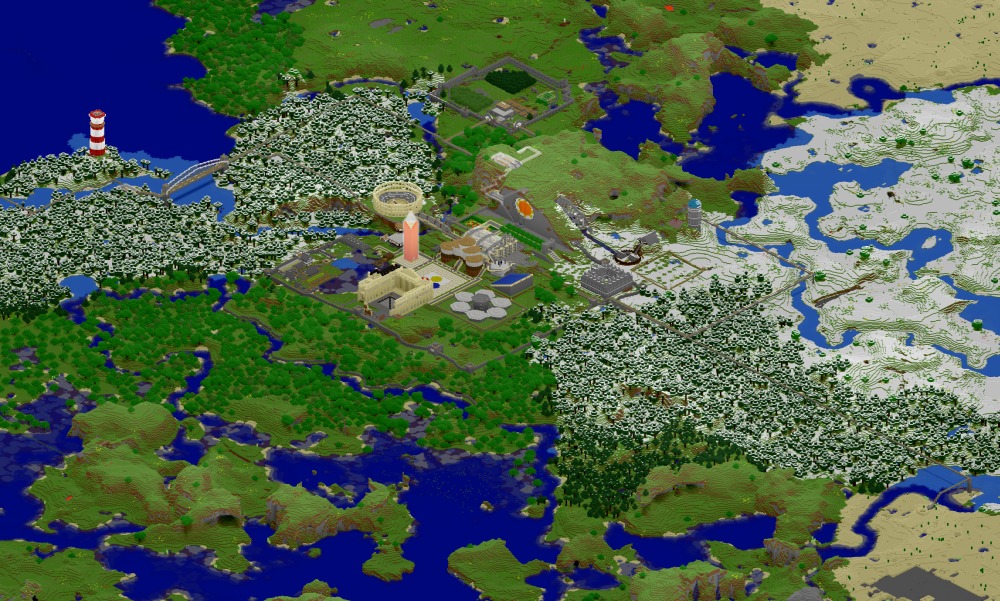
For players, the most immediate and impactful benefit is the unparalleled replayability that procedural generation offers. Games that rely on handcrafted content, while often rich and detailed, can become predictable after multiple playthroughs. Once the map is memorized, the enemy placements are known, and the optimal strategies are discovered, the sense of discovery can wane. Procedural generation shatters this predictability. Each new game session can present a fresh start, a unique arrangement of challenges, opportunities, and environmental features. This constant sense of novelty ensures that players remain engaged and excited, always eager to see what the next playthrough will reveal. Titles like Minecraft, with its procedurally generated infinite worlds, exemplify this principle, offering endless landscapes to explore and build upon. No Man’s Sky takes this to an even grander scale, promising a universe of unique planets, each with its own flora, fauna, and atmospheric conditions, all generated on the fly.
Procedural generation also fosters a sense of emergent gameplay. When systems interact in unexpected ways due to their random, yet rule-based, generation, novel and unscripted scenarios can arise. A carefully crafted dungeon might lead to a specific boss encounter, but a procedurally generated one could present a series of unexpected challenges that force players to adapt their tactics on the fly. This leads to unique player stories, memorable moments that are not pre-written by developers but are born from the dynamic interplay of the game’s mechanics and the player’s actions within a procedurally generated environment. These are the tales players share, the experiences that define their personal journeys within these digital worlds.
Furthermore, procedural generation can be a powerful tool for creating diverse and inclusive experiences. By defining a broad range of parameters and allowing algorithms to combine them in various ways, developers can generate a wide spectrum of characters, environments, and scenarios. This can lead to worlds that feel more representative and can cater to a wider array of player preferences and playstyles. The sheer scale achievable through procedural generation means that vast, sprawling environments can be populated with unique elements, making each player’s exploration feel personal and distinct.
Mastering the Algorithm: Design Considerations and Challenges
While the potential of procedural generation is immense, its successful implementation requires careful design and a deep understanding of its underlying principles. The greatest challenge lies in balancing the randomness with a cohesive and meaningful game experience. Purely random generation can often result in chaotic, nonsensical, or unplayable environments. Therefore, developers must establish a robust set of rules, constraints, and guidelines that shape the output of their algorithms.
Seed values are crucial in this regard. A seed is a numerical value that acts as a starting point for a random number generator. By using the same seed, the same sequence of “random” numbers will be produced, leading to the generation of identical worlds. This is invaluable for debugging, sharing specific game worlds with friends, and even for competitive play where a shared, identical environment is essential. However, for true player-driven variety, each player will typically start with a different, or algorithmically generated, seed.
The concept of constrained randomness is paramount. Instead of generating completely arbitrary elements, developers define parameters that limit the possibilities. For example, a procedurally generated forest might have rules dictating the maximum density of trees, the types of undergrowth appropriate for the biome, and the likelihood of finding specific fauna. This ensures that while the exact arrangement is random, the overall environment remains believable and consistent with the game’s established rules and aesthetic. Player-defined constraints can also play a role, allowing players to influence the type of worlds they generate, perhaps specifying a preference for mountainous terrain or a desert climate.
Quality control is another significant consideration. Even with well-defined constraints, procedural systems can sometimes produce undesirable results. Developers often employ post-processing filters or validation checks to identify and correct problematic outputs. This might involve ensuring that a generated level is always navigable, that there are no impossible jumps or impassable obstacles, or that key gameplay elements are present and accessible. Iterative testing and refinement of the generation algorithms are ongoing processes.
The challenge of ensuring meaningful variety is also critical. Simply creating more of the same, albeit in a different configuration, can lead to a sense of monotony. True procedural generation aims to create distinct experiences. This can be achieved by generating not just the layout of a level, but also the types of challenges encountered, the narrative context, and the rewards offered. A procedurally generated quest might involve a different enemy type, a new objective, or a twist on a familiar trope, keeping the player engaged through genuine novelty.
Finally, there’s the ongoing debate about the balance between procedurally generated content and handcrafted elements. Many of the most successful games that utilize procedural generation often blend it with carefully designed handcrafted moments or areas. This allows developers to leverage the scalability and replayability of procedural systems while still ensuring moments of unique artistic vision and expertly crafted gameplay challenges. This hybrid approach often yields the most compelling results, offering the best of both worlds.
The Future is Generated: Evolving Frontiers of Proceduralism
As technology advances and our understanding of algorithms deepens, the potential applications of procedural generation in gaming are only set to expand. We are on the cusp of a new era where procedural content generation (PCG) will become even more sophisticated, blurring the lines between what is programmed and what is perceived as authored.
One of the most exciting frontiers is the development of AI-driven procedural generation. Imagine systems that not only generate content based on predefined rules but can also learn from player behavior and adapt the generation process accordingly. This could lead to games that dynamically adjust their difficulty, complexity, and even narrative elements in real-time, creating a truly personalized and responsive experience for each individual player. Games could learn what types of challenges a player enjoys and generate more of them, or conversely, identify areas where a player struggles and offer tailored support or alternative paths.
The integration of machine learning will be key. By training models on vast datasets of existing game content and player interactions, procedural generation systems can learn to create more aesthetically pleasing, functionally sound, and engaging content. This could lead to the generation of more nuanced and believable character behaviors, more intricate and aesthetically sophisticated environmental designs, and even more compelling and unpredictable narrative arcs.
Furthermore, the exploration of virtual reality (VR) and augmented reality (AR) presents unique opportunities for procedural generation. The immersive nature of these technologies demands rich, expansive, and dynamic environments. Procedural generation is ideally suited to creating the sheer scale and variety required to make VR and AR worlds feel truly alive and engaging. Imagine stepping into a VR world where every planet you visit is unique, every cave system is uncharted, and every encounter is a fresh surprise, all generated seamlessly around you.
The ongoing development of more accessible PCG tools will also empower a new generation of game developers. As these tools become more user-friendly, we can expect to see an explosion of innovative games that harness the power of procedural generation, pushing the boundaries of what is creatively and technically possible. This democratization of advanced content creation techniques will undoubtedly lead to a more diverse and vibrant gaming ecosystem.
Ultimately, procedural generation is not just a tool for creating endless content; it is a philosophy of game design that embraces the beauty of the unpredictable. It allows us to craft worlds that feel boundless, where every adventure is a unique journey, and where the thrill of discovery is always just a click away. At Gaming News, we are excited to witness and report on the continued evolution of this transformative technology, as it shapes the future of interactive entertainment and delivers truly unforgettable experiences. The promise of random worlds is not one of chaos, but of infinite, captivating possibility.