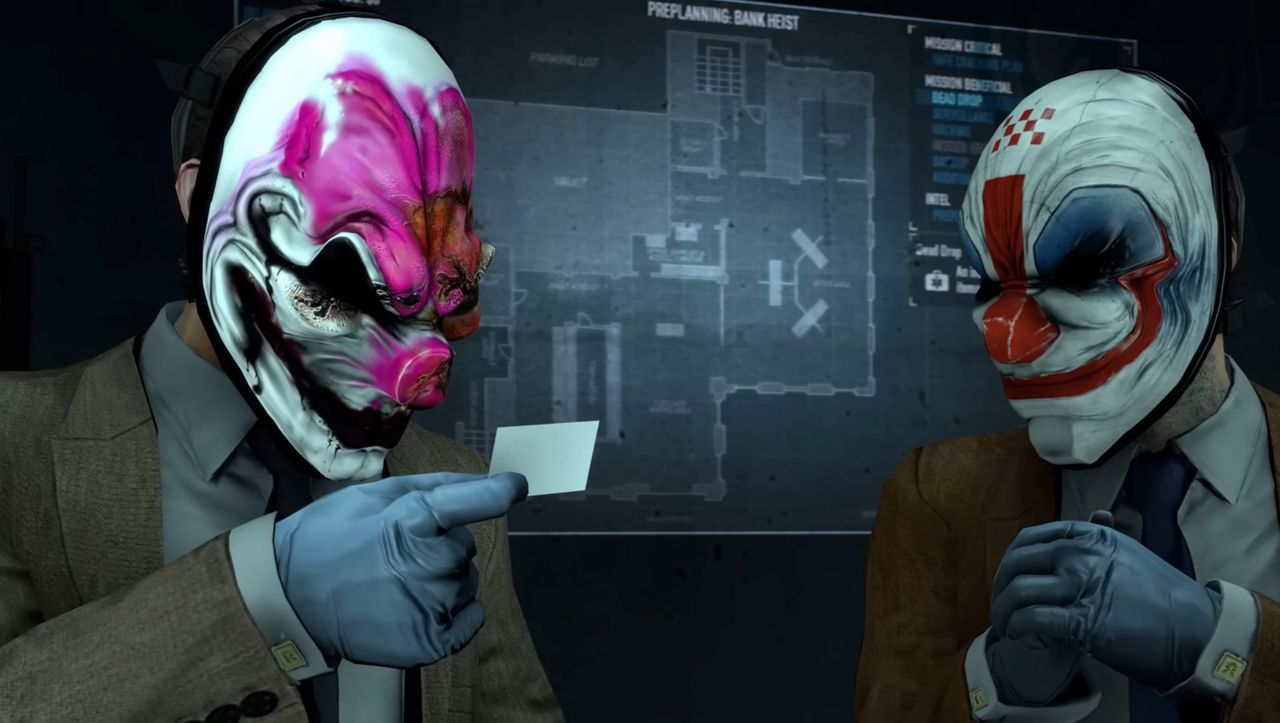
Louvre’s Hilarious Security Lapse: When ‘Louvre’ Was the Password, Gaming NPC Opsec Suddenly Makes Sense
The art world was recently rocked by a revelation that, for many in the gaming community, felt eerily familiar. Reports emerged detailing a security breach at the prestigious Louvre Museum, where the password for their video surveillance system was discovered to be the utterly unremarkable word “Louvre.” This astonishingly lax approach to security, or “opsec” (operational security) as it’s colloquially known, has not only sent shockwaves through institutions responsible for safeguarding priceless artifacts but has also, perhaps more surprisingly, brought into sharp focus the often-derided security practices of video game characters. Suddenly, the seemingly nonsensical decisions made by NPCs (Non-Player Characters) in our favorite digital worlds don’t appear quite so absurd. In fact, they might just be a reflection of a surprisingly pervasive, if unintentional, understanding of human fallibility.
The implications of the Louvre’s security bungle are profound. It underscores a critical point: even in environments where the highest levels of security are expected, the human element, and its inherent propensity for oversight or even outright laziness, can be the weakest link. When a world-renowned institution, tasked with protecting billions of dollars worth of cultural heritage, resorts to a password as transparent as the name of the institution itself, it begs the question of what constitutes effective security in the first place. This incident serves as a stark reminder that while sophisticated cybersecurity measures and physical barriers are essential, they are ultimately only as strong as the weakest human decision made within the system.
The Absurdity of Simplicity: How ‘Louvre’ Became the Key
The specific details surrounding the Louvre incident are still being meticulously pieced together by investigators. However, the core revelation – that the password for accessing potentially sensitive video footage of the museum’s vast halls was as simple as its own name – is a testament to a staggering lapse in judgment and protocol. In the realm of digital security, where threats are constantly evolving and the stakes are astronomically high, such a vulnerability is not merely an oversight; it is a fundamental failure.
Imagine the thought process, or lack thereof, that could lead to such a decision. Was it a case of convenience over caution? Perhaps an employee, under pressure or simply seeking an easy-to-remember identifier, defaulted to the most obvious choice. Or was it a deliberate, albeit misguided, attempt at internal simplicity, assuming that only authorized personnel would ever need access and that the name itself offered a form of de facto identification? Regardless of the exact rationale, the outcome is the same: a critical security system was rendered extraordinarily vulnerable.
This simplicity is precisely where the parallel with video game NPCs begins to emerge. How many times have we, as players, stumbled upon a hidden stash or confidential information because a guard left their access codes on a desk, scrawled on a note, or even, in some truly remarkable instances, uttered them aloud in a moment of unguarded conversation? The game designers, in their quest to create believable, albeit often flawed, characters and environments, have consistently incorporated these kinds of security oversights.
Game Logic vs. Real-World Negligence: A Surprising Convergence
The common trope of an NPC casually leaving crucial credentials lying around is often dismissed as a contrivance of game design, a necessary shortcut to advance the plot or provide players with gameplay progression. However, the Louvre incident suggests that these game mechanics might be tapping into a deeper, more unsettling truth about how real-world security protocols can sometimes falter.
Consider the sheer volume of data and information that systems like the Louvre’s video surveillance network generate. Protecting this data, ensuring its integrity, and controlling access to it are paramount. The choice of a password is a foundational element of this security architecture. To opt for a password that is not only commonplace but directly linked to the organization itself is akin to leaving the key to your house under the doormat.
In video games, this type of opsec failure often manifests in scenarios where:
- A guard will repeatedly patrol the same area, making them predictable.
- A keycard is found in a locker just outside a secured door.
- Passwords are written on whiteboards in plain view within a heavily guarded facility.
- Computers are left unlocked, with sensitive files accessible to anyone who happens to walk by.
These instances, while serving player convenience, are also, in their own way, simulations of human error and organizational oversight. The Louvre’s situation demonstrates that these “game logic” flaws are not confined to the digital realm; they bleed into the tangible world with disconcerting frequency.
The ‘Post-it Note’ Security Model: A Real-World Problem
The idea that a password as simple as “Louvre” could be used is not a far cry from the scenario of leaving a safe combination on a post-it note stuck to the safe itself. In fact, in terms of vulnerability, they are almost equivalent. Both represent a profound failure to appreciate the potential threat landscape and to implement even the most basic protective measures.
In a physical security context, a post-it note with a combination is an open invitation to anyone with ill intentions. In a digital security context, a password like “Louvre” is equally accessible to anyone with the slightest inkling of how to probe a system for common vulnerabilities. Both are examples of “dumpster-tier” opsec, a term that ironically echoes the kind of rudimentary security one might expect to find in a fictional narrative rather than a real-world, high-security environment.
The reasons behind such security lapses in the real world are multifaceted and often stem from:
- Lack of Training: Insufficient education on cybersecurity best practices and the importance of strong, unique passwords.
- Time Constraints: In fast-paced environments, employees might prioritize immediate tasks over diligent security procedures.
- Complacency: A false sense of security, believing that an attack is unlikely or that existing measures are sufficient.
- Poor Policy Enforcement: Even if good policies exist, a lack of consistent enforcement can lead to a drift towards lax practices.
- Human Nature: The inherent tendency towards convenience and the path of least resistance.
These factors are precisely what game designers often leverage to create engaging gameplay. They understand that if a player is presented with an easy way to overcome a security obstacle, they will likely take it. The Louvre’s unfortunate incident suggests that this understanding of human nature, and its susceptibility to simple solutions, is not just a game design tool but a genuine factor in real-world security breakdowns.
Unpacking the ‘Louvre’ Password Phenomenon: A Deeper Dive into Security Failures
The revelation that the Louvre’s video surveillance password was “Louvre” is more than just an amusing anecdote; it’s a critical case study in organizational security culture and the psychology of passwords. The ease with which this password could be discovered by an unauthorized party highlights a fundamental misunderstanding of the threat model and the importance of obscurity in security.
In the digital age, passwords serve as the first line of defense for countless systems. They are the keys that unlock access to sensitive data, control critical infrastructure, and protect personal information. When these keys are as obvious as the name of the entity they are meant to protect, the entire security framework is compromised. This is not a hypothetical scenario; it is a demonstrable failure that occurred in one of the world’s most iconic cultural institutions.
The Ubiquitous Threat of Predictable Passwords
The act of using a predictable password is a recurring theme in security breaches across various industries. While the Louvre’s specific choice is remarkably blunt, the underlying principle – relying on easily guessable information – is a widespread problem. Think about the common practice of using:
- Names: Personal names, pet names, family names.
- Dates: Birthdays, anniversaries, historical dates.
- Locations: Birthplaces, favorite cities, street names.
- Common Words: Dictionary words, simple phrases, sequences like “123456” or “password.”
These are precisely the types of passwords that hackers will often target first during brute-force attacks or social engineering attempts. The simplicity of the password “Louvre” means that any individual with a basic understanding of common password guessing techniques and a knowledge of the institution itself would have a high probability of success.
This mirrors the game design principle of creating a puzzle for the player to solve. In video games, a guard’s password might be related to their favorite food, their commanding officer’s name, or a recent event within the game world. While these are fictional, they are designed to be solvable within the context of the game. The Louvre’s situation, however, suggests that in the real world, the “puzzle” was solved not through clever deduction by a player but through the sheer, almost comical, obviousness of the solution.
Gaming’s ‘Dumpster-Tier’ Opsec: A Mirror to Reality
The term “dumpster-tier opsec” perfectly encapsulates the level of security demonstrated by the Louvre’s choice. It evokes an image of something so poorly protected that it might as well be discarded and left in a public dumpster. This is a description that, unfortunately, aligns with many security protocols observed in video game environments.
In RPGs (Role-Playing Games) and action-adventure titles, players often encounter scenarios where security is surprisingly superficial. For instance, a highly secured military base might have its security codes written on a crumpled piece of paper in a locker, or an important document detailing a secret plan might be left on a desk in an unguarded office. These are deliberate design choices by game developers to:
- Facilitate Player Progression: Without these “convenient” security lapses, players might get stuck, unable to advance through the game.
- Enhance Immersion (in a particular way): While it might seem counterintuitive, these flaws can contribute to a sense of realism by reflecting the imperfections found in the real world.
- Provide Opportunities for Stealth and Exploration: Players are rewarded for their observational skills and willingness to explore every nook and cranny.
The Louvre incident brings this game-like absurdity into stark reality. It suggests that the developers’ understanding of human fallibility in maintaining security is not entirely divorced from how real-world institutions can operate. The ease with which a “Louvre” password could be compromised is functionally similar to finding a keycard left in a public area within a game.
Is Leaving the Safe Combination on a Post-it Note That Much Worse?
The question of whether leaving a safe combination on a post-it note is “that much worse” than the Louvre’s password situation is a matter of degree, but fundamentally, they represent the same core problem: a catastrophic failure to safeguard sensitive information.
Post-it Note Combination: This is a physical security breach. The note itself, with the combination clearly written, could be found by anyone who has access to the physical location where the note is placed. If the note is in a public area, or an area accessible to unauthorized personnel, the safe is effectively unlocked. This is direct, tangible vulnerability.
‘Louvre’ Password: This is a digital security breach. The password is the key to accessing the video surveillance system. While not physically exposed in the same way as a written note, it is extremely susceptible to digital intrusion. An attacker could use network scanning tools, dictionary attacks, or even simple guessing based on contextual clues to gain access.
In essence, both scenarios involve a critical piece of sensitive information being made readily accessible due to a lack of diligence or a misunderstanding of the associated risks. The impact could be equally devastating. For the Louvre, access to their surveillance footage could reveal vulnerabilities in their physical security, track the movements of valuable assets, or even provide intelligence for further criminal activity. For a safe containing valuables, the loss is immediate and direct.
The gaming community’s familiarity with these kinds of security oversights in fictional worlds is what makes the Louvre revelation so striking. It’s a reminder that the sometimes-clumsy, sometimes-hilarious security measures we encounter in games are not always entirely fictional. They are, in part, a reflection of the inherent challenges in maintaining robust security in a world where human factors – convenience, oversight, and even laziness – play a significant role. The “dumpster-tier” opsec of game NPCs has, in this instance, walked right out of the screen and into the hallowed halls of one of the world’s greatest museums. This begs the question: are we adequately learning from the “mistakes” we observe in our virtual lives, and are institutions truly prioritizing operational security with the rigor it demands? The answer, at least for the Louvre, appears to be a resounding, and somewhat embarrassing, no.