Pokémon Legends: Z-A Review - Maintaining Rank: A Deep Dive into the Evolution of the Pokémon Experience
The world of Pokémon is one of perpetual evolution, a testament to the enduring appeal of capturing, training, and battling creatures that have become cultural icons. For longtime fans, the core formula of the mainline RPGs offers a comforting familiarity, a well-trodden path of progression. However, the introduction of the Pokémon Legends spin-off series has injected a vital element of surprise and innovation. Following the groundbreaking Pokémon Legends: Arceus which transported players to the expansive and untamed Hisui region, tasked with compiling its inaugural Pokédex, Pokémon Legends: Z-A takes a decidedly different, yet equally captivating, approach. While Arceus championed unbridled exploration, Z-A dedicates itself to refining and re-imagining the Pokémon experience within a more concentrated, urban setting, demonstrating Game Freak’s continued willingness to experiment with the beloved formula, even if at times, the echoes of tradition are undeniably present.
Our journey in Pokémon Legends: Z-A eschews the vast, open wilderness of its predecessor. Instead, the adventure unfolds within the confines of Lumiose City, the sprawling, vibrant metropolis that served as the central hub for Pokémon X and Y’s Kalos Region. While our preference leaned towards the expansive exploration offered in Legends: Arceus, the meticulously crafted Lumiose City proves to be an exceptional and engaging host for our extensive playthrough, spanning well over 30 hours. This densely packed urban environment presents an abundance of opportunities to uncover hidden items, engage in a variety of side missions, and locate crucial Pokémon Centers. Coupled with an ample network of fast-travel locations, navigating the city becomes a seamless and efficient experience, allowing for rapid traversal when our focus shifted towards specific objectives.
The Z-A Royale: A Revitalized Battle System
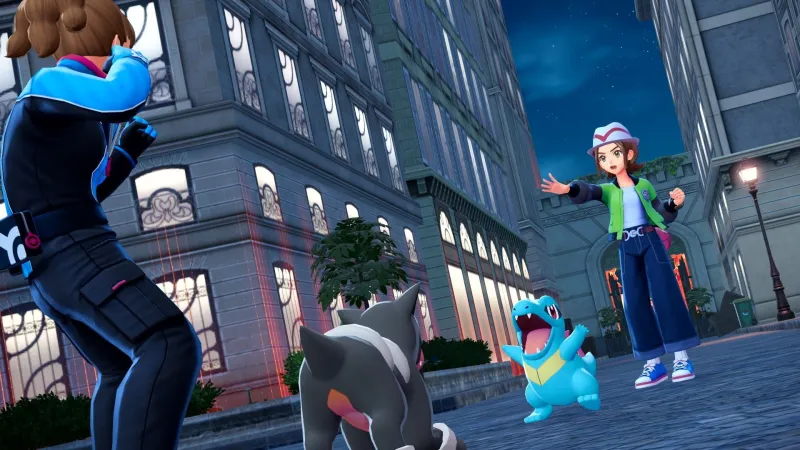
At the heart of Pokémon Legends: Z-A’s narrative lies the Z-A Royale, a competitive circuit that challenges players to engage in escalating battles within dynamic Battle Zones that materialize each night. This iteration introduces a real-time battle system that fundamentally alters the player’s interaction with their Pokémon. By commanding our companions to attack via intuitive face button inputs, the experience feels more immediate and visceral, truly immersing us in the role of a Pokémon trainer. The act of issuing commands and witnessing them unfold with careful consideration for timing, positioning, and crucial type matchups transported us directly into the thrilling dynamism of an anime episode.
The moves themselves may be familiar, rooted in the extensive legacy of Pokémon battles, but the integration of new mechanics such as cooldowns and upfront charge times necessitates a strategic rethinking of our Pokémon’s move sets. We found ourselves revisiting and utilizing moves that had previously been relegated to the sidelines in other titles, constantly adjusting our loadouts to adapt to the evolving combat scenarios. This dynamic approach to battle is a profound testament to the success of the new system. While we have long appreciated the deliberate nature of turn-based combat, the sheer immersion afforded by this real-time system is an unparalleled achievement within the Pokémon series, offering a fresh and exhilarating perspective on trainer battles.
Wild Zones: A Sanctuary for Discovery and Training
Complementing the urban exploration and competitive spirit of the Z-A Royale, the game’s Wild Zones provide concentrated pockets of wilderness where players can discover and capture a diverse array of Pokémon to bolster their teams. A particularly welcome change is the ability to still catch wild Pokémon even if they are inadvertently K.O.’d during battles, a welcome departure from previous games where a defeated wild Pokémon would simply vanish. This feature, especially relevant with the faster-paced combat, offers a forgiving yet engaging approach to team building. Furthermore, stumbling upon the formidable Alpha variants of wild Pokémon always culminates in intimidating yet rewarding miniboss-style encounters. Dedicating time to strengthening your team through these Wild Zones is not merely optional; it becomes a critical component for success when night descends and the Z-A Royale commences its nightly challenges.
Stealth and Strategy: An Imperfect Approach to the Advantage
Within the Battle Zones, a new strategic layer is introduced with the ability to creep up on trainers and their Pokémon, initiating battles with a stealth attack. This satisfyingly sneaky maneuver grants a significant advantage from the outset, and in some instances, can even result in a one-hit knockout. While we relished the opportunity to gain the upper hand through such clandestine tactics, the stealth system itself proved to be somewhat antiquated and unreliable. On several occasions, despite successfully landing a stealth strike, the targeted trainer would inexplicably spot us just as the attack registered, negating the intended advantage and allowing them to seize the initiative. Fortunately, these particular battles rarely posed a significant challenge, meaning the shortcomings of the stealth mechanics primarily served as a minor delay on our inevitable victory rather than a true impediment.
Promotion Matches and Narrative Integration: A Flawed but Fascinating Premise
The true test of skill within the Z-A Royale arrives in the form of Promotion Matches. These pivotal encounters occur after players have bested a sufficient number of trainers, serving as the gateway to ascending the ranks and progressing the game’s overarching narrative. The tournament-style premise is undeniably compelling, and the increased frequency of Mega Evolutions is a welcome evolution for X and Y’s signature mechanic, elevating it beyond a mere situational “push to win” button. However, when this tournament structure becomes inextricably intertwined with the storyline, the execution begins to falter.
For the sake of narrative expediency, players often find themselves skipping through large swathes of the lower ranks. Furthermore, the Promotion Matches themselves tend to devolve into predictable sequences punctuated by well-timed character appearances, ultimately revealing the initially captivating concept as a rather paper-thin narrative façade. This approach undermines the potential for genuine progression and diminishes the impact of the tournament itself as a narrative driver.
Rogue Mega Evolutions: Intense Encounters and Strategic Demands
The more genuinely compelling narrative threads emerge from a mysterious phenomenon: the appearance of Rogue Mega Evolved Pokémon throughout the city. Investigating the interplay between these events and the established lore of Pokémon X and Y provided a captivating mystery. Battling these formidable adversaries is an exhilarating experience. Unlike standard encounters, these Rogue Mega Evolved creatures not only target your Pokémon but also your player character, necessitating constant dodge-rolling and evasive maneuvers throughout the intense combat.
While these battles are undeniably intense and well-paced, they can also be frustrating when lacking the precise Pokémon type needed to counter effectively. Success in these encounters demands not only a Pokémon of the correct type and level but also one capable of Mega Evolving to truly contend with the opponent’s overwhelming power. This requirement adds a significant layer of strategic depth, forcing players to meticulously plan their teams and consider their Mega Evolution capabilities when facing these exceptionally powerful foes.
Lumiose City: A Hub of Side Content and Vertical Exploration
Beyond the demands of the Z-A Royale, Pokédex completion, and the ongoing battle against Rogue Mega Evolved Pokémon, Lumiose City offers a wealth of side content and exploration opportunities to keep players engaged. The game incentivizes players to complete various research tasks, such as capturing Pokémon of specific types or successfully navigating Wild Zones, by rewarding them with valuable TMs and other rare items. Simultaneously, the city’s inhabitants present a diverse range of requests for assistance, often involving trading or engaging in battles. While these side missions can sometimes feel perfunctory or lean towards tutorial territory, the allure of their worthwhile rewards consistently encouraged us to complete every available task.
These side missions also serve as pathways to previously inaccessible areas, including the city’s rooftops. Upon unlocking the ability to glide with the Rotom Phone, exploration dramatically expanded, allowing our character to leap between buildings with newfound freedom. We also actively sought out various construction scaffolding setups, which function as rudimentary platforming puzzles. While the challenges presented by these puzzles are not particularly demanding, and the designs can occasionally feel underdeveloped, they represent a unique and engaging method of leveraging the city’s inherent verticality, adding a refreshing dimension to urban exploration within the Pokémon universe.
Technical Presentation: A Stagnant Facade in a Dynamic World
Despite Pokémon Legends: Z-A’s generally smooth performance, a stark contrast to some other recent Pokémon releases at launch, the game’s overall technical presentation feels woefully out of step with other long-running and successful franchises in the gaming landscape. The most glaring omission is the lack of voice acting, a feature that has become a standard expectation in modern RPGs. Beyond this, the animations, visuals, and sound effects often feel several generations behind what is currently achievable.
The era of Pokémon being exclusively a handheld experience, with its inherent technological limitations, has long passed. While the initial transitions of the series to the Nintendo Switch suggested a period of adaptation for Game Freak on console platforms, it is now seven years into the Switch’s lifecycle. At this juncture, the expectation is that the series’ presentation should have evolved significantly beyond its current scope. The visual fidelity and polish that define many contemporary titles in the RPG genre are conspicuously absent, leaving Pokémon Legends: Z-A feeling somewhat dated in its presentation.
The Lingering Shadow of Déjà Vu and the Promise of the Future
Even though our last sojourn to Lumiose City was over a decade ago in Pokémon X and Y, the pervasive sensation of déjà vu was undeniable. However, this feeling was not directed towards the city itself, but rather towards the familiar Pokémon routine that underpins the core gameplay loop. Nevertheless, it is precisely within the areas where Legends: Z-A dares to experiment with the Pokémon formula that it truly shines. The game succeeds in delivering a novel experience that offers a potent glimpse into the future of the franchise. We are genuinely hopeful that this spirit of innovation will inspire Game Freak to continue pushing the boundaries and challenging the established conventions of what Pokémon games can and should be. The potential for truly groundbreaking evolution is palpable, and Pokémon Legends: Z-A serves as a strong, albeit imperfect, stepping stone towards that exciting future.