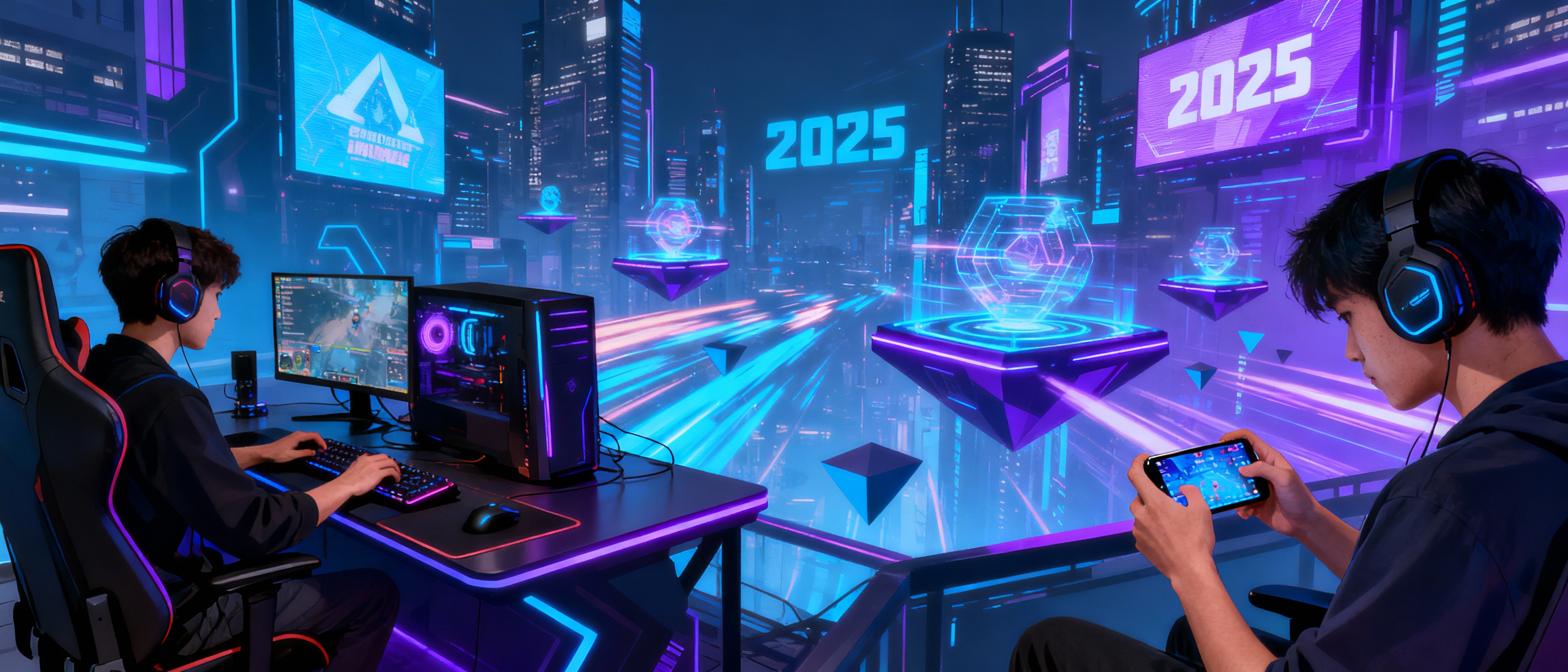
PC Gamers vs. Mobile Gamers: The Ultimate Showdown in 2025
Introduction: The Evolving Landscape of Digital Entertainment
We stand at a pivotal moment in the history of digital entertainment. The year 2025 marks a dramatic shift in how we experience video games. The once-clear distinctions between gaming platforms have blurred, giving rise to a dynamic ecosystem where the PC gamer and the mobile gamer are no longer separate entities but rather participants in a multifaceted industry. This article delves into the escalating rivalry between these two communities, exploring the technological advancements, the evolving player preferences, and the economic forces shaping this captivating showdown. We analyze the key strengths of each platform, dissecting their respective weaknesses and forecasting the trends that will dictate the future of gaming. The goal is not simply to declare a victor, but to offer a comprehensive understanding of the forces that are molding the entertainment landscape. The lines are now so blurry, that this is now not about platform, but player experience and satisfaction.
The Reign of the PC: Power, Performance, and Customization
For decades, the personal computer has reigned supreme as the platform of choice for the most demanding gamers. The PC offers unparalleled performance, graphics fidelity, and customization options.
Unleashing the Beast: Hardware Prowess in 2025
In 2025, the PC gaming experience is characterized by cutting-edge hardware. Graphics cards are pushing the boundaries of visual realism, boasting ray tracing capabilities, and artificial intelligence-driven upscaling technologies that deliver stunning frame rates at resolutions. Processors are becoming faster, more efficient, and offer unparalleled parallel processing power. Storage solutions have evolved beyond traditional hard drives, with solid-state drives (SSDs) providing lightning-fast loading times. The availability of custom liquid cooling systems is allowing enthusiasts to overclock their components to their utmost limits. With this enhanced performance comes a wider variety of immersive experiences. The use of virtual reality (VR) and augmented reality (AR) headsets has become more refined, allowing users to fully immerse themselves in games.
The Art of the Build: Customization and Peripheral Choices
One of the most defining aspects of PC gaming is the ability to tailor your experience. The PC gamer enjoys the freedom to build their rigs from scratch, choosing components that perfectly align with their gaming needs and budget. Custom PC builds are a badge of honor, allowing for the fine-tuning of performance, aesthetics, and ergonomics. The ecosystem of peripherals has also expanded, offering players an unparalleled array of choices. From mechanical keyboards with customizable switches to high-precision gaming mice with adjustable DPI settings, the PC gaming community places a high premium on performance and personalized comfort. The development of dedicated gaming chairs with lumbar support and ergonomic designs has further enhanced the comfort aspect. Furthermore, multiple monitor setups are a common sight, offering expansive views.
The Content Advantage: Game Libraries and Emerging Technologies
The PC boasts an extensive and diverse game library. PC gamers have access to a vast selection of titles, ranging from AAA blockbusters to indie gems, with a steady stream of new releases on platforms like Steam, GOG, and the Epic Games Store. The PC also benefits from the support of independent developers, who often release their games first or exclusively on PC. The emergence of technologies like DirectX 12 Ultimate and Ray Tracing continues to give PC gamers an edge in visual fidelity.
Mobile Gaming’s Ascendancy: Accessibility, Convenience, and the Social Factor
Mobile gaming has exploded in popularity in recent years, becoming a dominant force in the industry. Fueled by the ubiquity of smartphones and the convenience of on-the-go gaming, it has captured the attention of a massive and diverse audience.
The Smartphone as a Gaming Device: Advancements and Capabilities
The evolution of the smartphone has been instrumental in the rise of mobile gaming. In 2025, smartphones are powerful gaming devices. High-resolution screens with fast refresh rates, powerful processors, and long-lasting batteries are now standard features. Mobile games are benefiting from advancements in touch-screen technology and haptic feedback. The proliferation of 5G connectivity has solved the issue of lagging.
The Casual Gamer Revolution: Accessibility and Ease of Play
Mobile gaming’s accessibility is a key driver of its success. Games are readily available, instantly downloadable, and often free to play. The mobile platform caters to casual gamers. The simple gameplay mechanics, bite-sized sessions, and intuitive touch controls make it easy for players of all ages and experience levels to enjoy gaming.
The Social Experience: Multiplayer, Community, and Engagement
Mobile gaming also thrives on its social element. Multiplayer games are a staple of the platform, allowing players to connect with friends, family, and other gamers around the world. Social integration features, such as leaderboards, chat functions, and in-game events, create a sense of community. The rise of esports on mobile platforms has also boosted interest and player engagement, creating a competitive scene and a thriving ecosystem of content creators.
Bridging the Divide: Cross-Platform Gaming and the Future of Convergence
While the PC gamer and the mobile gamer may seem to inhabit separate worlds, the lines are blurring. Cross-platform gaming and the emergence of cloud gaming are leading to convergence.
Cross-Platform Play: Breaking Down Barriers
Cross-platform play allows players on different devices to compete against each other. This is expanding the user base for games and fostering a sense of community. Leading titles like Fortnite, Call of Duty: Mobile, and Genshin Impact are pioneering this trend, allowing players to jump between devices with their progress and shared experiences.
Cloud Gaming: The Liberation of Hardware
Cloud gaming services are evolving, with the ability to stream games directly to devices with minimal hardware requirements. Platforms like Nvidia GeForce Now, Google Stadia (and its successors), and Microsoft’s Xbox Cloud Gaming are making it possible to play graphically intensive titles on smartphones, tablets, and even smart TVs. While the current model has its weaknesses, it offers unprecedented accessibility.
The Hybrid Gamer: Embracing the Best of Both Worlds
The future of gaming is likely to be characterized by the rise of the hybrid gamer, who enjoys playing on multiple platforms. The ability to seamlessly switch between devices, save progress, and interact with friends regardless of their preferred platform will be a key differentiator. This will lead to further innovation in game design.
Economic Realities: Revenue Models, Market Shares, and the Future of Gaming Revenue
The economic dynamics are fueling this showdown. Understanding the financial incentives, market trends, and revenue models of the gaming industry is important to see the future.
Freemium vs. Premium: Monetization Strategies
The mobile gaming landscape is dominated by the freemium model, which offers games free of charge but relies on in-app purchases for revenue. While this model has proven to be incredibly lucrative, it also faces criticism regarding pay-to-win mechanics and aggressive monetization strategies. PC gaming encompasses a range of revenue models, including traditional sales, subscription services, and the growing popularity of battle passes.
Market Share Analysis: Tracking the Trends
While it’s difficult to predict the exact market share in 2025, several trends are evident. Mobile gaming is expected to remain a dominant force, fueled by its accessibility and global reach. The PC gaming market is likely to grow, supported by the continued technological advancements, the demand for high-fidelity gaming experiences, and esports. The growth of cloud gaming and cross-platform play will also shape the market landscape.
The Esports Factor: Competitive Gaming and Sponsorships
Esports is transforming the gaming industry, with competitive gaming events, tournaments, and professional leagues attracting millions of viewers. Both PC gaming and mobile gaming have vibrant esports scenes. PC esports has long dominated the professional circuit. The rise of mobile esports is now being driven by games like PUBG Mobile, Mobile Legends, and Call of Duty: Mobile, with significant viewership and sponsorship deals.
The Player Experience: Preferences, Playstyles, and the Ever-Changing Landscape
Understanding what gamers value most and how they like to play is critical to understanding the rivalry between PC gamers and mobile gamers.
Playstyles: Casual vs. Hardcore
PC gaming often caters to the hardcore gamer, who seeks depth, complexity, and immersive experiences. Mobile gaming is often preferred by casual gamers who appreciate quick, easy-to-learn games. These are not exclusive, with many gamers enjoying both platforms.
Game Genres: Exploring the Trends
PC gamers enjoy a wide variety of genres, including first-person shooters, role-playing games, strategy games, and massively multiplayer online role-playing games (MMORPGs). Mobile gaming sees success in puzzle games, casual action games, strategy games, and mobile versions of popular titles. Cross-platform play is becoming the norm.
Community and Player Engagement: The Social Fabric of Gaming
The PC gaming community is found on forums, streaming platforms like Twitch and YouTube, and dedicated Discord servers. Mobile gaming community engagement relies heavily on social media, in-game chat features, and social networking platforms. The rise of influencer marketing and content creation is also driving player engagement.
Technological Advancements: Innovation and the Future of Gaming
The future of gaming is being shaped by cutting-edge technology. Advancements in hardware, software, and networking are providing exciting possibilities for players.
Virtual Reality (VR) and Augmented Reality (AR)
VR and AR are poised to revolutionize the gaming experience. VR headsets are becoming more sophisticated, offering immersive gameplay experiences and greater graphical fidelity. AR offers potential for mobile gaming, enabling augmented reality games.
Artificial Intelligence (AI) and Machine Learning
AI and Machine Learning are driving innovation across the gaming industry. AI is used to create more sophisticated non-player characters (NPCs) and create dynamic game worlds. AI-driven gameplay will adapt to player behavior, generating unique game experiences.
The Metaverse and Beyond: Immersive Worlds
The concept of the metaverse is being discussed, with the potential to merge gaming, social media, and virtual reality into an immersive, interconnected world. Cloud gaming will become the core technology behind the metaverse.
Conclusion: The Future is Multi-Platform
The showdown between PC gamers and mobile gamers is not a zero-sum game. The future of gaming lies in its multi-platform nature.
Key Takeaways: A Recap of the Showdown
- PC gaming continues to provide high-performance experiences with unmatched customization and a vast library of games.
- Mobile gaming has become dominant due to its accessibility, convenience, and social elements.
- Cross-platform gaming and cloud gaming are breaking down the barriers between platforms.
- The economic incentives are driving competition and innovation.
- Player preferences and playstyles continue to evolve.
- Technological advancements in VR, AR, AI, and the metaverse will revolutionize gaming.
Predicting the Future: Trends and Predictions
The future of gaming is bright. The convergence of platforms will continue, with the lines between PC and mobile gaming blurring further.
- Expect more cross-platform games that will engage and bring new communities together.
- Cloud gaming will become more mainstream.
- VR/AR adoption will continue to grow, offering unprecedented immersion.
- AI and machine learning will continue to enhance gameplay experiences.
- Esports will continue to grow, with professional leagues.
The Ultimate Winner: The Gamer
In the final analysis, the ultimate winner of this showdown is the gamer. Regardless of the platform they choose, players will continue to benefit from technological innovation, greater accessibility, and a wider variety of gaming experiences. The future is exciting, and we eagerly await the evolution of the ever-changing digital landscape.