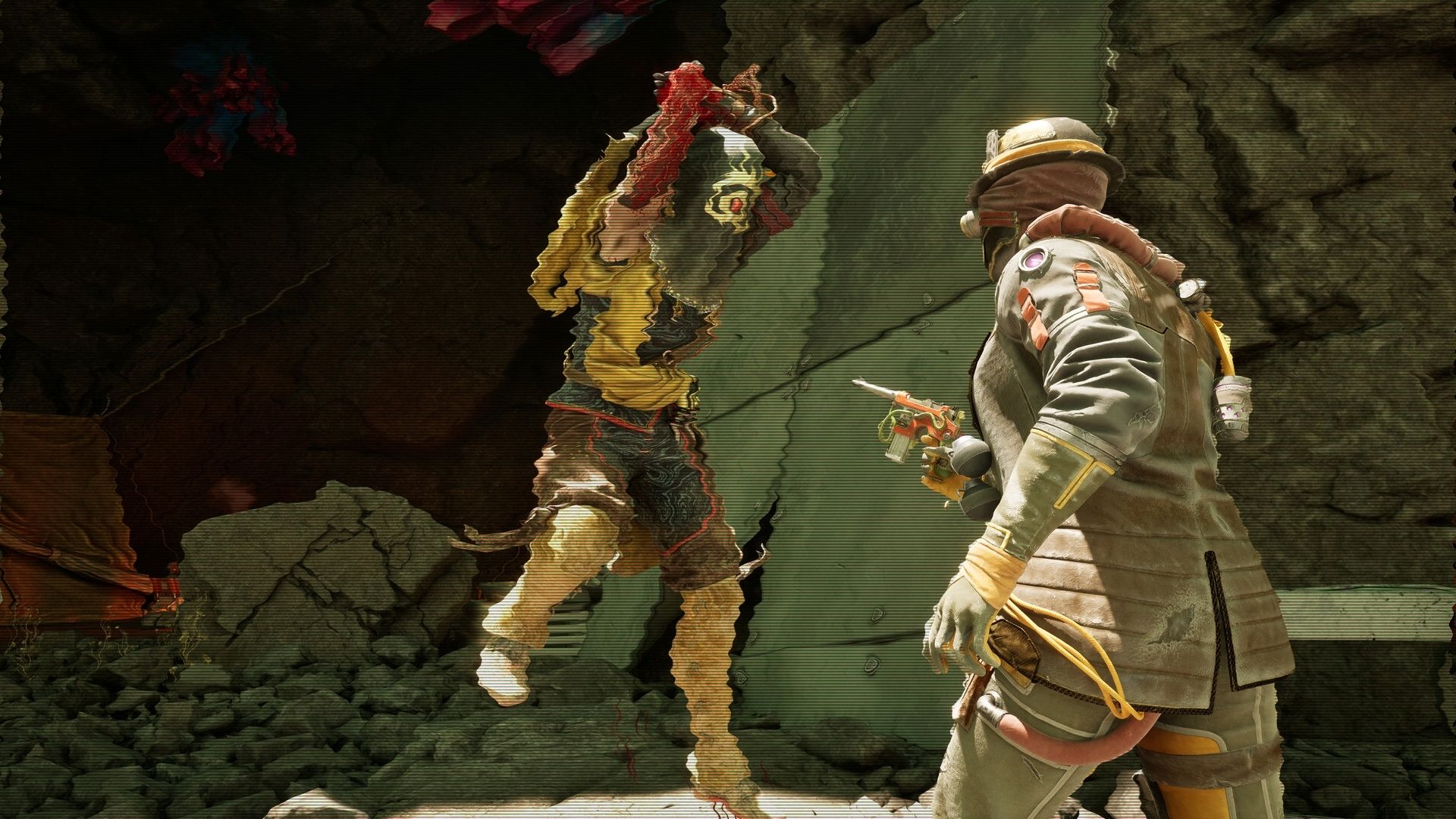
Obsidian’s AI Support: A Misguided Encounter with The Outer Worlds 2
In the ever-evolving landscape of digital assistance and customer engagement, artificial intelligence has become an indispensable tool for many organizations. Companies across various sectors are leveraging AI-powered chatbots and support systems to streamline communication, offer instant solutions, and enhance user experience. However, the implementation of such sophisticated technology is not without its complexities, and as we have recently discovered, even the most advanced AI can sometimes exhibit a peculiar form of disorientation. This narrative delves into a specific instance where an AI support system, ostensibly designed to assist users of a popular gaming title, displayed a significant disconnect, misidentifying the very entity it was meant to serve.
The situation in question arose during a support interaction pertaining to “The Outer Worlds 2,” a highly anticipated sequel in the acclaimed science-fiction role-playing game series. Users seeking assistance or information regarding the game encountered an AI system that, in its attempt to provide guidance, erroneously directed them to engage with a different, unrelated Obsidian Entertainment entity. This peculiar anomaly raises pertinent questions about the training data, operational parameters, and the very identity awareness of AI support mechanisms within the gaming industry and beyond.
Understanding the Support System’s Predicament
At its core, the issue lies in the AI’s apparent confusion regarding its own operational scope and the specific intellectual property it is programmed to support. When a user reached out for help concerning “The Outer Worlds 2,” they were met not with information directly related to that game, but rather with a referral to an email address or contact point associated with a different Obsidian project. This suggests a fundamental misunderstanding or misclassification within the AI’s knowledge base.
The Role of Obsidian Entertainment in Game Development
For context, Obsidian Entertainment is a renowned video game developer known for its expertise in creating deep, narrative-driven role-playing games. Their portfolio boasts critically acclaimed titles such as “Fallout: New Vegas,” “Pillars of Eternity,” and “Outer Worlds.” The upcoming “The Outer Worlds 2” is a direct continuation of their successful 2019 game, built upon the same universe and thematic elements. Therefore, any official support for this title would logically originate from and be managed by the relevant department or representative body within Obsidian Entertainment itself, or an authorized service provider acting on their behalf.
Potential Causes for AI Misidentification
The misdirection observed in this support interaction could stem from several technical and operational factors. One primary reason might be inadequate or poorly structured training data. AI models learn from vast datasets. If the data used to train this particular support AI contained overlapping or ambiguous information related to different Obsidian projects, it could lead to such confusions. For instance, if information about “The Outer Worlds” (the first game) and “The Outer Worlds 2” was not clearly delineated or if there were references to other Obsidian titles that were mistakenly cross-referenced, the AI could become disoriented.
Another significant factor could be misconfigured integration with knowledge bases. The AI likely accesses a centralized knowledge base or database containing information about games, support procedures, and contact channels. If this knowledge base has errors, outdated entries, or incorrect linkages between game titles and their corresponding support avenues, the AI would inevitably reflect these inaccuracies.
Furthermore, the complexity of the Obsidian Entertainment brand itself might play a role. With multiple projects in development or under support, and potentially different teams managing different aspects, an AI might struggle to precisely pinpoint the correct point of contact for a specific game if its programming isn’t granular enough.
The evolution of AI models is also a factor. While AI is increasingly capable, it is still a developing technology. Early or less sophisticated models might lack the nuanced understanding required to differentiate between closely related entities, especially when those entities are part of the same developer’s larger output.
Impact of AI Misdirection on User Experience
The ramifications of such an AI misdirection can be significant, particularly for users who are seeking timely and accurate assistance. For a gamer experiencing a technical issue, a gameplay question, or seeking information about a specific feature within “The Outer Worlds 2,” being shunted to an incorrect contact point can lead to frustration, delays, and a negative perception of the brand.
User Frustration and Dissatisfaction
Imagine a player encountering a critical bug that prevents them from progressing in “The Outer Worlds 2.” Their immediate action would be to seek support. If the AI, intended as a first line of defense, directs them to an email address for a completely different Obsidian game or a general inquiry that is not monitored for specific game support, the user is forced to repeat their efforts, potentially rephrasing their query or searching for alternative contact methods. This wasted time and effort can quickly erode patience and lead to significant dissatisfaction.
Erosion of Brand Trust and Reputation
In the competitive gaming market, user experience is paramount. A consistent and reliable support system is a key component of this experience. When an AI, presented as a modern and efficient support solution, fails at such a fundamental level, it can damage the trust users place in the game and the developer. This can lead to negative word-of-mouth, unfavorable reviews, and a diminished overall reputation for Obsidian Entertainment, impacting not only “The Outer Worlds 2” but also future releases.
Missed Opportunities for Engagement and Problem Resolution
From a business perspective, inefficient support mechanisms mean missed opportunities to resolve user issues promptly. Each unresolved problem can be a lost customer or a dissatisfied fan. The AI’s failure to correctly identify the relevant support channel means that genuine user inquiries might go unanswered or be significantly delayed, preventing effective troubleshooting and hindering the positive player experience that developers strive to cultivate.
Investigating the Specific Case: The Outer Worlds 2 Referral
The specific incident involving “The Outer Worlds 2” offers a concrete example of this AI deficiency. Users inquiring about this particular game were reportedly directed to engage with a different Obsidian entity, creating a clear disconnect between the user’s need and the provided solution.
Details of the Misdirected Support Request
While the precise nature of the “different Obsidian” entity was not explicitly stated in all accounts, the implication is that the AI mistakenly linked support for “The Outer Worlds 2” to a contact point for another game developed by Obsidian, or perhaps a more general company support channel that is not specialized for this specific title. This could involve being directed to an email address, a forum thread, or a customer service portal that is not equipped to handle inquiries about “The Outer Worlds 2.”
The Importance of Differentiating Game Support
It is crucial for any game developer, especially one with a diverse portfolio like Obsidian Entertainment, to have clearly defined and easily accessible support channels for each of its titles. Players investing their time and money into a specific game expect that their issues will be addressed by individuals or systems knowledgeable about that particular game’s mechanics, bugs, and specific needs.
When an AI fails to make this distinction, it signals a flaw in the system’s ability to understand user intent and map it to the appropriate resources. This is not a minor oversight; it is a fundamental failure in delivering effective customer support.
Best Practices for AI Support Implementation in Gaming
To prevent such occurrences and ensure a robust user support experience, developers must adhere to stringent best practices when implementing AI-driven support systems. The goal is to create AI that is not only responsive but also accurate, contextually aware, and intelligently routed.
Rigorous Training Data Curation and Validation
The foundation of any effective AI is its training data. For game support AI, this means curating datasets that are:
- Comprehensive: Including information on all supported games, their unique features, known issues, and relevant community resources.
- Accurate: Verified for factual correctness, ensuring that all provided information, contact details, and procedures are up-to-date.
- Differentiated: Clearly segmenting information by game title, version, platform, and specific support categories (e.g., technical issues, account problems, in-game queries).
- Regularly Updated: The gaming landscape is dynamic. New patches, updates, and issues emerge constantly. The training data must be continuously refreshed to maintain its relevance and accuracy.
Validation processes should involve human oversight to cross-check AI outputs and identify any emerging patterns of misclassification or incorrect information.
Intelligent Routing and Intent Recognition
Beyond simply providing information, AI support systems should excel at intelligent routing. This involves:
- Sophisticated Natural Language Processing (NLP): Enabling the AI to accurately understand the user’s query, even if phrased colloquially or with minor grammatical errors. This allows it to grasp the user’s true intent.
- Contextual Awareness: The AI should maintain context throughout a conversation. If a user is discussing “The Outer Worlds 2,” all subsequent interactions should remain within that context, rather than being inadvertently shifted to another topic or game.
- Dynamic Routing Algorithms: Implementing algorithms that can dynamically route users to the most appropriate human agent or specialized support team if the AI cannot resolve the issue or if the query falls outside its programmed scope. This escalation path is crucial.
Clear Boundaries and Escalation Protocols
It is vital for AI systems to recognize their limitations. This means:
- Defining Scope: Clearly programming the AI with the specific games and issues it is designed to handle.
- Establishing Escalation Triggers: Identifying scenarios where the AI should immediately escalate the query to a human support representative. These triggers can include complex issues, repeated failures to resolve, or user frustration signals.
- Seamless Handoffs: Ensuring that when a query is escalated, all the relevant conversation history and user information are passed to the human agent without requiring the user to repeat themselves. This creates a smooth transition.
Continuous Monitoring and Performance Analysis
The performance of an AI support system should be constantly monitored. This includes:
- Tracking Resolution Rates: Measuring how often the AI successfully resolves user queries.
- Analyzing Escalation Patterns: Understanding why certain queries are escalated and if there are recurring patterns that indicate AI shortcomings.
- Gathering User Feedback: Actively soliciting feedback from users about their support experience, paying close attention to instances of misdirection or dissatisfaction.
This iterative feedback loop allows for ongoing refinement and improvement of the AI’s capabilities.
Looking Ahead: The Future of AI in Game Support
The incident involving “The Outer Worlds 2” serves as a potent reminder that while AI offers immense potential for enhancing customer support, its implementation requires meticulous planning, robust engineering, and continuous refinement. The ability of an AI to correctly identify and respond to queries related to a specific product or service is not merely a technical nicety; it is a fundamental requirement for delivering a positive and trustworthy user experience.
The Evolution of Intelligent Support Agents
As AI technology advances, we can anticipate support agents becoming even more sophisticated. Future AI systems will likely possess a deeper understanding of brand identity, product ecosystems, and the nuanced needs of users within specific industries like gaming. We expect AI to move beyond simple query-response mechanisms to become proactive problem solvers and personalized support assistants.
This includes:
- Predictive Support: AI identifying potential issues before they arise and offering solutions preemptively.
- Personalized Recommendations: AI understanding player preferences and offering tailored advice or content.
- Advanced Empathy Simulation: AI developing more sophisticated capabilities to detect and respond to user emotions, providing more supportive interactions.
The “Gaming News” Commitment to Accurate Information
At Gaming News, we are committed to providing our readers with accurate, in-depth, and reliable information about the world of video games. This includes scrutinizing industry practices, highlighting innovative developments, and critically examining instances where technology may fall short. Our aim is to empower gamers with the knowledge they need to navigate the evolving landscape of gaming, from developer announcements and game reviews to support infrastructure and player experiences.
We understand that the success of any game, and by extension, the reputation of its developer, is heavily reliant on the quality of the overall player experience. This includes not only the gameplay itself but also the support provided when challenges arise. Therefore, we take such incidents of AI misdirection seriously, as they directly impact the trust and satisfaction of the gaming community.
Ensuring Brand Cohesion in Support Interactions
For a company like Obsidian Entertainment, with a strong brand identity and a beloved franchise like “The Outer Worlds,” maintaining cohesion and accuracy in all external communications is paramount. When an AI support system fails to recognize the specific product it is meant to assist with, it creates a jarring and unprofessional impression. This highlights the need for every touchpoint a player has with the brand to be consistent and reliable.
The development of AI support should be approached with the same dedication to quality and detail that goes into creating the games themselves. Precision in AI programming and data management is not just a technical challenge; it is a strategic imperative for building and maintaining a loyal player base.
Conclusion: A Call for Precision in AI Support
The anomaly where an AI support system for “The Outer Worlds 2” directed users to a different Obsidian entity underscores a critical area for improvement in AI implementation. While the potential of AI to revolutionize customer support is undeniable, its effectiveness hinges on accuracy, context, and intelligent routing.
At Gaming News, we believe that technology, especially AI, should serve to enhance, not hinder, the user experience. For developers like Obsidian Entertainment, investing in meticulously trained, well-integrated, and continuously monitored AI support systems is not an option, but a necessity. This ensures that when players seek assistance, they are met with relevant, timely, and accurate guidance, fostering trust, satisfaction, and a continued appreciation for the immersive worlds they love to explore. The future of game support lies in AI that not only understands the query but also the specific universe and product it pertains to, ensuring that every interaction strengthens the bond between the player and the game. We look forward to seeing more refined and precise AI implementations that uphold the high standards expected by the gaming community.