Is Withers in Baldur’s Gate 3 Actually Jergal, the Forgotten God of Death? Unraveling the Mausoleum Mystery
Baldur’s Gate 3 is brimming with fascinating characters, intricate lore, and secrets hidden around every corner. While many players focus on their companions and the main storyline, one enigmatic figure continues to spark debate and fuel speculation: Withers. Initially presented as a seemingly simple re-spec and resurrection vendor, astute players have begun to question the true nature of Withers, and the answer may lie within a forgotten journal tucked away inside a seemingly insignificant mausoleum. At Gaming News, we delve deep into the compelling theory that Withers is, in fact, Jergal, the ancient, forgotten god of death, and we’ll examine the evidence that supports this claim.
Withers: More Than Meets the Eye
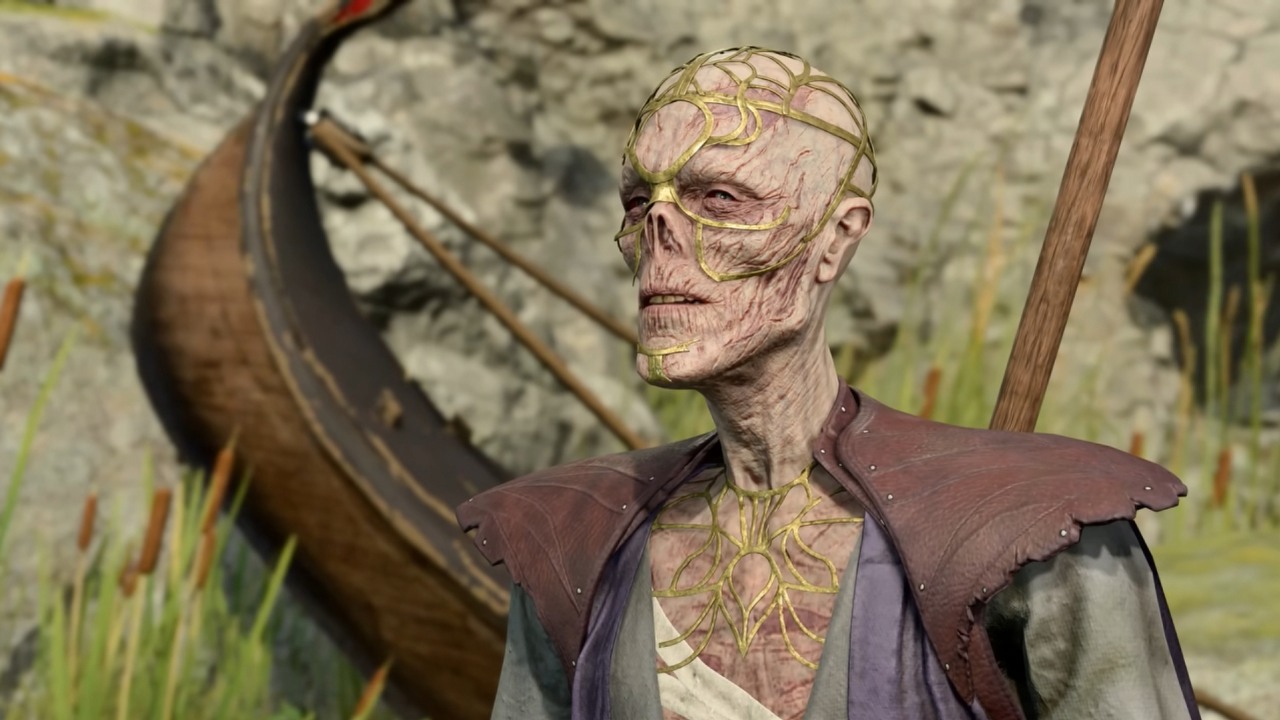
From the moment you encounter Withers in the Dank Crypt, something feels…off. His detached demeanor, cryptic pronouncements, and the sheer power he wields over life and death are far beyond what one would expect from a simple undead servant. He never explains his origins, his motivations remain shrouded in mystery, and he seems to possess an otherworldly awareness of events unfolding around the player. This air of mystery, coupled with his undeniable importance to the player’s progression, has led many to question his seemingly mundane role in the narrative. Is he merely a helpful NPC, or is there a deeper, more significant purpose to his existence?
The Unassuming Vendor with Godlike Powers
Consider the services Withers provides. He can resurrect fallen companions for a relatively small fee, and he allows players to completely respec their characters, changing their class, abilities, and even appearance. These actions, while convenient for gameplay, are, within the context of the game’s lore, practically godlike abilities. To manipulate the very essence of a soul, to restore life from death, and to reshape a person’s destiny are powers usually reserved for deities or beings of immense magical power. That a seemingly unassuming vendor possesses these abilities raises serious questions about his true nature and origin.
Withers’ Cryptic Dialogue and Omniscient Awareness
Adding to the mystery is Withers’ peculiar dialogue. He speaks in riddles and pronouncements that often hint at a deeper understanding of the player’s journey and the overarching conflict with the Absolute. He seems to know more than he lets on, and his advice, while often vague, is almost always insightful. Moreover, he possesses an almost omniscient awareness of events unfolding across the Sword Coast, offering commentary and observations that suggest he is watching everything unfold from a higher plane of existence.
The Key to the Puzzle: The Journal in the Mausoleum
The strongest evidence supporting the Jergal theory lies within a seemingly inconsequential journal found in a mausoleum located within the Goblin Camp. Many players, eager to progress the main quest, may have overlooked this area entirely, or dismissed the journal as just another piece of environmental storytelling. However, a careful reading of this journal reveals crucial information about the history of Jergal and his connection to the events of Baldur’s Gate 3.
The History of Jergal: From God of Death to Seneschal
The journal details the history of Jergal, an ancient deity who once ruled as the god of death, the end of everything. He was a powerful and feared figure, responsible for ushering souls into the afterlife and maintaining the balance between life and death. However, after eons of service, Jergal grew weary of his responsibilities. He grew bored, and when Bane, Bhaal, and Myrkul sought to usurp his dominion, Jergal willingly relinquished his power, choosing instead to become their seneschal, serving at their whim.
The Implications for Baldur’s Gate 3
This historical context is crucial to understanding the Withers theory. The journal reveals that Jergal was not simply defeated or overthrown; he willingly gave up his godhood. This act of abdication suggests a profound change in his motivations, a weariness of power and a desire to step back from the cosmic stage. If Withers is indeed Jergal, then his seemingly mundane role as a vendor might be a deliberate choice, a way for him to observe the unfolding events of Baldur’s Gate 3 without directly interfering.
Connecting the Dots: Withers, Jergal, and the Dead Three
The connection between Jergal and the Dead Three (Bane, Bhaal, and Myrkul) is also significant. In Baldur’s Gate 3, the Dead Three are the primary antagonists, their influence spreading across the Sword Coast and threatening to plunge the region into chaos. If Withers is Jergal, then he would have intimate knowledge of the Dead Three’s strengths, weaknesses, and strategies. This knowledge could explain his ability to guide the player, offering cryptic advice that ultimately helps them thwart the Dead Three’s plans.
Why Would Jergal Choose to Intervene (Indirectly)?
One might wonder why Jergal, having relinquished his godhood, would choose to intervene in the affairs of mortals, even indirectly. The answer likely lies in the nature of the threat posed by the Absolute. The Absolute, controlled by the Elder Brain and influenced by the Dead Three, represents a fundamental disruption of the natural order, a perversion of the very principles that Jergal once upheld as the god of death. While he may no longer wield the power of a god, Jergal may still feel a responsibility to protect the balance between life and death, even if it means acting from the shadows.
The Nature of Undeath and Withers’ Appearance
It’s also important to consider Withers’ appearance. He is clearly an undead being, his skin withered and his eyes glowing with an eerie light. This appearance aligns with Jergal’s association with death and undeath. As the former god of death, Jergal would have a deep understanding of the processes of decay and resurrection. It’s possible that his current undead form is a result of his abdication of godhood, a physical manifestation of his detachment from the cycle of life and death. Alternatively, it could be a disguise, a way for him to conceal his true identity from those who might recognize him.
Further Evidence and Speculation
Beyond the journal and Withers’ abilities, there are other subtle clues and pieces of evidence that support the Jergal theory.
The Symbolism of the Dank Crypt
The Dank Crypt, where you first encounter Withers, is itself a significant location. It is filled with ancient sarcophagi and tombs, suggesting a place of burial and remembrance. This location would be a fitting place for Jergal, the former god of death, to reside. The crypt’s hidden nature also reinforces the idea that Withers is deliberately concealing his true identity.
Withers’ Immunity to Mind Flayer Parasites
The player characters and their companions are all infected with mind flayer parasites, which slowly transform them into illithids. However, Withers is seemingly immune to this infection. This immunity could be attributed to his undead nature, or it could be a sign of his divine origins. As a former god, Withers may possess a level of resistance to parasitic infections that is beyond the comprehension of mortals.
The Lack of Definitive Answers: Leaving Room for Interpretation
Ultimately, the question of whether Withers is Jergal remains open to interpretation. Larian Studios, the developers of Baldur’s Gate 3, have deliberately left the matter ambiguous, allowing players to draw their own conclusions. This ambiguity is part of what makes Withers such a compelling character, and it encourages players to engage with the game’s lore and to speculate about the mysteries that lie beneath the surface.
Conclusion: The Enduring Mystery of Withers
Whether Withers is Jergal, the forgotten god of death, or some other powerful entity, one thing is certain: he is far more than a simple vendor. His cryptic pronouncements, godlike abilities, and mysterious origins make him one of the most fascinating and enigmatic characters in Baldur’s Gate 3. The journal found in the mausoleum provides compelling evidence to support the Jergal theory, but ultimately, the truth remains shrouded in mystery. At Gaming News, we encourage you to explore the world of Baldur’s Gate 3, to uncover its secrets, and to decide for yourself the true nature of Withers. The answer, like the game itself, is complex, rewarding, and endlessly fascinating. Only by experiencing the story firsthand can you truly appreciate the depth and nuance of this incredible character and the mysteries he embodies. The journey to uncover his secrets is well worth undertaking, offering a richer and more rewarding experience for those willing to delve deeper into the lore of Baldur’s Gate 3. His presence is not just a convenience, but a pivotal part of the narrative tapestry, prompting questions of fate, divine intervention, and the very nature of good and evil.