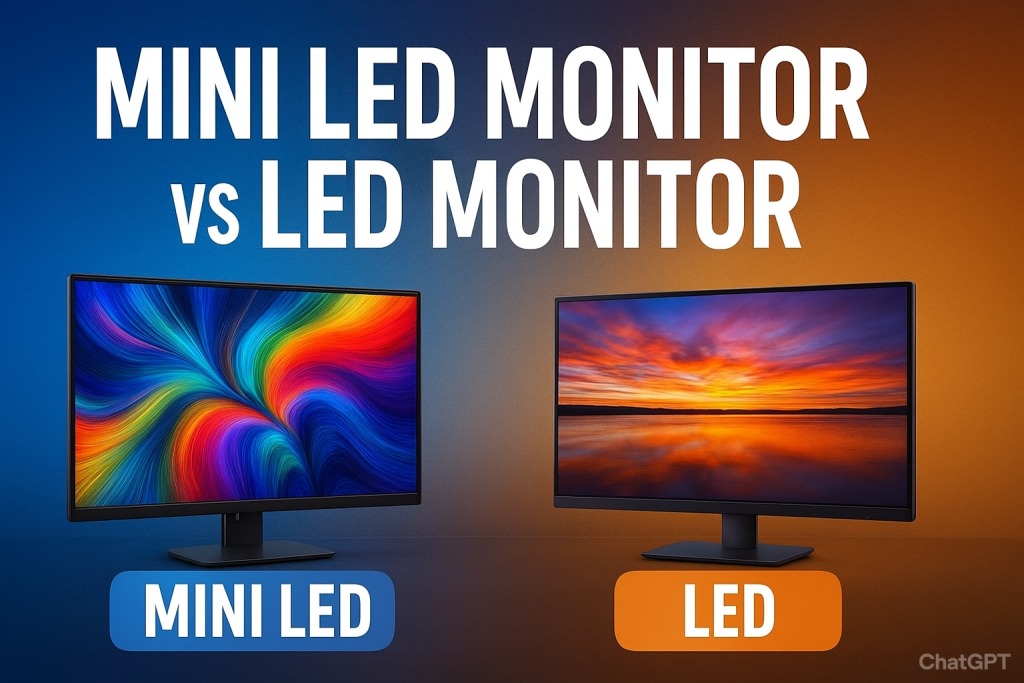
Mini LED Monitor vs LED Monitor: Unveiling the True Visual Difference
As avid gamers and tech enthusiasts at Gaming News, we constantly strive to bring you the most accurate and comprehensive information about the latest advancements in display technology. Among the myriad of options available today, LED and Mini LED monitors stand out as two prevalent, yet often perplexing, choices for consumers. While both technologies leverage LEDs to illuminate the display, the underlying architecture and resulting visual performance differ significantly. This in-depth comparison will dissect the core distinctions between LED and Mini LED monitors, empowering you to make an informed decision that perfectly aligns with your viewing preferences and budget. We’ll delve into the technical nuances, exploring brightness levels, contrast ratios, color accuracy, and overall picture quality to reveal which technology truly reigns supreme.
Understanding the Fundamentals: LED vs. Mini LED Backlighting
To grasp the key differences between these monitor types, it’s crucial to understand the fundamental principles of LED backlighting. Both LED and Mini LED monitors employ Light Emitting Diodes (LEDs) to illuminate the LCD panel, which ultimately creates the image you see. However, the size, arrangement, and control of these LEDs vary dramatically, leading to substantial variations in performance.
Traditional LED Backlighting: A Broad Approach
Traditional LED monitors typically utilize a relatively small number of larger LEDs positioned around the edges of the screen (edge-lit) or directly behind the LCD panel (direct-lit). Edge-lit displays use a light guide to distribute the light across the screen, while direct-lit displays have LEDs evenly spaced behind the panel. In either case, the backlight is often controlled globally or in a limited number of zones. This means that the entire backlight, or large sections of it, dim or brighten together, offering limited control over local contrast.
Edge-Lit LED Limitations
Edge-lit LED monitors, while generally more affordable, often suffer from uneven brightness and backlight bleed, particularly around the edges and corners of the screen. This is due to the challenges of evenly distributing light across the entire panel from the edges.
Direct-Lit LED Improvements
Direct-lit LED monitors offer slightly better uniformity than edge-lit displays, but the limited number of dimming zones still restricts their ability to accurately reproduce high-contrast scenes. In scenes with both bright and dark areas, the dark areas may appear washed out due to the backlight illuminating them unnecessarily.
Mini LED Backlighting: Precision and Control
Mini LED technology represents a significant leap forward in LED backlighting. As the name suggests, Mini LED monitors employ thousands of significantly smaller LEDs, typically measuring less than 0.2mm in size, arranged directly behind the LCD panel. This dense array of LEDs allows for a vastly increased number of local dimming zones – often hundreds or even thousands – providing unparalleled control over the backlight.
The Power of Local Dimming Zones
These numerous local dimming zones enable Mini LED monitors to precisely control the brightness of specific areas of the screen. In scenes with high contrast, the monitor can dim the LEDs in dark areas while simultaneously boosting the brightness of LEDs in bright areas. This results in significantly improved contrast ratios, deeper blacks, and brighter highlights, creating a more dynamic and realistic image.
Unmatched Precision and Detail
The increased density of LEDs also contributes to improved uniformity and reduced backlight bleed. With thousands of individual light sources, Mini LED monitors can more accurately and evenly illuminate the LCD panel, minimizing the visual distractions caused by uneven brightness.
Key Performance Differences: A Side-by-Side Comparison
Now that we’ve established the fundamental differences in backlighting technology, let’s delve into the specific performance advantages that Mini LED monitors offer over traditional LED monitors.
Contrast Ratio: A Dramatic Improvement
The contrast ratio, which is the ratio between the brightest white and the darkest black that a display can produce, is a crucial factor in determining overall picture quality. Mini LED monitors, with their superior local dimming capabilities, boast significantly higher contrast ratios than traditional LED monitors.
True Blacks and Brilliant Whites
While traditional LED monitors typically achieve contrast ratios in the range of 1000:1 to 3000:1, Mini LED monitors can reach contrast ratios of 1,000,000:1 or even higher. This vast difference translates to significantly deeper blacks, more vibrant whites, and a greater sense of depth and realism in the image.
Elevated Viewing Experience
The improved contrast ratio of Mini LED monitors is particularly noticeable in dark scenes, where details that would be lost on a traditional LED monitor become clearly visible. This makes Mini LED monitors ideal for watching movies, playing games, and viewing content with a wide dynamic range.
Brightness: Shining Brighter Than Ever
Mini LED monitors also tend to offer higher peak brightness levels than traditional LED monitors. The increased density of LEDs allows for greater overall light output, resulting in brighter and more vibrant images.
HDR Performance: Unleashing the Full Potential
This increased brightness is particularly beneficial for High Dynamic Range (HDR) content. HDR content is designed to deliver a wider range of brightness and color than Standard Dynamic Range (SDR) content, creating a more lifelike and immersive viewing experience. Mini LED monitors, with their high peak brightness, can accurately reproduce the full dynamic range of HDR content, bringing out the subtle details and nuances that would be lost on a traditional LED monitor.
Improved Visibility in Bright Environments
The higher brightness of Mini LED monitors also makes them better suited for use in brightly lit environments. The increased light output helps to overcome glare and reflections, ensuring that the image remains clear and visible even in challenging lighting conditions.
Color Accuracy: Capturing Every Nuance
While both LED and Mini LED monitors can achieve excellent color accuracy, Mini LED technology often offers a slight advantage due to its improved uniformity and reduced backlight bleed.
Consistent Color Reproduction
The more even distribution of light across the panel in Mini LED monitors helps to ensure that colors are reproduced accurately and consistently across the entire screen. This is particularly important for tasks that require precise color accuracy, such as photo and video editing.
Wider Color Gamut Coverage
Some Mini LED monitors also boast wider color gamut coverage than traditional LED monitors, meaning they can reproduce a greater range of colors. This results in more vibrant and realistic images, with richer and more nuanced color palettes.
Uniformity: Eliminating Visual Distractions
Uniformity refers to the consistency of brightness and color across the entire screen. As mentioned earlier, Mini LED monitors generally offer better uniformity than traditional LED monitors, thanks to their dense array of LEDs and precise local dimming capabilities.
Minimizing Backlight Bleed and Clouding
The improved uniformity of Mini LED monitors helps to minimize backlight bleed and clouding, which are common issues with traditional LED monitors. Backlight bleed refers to the leakage of light around the edges of the screen, while clouding refers to uneven patches of brightness across the panel. These imperfections can be distracting and detract from the overall viewing experience.
A Cleaner, More Immersive Image
By minimizing backlight bleed and clouding, Mini LED monitors deliver a cleaner and more immersive image, allowing you to focus on the content without distractions.
Addressing the Downsides: Cost and Availability
While Mini LED technology offers significant performance advantages over traditional LED monitors, it’s important to acknowledge the potential downsides.
Higher Price Point: A Premium Investment
Mini LED monitors typically command a higher price point than traditional LED monitors. The increased complexity of the backlighting system and the use of thousands of tiny LEDs contribute to the higher manufacturing costs.
Weighing Performance Against Budget
When considering a Mini LED monitor, it’s important to weigh the performance benefits against your budget. If you prioritize image quality and are willing to invest in a premium display, a Mini LED monitor can be a worthwhile upgrade. However, if you’re on a tight budget, a traditional LED monitor may still offer a satisfactory viewing experience.
Limited Availability: Emerging Technology
While Mini LED technology is becoming increasingly prevalent, it’s still a relatively emerging technology compared to traditional LED backlighting. This means that the availability of Mini LED monitors may be limited, particularly in certain regions or at specific retailers.
Expanding Selection and Innovation
However, as Mini LED technology matures, we expect to see a wider selection of Mini LED monitors become available, with more manufacturers incorporating this technology into their product lineups. This increased competition will likely lead to lower prices and further innovation in the Mini LED space.
Who Should Choose a Mini LED Monitor?
Mini LED monitors are an excellent choice for users who prioritize image quality, demand high contrast and brightness, and are willing to invest in a premium display. They are particularly well-suited for:
- Gamers: The improved contrast, brightness, and uniformity of Mini LED monitors create a more immersive and visually stunning gaming experience.
- Content Creators: Professionals who work with photos, videos, and other visual content will appreciate the accurate color reproduction and wide color gamut of Mini LED monitors.
- Movie Enthusiasts: Mini LED monitors deliver a cinematic viewing experience with deep blacks, bright highlights, and exceptional detail in dark scenes.
- Users in Bright Environments: The high brightness of Mini LED monitors makes them ideal for use in brightly lit rooms or offices.
Conclusion: The Evolution of Display Technology
In conclusion, Mini LED technology represents a significant advancement in display technology, offering substantial improvements in contrast ratio, brightness, color accuracy, and uniformity compared to traditional LED monitors. While Mini LED monitors typically come with a higher price tag, the enhanced visual experience they provide makes them a compelling option for users who demand the best possible picture quality. As the technology continues to mature and become more accessible, we anticipate that Mini LED monitors will become increasingly prevalent in the market, further blurring the lines between traditional LCDs and premium display technologies like OLED. As always, at Gaming News, we are here to guide you through the ever-evolving world of display technology, empowering you to make informed decisions and enjoy the best possible viewing experience.