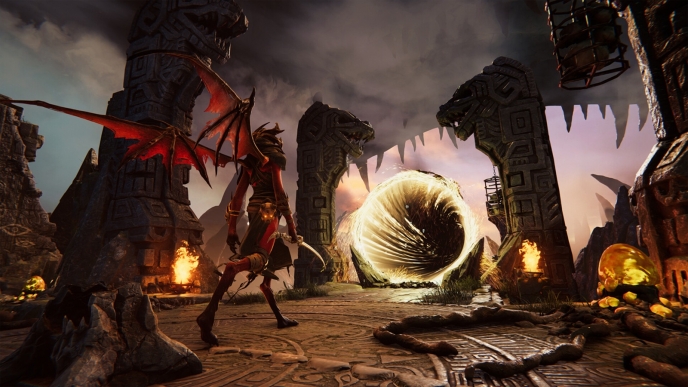
Metal: Hellsinger Studio The Outsiders Shut Down Amidst Funcom Layoffs: A Devastating Blow to Rhythmic Combat
The vibrant world of rhythm-action gaming has been dealt a severe blow with the unfortunate closure of The Outsiders, the acclaimed studio behind the electrifying Metal: Hellsinger. This abrupt end to a promising development house comes as a direct consequence of sweeping layoffs announced by its parent company, Funcom, earlier this month. The news has sent ripples of concern throughout the gaming community, highlighting the precarious nature of the industry and the profound impact that corporate decisions can have on creative talent and beloved franchises. Our investigation into this development reveals a complex interplay of corporate restructuring, economic pressures, and the inherent risks associated with game development, all culminating in the shuttering of a studio that had rapidly carved out a significant niche for itself.
The Outsiders, established with a clear vision to deliver unique and impactful gaming experiences, first burst onto the scene with Metal: Hellsinger, a title that masterfully blended heavy metal music with intense first-person shooter gameplay. The game’s innovative approach, allowing players to shoot and move to the rhythm of a curated soundtrack featuring legendary metal vocalists, garnered widespread critical acclaim and a dedicated fanbase. Its success was a testament to The Outsiders’ commitment to pushing boundaries and their passion for creating something truly original. The acquisition by Funcom in 2021 was initially viewed as a positive step, promising access to greater resources and stability that would allow The Outsiders to further develop their creative ambitions. However, as we have seen with numerous other studios in the past, such acquisitions can sometimes lead to unforeseen and ultimately detrimental outcomes for the acquired entity.
The Genesis and Rise of The Outsiders: A Studio Defined by Innovation
The Outsiders was founded by a team of industry veterans with a shared passion for creating experiences that resonated with players on a visceral level. Their core philosophy revolved around the idea that music and gameplay should not merely coexist but should be intrinsically interwoven, creating a symbiotic relationship that elevates the overall player experience. This philosophy found its ultimate expression in Metal: Hellsinger. The studio’s meticulous attention to detail in translating musical beats into satisfying combat mechanics was remarkable. Each weapon had its own distinct rhythm, encouraging players to learn and adapt their playstyle to the pulsating soundtrack. The integration of iconic metal artists such as Serj Tankian of System of a Down, Randy Blythe from Lamb of God, and Matt Heafy of Trivium not only added a layer of authenticity but also attracted a broader audience to the game, further cementing its unique identity.
The development of Metal: Hellsinger was a testament to The Outsiders’ dedication and expertise. They managed to strike a delicate balance between the frenetic energy of a shooter and the precise timing required for a rhythm game, a feat that many studios would shy away from due to its inherent complexity. The result was a game that was both challenging and immensely rewarding, offering a fresh take on familiar genres. Its success was not accidental; it was the product of countless hours of refinement, a deep understanding of both shooter mechanics and musicality, and an unwavering commitment to their artistic vision. This dedication was recognized by critics and players alike, leading to numerous accolades and a strong position for the studio as a rising star in the independent game development scene. The acquisition by Funcom in 2021 was seen by many as a logical progression, providing The Outsiders with the backing of a larger publisher to explore even grander projects and expand their reach.
Funcom’s Strategic Shift and the Impact of Recent Layoffs
Funcom, the Norwegian developer and publisher known for titles such as Conan Exiles and The Secret World, had been undergoing a period of strategic realignment. The acquisition of The Outsiders was part of a broader effort to diversify their portfolio and invest in studios with unique creative capabilities. However, the gaming industry, like many others, is susceptible to economic headwinds and shifting market demands. In early June 2023, Funcom announced a significant round of layoffs across its various studios, a decision that sent shockwaves through the company and the wider industry. These layoffs, impacting numerous talented individuals, were cited as a necessary measure to streamline operations and focus on core projects. The exact reasons for the extent of these workforce reductions are multifaceted, likely stemming from a combination of factors including market saturation, increased development costs, and a reassessment of strategic priorities.
The announcement of these layoffs immediately raised concerns about the future of the studios under Funcom’s umbrella, particularly those that had been acquired more recently and were still establishing their footing. The closure of The Outsiders, directly following these widespread workforce reductions, serves as a stark illustration of the cascading effects that corporate restructuring can have. While Funcom has not provided explicit details linking the closure of The Outsiders solely to the layoffs, the timing strongly suggests a direct causal relationship. It is within this context that the future of Metal: Hellsinger and any potential sequels or related projects becomes uncertain, leaving fans in a state of anxious anticipation. The decision to close a studio, especially one that had recently delivered a successful and critically acclaimed title, raises questions about the long-term vision and operational strategies of Funcom.
The Outsiders’ Closure: A Loss for the Rhythm-Action Genre
The closure of The Outsiders represents a significant setback for the rhythm-action genre. This niche, while perhaps not as mainstream as other gaming categories, has a devoted following that appreciates its unique blend of challenge and musical immersion. Metal: Hellsinger was a shining example of what this genre can achieve when executed with passion and skill. Its success demonstrated a clear market demand for experiences that innovate by integrating music directly into the core gameplay loop. The loss of The Outsiders means the loss of a studio that was actively pushing the boundaries of this genre, leaving a void that will be difficult to fill. Their ability to attract such renowned metal artists and seamlessly integrate their contributions into the gameplay was a rare feat, and it is unlikely that another studio will be able to replicate this specific synergy in the immediate future.
Furthermore, the closure serves as a poignant reminder of the fragility of creative endeavors within the corporate gaming landscape. Studios with unique visions and innovative ideas are often at the mercy of broader financial decisions made by larger entities. The talent that comprised The Outsiders, individuals who poured their expertise and creativity into crafting Metal: Hellsinger, are now dispersed, their collective energy no longer focused on their shared project. This not only impacts the potential for future installments of their acclaimed game but also represents a loss of valuable creative capital for the industry as a whole. The skills and dedication of these developers are in high demand, but the specific collaborative environment that fosters such unique projects is harder to recreate. The impact on the future of rhythmic combat games is therefore substantial, as one of its most promising architects has been unceremoniously dismantled.
Future of Metal: Hellsinger and IP Concerns
The most immediate and pressing question for fans of Metal: Hellsinger concerns the future of the intellectual property (IP) itself. With The Outsiders now closed, the ownership and future development rights of Metal: Hellsinger are likely to revert to Funcom. This raises a crucial question: does Funcom intend to continue the franchise? Given Funcom’s stated intention to focus on core projects, it is unclear whether investing in a sequel or further development of the Metal: Hellsinger IP aligns with their revised strategic objectives. The acquisition of The Outsiders was predicated on their creative output, and now that the creative engine has been dismantled, the IP may be left in limbo. This is a common, yet always disappointing, outcome when studios are shuttered. The potential for future installments remains a tantalizing, albeit uncertain, prospect for the game’s fervent player base.
The uncertainty surrounding the Metal: Hellsinger IP underscores the challenges faced by smaller studios acquired by larger corporations. While acquisition can provide much-needed financial backing and resources, it also means ceding a degree of creative control and potentially facing the consequences of decisions made by a parent company that may not fully understand or prioritize the acquired studio’s unique vision. The legacy of Metal: Hellsinger is now intertwined with the corporate decisions of Funcom. Whether this legacy continues to flourish or fades into the annals of unfulfilled potential will depend entirely on Funcom’s future strategies and their willingness to invest in the IP that The Outsiders so brilliantly brought to life. The community’s vocal appreciation for the game, amplified across social media and gaming forums, suggests a strong desire for its continuation. This collective voice may yet influence Funcom’s decision-making process.
Industry Repercussions and the Evolving Landscape of Game Development
The closure of The Outsiders, directly linked to Funcom’s extensive layoffs, serves as a potent symbol of the turbulent currents shaping the video game industry. In recent years, we have witnessed a trend of consolidation, with larger publishers acquiring smaller, independent studios. While this can offer benefits such as increased funding and wider distribution, it also exposes these smaller entities to the financial pressures and strategic shifts of their parent companies. The current economic climate, characterized by inflation, rising development costs, and a potentially maturing market, has undoubtedly contributed to the wave of layoffs and studio closures that we are currently observing. Companies are re-evaluating their portfolios, shedding underperforming assets, and consolidating resources to weather economic storms.
This trend has significant implications for game innovation and diversity. Studios like The Outsiders, with their bold and original ideas, are often the incubators of genre-defining experiences. When these studios are shut down, not only is their current work lost, but the potential for future groundbreaking titles diminishes. The emphasis on profitability and risk mitigation can sometimes stifle the very creativity that makes the industry so dynamic. Developers may become more hesitant to pursue niche or experimental projects for fear of not meeting stringent financial targets, leading to a more homogenized gaming landscape. The outsourcing of development work and the increasing reliance on established franchises over new intellectual property can also contribute to a sense of stagnation. The closure of The Outsiders is not an isolated incident but rather a symptom of broader challenges facing the industry, demanding careful consideration from developers, publishers, and players alike. The future of independent game development hinges on finding sustainable models that protect creative freedom while ensuring financial viability.
Lessons Learned and the Path Forward for Developers
The unfortunate closure of The Outsiders and the widespread layoffs at Funcom offer critical lessons for both developers and the industry at large. For developers, securing robust and clear contractual agreements during acquisition processes is paramount. Understanding the long-term commitment and potential exit strategies of acquiring companies can provide a crucial safety net. Building strong community engagement and fostering a dedicated fanbase can also create leverage, demonstrating the market value of a studio’s work independently of corporate interests. Diversifying revenue streams, where possible, and maintaining a degree of financial independence can buffer against unexpected corporate decisions. Furthermore, cultivating a reputation for high-quality, innovative game development remains the most potent asset, making a studio’s work desirable and its closure a more impactful loss for the acquirer.
From an industry perspective, there is a growing need for greater transparency and ethical considerations in mergers and acquisitions. The human cost of corporate restructuring in the gaming sector is often immense, impacting the livelihoods and creative aspirations of countless individuals. Publishers and investors must weigh the short-term financial gains against the long-term damage to industry morale and the stifling of creative talent. Exploring alternative funding models, such as crowdfunding and publisher-agnostic funding initiatives, could empower developers to retain greater control over their intellectual property and creative direction. The resilience of the gaming community and its ability to rally behind beloved franchises and studios should not be underestimated. As we navigate this challenging period, a collective effort towards fostering a more stable and creatively supportive environment is essential for the continued growth and innovation of the video game industry. The impact of The Outsiders’ closure serves as a somber reminder of the need for a more sustainable and equitable future for game development.