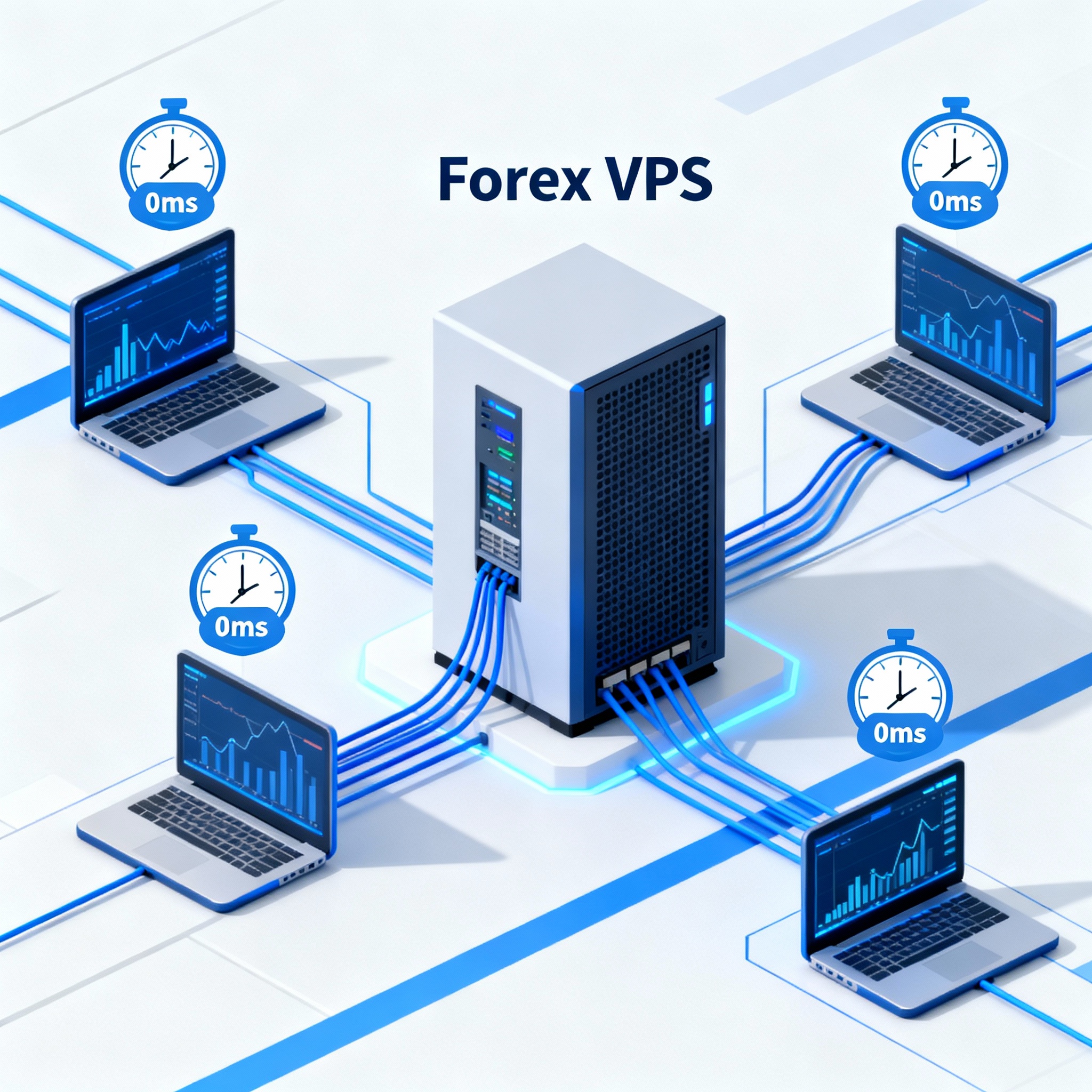
Low Latency Forex VPS Explained: The Critical Time Factor in Forex Trading
In the fast-paced and perpetually evolving world of Forex trading, speed isn’t just an advantage; it’s an absolute necessity. For retail traders and institutional players alike, the ability to execute trades with minimal delay can mean the difference between a profitable venture and a costly misstep. The underlying technology that powers this critical speed is often found in the form of a Virtual Private Server (VPS), specifically optimized for low latency Forex trading. This article delves deep into the intricacies of low latency Forex VPS, exploring how it directly impacts the time factor in Forex trading, mitigates the dreaded phenomenon of slippage, and ultimately empowers traders to seize opportunities in dynamic, volatile markets.
Understanding the Core Challenge: Forex Latency and its Impact
The traditional internet connection, while ubiquitous, is inherently prone to inconsistencies that can severely hinder a Forex trader’s performance. Forex latency, simply put, is the delay between when a trade order is placed and when it is actually received and processed by the broker’s server. This delay, even if measured in milliseconds, can have significant consequences in a market where price fluctuations occur with astonishing rapidity.
The Nature of Forex Latency
Several factors contribute to Forex latency. The physical distance between a trader’s computer and the broker’s server is a primary culprit. Data must travel across networks, routers, and switches, each hop introducing a minuscule delay. Network congestion, especially during peak trading hours, can further exacerbate these delays, akin to traffic jams on a highway. The quality of the internet connection itself plays a crucial role; slower, less reliable connections are inherently more susceptible to latency issues. Furthermore, the efficiency of the broker’s own infrastructure and the speed of their servers contribute to the overall time it takes for an order to be processed.
The Perils of Slippage
The most direct and often detrimental consequence of Forex latency is slippage. Slippage occurs when the actual execution price of a trade differs from the intended execution price. In highly volatile markets, prices can change dramatically in the blink of an eye. If a trader places a buy order at a specific price, but by the time the order reaches the broker’s server, the price has already moved unfavorably, the order will be filled at the new, less desirable price.
Favorable vs. Unfavorable Slippage
While slippage is often associated with negative outcomes, it’s important to note that it can, in rare instances, be favorable. If a price moves in the trader’s favor between the order placement and execution, the trade might be filled at a better price than initially requested. However, the overwhelming majority of experienced traders focus on mitigating unfavorable slippage, as it consistently erodes profits and introduces an element of unpredictable risk. The unpredictability of slippage is a major concern; traders can rarely account for it, making it difficult to accurately calculate potential profits or losses.
The Economic Impact of Slippage
For retail traders, even a few extra pips of unfavorable slippage on every trade can accumulate into substantial losses over time. This is particularly true for strategies that rely on small price movements or high-frequency trading. For institutional traders managing large volumes, the impact of slippage is amplified, potentially costing millions of dollars on a single trading day. This financial drain directly impacts the profitability of trading operations.
Introducing the Solution: The Low Latency Forex VPS
A low latency Forex VPS is a cloud-based server specifically designed and optimized to provide traders with the fastest possible connection to their broker’s trading servers. Unlike relying on a home internet connection, a VPS offers a dedicated and highly efficient environment for running trading platforms and Expert Advisors (EAs).
What is a Virtual Private Server (VPS)?
A VPS is essentially a virtual machine residing on a powerful physical server. It provides users with their own dedicated resources, including CPU, RAM, and storage, and an independent operating system. This isolation ensures that the performance of the VPS is not affected by other users on the same physical server, a common issue with shared hosting environments. For Forex trading, this means a stable and predictable environment for executing trades.
The “Low Latency” Advantage
The term “low latency” is the key differentiator. A low latency Forex VPS is strategically located in data centers that are physically proximate to the major Forex broker servers. By hosting your trading platform on a VPS situated in the same geographical region, or even the same data center, as your broker, the physical distance data needs to travel is dramatically reduced. This minimizes the time it takes for your trading commands to reach the broker and for trade confirmations to return.
Proximity to Broker Servers
The geographic location of the VPS is paramount. Leading Forex VPS providers have established networks of data centers in major financial hubs around the globe. These hubs are chosen precisely because they house the critical infrastructure of major Forex brokers. When you select a VPS, you will be given the option to choose a server location that is closest to your chosen broker. This strategic placement is the cornerstone of achieving ultra-low latency.
Optimized Network Infrastructure
Beyond physical proximity, low latency Forex VPS providers invest heavily in high-speed network infrastructure. This includes utilizing fiber optic connections, advanced routing protocols, and dedicated network pathways to ensure that data packets travel with minimal interference and maximum speed. They also employ sophisticated network monitoring tools to identify and resolve any potential bottlenecks before they impact trading performance.
How a Low Latency Forex VPS Mitigates Latency
By bringing your trading operations closer to the broker’s servers, a low latency Forex VPS effectively circumvents the inherent limitations of a standard internet connection.
Reduced Ping Times
The measure of latency is often referred to as “ping time” – the round-trip time for a data packet to travel from your computer to a server and back. A typical home internet connection might have ping times of 50-100 milliseconds or more to a broker’s server. A low latency Forex VPS, by contrast, can achieve ping times of under 10 milliseconds, and in optimal scenarios, even under 1 millisecond. This drastic reduction in ping time translates directly into faster order execution.
Consistent and Stable Performance
Unlike home internet connections, which can be subject to fluctuations in speed and stability due to factors like ISP congestion, Wi-Fi interference, or other devices using bandwidth, a Forex VPS offers a consistent and stable trading environment. The dedicated resources and optimized network ensure that your trading platform operates reliably without interruptions, regardless of external network conditions. This predictability is invaluable for disciplined trading.
The Tangible Benefits of Low Latency Trading
The adoption of a low latency Forex VPS yields a multitude of tangible benefits for traders, directly impacting their ability to profit from market opportunities.
Minimizing Slippage and Improving Execution Prices
The primary advantage of low latency is the significant reduction in slippage. With your trading platform running on a VPS located close to your broker, your orders reach the server almost instantaneously. This means that the price at which you place your order is far more likely to be the price at which it is executed, especially in fast-moving markets.
Capturing Favorable Price Movements
In volatile markets, price movements can occur within milliseconds. A low latency connection allows traders to react to these movements with unprecedented speed. If a price is about to move in your favor, a low latency VPS can enable you to enter or exit a trade at the optimal moment, maximizing potential profits. Conversely, it allows you to exit a trade quickly to limit losses when market conditions turn against you.
Enhanced Scalping and High-Frequency Trading
Strategies like scalping and high-frequency trading (HFT) are particularly sensitive to latency. Scalpers aim to profit from small price changes, often holding trades for mere seconds. Any delay in execution can wipe out potential profits. HFT strategies rely on executing a massive number of orders at incredibly high speeds, making ultra-low latency not just an advantage, but a fundamental requirement for success. A low latency Forex VPS is an indispensable tool for anyone employing these demanding trading styles.
Increased Reliability and Uptime
Trading Forex involves continuous monitoring and quick decision-making. A reliable trading environment is therefore crucial. Traditional home internet connections can be prone to outages, disconnections, and slowdowns, which can lead to missed trading opportunities or forced exits from trades.
24/7 Trading Operations
The Forex market operates 24 hours a day, five days a week. A low latency Forex VPS is typically hosted in robust data centers with redundant power supplies, backup internet connections, and professional management teams ensuring maximum uptime. This allows traders to run their trading platforms and EAs continuously without the fear of their connection failing at a critical moment.
Running Expert Advisors (EAs) and Automated Trading Systems
For traders utilizing Expert Advisors (EAs) or other automated trading systems, a low latency Forex VPS is essential. These EAs operate autonomously, executing trades based on pre-programmed algorithms. They require a stable, uninterrupted connection to function optimally. Running an EA on a home computer is risky due to potential disconnections or the computer being shut down. A VPS provides a secure and always-on environment for your automated trading strategies to operate seamlessly, maximizing their effectiveness.
Improved Trading Strategy Performance
The cumulative effect of reduced slippage, faster execution, and enhanced reliability translates directly into improved trading strategy performance. By eliminating the variable of latency, traders can more accurately assess the effectiveness of their strategies and make more informed adjustments.
Data-Driven Strategy Optimization
With accurate execution data, traders can perform more precise backtesting and forward testing of their strategies. This allows for more effective strategy optimization, leading to refined entry and exit points, improved risk management, and ultimately, higher profitability. The ability to trust the execution data is fundamental to this process.
Psychological Advantages
The constant worry about potential slippage and missed opportunities can take a significant toll on a trader’s psychological well-being. By implementing a low latency Forex VPS, traders can gain a greater sense of control and confidence in their trading operations. This psychological benefit can lead to more disciplined decision-making and a reduced propensity for emotional trading.
Key Features to Look For in a Low Latency Forex VPS
When selecting a low latency Forex VPS, several critical features should be prioritized to ensure you are investing in the most effective solution for your trading needs.
Server Location Proximity
As repeatedly emphasized, the geographic location of the VPS server is paramount. The VPS should be situated in a data center that is physically close to your Forex broker’s trading servers. Leading providers will offer a range of data center locations in key financial hubs such as New York, London, Frankfurt, Amsterdam, and Tokyo.
Network Speed and Quality
Beyond location, the quality of the network infrastructure is vital. Look for providers that guarantee high-speed internet connections, low ping times, and minimal packet loss. They should also have robust network management systems in place to ensure consistent performance. Many providers will display their network latency to major Forex hubs on their website.
Dedicated Resources and Performance Guarantees
Ensure the VPS plan you choose offers dedicated resources, including sufficient CPU power, RAM, and fast SSD storage. This guarantees that your trading platform will run smoothly and efficiently without being impacted by other users. Look for providers who offer performance guarantees and service level agreements (SLAs) that outline their commitment to uptime and speed.
Operating System and Software Compatibility
Most Forex VPS providers offer Windows Server operating systems, which are compatible with the vast majority of popular Forex trading platforms like MetaTrader 4 (MT4), MetaTrader 5 (MT5), and cTrader. Confirm that the VPS supports the operating system and software you intend to use.
Reliability and Uptime Guarantees
A high uptime guarantee (e.g., 99.9% or higher) is crucial for ensuring your trading operations are always accessible. This indicates the provider’s commitment to maintaining a stable and operational server environment.
Customer Support and Technical Expertise
Given the critical nature of trading, responsive and knowledgeable customer support is essential. Look for providers that offer 24/7 support and have technicians who understand the specific needs of Forex traders.
Implementing Your Low Latency Forex VPS Strategy
Once you have selected a suitable low latency Forex VPS, the implementation process is generally straightforward.
Choosing the Right VPS Plan
Evaluate your trading needs and choose a VPS plan that offers the appropriate level of resources. Factors to consider include the number of trading platforms you plan to run, whether you will be using multiple EAs, and the expected trading volume. It’s often advisable to start with a plan that offers a bit more power than you think you might need, to accommodate future growth.
Connecting to Your VPS
Connecting to your VPS is typically done via the Remote Desktop Protocol (RDP). Once you receive your VPS login credentials, you will use the RDP client on your computer to establish a secure connection to your virtual server.
Installing Trading Platforms and Software
After connecting to your VPS, you can then proceed to install your preferred Forex trading platforms (MT4, MT5, etc.), Expert Advisors, indicators, and any other necessary trading software.
Configuring Your Broker Connection
Within your trading platform on the VPS, you will configure your connection to your Forex broker. This usually involves entering your broker’s server address and your trading account login details. Due to the proximity of the VPS to the broker’s servers, this connection will be established with minimal latency.
Testing and Optimization
After installation and configuration, it is crucial to test your setup thoroughly. Monitor your ping times, execution speeds, and EA performance. Make any necessary adjustments to your trading platform settings or EA parameters to ensure optimal performance.
Conclusion: Investing in Speed for Trading Success
In the relentless pursuit of profitability in the Forex market, every millisecond counts. Forex latency, a silent thief of profits, can transform winning trades into losing ones through the insidious mechanism of slippage. For traders who are serious about maximizing their performance and gaining a competitive edge, the adoption of a low latency Forex VPS is no longer a luxury, but a fundamental necessity.
By situating your trading operations within a high-speed, cloud-based environment strategically located near your broker’s servers, you dramatically reduce ping times, ensure consistent execution prices, and create an uninterrupted trading environment. This empowers you to execute your strategies with precision, capture fleeting market opportunities, and gain a significant advantage in dynamic, volatile markets. The time factor in Forex trading is undeniably critical, and a low latency Forex VPS is the most effective tool available today for mastering it. Investing in a low latency Forex VPS is not merely an operational upgrade; it is an investment in your trading success.