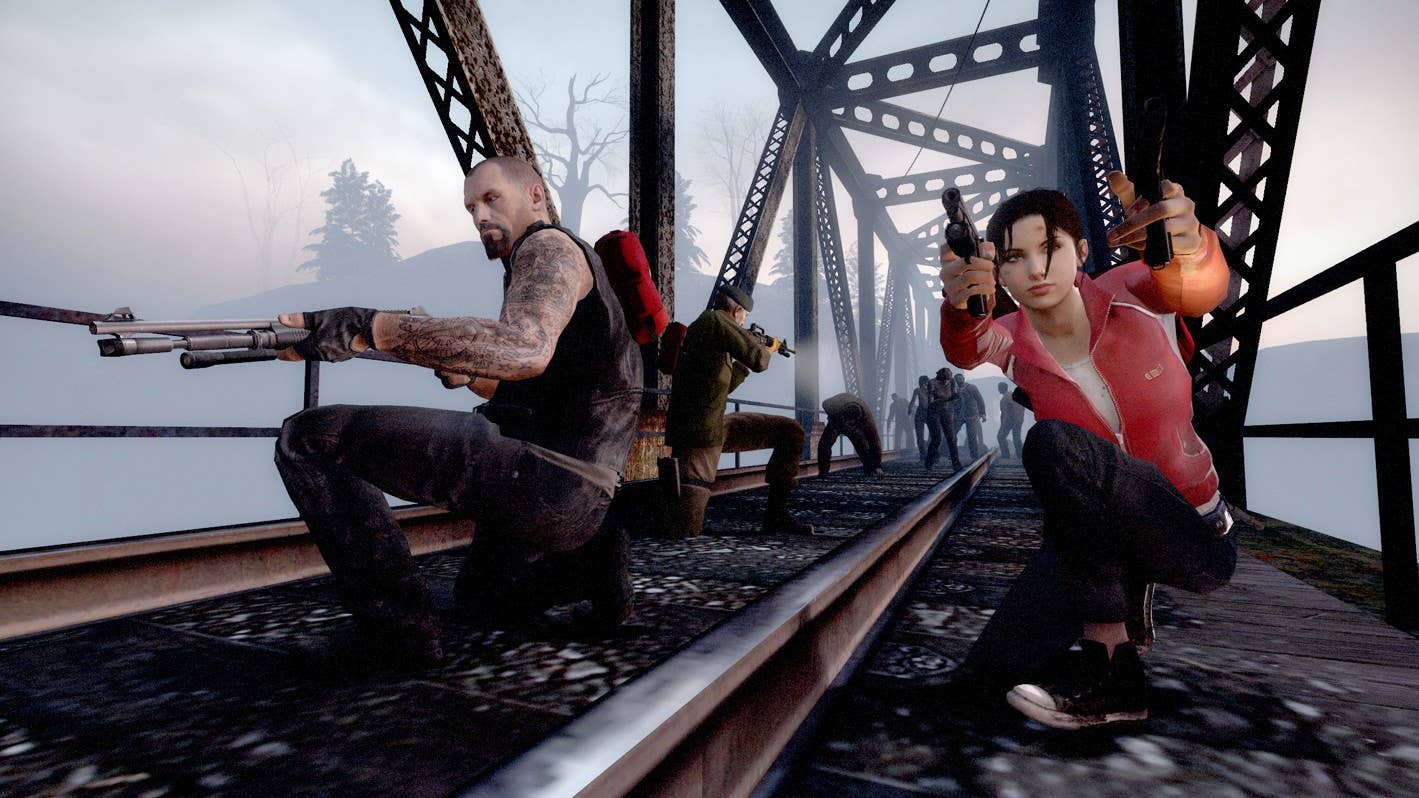
Left 4 Dead Creator Unveils Ambitious New Four-Player Co-op Shooter: What We Know So Far
The landscape of cooperative gaming is buzzing with anticipation following a monumental announcement from a figure synonymous with some of the genre’s most beloved experiences. Mike Booth, the visionary mind behind the iconic Left 4 Dead series, has revealed that he is actively engaged in the development of a brand-new four-player co-op shooter. This revelation, though still in its nascent stages, has immediately ignited the imaginations of players worldwide, promising a return to the thrilling, high-stakes teamwork that defined Valve’s groundbreaking franchise. At Gaming News, we are on the front lines, meticulously dissecting every available detail to provide you with the most comprehensive understanding of what this exciting new venture might entail.
A Legacy of Cooperative Excellence: The Mike Booth Factor
To understand the significance of this announcement, one must first appreciate the profound impact Mike Booth and his team had on the gaming industry with Left 4 Dead. Released in 2008, Left 4 Dead wasn’t just a game; it was a phenomenon. It redefined the zombie apocalypse genre, shifting the focus from individual heroism to unwavering cooperative reliance. The game’s genius lay in its dynamic AI Director, a system that intelligently adjusted enemy spawns, item placement, and environmental challenges based on player performance and progression. This ensured that no two playthroughs were ever the same, fostering immense replayability and forcing players to constantly adapt their strategies. The intense pressure of surviving hordes of infected, coordinating every bullet and every movement with three other allies, created an unparalleled sense of camaraderie and shared accomplishment. This formula was so potent that it became the benchmark for all subsequent co-op shooters, a standard that few have managed to truly meet.
The sequel, Left 4 Dead 2, further refined this formula, introducing new enemy types, more elaborate environments, and an expanded arsenal. The core gameplay loop remained: four survivors, an overwhelming tide of the undead, and the desperate race to safety. Booth’s leadership during this period solidified his reputation as a master craftsman of engaging and replayable multiplayer experiences. His understanding of player psychology, pacing, and the delicate balance of challenge and reward is precisely why his current endeavor is met with such fervent enthusiasm. The prospect of this veteran developer returning to the genre he helped pioneer suggests that we are not merely getting a spiritual successor, but potentially a revolutionary leap forward for four-player cooperative shooters.
Teasing the Unknown: What Little We Know About Booth’s New Project
While concrete details about Mike Booth’s new project are scarce, the mere confirmation of its existence as a four-player co-op shooter is enough to set the internet ablaze. Booth has been relatively quiet about his post-Valve projects, making this announcement all the more impactful. The information that has surfaced, primarily through interviews and social media hints, paints a picture of a developer dedicated to honing the core tenets of what made Left 4 Dead so successful, while also exploring new frontiers.
The emphasis on “four-player co-op” is the most significant keyword here. It signals a deliberate design choice to foster the intimate, interdependent gameplay that is the hallmark of Booth’s previous successes. This isn’t a game for lone wolves; it’s a title that will demand communication, coordination, and a shared understanding of objectives. We can infer that the game will likely feature distinct character roles or specializations, encouraging players to leverage each other’s strengths to overcome overwhelming odds. Whether these roles are pre-defined archetypes or more fluid, emergent playstyles remains to be seen, but the underlying principle of interdependence will undoubtedly be central.
Furthermore, the “shooter” aspect, while obvious, implies a focus on fast-paced action, satisfying gunplay, and a visceral sense of combat. Given Booth’s pedigree, we can expect the shooting mechanics to be polished and responsive, delivering a tactile and impactful experience. The types of enemies, the scale of the threats, and the overall tone of the game are still subjects of intense speculation. However, the legacy of Left 4 Dead suggests a focus on hordes of enemies that require strategic crowd control and precise targeting, rather than individual, bullet-sponge bosses. The thrill will likely come from managing overwhelming numbers and executing well-timed maneuvers to survive.
Potential Directions: Innovations in Cooperative Design
While paying homage to the foundations laid by Left 4 Dead is a given, it would be shortsighted to assume Booth’s new project will simply be a rehash. The industry has evolved significantly since the original game’s release, and advancements in technology and design philosophies offer fertile ground for innovation. We can anticipate Booth and his team exploring new ways to enhance the cooperative experience, potentially pushing the boundaries of what is possible in a four-player shooter.
One area ripe for innovation is the AI Director. The original was revolutionary, but modern AI capabilities have advanced exponentially. Could we see a more sophisticated AI Director that not only adapts to player skill but also to player behavior, narrative choices, or even external factors? Imagine an AI that learns your team’s preferred tactics and actively throws challenges designed to counter them, forcing constant adaptation. Or perhaps an AI that dynamically crafts narrative arcs based on your survival, weaving a unique story for each playthrough. This level of procedural generation and adaptive difficulty could elevate replayability to unprecedented heights.
Another avenue for exploration lies in the interconnectivity between players. Beyond simple communication and shared objectives, could there be deeper mechanics that bind the four players together? Perhaps a shared resource pool that requires careful management, or the ability to perform complex, multi-person actions that are only possible through perfect synchronization. Think of specialized rescue maneuvers, coordinated demolitions, or even synergistic combat abilities that unleash devastating effects when activated in tandem. The possibilities for fostering genuine teamwork are vast, and Booth’s expertise in this area suggests he will explore them thoroughly.
The progression systems in modern games are also a key consideration. While Left 4 Dead focused on immediate survival, a new title could incorporate more robust long-term progression, such as character customization, persistent skill trees, or even a meta-narrative that unfolds over multiple campaigns. However, any such systems would need to be carefully balanced to avoid undermining the core cooperative gameplay. The focus must remain on teamwork in the moment, with progression serving to enhance that experience rather than replace it.
Genre Evolution: What Does This Mean for the Future of Co-op Shooters?
The announcement of a new four-player co-op shooter from Mike Booth is more than just exciting news for fans of his previous work; it’s a potential catalyst for the evolution of the entire genre. For years, the co-op shooter space has seen a proliferation of games, some excellent, but many failing to capture the magic of titles like Left 4 Dead. This new project has the potential to reignite interest and set new standards for what players expect from cooperative multiplayer experiences.
If Booth’s new game successfully marries the core strengths of Left 4 Dead with modern technological advancements and innovative design, it could inspire a wave of new developers to experiment with similar concepts. We might see a resurgence of games that prioritize genuine player interdependence over individualistic gameplay. The focus could shift back to shared challenges, communication-driven strategies, and the sheer joy of overcoming adversity as a united force.
The success of this title could also influence how games are designed from the ground up with cooperative play as the primary focus. For too long, cooperative modes have often felt like an add-on, a secondary consideration to a single-player campaign. Booth’s commitment to the four-player co-op format suggests a holistic approach to design, where every element is crafted to enhance the shared experience. This could lead to more innovative mechanics, more compelling team-based objectives, and a deeper understanding of what makes multiplayer cooperative gameplay truly engaging.
Furthermore, the potential for a highly replayable experience is crucial. In an era where players have access to an endless stream of content, games that offer long-term engagement through dynamic systems and emergent gameplay are highly valued. If Booth can deliver on the promise of a constantly evolving challenge, his new game could become a cornerstone of online gaming communities for years to come, fostering dedicated player bases and fostering vibrant communities.
Speculating on the Setting and Enemies: A World of Possibilities
While the core mechanics of a four-player co-op shooter are becoming clearer, the specific setting and the nature of the threats players will face remain a significant area of speculation. The zombie apocalypse was the iconic backdrop for Left 4 Dead, but there are numerous other scenarios that could lend themselves to intense cooperative survival.
One possibility is a return to a post-apocalyptic world, but with a new twist. Instead of zombies, players could be battling mutated creatures, alien invaders, or even rogue AI constructs. The key would be to create enemies that pose a significant threat and require coordinated efforts to defeat. Think of large, imposing creatures that require flanking maneuvers and focused fire to bring down, or swarms of smaller, agile enemies that necessitate area-of-effect abilities and effective crowd control.
Alternatively, the game could lean into a more sci-fi setting. Imagine a squad of elite soldiers tasked with infiltrating hostile alien territory, or a group of survivors trying to escape a derelict space station overrun by something sinister. This would open up possibilities for unique weaponry, advanced technology, and environmental hazards that demand strategic thinking and resource management. The introduction of non-human enemies could also allow for more creative and unpredictable combat encounters.
A more grounded, yet equally terrifying, setting could involve a modern-day catastrophe. Perhaps a biological outbreak that doesn’t create zombies but rather intelligent, aggressive infected, or a societal collapse that has led to widespread lawlessness and the rise of dangerous factions. The familiarity of such a setting could make the threats feel even more palpable and immediate, amplifying the sense of desperate survival.
Regardless of the specific setting, the enemy design will be paramount. We can expect a variety of enemy types, each with distinct attack patterns and weaknesses, that will force players to adapt their tactics on the fly. The hallmark of Left 4 Dead was its ability to create tension through overwhelming odds, and this new project will undoubtedly aim to replicate and even surpass that. The AI Director will play a crucial role in ensuring that these threats are unpredictable and challenging, keeping players on the edge of their seats.
The Anticipation Builds: What Players Are Hoping For
The gaming community’s response to this announcement has been overwhelmingly positive, fueled by nostalgia for Left 4 Dead and excitement for what Booth might bring to the table. Players are not just looking for a new game; they are looking for an experience that recaptures the unique thrill of true cooperative gameplay.
At the top of many wish lists is the return of the AI Director’s intelligent chaos. Players fondly remember how the Director would ramp up the tension at just the right moments, throwing unexpected hordes or special infected at them when they least expected it. They crave that unpredictable replayability that made Left 4 Dead feel fresh for years.
Beyond the AI, there’s a strong desire for meaningful teamwork mechanics. Players want to feel like their contributions are essential to the team’s survival, not just a byproduct of individual skill. This means seeing distinct roles or specializations that encourage reliance on each other, abilities that synergize, and situations where coordination is not just helpful, but absolutely vital. The ability to revive fallen comrades, share resources, and strategically position themselves will be key to this.
The satisfaction of gunplay is another crucial element. Left 4 Dead had a tactile and responsive feel to its weaponry, and players are hoping for a similar level of polish in Booth’s new shooter. The visceral feedback of taking down hordes of enemies, the precise aiming required for critical shots, and the impactful sound design all contribute to an immensely satisfying combat experience.
Finally, there’s a general hope for a game that understands and respects the value of cooperative play. This means a game that is balanced around the assumption of four players working together, rather than a single-player experience awkwardly shoehorned into a multiplayer format. It means well-designed maps that encourage strategic movement and flanking, clear objectives that foster collaboration, and a sense of shared accomplishment that is unparalleled in gaming. The anticipation is palpable, and the expectations are undoubtedly high for Mike Booth’s next masterpiece.
Gaming News will continue to monitor all developments regarding this exciting new four-player co-op shooter. Stay tuned for further updates as more information is revealed.