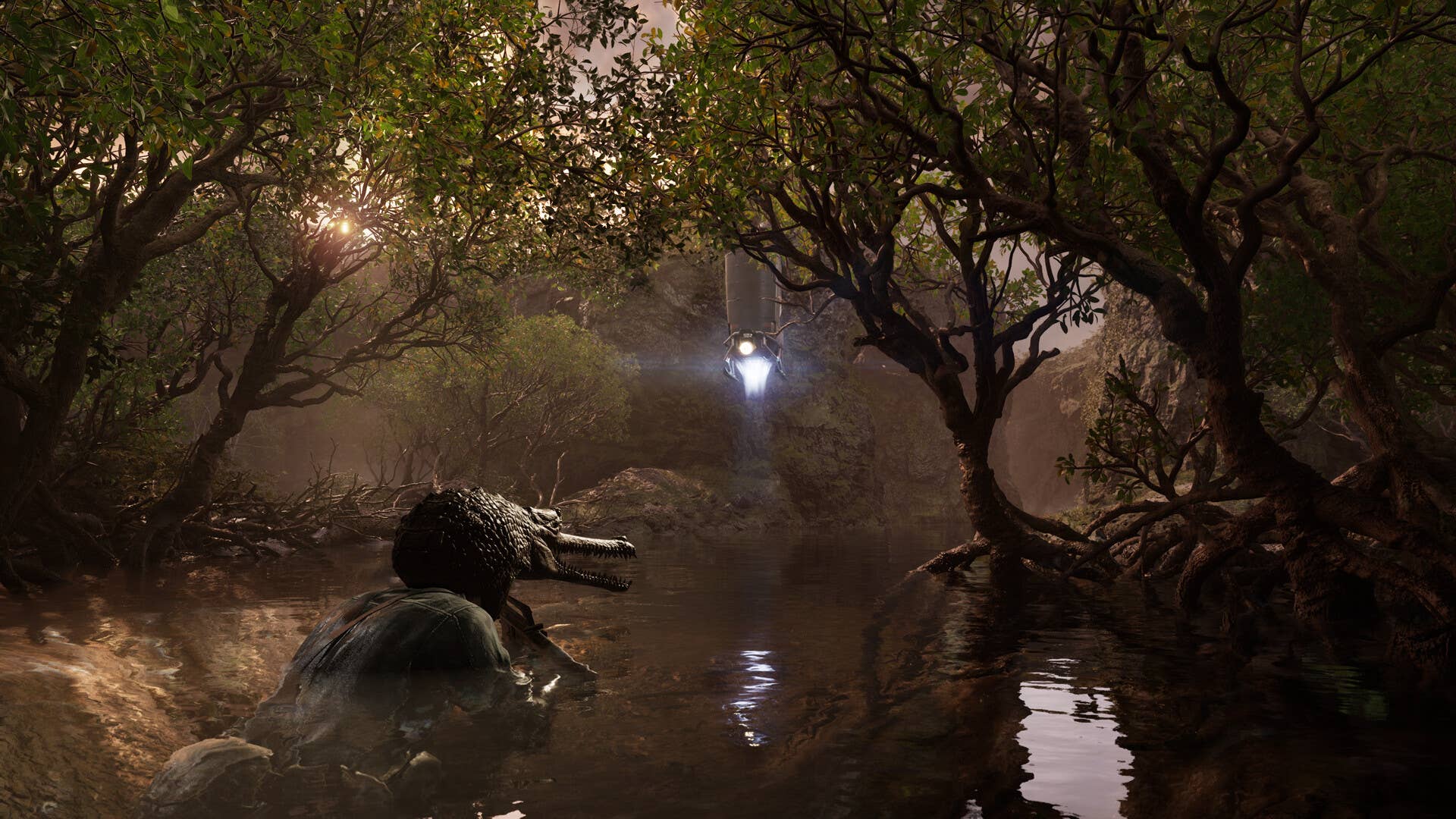
Konami Addresses Metal Gear Solid Delta: Snake Eater’s Persistent Crashing Issues, Points Finger at Unruly Crocodiles
The highly anticipated Metal Gear Solid Delta: Snake Eater, a stunning modern reimagining of the beloved stealth-action classic, has finally arrived, offering players a visually breathtaking journey through the jungles of Tselinoyarsk. However, alongside the enhanced graphics powered by the Unreal Engine and a plethora of gameplay refinements, players have encountered a series of frustrating technical glitches. Notably, two of the most prevalent and game-breaking crashing bugs have been intrinsically linked to the game’s reptilian inhabitants, specifically its formidable crocodiles. This has led to a peculiar and rather amusing explanation from Konami, the game’s publisher, who has seemingly attributed these significant stability issues to the unpredictable and, dare we say, “cranky” behavior of these digital predators.
The Crocodile Conundrum: A Persistent Plague on Metal Gear Solid Delta
From the moment Metal Gear Solid Delta: Snake Eater launched, the gaming community began reporting a consistent pattern of unexpected game crashes. While many game launches are accompanied by minor bugs, the frequency and severity of these particular crashing incidents quickly became a focal point of player discussion. Initial investigations by players and the wider gaming press revealed a striking correlation: major crashes were occurring during specific encounters involving crocodiles. This wasn’t an isolated incident; numerous reports detailed how engaging with these dangerous creatures, whether by attempting to mimic their behavior or simply being in their immediate vicinity during meal times, would frequently trigger a catastrophic game shutdown.
The implications of this are both fascinating and somewhat bewildering. The idea that the core gameplay experience could be so profoundly disrupted by the actions of non-player characters, let alone a specific type of wildlife, is an unprecedented situation. It raises questions about the intricate coding that governs the behavior of these digital creatures and their interactions with the game’s mechanics and engine. The term “cranky crocs” has, therefore, become an unofficial, albeit apt, descriptor for the root cause of these technical woes, injecting a dose of dark humor into an otherwise frustrating player experience.
Unpacking the “Crocodile Bug” Phenomenon
The nature of these crocodile-related crashes appears to manifest in a few distinct scenarios. One of the most commonly cited issues occurs when players attempt to utilize the crocodile’s behavior as a means of camouflage or stealth. In the original Metal Gear Solid 3: Snake Eater, players could employ various animal disguises and engage in environmental mimicry to evade enemy patrols. It seems that in Metal Gear Solid Delta, the implementation of these mechanics, when applied to or interacting with crocodiles, may be encountering unforeseen conflicts within the game’s code. This could involve anything from an improperly rendered crocodile model to a flawed animation sequence that clashes with the player’s actions, ultimately leading to a system-wide failure.
Another significant area of concern is tied to the in-game ecosystem and the predatory AI of the crocodiles. Players have reported crashes when they find themselves in close proximity to crocodiles during their designated feeding times or when attempting to engage them in combat. This suggests that the complex AI routines designed to make the jungle feel alive and dangerous might be experiencing a critical error when simulating these natural, albeit brutal, events. It’s possible that the game’s engine struggles to cope with the high demand of rendering multiple complex entities and their associated behaviors simultaneously, particularly when those entities are as unpredictable and dynamic as a hungry crocodile.
The Algorithmic Alligator’s Anguish
Delving deeper into the technical underpinnings, it’s conceivable that the Unreal Engine, while incredibly powerful, may have encountered unforeseen complexities when handling the specific physics and AI associated with crocodiles in Metal Gear Solid Delta. The intricate details of their movements, their water interactions, their attack animations, and their integration into the broader environmental simulation could be triggering edge cases within the engine’s code. These edge cases, often dormant under normal operational conditions, can surface when specific, perhaps even unintended, player actions or AI states are reached, leading to a cascade of errors that ultimately result in a game crash.
We hypothesize that the code responsible for crocodile AI might be intertwined with crucial game systems, such as player state, physics simulation, or even asset streaming. A single erroneous calculation or an unhandled exception within this intertwined code could propagate rapidly, corrupting data and leading to the abrupt termination of the game. The sheer level of detail in the Delta remake, from the swaying foliage to the realistic water ripples, all contribute to a more immersive experience, but they also increase the computational load and the potential for such intricate bugs to emerge.
Konami’s Official Stance: A Surprisingly Specific Apology
In response to the widespread player reports and the mounting frustration, Konami has issued a statement that, while acknowledging the issues, has garnered significant attention for its peculiar specificity. Instead of a general “technical difficulties” disclaimer, the company has directly pointed to the crocodile encounters as the primary culprits behind the major crashing bugs. This direct attribution, while seemingly humorous, underscores the severity and the focused nature of the problem.
The implication that crocodiles are somehow “working against the game” or exhibiting a “reptilian resentment” is, of course, a lighthearted anthropomorphism of a complex technical issue. However, it serves as a clear indicator that the development team has identified the reptilian inhabitants as the direct trigger for these critical errors. This precise identification is crucial for the development team to focus their efforts on debugging and patching the affected systems, rather than embarking on a broad and potentially less effective troubleshooting process.
Decoding Konami’s Crocodile-Centric Explanation
The official explanation from Konami suggests that their investigation has pinpointed specific instances where player interaction with, or proximity to, crocodiles directly leads to a game crash. This could be due to a variety of factors, including:
- Flawed Crocodile AI Logic: The algorithms governing crocodile behavior might be introducing game-breaking paradoxes or infinite loops when certain conditions are met. For example, an attempt to engage a crocodile might trigger a combat state that the game engine is not prepared to handle under specific circumstances.
- Asset Loading or Streaming Errors: The detailed models and animations for crocodiles, especially when interacting with water physics, might be triggering issues with how the game loads and streams assets. If a particular crocodile asset fails to load correctly or conflicts with another in-game element, it could destabilize the entire system.
- Physics Engine Conflicts: The sophisticated physics simulations in Metal Gear Solid Delta, particularly those involving water and dynamic objects, might be encountering unexpected conflicts with the crocodile’s unique movement patterns or collision detection. This could lead to a physics engine stall or a critical error.
- Player Interaction Glitches: As mentioned earlier, attempts to mimic crocodile behavior or use them as part of a stealth strategy might be exposing underlying bugs in how player actions are processed in relation to these specific entities.
The emphasis on “cranky crocs” also hints at the potential for these creatures to exhibit unpredictable and erratic behavior within the game’s simulation, behavior that the current build of the game struggles to gracefully manage. This unpredictability, while contributing to the game’s atmosphere, appears to be a double-edged sword, leading to critical system failures.
The Serpent’s Shadow: A Deeper Dive into Potential Causation
The term “Snake Eater” itself, while a nod to the original game’s title, also carries a metaphorical weight. In the context of these bugs, one might humorously speculate if the “snakes” in the development cycle, perhaps referring to unforeseen programming hurdles or lingering technical debt, have manifested as these crocodile-related issues. It’s a compelling, if purely speculative, narrative to consider.
From a development perspective, identifying a specific trigger for a crash bug is a significant step towards a resolution. While the current explanation might seem unconventional, it provides a clear directive for the Konami development team. They can now focus their debugging efforts on the systems directly associated with crocodile AI, animation, physics interaction, and player engagement with these creatures. This targeted approach is far more efficient than attempting to address a broad spectrum of potential issues.
We believe that the Unreal Engine’s capabilities are vast, but with such ambitious graphical and simulation updates, it is inevitable that intricate, often obscure, bugs can emerge. The detailed simulation of the jungle environment, the complex AI of its inhabitants, and the advanced physics all combine to create a rich tapestry of gameplay. However, it is within this very richness that a single, seemingly minor, flaw in a crocodile’s AI or its interaction with the water physics could unravel the entire experience, leading to the frustrating crashing bugs that players are encountering.
Navigating the Jungle: Player Strategies and Future Fixes
For players currently experiencing these issues, Konami’s explanation provides a temporary workaround: avoid prolonged engagement with crocodiles and be mindful of their presence, especially during what appears to be their “feeding times” or when attempting to use them for tactical advantage. This means exercising caution in areas heavily populated by crocodiles and refraining from actions that might provoke them.
However, the ultimate solution lies in a swift and effective patch from Konami. Given the publisher’s direct acknowledgement and specific attribution of the problem to crocodiles, we anticipate that a game update addressing these crashing bugs is already in development. Such an update will likely involve:
- Refining Crocodile AI: Adjusting the AI logic to prevent erratic behavior and ensure predictable interactions.
- Optimizing Asset Rendering: Improving how crocodile models and animations are loaded and rendered, especially in complex environmental settings.
- Addressing Physics Conflicts: Ensuring smoother integration between crocodile physics, water simulation, and the game world.
- Fixing Player Interaction Glitches: Rectifying any issues that arise from player actions when interacting with crocodiles.
The community eagerly awaits these fixes, as they are essential for players to fully enjoy the meticulously crafted world of Metal Gear Solid Delta: Snake Eater without the persistent threat of unexpected game closures. The current situation, while frustrating, serves as a stark reminder of the complexities involved in modern game development and the often-unforeseen challenges that can arise, even from the most seemingly innocuous elements of a game’s design, such as its digital wildlife.
The Future of Metal Gear Solid Delta: A Patch on the Horizon
The commitment shown by Konami in acknowledging and, more importantly, pinpointing the source of these crashing bugs is a positive sign. The move from a generic “bug fix” to a specific “crocodile issue” highlights a focused development effort. This level of transparency, even with a slightly whimsical explanation, builds trust with the player base.
We understand that the development of a patch is a meticulous process. It involves identifying the exact lines of code responsible for the error, implementing a fix, rigorously testing the solution to ensure it resolves the original issue without introducing new ones, and then distributing the update to players across all platforms. The Unreal Engine, while robust, requires a deep understanding of its various subsystems to effectively troubleshoot such intricate problems.
The fact that crocodiles are involved suggests that the issue might stem from the interplay between visual fidelity, AI complexity, and environmental interaction. For instance, the sophisticated water physics, a hallmark of Metal Gear Solid Delta, might be interacting in unexpected ways with the crocodile’s animations or collision meshes, leading to a breakdown in the simulation. Furthermore, the predatory AI of these creatures, designed to create a believable and dangerous ecosystem, could be inadvertently triggering game-breaking events under certain player-initiated or environmental conditions.
Lessons Learned: The Importance of Rigorous Testing in Game Development
This situation, while particular to Metal Gear Solid Delta: Snake Eater, also serves as a broader lesson for the gaming industry regarding the critical importance of comprehensive testing. The “crunch” culture in game development often leads to rushed releases, and while players are eager to experience new titles, unexpected bugs of this magnitude can significantly tarnish a game’s launch.
The emphasis on Unreal Engine advancements often means pushing the boundaries of what’s possible. In this pursuit of cutting-edge graphics and immersive gameplay, developers must dedicate ample resources to thoroughly test all aspects of the game, including the often-overlooked interactions with environmental elements and AI. The case of the cranky crocs in Metal Gear Solid Delta underscores that even the most impressive technological leaps can be undermined by seemingly small, yet critical, bugs.
We are confident that Konami will address these crocodile-related crashing bugs promptly and effectively. The detailed focus on this specific issue suggests a clear path forward, and the gaming community will undoubtedly appreciate a stable and polished experience in the jungle of Tselinoyarsk. The journey of Snake Eater is meant to be one of stealth, survival, and masterful gameplay, and the presence of these persistent bugs has unfortunately hindered that experience for many. We anticipate a future where players can once again immerse themselves fully in the legendary world of Metal Gear Solid, free from the unpredictable ire of its reptilian denizens. The dedication to refining the game and ensuring a high-quality player experience will ultimately define the legacy of Metal Gear Solid Delta: Snake Eater.