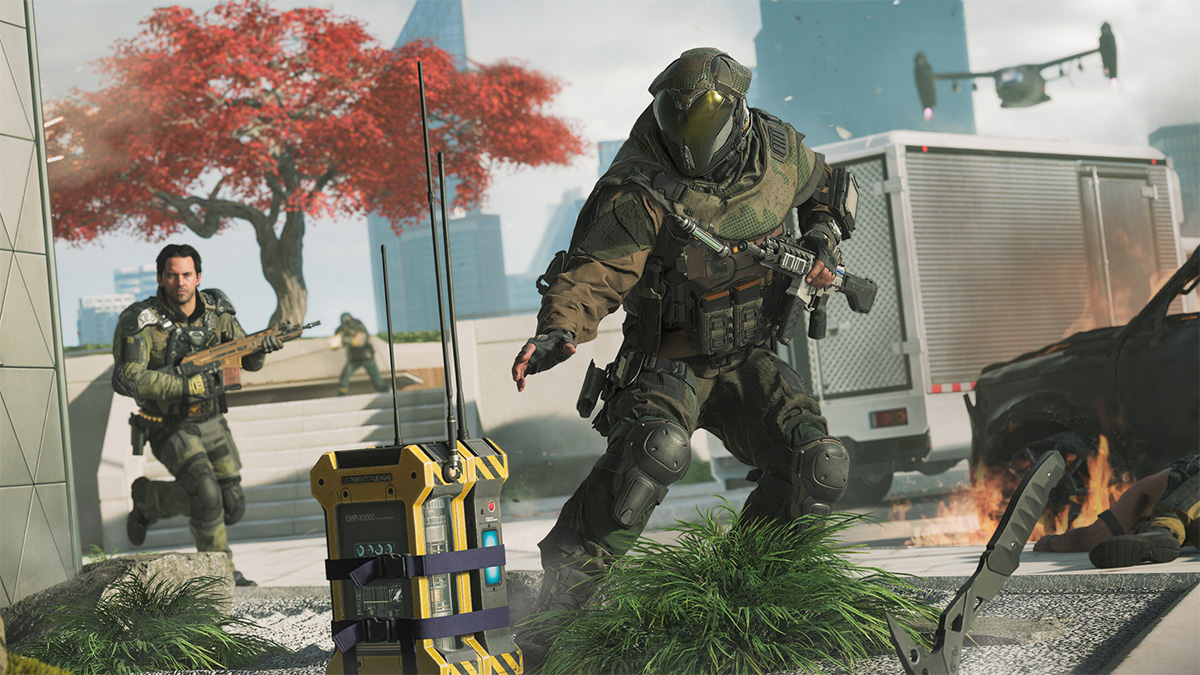
Mastering Connectivity: Your Definitive Guide to Preventing Packet Bursts in Call of Duty Black Ops Cold War
At Gaming News, we understand the sheer frustration that packet bursts can bring to your Call of Duty experience. Imagine being in the heat of a crucial firefight, lining up the perfect headshot, only for your game to stutter, freeze, and then snap back to reality, leaving you defenseless. This disruptive phenomenon, known as packet burst, is a common nemesis for online gamers, and it has been a recurring issue for players diving into the intense world of Call of Duty Black Ops Cold War. While it might seem like an insurmountable technical hurdle, rest assured that a systematic approach to troubleshooting and optimizing your connection can significantly mitigate, and often prevent packet bursts.
The arrival of a new Call of Duty title is always met with immense excitement, but it’s also a period where players frequently encounter various technical glitches, with packet bursts being a prominent offender. This isn’t exclusive to Black Ops Cold War; veteran players will recall similar struggles with past iterations of the franchise. At its core, a packet burst indicates a problem with the flow of data between your gaming device and the game’s servers. This can stem from a multitude of factors, ranging from your local network environment to the broader internet infrastructure and the game servers themselves. While the primary culprits are often related to internet connectivity and server load, there are several critical game settings and network configurations that, when fine-tuned, can drastically improve your stability and eliminate packet loss.
We’ve delved deep into the intricacies of online gaming connectivity and Call of Duty Black Ops Cold War’s specific architecture to bring you the most effective strategies for preventing packet bursts. Our goal is to provide you with comprehensive, actionable steps that go beyond generic advice, empowering you to reclaim a smooth and uninterrupted gaming experience.
Understanding the Root Causes of Packet Bursts in Black Ops Cold War
Before we dive into solutions, it’s crucial to have a foundational understanding of what a packet burst actually signifies. When you perform an action in Call of Duty, like firing your weapon or moving your character, your game client sends small chunks of data, called packets, to the game server. These packets contain information about your actions. The server processes this information and sends back updates to your game, which then render the corresponding changes on your screen.
A packet burst occurs when there’s a delay or disruption in this data transmission process. Specifically, it often means that packets are arriving at their destination much later than expected, or that a significant number of packets are being dropped altogether. This leads to a noticeable stuttering or freezing of your game as it struggles to keep up with the missing or delayed information. The visible “Packet Burst” notification that appears on your screen is the game’s way of telling you that your connection is experiencing significant network latency and packet loss.
Several factors can contribute to these delays and drops:
- Unstable Internet Connection: This is the most common culprit. Fluctuations in your internet speed, high ping (latency), and inconsistent bandwidth can all lead to packets being delayed or lost.
- Network Congestion: If your home network is overloaded with devices using the internet simultaneously (streaming, downloading, other devices gaming), it can create congestion, leading to delays for your game’s data.
- Router Issues: An outdated or poorly configured router can struggle to manage network traffic efficiently, leading to packet loss.
- Wireless vs. Wired Connection: Wi-Fi signals can be more susceptible to interference and signal degradation than a direct wired Ethernet connection, impacting packet integrity.
- Game Server Performance: While less controllable by the player, issues with the Call of Duty servers themselves can also contribute to packet bursts.
- In-Game Settings: Certain graphics and network-related settings within Black Ops Cold War can inadvertently place a heavier load on your connection, exacerbating underlying network issues.
Optimizing Your Network Environment for Peak Performance
The foundation of a stable online gaming experience lies in a robust and well-configured network. Before even touching in-game settings, ensuring your internet connection is as strong and reliable as possible is paramount.
Prioritizing a Wired Ethernet Connection
The single most impactful change you can make to improve your connection stability is to switch from Wi-Fi to a wired Ethernet connection. While Wi-Fi offers convenience, it’s inherently more susceptible to interference from other wireless devices, physical obstructions (walls, furniture), and distance from the router. This interference can lead to packet corruption and loss.
- How to Implement: Purchase an Ethernet cable (Cat 5e, Cat 6, or Cat 6a are recommended for modern speeds) and connect one end directly from your gaming console or PC’s Ethernet port to a LAN port on your router. This provides a direct, stable link to your network, significantly reducing the chances of packet bursts.
Configuring Your Router for Gaming
Your router is the gateway to the internet for all your devices. Optimizing its settings can make a world of difference.
Quality of Service (QoS) Settings
Quality of Service (QoS) is a router feature that allows you to prioritize certain types of network traffic over others. By enabling QoS and prioritizing gaming traffic, you can ensure that your Call of Duty data packets are given precedence, even when other devices on your network are consuming bandwidth.
- How to Implement:
- Access your router’s administrative interface by typing its IP address (often 192.168.1.1 or 192.168.0.1) into a web browser. You’ll need your router’s login credentials.
- Locate the QoS settings. This can vary significantly between router manufacturers. Look for sections labeled “QoS,” “Traffic Management,” or “Bandwidth Control.”
- Enable QoS.
- Create a rule to prioritize gaming traffic. Some routers have pre-set gaming profiles. If not, you may need to create a custom rule. You can often prioritize traffic based on device (your gaming console/PC’s MAC address or IP address) or specific ports used by Call of Duty. For Black Ops Cold War, common ports include UDP 3074, 3075, 3076, and 3077. Consult Call of Duty’s official support pages for the most up-to-date port information.
- Apply and save your settings.
Port Forwarding
Port forwarding directs specific incoming network traffic directly to your gaming device, bypassing some of the router’s default security protocols that might otherwise slow down or drop game packets. This can be particularly helpful for games that utilize specific ports.
- How to Implement:
- Find your gaming device’s static IP address. You can usually set this within your router’s DHCP settings or configure a static IP on your console/PC.
- Access your router’s administrative interface.
- Navigate to the “Port Forwarding” or “Virtual Servers” section.
- Create new rules for the ports used by Call of Duty Black Ops Cold War. You will typically need to specify:
- Internal IP Address: Your gaming device’s static IP address.
- External Port: The port number (e.g., 3074).
- Internal Port: The same port number.
- Protocol: UDP is generally used for gaming, but sometimes TCP/UDP is required.
- Name/Description: A label like “CoD Cold War Port 3074.”
- You will likely need to create separate rules for each required port.
UPnP (Universal Plug and Play)
UPnP is a networking standard that allows devices on your network to automatically discover and communicate with each other, and to configure router settings for them. While convenient, UPnP can sometimes be a security risk and may not always configure settings optimally for gaming.
- Recommendation: If you are experiencing persistent packet bursts and have tried port forwarding, it can be beneficial to disable UPnP on your router and rely solely on manual port forwarding. This ensures that only the necessary ports are opened and directed correctly. However, if you have no issues with UPnP enabled and have a stable connection, you may choose to leave it on for simplicity.
Managing Home Network Congestion
A busy household internet connection is a breeding ground for packet loss. Even with a fast internet plan, if multiple devices are simultaneously streaming 4K video, downloading large files, or engaged in other bandwidth-intensive activities, your game’s packets can be delayed.
- How to Implement:
- Schedule Heavy Usage: If possible, schedule large downloads or extensive streaming for times when you are not gaming.
- Limit Simultaneous Devices: When you are actively gaming, try to minimize the number of other devices actively consuming significant bandwidth.
- Use QoS: As mentioned earlier, QoS is invaluable for managing bandwidth on your home network.
Considering a DNS Server Change
Your Domain Name System (DNS) server translates human-readable website addresses (like gamingnews.gitlab.io) into machine-readable IP addresses. While your Internet Service Provider (ISP) provides a default DNS server, switching to a faster, more reliable third-party DNS server can sometimes improve connection speeds and reduce latency.
- Popular Options: Google DNS (8.8.8.8 and 8.8.4.4) and Cloudflare DNS (1.1.1.1 and 1.0.0.1) are widely regarded as fast and reliable alternatives.
- How to Implement: You can change your DNS settings either on your router (affecting all devices on your network) or directly on your gaming console/PC. This is typically done within the network settings menu of each device or router.
Fine-Tuning In-Game Settings to Reduce Network Strain
Beyond your external network setup, Call of Duty Black Ops Cold War itself offers several in-game options that can impact network performance and contribute to packet bursts. By adjusting these settings, you can alleviate some of the strain on your internet connection.
Managing On-Demand Texture Streaming
The On-Demand Texture Streaming feature is designed to enhance visual fidelity by downloading high-resolution textures as you play. While this leads to stunning graphics, it also places a significant burden on your internet connection, as it constantly downloads data.
- Impact on Packet Bursts: High bandwidth usage from texture streaming can easily interfere with the timely delivery of crucial gameplay packets, leading to stutters and packet loss.
- How to Prevent Packet Bursts:
- Navigate to the Graphics settings within Call of Duty Black Ops Cold War.
- Locate the On-Demand Texture Streaming option.
- While you cannot disable it entirely, you can set it to “Minimal” or “Optimized”. The “Optimized” setting attempts to manage downloads more intelligently, but “Minimal” will significantly reduce the amount of data being downloaded during gameplay. We recommend setting it to Minimal for the best chance of reducing network strain.
Disabling Dismemberment and Gore Effects
The visceral and often bloody nature of combat in Call of Duty is a key part of its appeal. However, the visual data associated with dismemberment and gore effects requires the transmission of additional information to the server.
- Impact on Packet Bursts: In scenarios where your connection is already borderline, the extra data associated with these effects can be enough to push your network into a state where packet loss becomes more frequent, resulting in packet bursts.
- How to Prevent Packet Bursts:
- Go to your Graphics or Gameplay settings.
- Look for options related to Dismemberment and Gore Effects.
- Disable these features. While this might slightly reduce the immersive feel of the game for some players, the benefit to network stability and the reduction of packet bursts can be substantial.
Adjusting VRAM Usage (Graphics Memory)
The VRAM Scale Target setting controls how much of your graphics card’s Video RAM (VRAM) Call of Duty Black Ops Cold War is allowed to use. While allocating more VRAM can improve performance and visual quality, pushing it too high can sometimes lead to conflicts and system instability, which can indirectly affect network performance.
- Impact on Packet Bursts: If the game is demanding an excessive amount of VRAM, it can lead to overall system performance degradation, including slower data processing that might impact your ability to send and receive game packets efficiently.
- How to Prevent Packet Bursts:
- Access the Graphics settings in Black Ops Cold War.
- Find the VRAM Scale Target slider.
- Lower this value. A good starting point is often around 80-90% of your graphics card’s total VRAM capacity. Experiment with slightly lower values if you continue to experience issues. The goal is to find a balance between visual quality and system stability that doesn’t tax your hardware to the point of causing network-related problems.
Advanced Troubleshooting and Maintenance
Even with optimized settings and a solid network configuration, other factors can still contribute to or exacerbate packet burst issues. Proactive maintenance and a willingness to troubleshoot further can be key.
Updating Game and System Software
Game developers frequently release patches and updates that address bugs, improve performance, and optimize network code. Similarly, your console or PC operating system and network drivers may have updates that can resolve connectivity issues.
- How to Implement:
- Game Updates: Ensure Call of Duty Black Ops Cold War is set to automatically download and install updates. Regularly check for game updates in your platform’s store or library.
- System Updates: For PC players, ensure your Windows operating system is up-to-date. For consoles, check for system software updates in your console’s settings.
- Network Drivers (PC): For PC users, it’s also a good practice to ensure your network adapter drivers are current. You can usually find these on the manufacturer’s website of your motherboard or network card.
Clearing Cache and Resetting Network Settings
Over time, temporary files and network configurations can become corrupted, leading to persistent issues. Clearing your system’s cache and resetting network settings can resolve these underlying problems.
For Consoles (PlayStation/Xbox):
- Power Cycle: Turn off your console completely, unplug it from the power source, wait for about 60 seconds, and then plug it back in and turn it on.
- Clear Cache: Consult your console’s specific instructions for clearing the cache (this process varies). For Xbox, it often involves holding the power button for a longer period during startup.
- Reset Network Settings: Within your console’s network settings, there is usually an option to “Reset Network Settings” or “Restore Defaults.” Be aware that this will erase saved Wi-Fi passwords, so you’ll need to re-enter them.
For PC:
- Command Prompt Commands: Open the Command Prompt as an administrator and run the following commands:
ipconfig /flushdns(Clears the DNS resolver cache)ipconfig /registerdns(Re-registers DNS entries)ipconfig /release(Releases your current IP address)ipconfig /renew(Renews your IP address)netsh winsock reset(Resets the Winsock Catalog, which controls network protocol configurations)
- Restart your PC after running these commands.
- Command Prompt Commands: Open the Command Prompt as an administrator and run the following commands:
Monitoring Your Internet Connection
Understanding the real-time performance of your internet connection is crucial for diagnosing packet burst issues.
- How to Monitor:
- Speed Tests: Use reliable online speed test websites (like Speedtest.net or Fast.com) to check your download speed, upload speed, and most importantly, your ping (latency) and jitter (variation in ping). Run these tests at different times of the day to identify peak-hour slowdowns.
- Ping Monitoring Tools: For more advanced users, tools exist that can continuously ping a server (like Google’s DNS or a Call of Duty server) and log packet loss and latency over time. This can help pinpoint intermittent issues.
Server Status and ISP Issues
Occasionally, the problem might not be on your end.
- Check Call of Duty Server Status: Activision often provides updates on server status. Look for official announcements on their website or social media channels.
- Contact Your ISP: If you suspect your Internet Service Provider (ISP) is throttling your connection, experiencing widespread outages, or providing an unreliable service, don’t hesitate to contact them. Inform them of your persistent packet burst issues during online gaming.
The Final Check: Patience and Shader Preloading
Sometimes, especially after a new game update or on launch day, the game needs time to fully integrate its assets.
- Shader Preloading: Call of Duty Black Ops Cold War, like many modern games, uses shaders to improve performance. These shaders are often compiled and loaded in the background. If these shaders haven’t fully downloaded and preloaded across all game modes, it can lead to stuttering and packet bursts as the game tries to compile them on the fly.
- How to Ensure Smoothness: After any significant game update, allow the game to sit on the main menu for a period. You might see a “Compiling Shaders” notification. Let this process complete entirely before diving into multiplayer matches. This simple step can often resolve many initial packet burst occurrences.
By systematically implementing these strategies, from prioritizing a wired connection and optimizing router settings to fine-tuning in-game options and performing regular maintenance, you can dramatically reduce and ultimately prevent packet bursts in Call of Duty Black Ops Cold War. A stable and responsive connection is not just a convenience; it’s fundamental to enjoying the competitive edge and immersive experience that Call of Duty is renowned for. At Gaming News, we are committed to helping you achieve the best possible gaming performance.