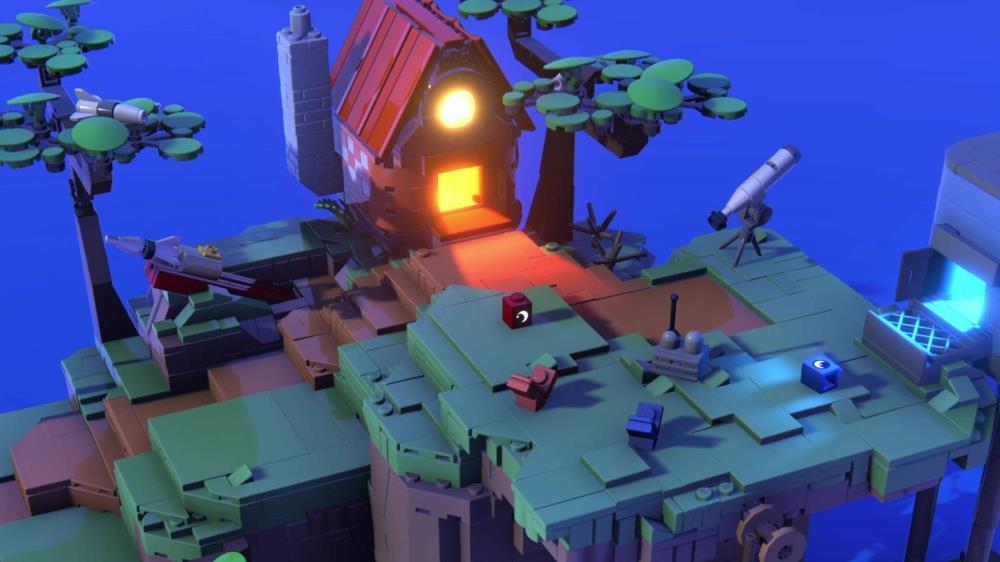
How Lego Voyagers Teaches Co-op Puzzles Without Using a Single Word
The beauty of Lego extends far beyond the simple act of brick assembly. It’s a language of shapes, colors, and spatial reasoning, a universal lexicon that transcends linguistic barriers. Lego Voyagers, the new cooperative puzzle game, masterfully harnesses this inherent quality, crafting a deeply engaging experience that communicates solely through visuals and intuitive design. There are no lengthy tutorials to wade through, no verbose character dialogues, just pure, unadulterated puzzle-solving bliss. This innovative approach to cooperative gameplay sets Lego Voyagers apart, offering a refreshingly accessible and universally appealing experience.
The Art of Visual Communication in Lego Voyagers
Lego Voyagers operates on a deceptively simple premise: guide your intrepid Lego minifigures through a series of increasingly challenging environments, each riddled with intricate puzzles that demand coordinated effort. What’s remarkable is how the game achieves this without a single word of instruction. Instead, the developers have meticulously crafted each puzzle to visually telegraph its solution.
Color Coding and Spatial Relationships: The environment itself becomes a crucial tool for communication. Color palettes are strategically employed to highlight interactive elements, indicating which blocks can be manipulated and where they need to be placed. Furthermore, the spatial arrangement of the Lego bricks within each puzzle subtly suggests the sequence of actions required to overcome the obstacles. A stack of red bricks next to a lever, for instance, might intuitively suggest that these bricks need to be used to weigh down the lever, activating a hidden mechanism.
Environmental Storytelling Through Lego Architecture: The game world is not merely a collection of puzzles; it is rich with environmental storytelling. The architecture of each level, constructed entirely from Lego bricks, provides contextual clues about the puzzle’s objective. A dilapidated bridge, for example, might visually indicate the need for a collaborative effort to repair it. Similarly, the presence of specific Lego elements, like gears or pulleys, hints at the type of mechanism that needs to be activated.
Character Animations as Non-Verbal Cues: The Lego minifigures themselves play an integral role in communication. Their animations are carefully designed to convey their intentions and needs. A minifigure struggling to lift a heavy object, for example, clearly signals the need for assistance from their partner. Likewise, a minifigure pointing towards a specific area of the puzzle highlights a potential point of interaction. This non-verbal communication fosters a sense of teamwork and shared purpose, encouraging players to work together towards a common goal.
The Cooperative Core: Solving Puzzles as a Team
At its heart, Lego Voyagers is a cooperative experience. The puzzles are specifically designed to require the coordinated effort of two players, fostering communication and collaboration. However, the absence of verbal communication enhances the experience.
Intuitive Problem-Solving through Shared Observation: Players are forced to rely on shared observation and intuitive reasoning to decipher the puzzles. By carefully scrutinizing the environment and paying close attention to the actions of their partner, they can collectively piece together the solution. This process fosters a deeper understanding of the game’s mechanics and promotes a sense of shared accomplishment.
Learning to Predict Your Partner’s Actions: As players progress through the game, they begin to anticipate each other’s actions. They learn to recognize the visual cues that indicate their partner’s intentions, allowing them to seamlessly coordinate their efforts. This unspoken understanding creates a powerful sense of teamwork and strengthens the bond between players.
Overcoming Challenges as a Single Unit: The most rewarding moments in Lego Voyagers come from overcoming seemingly insurmountable obstacles through coordinated teamwork. The feeling of accomplishment is amplified by the fact that the solution was achieved through shared observation, intuitive reasoning, and a deep understanding of the game’s visual language.
Karsten Lund’s Design Philosophy: Simplicity and Accessibility
We spoke to creative director Karsten Lund about the design philosophy behind the co-op Lego game. He emphasized the importance of simplicity and accessibility in creating a truly engaging cooperative experience. “We wanted to create a game that could be enjoyed by players of all ages and skill levels,” Lund explained. “By removing the need for verbal communication, we eliminated a potential barrier to entry and allowed players to focus on the core mechanics of puzzle-solving and teamwork.”
Focusing on Universal Understanding: Lund’s vision was to create a game that could be understood regardless of language or cultural background. He and his team achieved this by relying on the inherent visual language of Lego and the universally understood principles of spatial reasoning.
Creating a Truly Collaborative Experience: The absence of verbal communication was not merely a design constraint but a deliberate choice to foster a more authentic cooperative experience. By forcing players to rely on shared observation and intuitive reasoning, the developers encouraged them to engage with each other in a more meaningful way.
Balancing Difficulty and Accessibility: One of the biggest challenges in developing Lego Voyagers was striking the right balance between difficulty and accessibility. The puzzles had to be challenging enough to engage experienced players but not so complex as to alienate newcomers. The team achieved this by carefully pacing the introduction of new mechanics and providing subtle visual cues to guide players towards the solution.
The Benefits of Non-Verbal Communication in Gaming
Lego Voyagers demonstrates the power of non-verbal communication in video games. By removing the reliance on dialogue and written instructions, the game creates a more immersive and engaging experience.
Enhanced Immersion and Engagement: The absence of verbal communication forces players to pay closer attention to the game world and the actions of their partner. This heightened level of engagement leads to a more immersive and rewarding experience.
Improved Problem-Solving Skills: By relying on shared observation and intuitive reasoning, players develop their problem-solving skills and learn to think creatively. This can have benefits that extend beyond the game itself, improving their ability to solve real-world problems.
Strengthened Communication Skills: While Lego Voyagers removes the need for verbal communication, it actually strengthens communication skills in other ways. Players learn to communicate their intentions through actions and to interpret the non-verbal cues of their partner. This can improve their ability to communicate effectively in other contexts.
Lego Voyagers: A Masterclass in Cooperative Puzzle Design
Lego Voyagers is more than just a puzzle game; it’s a masterclass in cooperative design. By relying on visual communication and intuitive mechanics, the game creates a deeply engaging and universally appealing experience that transcends linguistic barriers. The absence of verbal communication fosters a stronger sense of teamwork and shared accomplishment, making Lego Voyagers a truly unforgettable cooperative adventure. This is one game that manages to combine the nostalgia of Lego with unique co-op gameplay.
Where to Find Lego Voyagers
- Steam: The most popular platform for PC gaming, Steam often features deals and community reviews.
- Nintendo Switch eShop: Ideal for portable co-op gaming on the go.
- PlayStation Store/Xbox Marketplace: Available on consoles, ensuring a social gaming experience.
Tips and Tricks for Mastering Lego Voyagers
- Observe Carefully: Before acting, thoroughly examine the environment. Look for color-coded clues, spatial relationships, and unique Lego elements that might hint at the solution.
- Communicate Non-Verbally: Pay close attention to your partner’s actions and animations. Use your own actions to communicate your intentions and guide your partner.
- Experiment and Iterate: Don’t be afraid to try different approaches. If one solution doesn’t work, try something else. Learn from your mistakes and iterate on your strategies.
- Break Down Complex Problems: Divide complex puzzles into smaller, more manageable tasks. Focus on solving one task at a time, and then combine your efforts to solve the larger puzzle.
- Patience is Key: Some puzzles may require a bit of trial and error. Be patient and persistent, and don’t give up easily. The feeling of accomplishment is well worth the effort.
The Future of Wordless Co-op Games
Lego Voyagers is a testament to the potential of wordless co-op games. Its success opens new doors for developers to explore innovative ways to communicate and engage players without relying on traditional methods.
Focus on Visual Storytelling: Wordless games can leverage visual storytelling techniques to create immersive and engaging narratives. By carefully crafting the environment, character animations, and puzzle design, developers can convey complex stories without a single word of dialogue.
Embrace Intuitive Mechanics: Wordless games encourage developers to focus on creating intuitive and easy-to-understand mechanics. By designing puzzles that are visually clear and logically consistent, they can create a more accessible and rewarding experience for players.
Promote Collaborative Problem-Solving: Wordless games force players to rely on shared observation and intuitive reasoning to solve puzzles. This promotes collaborative problem-solving and strengthens the bond between players.
Conclusion: A New Standard for Cooperative Gaming
Lego Voyagers sets a new standard for cooperative gaming. By embracing the power of visual communication and intuitive design, the game creates a deeply engaging and universally appealing experience that transcends linguistic barriers. Its success demonstrates the potential of wordless co-op games to foster teamwork, enhance immersion, and improve problem-solving skills. Lego Voyagers is not just a game; it’s an experience that will stay with you long after you’ve solved the last puzzle. The charm of Lego, combined with the innovative gameplay, makes it a must-play for fans of cooperative games and puzzle enthusiasts alike. Lego Voyagers earns its spot among the best co-op games. Its reliance on wordless communication challenges players to connect in new ways, enriching the gaming experience and solidifying its place as a true gem.