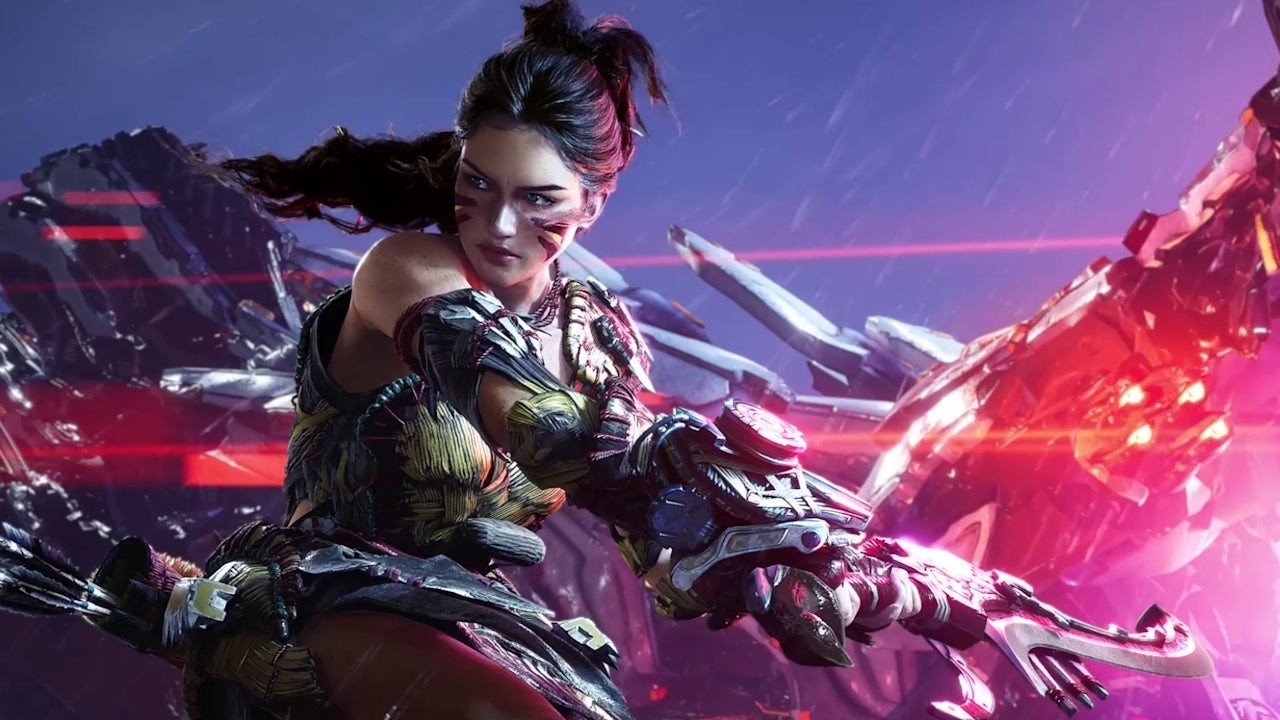
Horizon MMO: NCSOFT Leverages Extensive AI in Development, Igniting Fan Debate
The gaming landscape is constantly evolving, and with it, the tools and methodologies employed by developers to bring ambitious virtual worlds to life. In a development that has certainly sparked a significant amount of conversation within the player community, NCSOFT, the esteemed South Korean entertainment company, has revealed its extensive use of artificial intelligence (AI) throughout the creation process of its upcoming Horizon MMO. This groundbreaking approach, spanning a wide spectrum of development tasks from the foundational elements of coding to the intricate artistry of the game world, has undeniably positioned the Horizon MMO as a noteworthy title in the narrative of modern game development. While the full implications of this AI integration are still unfolding, the announcement itself has garnered substantial attention, particularly following the initial unveiling of Horizon Steel Frontiers, the mobile and PC MMORPG that has now become the focal point of this discussion.
The very notion of AI playing a role in game creation is, by its nature, a subject that evokes both immense excitement and considerable apprehension. For a franchise as beloved and established as Horizon, a property known for its rich lore, compelling narrative, and visually stunning post-apocalyptic world, the prospect of AI contributing to its expansion into the massively multiplayer online realm introduces a unique set of considerations. NCSOFT’s declaration that AI has been utilized ‘extensively’ in the development of the Horizon MMO signifies a deep commitment to integrating these advanced technologies into the very fabric of the game’s design, execution, and overall experience. This is not a superficial application, but rather a foundational reliance that touches upon numerous critical aspects of game production, a fact that demands a thorough examination of what this truly entails for the future of the Horizon universe and the MMORPG genre as a whole.
AI’s Pervasive Influence: From Core Programming to Creative Flourishes
The assertion by NCSOFT that AI is being used ’extensively’ in the development of the Horizon MMO goes beyond mere buzzword adoption; it signifies a deliberate and comprehensive integration of artificial intelligence into virtually every facet of the game’s creation. This pervasive influence extends from the most technical and foundational aspects of game development, such as the intricate processes of coding and system architecture, all the way to the highly creative and artistic dimensions that define the visual and experiential appeal of any virtual world. Understanding the depth of this AI involvement requires a granular exploration of how these technologies are being applied, recognizing that their impact is multifaceted and profound.
At the forefront of this AI integration lies the realm of coding. Modern game development is an immensely complex undertaking, demanding vast quantities of code to govern everything from player movement and combat mechanics to complex AI behaviors for non-player characters (NPCs) and the intricate systems that underpin a persistent online world. NCSOFT’s embrace of AI in this domain suggests the use of advanced tools capable of automating code generation, debugging, and optimization. This could translate into more efficient development cycles, allowing programmers to focus on higher-level design challenges rather than getting bogged down in repetitive coding tasks. AI-powered code assistants might be employed to suggest code snippets, identify potential errors before they manifest, and even generate boilerplate code, thereby accelerating the creation of the game’s underlying infrastructure. Furthermore, AI could be instrumental in procedural content generation for the vast open world that an MMO necessitates. Instead of manually crafting every single piece of terrain, foliage, or even minor environmental details, AI algorithms can be trained to generate diverse and believable landscapes, ensuring a vast and engaging world that feels both expansive and uniquely realized.
Beyond the purely technical, the artistic and design elements of the Horizon MMO are also being shaped by AI. The Horizon series is renowned for its distinct aesthetic, characterized by the juxtaposition of a lush, overgrown post-apocalyptic Earth and the presence of majestic, yet dangerous, robotic creatures. AI can play a significant role in bringing these artistic visions to fruition. For character design and modeling, AI tools could assist artists by generating initial concepts, exploring variations of creature designs, or even aiding in the creation of detailed textures and environmental assets. Imagine AI algorithms capable of learning the stylistic nuances of the Horizon universe and then generating new machine designs that are thematically consistent yet novel. Similarly, in the realm of environment art, AI could be employed to generate intricate details for settlements, ruins, and the natural landscapes that players will traverse. This could include anything from the arrangement of vegetation and rocks to the placement of atmospheric effects, all contributing to a visually rich and immersive experience.
The implications of AI in NPC behavior and world simulation are equally significant. In an MMO, the world needs to feel alive and dynamic, populated by creatures and characters that react believably to the player and their surroundings. AI can be used to develop more sophisticated and emergent behaviors for enemies and wildlife, making encounters more challenging and unpredictable. Instead of relying on pre-programmed patrol routes and attack patterns, AI can enable machines to exhibit more complex tactical decision-making, learn from player strategies, and adapt their behavior in real-time. This can lead to a more engaging and replayable combat experience. Furthermore, AI could be used to simulate ecosystems and societal behaviors within the game world, making the environment feel more organic and responsive. The actions of players could have ripple effects, influencing the behavior of NPCs, the availability of resources, and the overall state of the world, fostering a sense of true player agency and consequence.
The use of AI in game balancing and player experience optimization is another area where NCSOFT’s extensive integration could prove transformative. AI algorithms can analyze vast amounts of player data to identify imbalances in gameplay, such as overpowered classes, underutilized abilities, or frustrating difficulty spikes. This data-driven approach allows developers to make informed adjustments to game mechanics, ensuring a more equitable and enjoyable experience for all players. AI can also be used to personalize the player journey, tailoring content and challenges based on individual playstyles and preferences. This could involve dynamically adjusting quest difficulty, recommending specific activities, or even generating personalized narrative arcs, further enhancing player immersion and engagement.
The Horizon Steel Frontiers Announcement and the AI Revelation
The recent unveiling of Horizon Steel Frontiers, an MMORPG set to launch on both mobile and PC platforms, marked a significant expansion of the beloved Horizon franchise into new territory. This announcement, while met with a degree of anticipation, has also become the focal point for a more profound and, for some, contentious discussion surrounding the game’s development methodologies. It was during the period following this revelation that NCSOFT, the studio at the helm of this ambitious project, made the pivotal statement regarding their extensive use of AI in the development process. This disclosure, more than any specific gameplay mechanic or graphical feature initially presented, has captured the attention of the gaming community and ignited a fervent debate about the role of artificial intelligence in game creation.
The Horizon franchise, having carved out a unique niche with its rich lore, compelling storytelling, and distinctive blend of nature and technology, has cultivated a dedicated fanbase. This community holds a deep appreciation for the meticulously crafted world and the narrative depth that has defined previous installments. Therefore, any new venture, especially one as significant as an MMORPG aiming to expand this universe, is met with a high level of scrutiny and expectation. The announcement of Horizon Steel Frontiers itself was an event that drew considerable interest, promising an expansive online experience that would allow players to inhabit and explore the Horizon world in a manner previously unexplored.
However, it is the subsequent admission by NCSOFT that they have utilized AI ’extensively’ that has truly reshaped the narrative surrounding Horizon Steel Frontiers. This statement is not a minor detail; it represents a fundamental aspect of how the game has been brought into existence. The term ’extensively’ implies a deep and pervasive integration, suggesting that AI is not merely a peripheral tool but a core component of the development pipeline. This revelation has, understandably, generated a spectrum of reactions from the player base. For some, it represents a forward-thinking embrace of cutting-edge technology, a sign that NCSOFT is at the forefront of innovation, potentially leading to a more dynamic and efficiently developed game. They might see AI as a tool that can unlock new possibilities in terms of world-building, content creation, and player interaction, ultimately leading to a richer and more engaging MMO experience.
Conversely, for a significant portion of the Horizon community and the broader gaming public, the reliance on AI, particularly in such a comprehensive manner, has raised concerns. These anxieties often stem from a variety of sources. There is the perception that AI-generated content might lack the human touch, the nuanced creativity, and the artistic soul that players have come to associate with the Horizon series. The fear is that an over-reliance on AI could lead to a homogenized or generic experience, stripping away the unique identity that has made the franchise so successful. Furthermore, ethical considerations regarding the use of AI in creative industries, including potential impacts on human artists and developers, are also part of this complex dialogue. The announcement has thus thrust the Horizon MMO into the spotlight not just for its gameplay promises, but for the very philosophical and practical underpinnings of its creation, making it a case study in the evolving relationship between artificial intelligence and the art of video game development.
AI in the Artistry: Crafting the Visual Identity of the Horizon MMO
The Horizon franchise has always been celebrated for its breathtaking visual artistry, a hallmark that seamlessly blends the stark beauty of a reclaimed natural world with the intricate, often awe-inspiring, designs of its robotic inhabitants. The announcement that NCSOFT is leveraging AI extensively in the development of the Horizon MMO inevitably leads to a deep dive into how these advanced technologies are being applied to the creation of its visual identity. This is not simply about generating generic assets; it’s about augmenting and, in some instances, revolutionizing the processes by which the game’s aesthetic is brought to life, from the initial spark of an idea to the final, polished render.
When considering the artistic contributions of AI, its role in concept generation and ideation is particularly noteworthy. Imagine AI algorithms trained on the vast visual lexicon of the Horizon universe – its distinctive flora, fauna, architectural ruins, and, of course, its iconic machines. Such AI could be tasked with generating novel creature designs, exploring variations of existing robotic forms, or proposing unique environmental concepts that align with the established lore and aesthetic. This does not replace the vision of human artists but rather serves as a powerful brainstorming partner, presenting a multitude of possibilities that might not have been conceived through traditional methods alone. Artists can then iterate upon these AI-generated starting points, refining them, infusing them with their own creative flair, and ensuring they meet the high standards of the Horizon brand.
The creation of 3D models and assets is another area where AI is poised to make a significant impact. For an MMORPG, the sheer volume of assets required is staggering. AI-powered tools can assist in the modeling process, potentially generating intricate details for machine components, complex textures for organic and metallic surfaces, or even entire environmental structures. This could involve AI that can learn to replicate specific artistic styles, ensuring that newly generated assets seamlessly integrate with existing art direction. For instance, an AI could be trained on the characteristic patterns and weathering found on the machines in previous Horizon games and then apply these principles to generate new, diverse mechanical entities. Similarly, in the realm of environmental art, AI could be employed to procedurally generate vast landscapes, populating them with a rich variety of flora, geological formations, and the remnants of past civilizations. This not only speeds up development but also ensures a level of detail and variety that would be incredibly labor-intensive to achieve manually, contributing to a more expansive and immersive world for players to explore.
Furthermore, AI’s capabilities in animation and visual effects are equally transformative. The fluid and often menacing movements of the machines are a critical part of their appeal. AI can be utilized to generate more lifelike and responsive animations, potentially by analyzing real-world motion data or by creating complex movement patterns based on the biomechanics and operational logic of the robotic creatures. This could lead to more dynamic and challenging combat encounters. In the domain of visual effects (VFX), AI can aid in the creation of realistic particle systems for explosions, elemental effects, or the energy discharges from machine weaponry. AI can also learn to generate atmospheric effects, such as dynamic weather patterns, volumetric fog, or intricate lighting scenarios that enhance the mood and visual fidelity of the game world.
The process of texturing and material creation also benefits immensely from AI integration. AI algorithms can analyze reference images and generate highly detailed and realistic textures, including complex materials like worn metal, weathered stone, or vibrant organic foliage. This not only saves artists significant time but also allows for a greater degree of visual fidelity. AI could even be used to generate variations of textures, ensuring that no two elements in the game world look identical, contributing to a more organic and less repetitive visual experience. The goal is to utilize AI not as a replacement for human artistry, but as a powerful enhancer, an intelligent assistant that amplifies creative potential and accelerates the realization of a visually stunning and thematically consistent Horizon MMO.
The Code of Creation: AI’s Role in the Technical Backbone of the Horizon MMO
The technical foundation of any massive multiplayer online game is a complex symphony of code, algorithms, and system architecture. For NCSOFT’s Horizon MMO, the declaration of extensive AI usage points to a profound integration of artificial intelligence not just in the aesthetic and narrative elements, but critically, in the very coding and engineering that underpins the entire experience. This is where AI transforms from a creative assistant to a fundamental building block, shaping the game’s functionality, performance, and scalability.
At the most fundamental level, AI in coding can revolutionize the development lifecycle. Tools powered by AI can assist programmers in writing more efficient, robust, and secure code. This could involve AI-driven code completion and suggestion engines, which anticipate programmer needs and offer context-aware code snippets, significantly speeding up the writing process. More advanced AI can also be employed for automated code generation, where certain recurring patterns or functionalities are automatically produced based on high-level specifications. This allows human developers to focus on more complex problem-solving and innovative architectural design rather than getting bogged down in boilerplate code.
Debugging and error detection are notoriously time-consuming aspects of game development. AI has the potential to dramatically streamline this process. AI algorithms can be trained to identify potential bugs, logic errors, and security vulnerabilities within large codebases with remarkable accuracy. By analyzing code patterns and predicting potential failure points, AI can flag issues early in the development cycle, leading to a more stable and polished final product. This proactive approach to error resolution is invaluable for an MMORPG, where even minor bugs can have significant repercussions on player experience and server stability.
The creation of a vast, persistent, and dynamic world for an MMO presents immense challenges in terms of content generation and world population. AI is perfectly suited for procedural content generation (PCG) on a grand scale. While PCG has been used in games for some time, the integration of advanced AI allows for more sophisticated and believable generation of environments, quests, and even narrative elements. For the Horizon MMO, this could mean AI algorithms that understand the established lore and ecological principles of the Horizon universe to generate sprawling landscapes, diverse biome variations, and intricate points of interest that feel organically integrated. AI can ensure that the world is not only large but also rich with detail and emergent possibilities, providing players with a seemingly endless landscape to explore.
Furthermore, the very nature of an MMO demands sophisticated and responsive AI for non-player characters (NPCs) and the in-game ecosystem. This extends beyond mere combat AI for enemies. AI can be employed to create more believable and engaging behaviors for all inhabitants of the game world, from sentient machines to rudimentary wildlife. This includes developing dynamic AI systems that allow NPCs to react intelligently to player actions, environmental changes, and the behavior of other NPCs. Imagine machines that can coordinate attacks based on battlefield conditions, adapt their tactics to counter player strategies, or even exhibit emergent social behaviors within their factions. This level of AI sophistication can create a living, breathing world that feels responsive and unpredictable, enhancing immersion and replayability.
Finally, the scalability and performance of an MMO are paramount. AI can play a crucial role in optimizing game performance and managing server resources. AI algorithms can monitor player activity and server load in real-time, dynamically allocating resources and adjusting game parameters to ensure a smooth experience for thousands of concurrent players. This can involve intelligent load balancing, predictive resource management, and even AI-driven matchmaking systems that optimize player grouping for equitable gameplay. By leveraging AI in these critical technical areas, NCSOFT aims to build a robust and enduring Horizon MMO that can support a massive and active player base for years to come.
Fan Reactions and the Evolving Dialogue Around AI in Gaming
The revelation of NCSOFT’s extensive use of AI in the development of the Horizon MMO, specifically in relation to Horizon Steel Frontiers, has been met with a complex tapestry of fan reactions. This discourse reflects a broader and ongoing conversation within the gaming community about the increasing presence and influence of artificial intelligence in the creation of video games. While some segments of the player base have embraced this technological advancement with optimism, others have voiced significant apprehension, transforming the announcement into a focal point for a contentious debate.
On one side of the spectrum, many players and industry observers view the integration of AI as a logical and exciting progression in game development. They see it as a testament to NCSOFT’s commitment to innovation, a means to push the boundaries of what is possible in game design and execution. Proponents highlight the potential for AI to enhance efficiency, leading to more polished games developed on tighter schedules. They also point to the possibility of AI generating more dynamic and responsive game worlds, richer content, and more complex NPC behaviors, ultimately leading to a more engaging and personalized player experience. For these individuals, AI is a powerful tool that, when wielded effectively, can elevate the gaming experience to new heights, offering players novel and exciting ways to interact with virtual worlds like the one being built for the Horizon MMO.
However, a substantial and vocal portion of the fanbase has expressed considerable concern. These anxieties often stem from a fundamental worry about the authenticity and artistic integrity of AI-generated content. The Horizon franchise is lauded for its nuanced storytelling, its meticulously crafted lore, and the unique artistic vision that permeates every aspect of its design. There is a fear that an over-reliance on AI, particularly in creative domains like art and narrative, could lead to a homogenization of experiences, a loss of the “human touch” that imbues games with soul and character. Players are concerned that AI might produce content that is technically proficient but lacks the emotional depth, creative spark, and unique perspective that only human creators can bring. This concern is amplified by the fact that the game is an MMO, a genre that often relies on a persistent sense of wonder and discovery, which some fear could be compromised by predictable or formulaic AI-generated elements.
Ethical considerations also play a significant role in the ongoing discussion. The potential impact of AI on the livelihoods of human artists, writers, and other creative professionals is a pressing concern. Many in the community are sensitive to the idea that the widespread adoption of AI in game development could lead to job displacement or devalue the contributions of human creators. This ethical dimension adds another layer of complexity to the fan reactions, as players grapple with the broader societal implications of these technological shifts.
Furthermore, the specific context of the Horizon franchise adds weight to these concerns. This is not just any game; it is an expansion of a beloved IP. Fans have a deep emotional investment in the Horizon universe and its established aesthetics and narrative themes. Any perceived deviation from this established quality or artistic direction, especially if attributed to AI, can be viewed as a betrayal of that trust. The pushsquare.com article, for instance, highlights the negative reception, indicating that the AI revelation has indeed been a point of contention.
Ultimately, the fan reactions to NCSOFT’s AI integration serve as a microcosm of the wider debate surrounding AI in the creative industries. It underscores the need for transparency, thoughtful implementation, and a clear understanding of how AI can best serve to augment, rather than diminish, the human element in game development. The ongoing dialogue is crucial for shaping the future of gaming and ensuring that technological advancements align with the values and expectations of the player community.
The Future of Horizon and AI-Driven MMOS
The extensive integration of artificial intelligence into the development of NCSOFT’s Horizon MMO signifies a pivotal moment, not just for the Horizon franchise, but for the broader landscape of Massively Multiplayer Online (MMO) games. This ambitious undertaking, with its promise of leveraging AI across a spectrum of development tasks from coding to art, positions the title as a potential trailblazer in how future virtual worlds will be conceived and constructed. The implications of this approach extend far beyond a single game, offering a glimpse into a future where AI is an indispensable partner in the creation of expansive, dynamic, and deeply immersive online experiences.
For the Horizon MMO itself, the AI-driven development strategy offers the potential for unprecedented levels of detail and dynamism. Imagine vast, procedurally generated landscapes that feel both expansive and organically rendered, populated by machines with sophisticated and adaptive behaviors that offer genuinely challenging and unpredictable encounters. AI-driven narrative generation could allow for more emergent storytelling, where player choices have tangible and evolving consequences within the game world. The ability of AI to analyze player data and optimize gameplay experiences could lead to a highly refined and balanced MMO, catering to a wide range of player preferences and ensuring long-term engagement. This comprehensive use of AI promises an MMORPG that is not only visually stunning but also deeply interactive and responsive, a true evolution of the genre.
Beyond the immediate confines of this specific title, NCSOFT’s approach serves as a compelling case study for the future of MMO development. As game worlds become larger and more complex, and player expectations for immersive and persistent online experiences continue to grow, the demands on development teams are immense. AI offers a powerful solution to these challenges, enabling studios to create more ambitious games with greater efficiency and scope. We can anticipate a future where AI assists in everything from the initial conceptualization of game mechanics to the real-time balancing of complex in-game economies. The potential for AI to democratize certain aspects of game development, while simultaneously enabling hyper-complex systems, is a fascinating prospect.
However, this future is not without its complexities. The integration of AI, as evidenced by the mixed fan reactions to the Horizon MMO announcement, necessitates careful consideration of the human element. The balance between AI-driven efficiency and the irreplaceable value of human creativity, intuition, and artistic vision will be crucial. The success of AI in MMO development will likely depend on its ability to augment and empower human developers, rather than simply replace them. This means focusing on AI tools that enhance creativity, streamline workflows, and unlock new possibilities, while ensuring that the core artistic direction and emotional resonance of a game remain firmly in human hands.
The Horizon MMO, by embracing AI ’extensively’, is stepping onto a frontier that many studios will undoubtedly follow. The lessons learned from its development – the triumphs, the challenges, and the ongoing dialogue with its player base – will undoubtedly shape the trajectory of MMO game design for years to come. This title has the potential to redefine player expectations for what an MMO can be, showcasing how artificial intelligence can be harnessed to build worlds that are not only vast and visually impressive but also intelligent, adaptive, and profoundly engaging. The journey of the Horizon MMO will be closely watched, as it represents a significant leap forward in the ever-evolving partnership between human ingenuity and artificial intelligence in the creation of interactive entertainment.