Here’s How Ghost Of Yōtei Connects To Tsushima And Other Easter Eggs
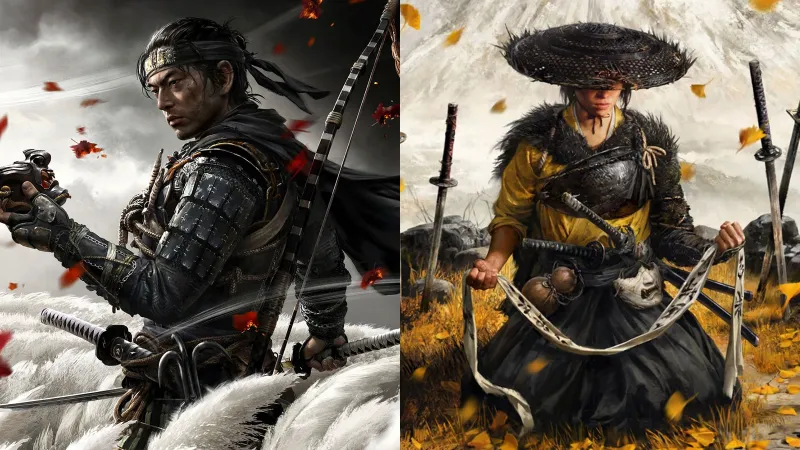
At Gaming News, we understand that for fans of Sucker Punch’s acclaimed samurai saga, the anticipation for Ghost of Yōtei has been immense. While developer Sucker Punch has been forthright about the significant temporal and geographical separation between Ghost of Tsushima and Ghost of Yōtei, stating that Ghost of Yōtei is a “spiritual sequel” and not a direct continuation, the shared universe allows for tantalizing connections. The protagonist of Ghost of Tsushima, Jin Sakai, and his era are separated from Atsu, the protagonist of Ghost of Yōtei, by over three centuries and more than a thousand miles. Ghost of Tsushima is set in 1274 on Tsushima Island, southwest of mainland Japan, while Ghost of Yōtei unfolds in 1603 on Ezo, the northernmost island of Japan, with its narrative often centered around the majestic Mount Yōtei. Despite these vast distances in time and space, players can discover a rich tapestry of Easter eggs and subtle nods that weave Ghost of Yōtei into the lore established by its predecessor. We’ve meticulously delved into the world of Ghost of Yōtei to uncover these fascinating links, some of which are deeply embedded within the narrative and others that serve as delightful homages to Sucker Punch’s broader catalog.
Unearthing the Whispers of Tsushima: The Wolfsbane Revelation
One of the most compelling connections between Ghost of Tsushima and Ghost of Yōtei is revealed through a seemingly innocuous document discovered by Atsu. While pursuing one of the enigmatic Yōtei Six, specifically the character known as the Kitsune, Atsu infiltrates a cave belonging to the Nine Tails organization. Within this clandestine location, she stumbles upon a piece of paperwork detailing the group’s intentions to create wolfsbane. This particular substance holds significant weight for fans of Ghost of Tsushima, as it was a potent poison utilized by Jin Sakai, albeit one his uncle, Lord Shimura, deemed dishonorable.
The document Atsu uncovers provides a critical narrative link: “I promise your patience will be rewarded. Centuries ago, a Mongol invasion was stopped on Tsushima Island. The Shogun would have you believe the samurai were responsible, but we know how they lie. It was the work of a single man – the first shinobi – and his use of wolfsbane.” This passage directly alludes to Jin Sakai’s unconventional tactics during the Mongol invasion. The Shogunate’s official narrative credited the samurai’s bravery, but the document reveals a deeper truth known within certain circles: the decisive victory was orchestrated by a lone figure employing stealth and deadly poisons.
Atsu’s reaction to this revelation is pivotal. She comments on the letter, noting, “He claims it stopped a Mongol invasion.” The NPC accompanying her at this moment further elaborates, stating, “A legend passed down through shinobi clans that Dojun latched onto. It was centuries ago.” This dialogue confirms that the legend of the lone warrior who repelled the Mongol forces with unconventional means has permeated shinobi lore for generations. The mention of Dojun, a character from Ghost of Tsushima known for his expertise in poisons and darker arts, also reinforces the connection. It suggests that the knowledge and the legend of Jin’s actions, including his use of wolfsbane, were preserved and perhaps even embellished within shinobi traditions, eventually finding their way into the hands of organizations like the Nine Tails in Ghost of Yōtei. This subtle yet powerful revelation serves as a testament to the enduring impact of Jin Sakai’s actions and the clandestine ways of the shinobi in the broader Ghost of Tsushima universe.
The Significance of Wolfsbane in the Narrative
The inclusion of wolfsbane as a narrative element in Ghost of Yōtei is far more than a simple callback. It signifies the lasting legacy of Jin Sakai’s most controversial yet effective tactics. In Ghost of Tsushima, Jin’s embrace of shinobi methods, including the use of poisons like wolfsbane, marked his descent from the path of the honorable samurai. Lord Shimura’s disapproval highlighted the ideological schism between tradition and pragmatism. The discovery of the document by Atsu suggests that these methods, once deemed taboo by the samurai elite, became foundational to shinobi strategies over centuries. This implies a societal shift, or at least a persistent undercurrent of acceptance for these tactics within clandestine organizations. The Nine Tails organization’s interest in replicating wolfsbane indicates a strategic pursuit of power, directly linking their modern ambitions to the historical actions of Jin Sakai. It underscores the idea that history is often written by the victors, but the truths, especially those involving unconventional warfare, can persist and influence future generations, albeit often through whispers and legends passed down through secretive clans.
The Storyteller’s Saga: Unveiling Jin Sakai’s Legend
Beyond textual references, Ghost of Yōtei masterfully weaves Jin Sakai’s story into its own through the recurring presence of a captivating storyteller. This enigmatic character serves a crucial role, offering Atsu some of the most engaging side quests in the game. However, one of his most significant contributions is a deeply personal and optional tale about Jin Sakai himself, which can only be accessed late in the game.
To embark on this particular narrative thread, players must venture to the southernmost region of Ezo, a location southwest of Matsumae Castle. It is at the Forgotten Shrine that the storyteller will meet Atsu, revealing his quest to find the Storm Blade. He describes the sword as “so powerful that it contains the strengths of an unstoppable storm,” admitting his ignorance regarding its associated tale, which is uncharacteristic of his usual comprehensive knowledge.
Upon entering the shrine, players are immediately greeted by familiar iconography from Ghost of Tsushima: the two-triangle symbol that prominently represented Jin’s family. The presence of this symbol is a clear and intentional beacon to the game’s predecessor. Adding to the mystique, a gray fox appears to guide Atsu through the shrine. This deviates from the typical red foxes encountered throughout Ghost of Yōtei, hinting at a special significance tied to this particular location and the events unfolding within. Foxes in Ghost of Tsushima were often spiritual guides, and the appearance of a different colored fox here suggests a unique connection to the past.
Inside, Atsu finds and reflects upon a haiku that speaks of solitude and being far from home, echoing themes of exile and wandering that resonate with Jin’s post-invasion life. She then discovers the Lost Shinobi Den, a dwelling filled with decrepit weapons and an ancient Stag Helmet. This helmet bears a striking resemblance to Jin’s Sakai Clan Helmet from Ghost of Tsushima, further solidifying the connection. Scattered among the remnants of the past are a rusted iron climbing hook, reminiscent of tools used for infiltration, and an old saddle that “carried its rider through countless battles.”
In the adjacent area, a cave contains a sword kit bearing Jin’s signature dual-triangle symbol. Nearby, the home of the first shinobi is revealed, with Atsu remarking that the owner of the Storm Blade must have resided there. Within this humble abode, players can find burned adoption papers for the Shimura clan, a very old flute, and an antique dagger inscribed with the name Yuna. Yuna was a pivotal character in Ghost of Tsushima, a skilled thief and loyal companion who aided Jin in his fight against the Mongols.
The Storyteller’s Culmination: Jin’s Unknown Fate
After navigating the challenges within the den and engaging in combat, the storyteller reappears to conclude the sidequest and share the full narrative. While he never explicitly names Jin Sakai, the tale he recounts is undeniably his. He speaks of a samurai who, through a singular act of defiance and transformation into the first shinobi, single-handedly repelled the Mongol invasion with the legendary Storm Blade. The warrior, having forsaken the samurai path and becoming an outcast, departed from Tsushima, his ultimate destination unknown to all. It is here that Atsu and the storyteller speculate that this legendary figure may have journeyed to Ezo to live out his remaining days in anonymity. This narrative culmination offers a poignant and satisfying conclusion to the Tsushima connections, providing a sense of closure and hinting at the far-reaching impact of Jin’s legend, potentially extending to the very land where Atsu now finds herself. It is a masterful piece of environmental storytelling and optional content, rewarding dedicated players with a deeper understanding of the universe’s interconnected past.
The Storm Blade: A Symbol of Transformation
The Storm Blade itself is presented as more than just a weapon; it’s an artifact imbued with immense power and symbolic meaning. The storyteller’s description of it containing “the strengths of an unstoppable storm” evokes the legendary “Storm” tactic that Jin Sakai famously employed, a whirlwind of skill and ferocity that overwhelmed his enemies. The fact that this blade is central to the storyteller’s tale about the first shinobi suggests it was the instrument of his transformation and his ultimate victory. In Ghost of Tsushima, Jin often wielded the Sakai Katana, but the narrative here hints at a weapon of even greater significance, one that perhaps facilitated his departure from the samurai code and his embrace of the shinobi way. The search for the Storm Blade by the storyteller and its connection to Jin’s legend further solidifies the idea that Jin’s influence and the artifacts he wielded have become the stuff of legend, passed down through oral tradition and sought after by those who understand their power and historical weight.
Beyond Tsushima: Tributes to Sucker Punch’s Legacy
While the Tsushima connections are a highlight, Ghost of Yōtei generously sprinkles its world with additional Easter eggs and nods to Sucker Punch’s beloved previous franchises, particularly the Sly Cooper series and the Infamous games. These references serve as delightful winks to long-time fans, celebrating the developer’s rich history of storytelling and character creation.
The Sly Cooper Connection: A Thief’s Mark
A particularly charming tribute comes in the form of Sly Cooper-themed armor that Atsu can discover and equip. This armor serves as a direct visual homage to the iconic thieving raccoon. Furthermore, players might stumble upon a mural that, to any seasoned Sucker Punch fan, is unmistakably a reference to Sly Cooper. The design and composition of the mural strongly suggest the presence and influence of the beloved master thief.
Beyond the general Sly Cooper nods, the game also features a direct cameo from a major antagonist: Sir Raleigh. This formidable pirate, a recurring foe in the Sly Cooper franchise, makes an appearance as a mural. This visual representation ensures that the legacy of Sly’s rogues’ gallery is not forgotten within the world of Ghost of Yōtei.
Infamous Echoes: Murals of Heroes and Villains
The Infamous series also receives its due recognition. Near the Amber Respite Shrine, players can find a mural that is clearly intended to depict Infamous 2. This artwork showcases Cole McGrath’s pivotal journey to New Marais to confront The Beast. The imagery is distinct and immediately recognizable to anyone familiar with the Infamous storyline.
Another notable mural, discovered near the Budding Grace Shrine, references Fetch Abigail Walker from Infamous Second Son. Fetch, the neon-powered Conduit who later starred in her own standalone game, Infamous First Light, is immortalized in this artwork. These murals serve as visual timelines, weaving the heroic and villainous tales of the Infamous universe into the backdrop of Ghost of Yōtei.
We at Gaming News are confident that these meticulously crafted Easter eggs not only enrich the player’s experience but also demonstrate Sucker Punch’s deep appreciation for their own creative output and their dedicated fanbase. The intentional placement of these callbacks, from subtle textual clues to prominent visual homages, creates a cohesive universe that feels both grand in its scope and intimate in its details. As players continue to explore the vast and beautiful landscapes of Ezo, we are certain that more hidden treasures and forgotten legacies await discovery, further solidifying the interconnectedness of Sucker Punch’s celebrated gaming worlds. The developers have succeeded in creating a game that stands tall on its own merits while simultaneously honoring the past, making Ghost of Yōtei a truly special addition to the pantheon of modern action-adventure titles. We encourage all players to keep their eyes peeled, for the most rewarding discoveries often lie just beyond the beaten path.