Fractured Blooms Demo Preview: A Descent into Cosmic Dread, Household Chores, and the Unsettling Allure of the Unfamiliar
Prepare yourselves, intrepid explorers of the digital frontier, for we have ventured into the disquieting corridors of Fractured Blooms, a title that promises a potent cocktail of cosmic horror, psychological distress, and an unexpected, yet undeniably compelling, integration of mundane domestic duties. Our hands-on experience with the Fractured Blooms demo preview has left us both enthralled and profoundly unsettled, a testament to the game’s ambitious design and its uncanny ability to burrow under the skin. This is not merely a game; it is an experience, a meticulously crafted descent into a reality that feels simultaneously familiar and terrifyingly alien.
The core premise of Fractured Blooms, as glimpsed in its potent demo, is built around a profound sense of dislocation. Players are thrust into a setting that, at first glance, might evoke a sense of comfortable nostalgia. Yet, beneath this veneer of normalcy, a sinister rot festers. The juxtaposition of the eerily mundane with the overtly horrific is a cornerstone of its unsettling charm. We’ve seen titles dabble in similar themes, but Fractured Blooms executes this duality with a rare finesse, making the dread all the more palpable by rooting it in the everyday. This is where the “anime girl in my Resident Evil house” sensation truly takes hold, a jarring yet captivating dissonance that defines the game’s unique identity.
The Eerie Embrace of the Familiar: Setting the Stage for Cosmic Dread
From the moment you step into the world of Fractured Blooms, an atmosphere of profound unease begins to permeate your senses. The environments are rendered with a meticulous attention to detail, capturing the quiet melancholy of a forgotten home. Dust motes dance in the slivers of sunlight that pierce through grimy windows, the worn upholstery of a sofa whispers tales of past inhabitants, and the creak of floorboards underfoot is a constant reminder that you are not alone. These aren’t the sterile, manufactured corridors of many survival horror games; they feel lived-in, burdened by history, and ripe for the supernatural to exploit.
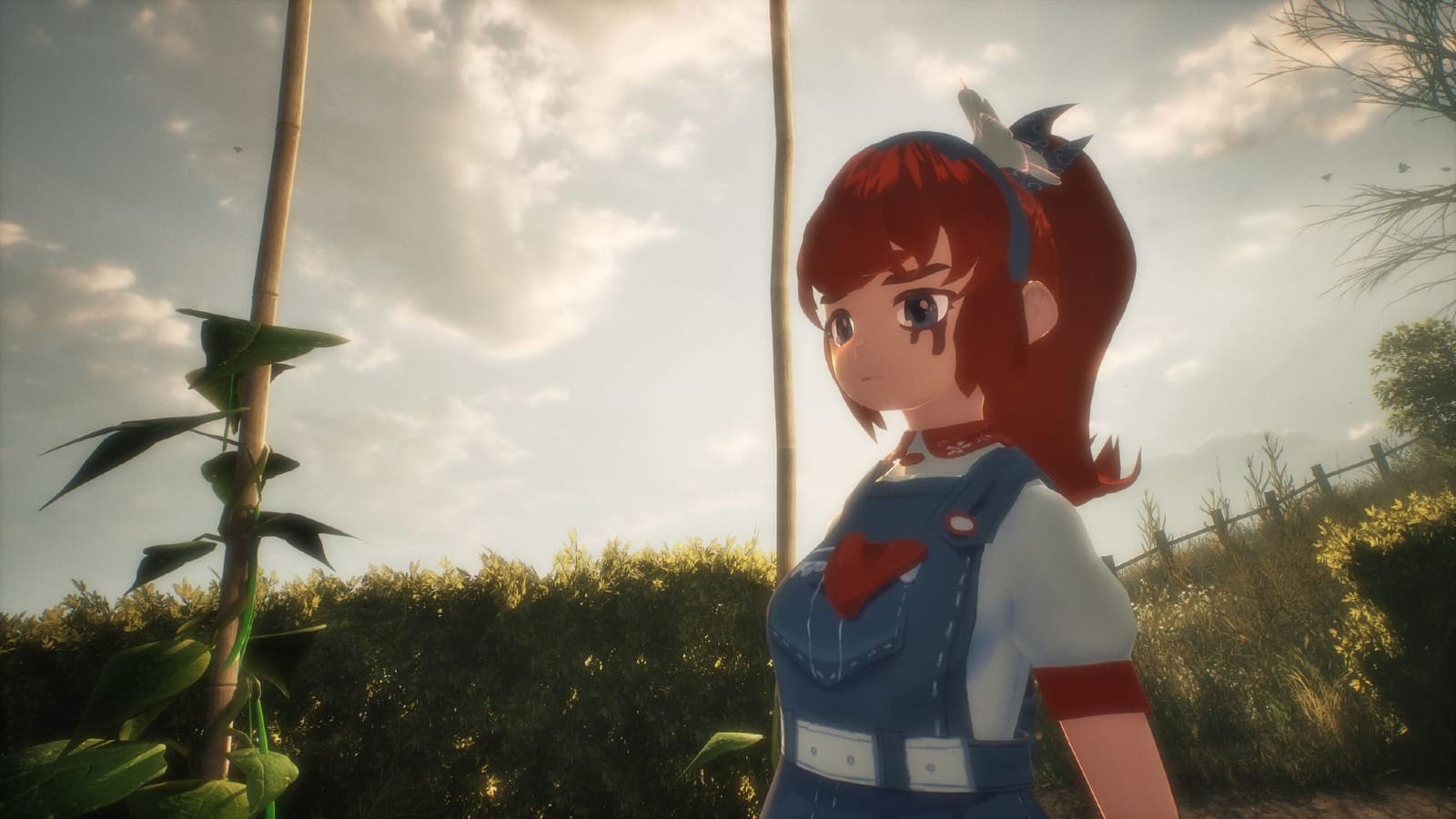
The visual style itself is a masterful exercise in psychological horror. While certain elements might hint at an anime aesthetic, they are not deployed for the sake of superficial charm. Instead, these stylized figures and their surreal intrusions serve to amplify the uncanny valley effect. Imagine stepping into a familiar suburban dwelling, only to find its inhabitants or their possessions warped by an alien, yet undeniably recognizable, artistic sensibility. This is the genius of Fractured Blooms: it leverages visual cues that might typically be associated with something lighthearted and imbues them with a suffocating sense of dread. This is particularly evident in the character designs, which possess a peculiar blend of innocence and something far more sinister, a visual paradox that will stick with you long after you’ve switched off your console.
The sound design in Fractured Blooms is equally crucial to its success. The ambient noises are carefully curated to create a palpable sense of tension. The distant hum of appliances, the gentle patter of rain against the glass, or the rustling of unseen things in the periphery all contribute to a soundscape that is as much a character as any of the entities you encounter. When these subtle cues are punctuated by sudden, jarring noises – a discordant melody, a distorted whisper, or the sickening thud of something heavy falling – the impact is amplified tenfold. This deliberate manipulation of the player’s auditory perception is a hallmark of truly effective horror experiences, and Fractured Blooms wields it with devastating precision.
Domesticity as a Crucible: The Unsettling Integration of Chores and Cosmic Horror
Perhaps the most audacious and intriguing element of the Fractured Blooms demo preview is its seamless, albeit disturbing, integration of household chores into the core gameplay loop. This is not a mere thematic flourish; these mundane tasks become integral to your survival and progression, twisting the familiar into something deeply unsettling. Scrubbing a stained floor, tidying a cluttered room, or preparing a meal are not presented as optional activities but as essential mechanics that directly impact your ability to navigate the unfolding horror.
This deliberate blurring of the lines between the domestic and the supernatural is what sets Fractured Blooms apart. The act of cleaning, for instance, might reveal hidden symbols, unlock new pathways, or even appease malevolent entities. The satisfaction of completing a task is constantly undermined by the knowledge that you are essentially tending to a haunted house, that your efforts are in service to forces beyond your comprehension. This subverts player expectations in the most profound ways, forcing you to confront the idea that even the most ordinary of human endeavors can become entwined with cosmic dread.
The implication here is profound. It suggests that the rot that infects this world is not confined to shadowy corners or eldritch dimensions; it has seeped into the very fabric of everyday life. The act of maintaining a home, a sanctuary, becomes a Sisyphean struggle against an encroaching darkness. This is where the “anime girl in my Resident Evil house” analogy truly resonates. It speaks to the uncanny feeling of finding something fundamentally out of place within a context that should be safe and familiar. The chores aren’t just gameplay mechanics; they are manifestations of the game’s central thesis: that even in the most mundane of settings, a terrifying reality can lie just beneath the surface, waiting to be unearthed through the most unexpected of actions.
Consider the implications for the narrative. Is the protagonist trapped in a purgatorial cycle of domesticity? Are these chores a form of penance, or a desperate attempt to impose order on an inherently chaotic existence? The demo leaves these questions tantalizingly unanswered, but the sheer originality of the concept is enough to fuel hours of speculation and deepens the sense of psychological horror.
Navigating the Labyrinth: Puzzles, Exploration, and the Threat of the Unknown
While the chores provide a unique twist, Fractured Blooms is still very much a game that rewards exploration and keen observation. The environments, while superficially familiar, are often intricate and laden with secrets. Players will need to carefully examine their surroundings, decipher cryptic clues, and solve a variety of puzzles to progress. These puzzles are not always conventional; they often tie directly into the game’s thematic elements, requiring players to think outside the box and consider the unsettling logic of the world they inhabit.
The dread in Fractured Blooms is not solely reliant on jump scares, though there are certainly moments that will send a jolt through you. Instead, the horror is more pervasive, a slow burn that emanates from the oppressive atmosphere, the unsettling lore, and the constant threat of encountering something truly alien. The creatures and entities that populate this world are not merely monstrous for the sake of it; they are manifestations of a deeper, more profound cosmic wrongness. Their designs are often abstract and disturbing, evoking a sense of revulsion that stems from their sheer incomprehensibility.
The demo provides a tantalizing glimpse into the types of encounters players can expect. These are not always direct confrontations. Often, the threat is implied, a shadow moving in the periphery, a chilling whisper in an empty room. This masterful use of suspense ensures that the player is constantly on edge, their mind conjuring horrors far worse than what might be explicitly shown. When direct encounters do occur, they are often brutal and unforgiving, emphasizing the fragility of the player’s existence in this hostile world. The feeling of being outmatched and overwhelmed is a constant companion, fueling the game’s intense survival horror elements.
The integration of Resident Evil sensibilities, though indirect, is palpable. Like Resident Evil, Fractured Blooms encourages meticulous resource management and strategic thinking. Every bullet, every healing item, every discovered key feels precious and hard-won. The backtracking through familiar yet now more dangerous areas, the unlocking of new paths with newfound items, and the constant sense of peril all echo the hallmarks of classic survival horror, but with a fresh, nightmarish twist.
The Anime Girl Enigma: Deconstructing the Uncanny Fusion
The question that inevitably arises for anyone encountering Fractured Blooms for the first time is: “Why is there an anime girl in my Resident Evil house?” This is not a simple aesthetic choice; it is the game’s boldest statement, its most disorienting paradox, and its most potent source of psychological horror. The presence of such a stylized, almost innocent figure within a context that is simultaneously mundane and terrifying creates a powerful dissonance.
This fusion of seemingly disparate elements forces players to question their own perceptions of reality and comfort. The anime aesthetic, often associated with youth, vitality, and even whimsy, is here weaponized to evoke feelings of dread and unease. The incongruity is jarring, like finding a child’s drawing scrawled in blood on a hospital wall. It creates a sense of profound unease, a feeling that the very rules of what is considered safe or appealing have been twisted and perverted.
This is not merely about aesthetics; it is about the subversion of expectations. The anime girl can serve multiple narrative functions within Fractured Blooms. She might be a victim, a harbinger of doom, a distorted reflection of the protagonist’s psyche, or even something entirely alien and unknowable. Her presence challenges our preconceived notions of horror, forcing us to confront the unsettling idea that even the most innocent or familiar forms can be imbued with terror. This is the essence of the uncanny, that feeling of something being almost, but not quite, right, which is the bedrock of so many psychological horror experiences.
The comparison to Resident Evil is apt because both franchises excel at creating worlds that are deeply unsettling through the manipulation of familiar settings and the introduction of the monstrous. However, Fractured Blooms takes this a step further by injecting a unique stylistic element that amplifies the horror through sheer, unadulterated oddity. It’s the juxtaposition of the recognizable domesticity of a Resident Evil setting with the distinct visual language of anime that creates a truly singular and unforgettable experience.
Whispers of the Cosmic: Unraveling the Lore and the Broader Implications
While the demo is deliberately coy with its narrative revelations, the glimpses of lore offered in Fractured Blooms hint at a much larger, more terrifying cosmic truth. The meticulous world-building suggests a universe where the veil between realities is thin, and ancient, unknowable entities exert their influence on our seemingly stable world. The horror here is not merely personal; it is existential.
The domestic chores and the stylized figures might be more than just gameplay mechanics or aesthetic choices; they could be manifestations of this larger cosmic influence. Perhaps the entities that lurk in the shadows are attempting to impose their own alien order on our world, and the mundane tasks we perform are somehow connected to their otherworldly machinations. The anime girl could be a conduit, a pawn, or even a distorted god in this emerging cosmic horror narrative.
The power of Fractured Blooms lies in its ability to evoke a sense of overwhelming insignificance in the face of vast, indifferent, and terrifying cosmic forces. The horror is not just about surviving monsters; it is about confronting the terrifying possibility that our reality is not as solid as we believe, and that forces far beyond our comprehension are at play. This is the domain of Lovecraftian horror, where the true terror lies not in what is seen, but in what is implied and what is fundamentally unknowable.
The integration of these grand, cosmic themes with the intimate, personal setting of a house and its domestic routines creates a potent and original narrative tapestry. It suggests that the supernatural and the mundane are not separate realms but are inextricably intertwined, and that the greatest terrors can be found not in the abyss, but in the quiet familiarity of our own homes. The Fractured Blooms demo preview is a masterclass in atmospheric horror, a testament to the power of unsettling juxtapositions, and a promising harbinger of a truly unique and terrifying gaming experience. We eagerly await further revelations from this world of fractured blooms, where domesticity collides with cosmic dread, and the familiar becomes the canvas for the most profound of terrors.