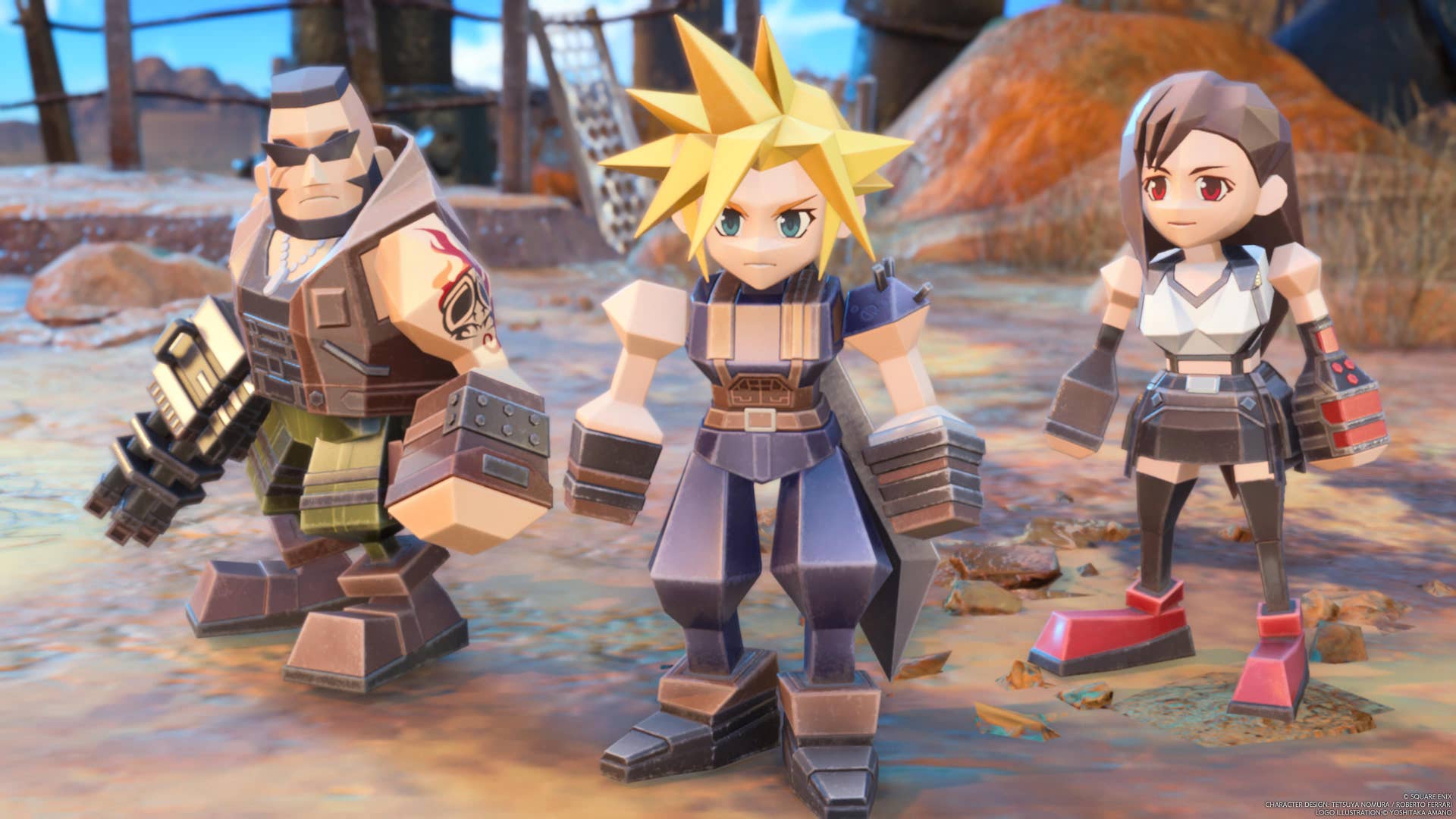
Final Fantasy 7 Remake Trilogy’s Climax: A Revolutionary “Gameplay Experience” Awaits
The anticipation surrounding the conclusion of the Final Fantasy 7 Remake trilogy has reached a fever pitch, with fans eagerly dissecting every morsel of information released by Square Enix. While details remain tantalizingly scarce regarding the third installment, a recent statement from director Naoki Hamaguchi has ignited widespread speculation: the game promises a fresh “gameplay experience”. This declaration, though intentionally vague, signals a bold evolutionary step for the beloved franchise, moving beyond mere visual upgrades and narrative expansions to fundamentally redefine how players interact with the world of Gaia. We at Gaming News delve deep into what this “gameplay experience” could entail, examining the historical trajectory of the Final Fantasy series, the innovative design choices already present in the Remake saga, and the myriad possibilities that lie ahead for this epic conclusion.
The Legacy of Innovation: Final Fantasy’s Evolving Gameplay
The Final Fantasy series has a storied history of innovation, frequently pushing the boundaries of what is expected from a role-playing game. From the transition to 3D environments in Final Fantasy VII (1997) to the adaptive combat system of Final Fantasy XIII and the open-world exploration of Final Fantasy XV, each numbered installment has strived to offer a distinct and engaging player experience. The Final Fantasy 7 Remake project itself is a testament to this ethos, reimagining a classic JRPG with a hybrid real-time and command-based combat system, a more dynamic narrative, and vastly expanded exploration.
Part 1, Final Fantasy VII Remake, laid the groundwork by meticulously rebuilding Midgar with stunning detail and introducing the ATB (Active Time Battle) system, which blended strategic command-based attacks with real-time action. Final Fantasy VII Rebirth (Part 2) further refined this by expanding the world beyond Midgar, introducing new combat mechanics like Synergy Abilities, and offering a richer exploration experience with diverse mini-games and side activities. The stage is now set for the trilogy’s finale to build upon this foundation and deliver something truly novel.
Historical Precedents for “New Gameplay Experiences”
Throughout the series, Square Enix has demonstrated a willingness to experiment. Final Fantasy X introduced a Sphere Grid system for character progression, a departure from traditional leveling. Final Fantasy Tactics pioneered a deep job system and tactical grid-based combat. Even within the mainline numbered titles, the core gameplay loop has been reimagined several times. For instance, the shift from turn-based combat to a more action-oriented approach in Final Fantasy VII Remake itself was a significant departure from the original PlayStation title. This history suggests that when Hamaguchi speaks of a “fresh gameplay experience,” it is not merely hyperbole but a genuine commitment to evolving the interactive elements of the game.
The Remake’s Foundation for Future Evolution
The Final Fantasy 7 Remake trilogy has already introduced significant gameplay innovations. The ATB system, which allows players to strategically slow down time to issue commands, has been a cornerstone. The introduction of Synergy Abilities in Rebirth, which encourage specific character pairings for powerful joint attacks, adds another layer of tactical depth and visual spectacle. These mechanics are not just superficial additions; they are designed to be expandable and adaptable. It is highly probable that the third installment will not abandon these established systems but rather integrate them into a larger, more sophisticated framework.
Decoding “Fresh Gameplay Experience”: Potential Avenues of Innovation
The ambiguity surrounding the “fresh gameplay experience” is precisely what makes it so intriguing. Several potential avenues for innovation emerge, each with the potential to dramatically alter how players engage with the Final Fantasy 7 Remake trilogy’s narrative and world.
Evolving the Combat System: Beyond ATB and Synergy
While the ATB system and Synergy Abilities have proven successful, the finale could introduce entirely new dimensions to combat.
Deeper Character Interactivity and Team Tactics
One significant possibility is an even deeper integration of character abilities and team tactics. We could see mechanics that allow for more fluid switching between characters mid-action, not just for specific attacks, but for chaining complex combos or defensive maneuvers. Imagine a system where a perfectly timed block by one character opens a brief window for a devastating counter-attack from another, or where specific environmental factors can be manipulated by multiple characters simultaneously to create tactical advantages. This would elevate team synergy beyond pre-set abilities into a more dynamic, emergent system.
Environmental Combat and Interactivity
The environments in the Remake games are incredibly detailed, and the third part could leverage this to a greater extent in combat. We might see mechanics that allow characters to interact with the battlefield in more profound ways – using the environment for cover, triggering traps, or even manipulating larger environmental elements to their advantage. This could include using electricity conduits to stun enemies, collapsing structures to create new pathways or obstacles, or utilizing the unique properties of different terrains. This would move combat beyond just character versus enemy to a more holistic engagement with the game’s world.
Advanced AI and Enemy Behavior
With a focus on a “fresh gameplay experience,” Square Enix could also be looking to evolve enemy AI. Instead of predictable attack patterns, enemies might exhibit more adaptive and intelligent behaviors, requiring players to constantly adjust their strategies. This could involve enemies coordinating attacks, exploiting player weaknesses, or even learning from previous encounters. This would ensure that even familiar enemy types feel fresh and challenging throughout the final act.
New Forms of Progression and Materia Integration
While the Materia system is iconic, the trilogy’s conclusion could introduce novel ways to enhance characters and their abilities. This might involve new types of Materia with unique effects, or a more dynamic integration of existing Materia into the core combat and exploration mechanics. Perhaps certain Materia could unlock entirely new traversal options or even influence the narrative in subtle ways. The possibility of entirely new progression systems, beyond the traditional leveling and Materia, also exists, offering players fresh ways to customize their journey.
Revolutionizing Exploration and World Interaction
Beyond combat, exploration and how players interact with the world of Final Fantasy 7 can also undergo significant transformations.
Expanded Open-World Mechanics and Dynamic Events
While Final Fantasy VII Rebirth expanded the world significantly, the final installment could introduce a truly seamless open-world experience. This might involve more dynamic world events that unfold organically, encouraging emergent gameplay and making the world feel more alive and reactive. Imagine a world where certain quests or encounters only appear under specific conditions, or where player actions have more tangible and visible consequences on the environment and its inhabitants.
New Traversal Methods and Environmental Puzzles
The possibility of entirely new traversal methods beyond walking, running, and riding a Chocobo is exciting. We could see advanced piloting sequences, enhanced climbing mechanics, or even entirely new modes of transportation that are integral to both exploration and puzzle-solving. Environmental puzzles that require intricate character coordination or the use of unique abilities could also be a significant feature, adding a cerebral layer to the gameplay.
Deeper Character Interaction and Relationship Dynamics
The emotional core of Final Fantasy 7 lies in its characters and their relationships. The trilogy’s conclusion could introduce more nuanced ways to interact with party members and NPCs, impacting both the narrative and gameplay. This might involve more in-depth dialogue options, mini-games that strengthen bonds, or even systems where relationships influence combat effectiveness or unlock unique story paths. The potential for building deeper connections with the cast would undoubtedly enhance the emotional impact of the finale.
Narrative Integration with Gameplay: A More Immersive Experience
The most profound “gameplay experience” could stem from a deeper, more organic integration of narrative and gameplay.
Player Choice and Branching Narratives
While Final Fantasy games are traditionally linear, the Remake trilogy has introduced subtle narrative divergences. The finale could take this a step further, offering players meaningful choices that impact the story’s progression and outcome. This would not only add replayability but also foster a greater sense of agency and personal connection to the narrative, making the gameplay experience uniquely tailored to each player’s decisions.
“Whispers” and Timeline Manipulation Mechanics
Given the thematic elements surrounding fate and destiny introduced by the Whispers, the final installment could feature gameplay mechanics directly related to manipulating or interacting with timelines. This could manifest in unique puzzle sections, combat scenarios where players must adapt to shifting realities, or even narrative choices that have temporal repercussions. This would be a truly revolutionary approach, directly tying the game’s core themes into its interactive design.
Environmental Storytelling and Lore Discovery
The world of Final Fantasy 7 is rich with lore and history. The third part could implement more advanced environmental storytelling techniques, where the world itself reveals its secrets through subtle clues, hidden areas, and interactive elements. This would reward players who meticulously explore and engage with the environment, turning the act of discovery into a core gameplay mechanic.
The Significance of a “Secret” Gameplay Experience
The fact that this “fresh gameplay experience” is being kept a big secret is as significant as the statement itself. Square Enix is clearly aware of the immense anticipation and the high expectations placed upon the conclusion of this beloved saga. By withholding specific details, they are not only aiming to surprise players but also to ensure that the revelation of these new mechanics has the maximum possible impact. This secrecy suggests that the innovation is not a minor tweak but a substantial overhaul, designed to be a defining feature of the game.
Building on Player Feedback and Expectations
Square Enix has a track record of listening to player feedback. The reception of the Remake trilogy has been overwhelmingly positive, but there have also been discussions and desires for further evolution. By promising a “fresh gameplay experience,” they are acknowledging these desires and signaling their intent to deliver something that goes beyond what players might anticipate, even based on the advancements seen in the first two parts.
The Power of Surprise in the Modern Gaming Landscape
In an era where information spreads rapidly, maintaining a significant secret about a game of this magnitude is a challenging feat. The fact that Square Enix is attempting it underscores their confidence in the innovation they have developed. This secrecy also builds a powerful sense of anticipation, allowing the eventual reveal to be a major event in itself, generating further buzz and excitement.
Conclusion: A Promise of a New Era for Final Fantasy 7
The promise of a fresh “gameplay experience” in the Final Fantasy 7 Remake trilogy’s final installment is more than just a marketing slogan; it’s a declaration of intent. It signifies Square Enix’s commitment to not only concluding the epic narrative of Cloud Strife and his allies but also to leaving a lasting legacy of innovation within the gaming industry. Whether this manifests as a radically reimagined combat system, unprecedented world interaction, or a groundbreaking fusion of narrative and gameplay, the possibilities are as vast as the world of Gaia itself.
As we await further details, the excitement is palpable. The Final Fantasy 7 Remake trilogy’s conclusion is shaping up to be not just the end of a story, but a monumental leap forward for the franchise, promising an unforgettable and revolutionary gameplay experience that will undoubtedly be dissected and celebrated by fans for years to come. The stage is set for a truly epic finale, one that honors its past while boldly forging a new path into the future of interactive storytelling.