Dragon Quest I & II HD-2D Remake Review - Level Up And Up
Gaming News is proud to present our in-depth review of the Dragon Quest I & II HD-2D Remake, a title that promises to not only revisit beloved classics but elevate them to new heights. For long-time fans of the Dragon Quest saga, particularly those who have navigated the sometimes-patchy release history in Western markets, this collection represents a significant milestone. It meticulously reconstructs the foundational adventures of the Erdrick Trilogy, offering a visual and gameplay refresh that is both faithful to the source material and remarkably modernized.
The decision to pair Dragon Quest I and Dragon Quest II for this remake is a practical one. In their original NES iterations, these titles were relatively concise, with completion times often dictated by the necessity of extensive level grinding. The HD-2D Remake collection, however, transforms them into a more cohesive and substantial RPG experience. While presented as distinct adventures, allowing players to tackle Dragon Quest II before Dragon Quest I if they so choose, their narratives are intricately woven, culminating in a unified story that seamlessly flows into the events of Dragon Quest III HD-2D Remake, chronologically the first installment in this legendary trilogy. This interconnectedness ensures a rich tapestry for both newcomers and seasoned veterans to unravel.
Our journey with Dragon Quest predates our ability to articulate the very concept of a “dragon.” For us, this collection is nothing short of a revelation, a meticulously crafted treat for any RPG enthusiast. It holds a particular resonance for those of us who have cherished these games since our formative years. The inclusion of new content, expanded stories, and a complete UI overhaul breathes vibrant new life into experiences we thought we knew intimately. The modernization is so profound that it reintroduces a sense of discovery to worlds we’ve explored countless times before.
The Solitary Hero’s Struggle: Dragon Quest I Reimagined
In the original Dragon Quest I on the NES, the player character, a descendant of the legendary hero Erdrick (whose own tale unfolds in Dragon Quest III), typically faced enemies one at a time. The HD-2D Remake dramatically alters this dynamic. Players are now frequently pitted against multiple adversaries simultaneously, a stark contrast to their solitary warrior status. This shift immediately amplifies the challenge and strategic depth. The question of how a single hero can possibly overcome entire hordes is no longer a rhetorical one; it becomes the central puzzle of survival.
This increased difficulty is not an arbitrary embellishment. The Dragon Quest I HD-2D Remake equips players with a crucial arsenal of multi-target weapons and spells. These are essential tools for managing the overwhelming odds, yet they do not guarantee victory. Overconfidence remains a swift path to defeat, and the game is adept at reminding players of their vulnerability. The introduction of numerous new bosses – a significant departure from the original’s modest two – further underscores the heightened challenge. True to the Dragon Quest tradition, these bosses are formidable adversaries, demanding meticulous preparation and strategic execution. Survival in these intense encounters hinges on the liberal and intelligent application of the hero’s new buffs and debuffs, transforming combat from a simple slugfest into a nuanced dance of offense and defense.
Navigating the Gauntlet with New Mechanics
The HD-2D presentation visually transforms these encounters, with enemies populating the screen in greater numbers and often exhibiting more aggressive animations. This visual density reinforces the feeling of being embattled. The strategic use of area-of-effect attacks and spells becomes paramount. Players must learn to prioritize targets, manage their resources efficiently, and anticipate enemy formations. The boss battles, in particular, are designed to be memorable tests of skill and endurance. Each new boss introduces unique attack patterns and mechanics that require players to adapt their strategies on the fly. Failure is not just a setback; it’s a learning opportunity, pushing players to refine their approach and better understand the game’s intricate combat system. The addition of a more dynamic camera perspective during battles further immerses the player, highlighting the sheer scale of the threats faced.
Erdrick’s Legacy: A Tale of Two Cousins in Dragon Quest II
While the Dragon Quest I HD-2D Remake leans into the solitary hero’s arduous journey, the Dragon Quest II HD-2D portion of the collection offers a distinctly different, yet equally engaging, experience. A significant departure from its NES predecessor, this remake consistently places the player in the company of at least two other party members. This inherent advantage, while making the overall progression smoother than in Dragon Quest I, does not render the game a cakewalk. The challenge remains, but it is now framed by the dynamic of a growing party.
This is a deliberate and welcome reversal from the notoriously unbalanced and often punishing Dragon Quest II on the NES. The original’s dreadful balancing issues have been addressed, resulting in a more enjoyable and accessible adventure for a wider audience. While the core gameplay loop remains largely intact, the Dragon Quest II HD-2D Remake shines with notable upgrades to character writing and the introduction of voice acting. These additions breathe unparalleled life into the narrative and the personalities of the heroes.
The Bond of Kin: A Deeper Dive into Character Dynamics
The heroes of Dragon Quest II are not just companions; they are cousins, a less common party composition in the RPG landscape. This familial bond is a focal point of the narrative, strengthening as their epic journey unfolds. Their interactions are a source of genuine delight, delivering laugh-out-loud moments and fostering a tangible sense of camaraderie. The voice acting is particularly noteworthy here, with performances that capture the essence of each character, their insecurities, their bravures, and their evolving relationships. This enhanced characterization makes the overarching quest feel more personal and the stakes higher. The development team at Artdink, in collaboration with Team Asano, has succeeded in transforming what were once somewhat archetypal characters into individuals with distinct voices and relatable personalities. The dialogue feels natural, witty, and often poignant, elevating the storytelling beyond the simple quest for victory.
The HD-2D Revolution: A Visual Masterpiece
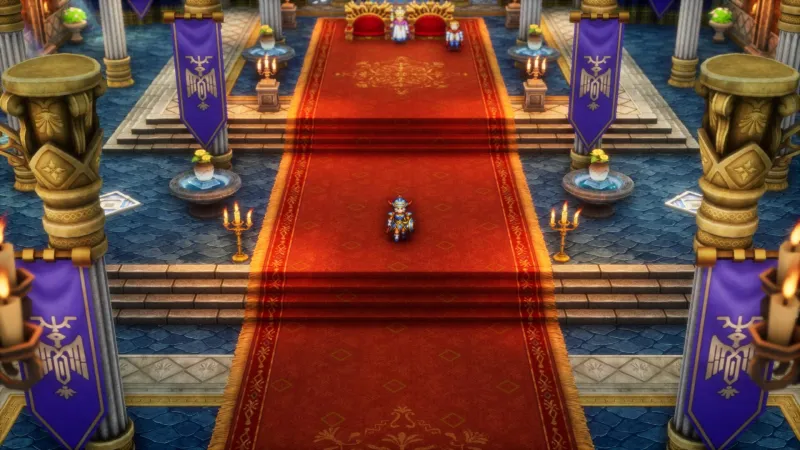
For those who were captivated by the stunning presentation of Dragon Quest III HD-2D Remake, the Dragon Quest I & II HD-2D Remake offers a similarly breathtaking visual spectacle. The HD-2D graphics are, to put it mildly, bursting with life. This art style masterfully blends the charm of classic 2D pixel art with the depth and dynamism of modern 3D environments. The result is a world that feels both familiar and strikingly new, a vibrant diorama brought to life with intricate detail and fluid animation.
The iconic Dragon Quest monster designs, a legacy of the legendary Akira Toriyama, are as charming as ever. Each creature, from the humble Slime to more formidable foes, is rendered with loving care, retaining their distinctive silhouettes and playful expressions while benefiting from the enhanced graphical fidelity. The environments are equally impressive, with lush forests, bustling towns, and treacherous dungeons rendered in exquisite detail. The interplay of light and shadow, the particle effects, and the expressive character animations all contribute to an immersive and visually rich experience.
A Tribute to Toriyama: Honoring a Legend Through Art
The aesthetic choices made in this remake are not merely superficial. They are a profound tribute to the enduring legacy of Akira Toriyama. His passing casts a somber shadow over the gaming world, but witnessing his iconic art style brought to life with such fidelity and respect in this collection provides a measure of comfort. The HD-2D approach allows for a faithful interpretation of his designs while simultaneously pushing them into a new era of visual storytelling. The character sprites, the enemy animations, the menu interfaces—all bear the unmistakable mark of Toriyama’s genius. It is heartening to see his contribution to the Dragon Quest universe celebrated in such a vibrant and impactful way. This collection serves as a poignant reminder of his immeasurable talent and the lasting impact he has had on the industry.
Gameplay Enhancements and Accessibility: Modernizing the Classics
Beyond the visual overhaul, the Dragon Quest I & II HD-2D Remake introduces a host of gameplay enhancements and accessibility options that significantly improve the player experience without compromising the core integrity of the original games. This delicate balance is something many remakes struggle to achieve, but here, it feels remarkably well-executed.
One of the most impactful changes, particularly for Dragon Quest I, is the ability to encounter multiple enemies simultaneously. While this inherently increases the difficulty, it is intelligently paired with a suite of new mechanics that provide players with the tools to manage these larger encounters. As mentioned, multi-target weapons and spells are crucial, but so too are the expanded use of buffs and debuffs. These status effects are no longer mere afterthoughts; they are vital components of combat strategy, allowing players to weaken formidable groups of enemies or bolster their own defenses.
Robust Difficulty Options: Tailoring the Experience
Recognizing that the challenge of classic RPGs can be a barrier for some, the developers have implemented robust difficulty options for both games. Players can readily swap overall difficulty settings, offering a tailored experience that caters to a wide spectrum of player skill and preference. Furthermore, a nuanced approach to “nerfing” difficulty is present. Instead of a blanket “easy” mode that might feel like it “lobotomizes the challenge,” the game provides more granular adjustments. For instance, the ability to shut down random encounters with a low-cost spell is a godsend for those who find the sheer volume of random battles to be a deterrent, especially during extensive grinding sessions. It allows players to focus on exploration and story progression without the constant interruption of battles, while still keeping the core combat encounters challenging and rewarding.
It is crucial to note that this does not entirely eliminate the need for grinding, as we are still dealing with RPGs that originated in the ’80s. However, the process has been made significantly less arduous and more engaging. Players can now strategically choose when and how they engage with combat, optimizing their time and enjoyment. This thoughtful approach to difficulty ensures that both the demanding spirit of the originals and the desire for a more accessible modern experience are respected.
A Seamless Transition: Connecting the Erdrick Saga
The Dragon Quest I & II HD-2D Remake serves not only as a standalone collection but as a vital connective tissue for the broader Erdrick Trilogy. The chronological order of events, starting with Dragon Quest III, then Dragon Quest I, and finally Dragon Quest II, forms a grand narrative arc. Understanding this sequence is key to appreciating the full scope of the Dragon Quest universe. The events, characters, and lore established in these foundational titles lay the groundwork for the epic tales that follow.
The HD-2D presentation provides a consistent and high-quality visual experience across all three games in the trilogy. This uniformity is invaluable for players embarking on the entire saga, ensuring that the visual journey is as cohesive as the narrative one. The interconnectedness extends beyond mere plot points; certain items, spells, and even character archetypes introduced in earlier games find echoes and evolutions in later installments. This thoughtful design fosters a deep sense of continuity and reward for players who invest in the entire series.
The Evolution of the Hero: From Erdrick’s Lineage to a Royal Union
The narrative progression from Dragon Quest I to Dragon Quest II showcases the evolving nature of heroism within the Dragon Quest universe. In Dragon Quest I, the player embodies a singular hero, a direct descendant of Erdrick, tasked with a monumental task. The focus is on the individual’s strength and destiny. Transitioning to Dragon Quest II, the narrative expands to encompass a more collaborative form of heroism. The emphasis shifts to a party of heroes, bound by blood and a shared destiny. This evolution reflects a broader thematic exploration of community, family, and the idea that even the greatest of heroes may need allies to face the world’s darkest threats.
The narrative design of Dragon Quest II, with its focus on the cousins’ journey, adds a layer of personal stakes to the epic quest. Their growth as individuals and as a unit is as compelling as the overarching conflict. This narrative choice, bolstered by the enhanced character writing and voice acting, ensures that the player becomes invested not just in the outcome of the battles, but in the relationships between the characters themselves. It is a testament to the developers’ commitment to enriching the core Dragon Quest experience while staying true to its RPG roots.
Conclusion: A Triumph for Dragon Quest Fans
The Dragon Quest I & II HD-2D Remake is, in essence, a love letter to the Dragon Quest franchise and its dedicated fanbase. It successfully modernizes two seminal RPGs, preserving their core charm while significantly enhancing their presentation, gameplay, and narrative depth. For those who have followed this series through its ups and downs, this collection is a cause for celebration. It offers a chance to relive cherished memories with a fresh coat of paint, and for newcomers, it provides an exceptional entry point into the legendary Dragon Quest saga.
The HD-2D visuals are a masterclass in artistic direction, breathing vibrant life into familiar worlds and characters. The gameplay refinements, particularly the expanded combat options and robust difficulty settings, make these classics more accessible and engaging than ever before. The improved narrative elements, especially in Dragon Quest II, elevate the storytelling and character development to new heights.
If you enjoyed the Dragon Quest III HD-2D Remake, you will undoubtedly find yourself captivated by this collection. It represents the pinnacle of what a remake can achieve: respecting the past while boldly embracing the future. The Dragon Quest I & II HD-2D Remake is not just a game; it is an experience, a journey through gaming history that is both deeply nostalgic and exhilaratingly new. It is a must-have for any serious RPG fan and a testament to the enduring power of Dragon Quest. The score of 9 is a reflection of the exceptional quality and thoughtful execution present throughout this remarkable collection.
Platform Reviewed On: Nintendo Switch
Platforms Available: PlayStation 5, Xbox Series X/S, Nintendo Switch, PC
Publisher: Square Enix
Developer: Artdink, Team Asano
Release Date: October 30, 2025