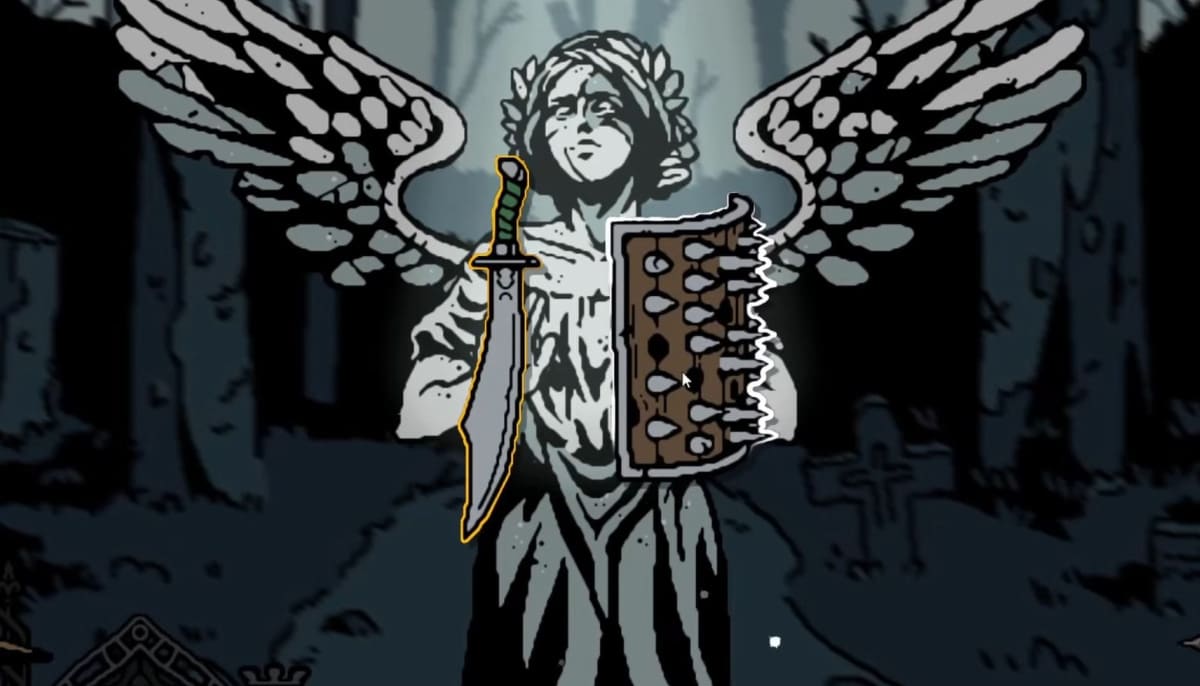
Die For The Lich First Impressions: A Descent into the Perilous Gamble of Life and Death
Welcome to Gaming News, where we delve deep into the experiences that redefine interactive entertainment. Today, we turn our discerning gaze towards Die For The Lich, a title that boldly proclaims its central theme: gambling for your life. This is not merely a suggestion; it is an invitation, or perhaps a stark warning, to step into a world where every decision carries the weight of existence, and every strategic play is a wager against oblivion. Our initial foray into this demanding title has revealed a game that is as unforgiving as it is undeniably compelling, forcing players to confront the raw essence of risk and reward in its most primal form.
The Existential Stakes: Understanding the Core Loop of Die For The Lich
At its heart, Die For The Lich presents a uniquely challenging proposition. The very act of progression within the game is inextricably linked to a series of high-stakes decisions. Unlike many titles that offer a gradual ramp-up of difficulty or clear indicators of safety, Die For The Lich thrusts players into a perpetual state of uncertainty. The “gambling for your life” moniker is not hyperbole; it is the foundational mechanic that underpins every encounter, every resource management choice, and ultimately, every moment you spend within its grim, stylized world.
We observed that the game masterfully weaves a narrative tapestry where survival is not a given, but a prize earned through audacious gambits. Players are presented with scenarios that demand an immediate assessment of risk versus reward, often with limited information. This forces a mental shift, from careful planning to calculated boldness. The thrill of a successful gamble is immense, providing a potent dopamine hit that keeps players coming back for more, even after succumbing to the game’s brutal nature. Conversely, the sting of a failed wager is equally profound, serving as a harsh but effective lesson in the unforgiving economy of life and death that Die For The Lich operates within.
Resource Management as a High-Stakes Bet
One of the most striking aspects of Die For The Lich is its approach to resource management. Every item, every consumable, and even the very health points your characters possess can be viewed as currency in a cosmic casino. Do you expend a precious healing potion now, knowing it might leave you vulnerable later, or do you push forward, hoping to find more before disaster strikes? This is the constant internal monologue that accompanies gameplay.
We found that the scarcity of resources is a deliberate design choice, amplifying the impact of each decision. There are no readily available ‘safety nets’ or easy replenishments. Instead, players are encouraged to think creatively, to weigh the immediate benefit against the potential long-term cost. This scarcity creates a palpable tension, making even the act of gathering basic supplies feel like a perilous undertaking. The game doesn’t just ask you to survive; it asks you to survive intelligently, a task made exponentially more difficult by the constant pressure of dwindling resources and the ever-present threat of a sudden, life-ending encounter.
The Thrill of the Calculated Risk
The allure of Die For The Lich lies in its ability to translate abstract concepts of risk into tangible, in-game consequences. When presented with a choice that offers a significant advantage but carries a substantial penalty for failure, players are forced to engage in a deep analytical process. This isn’t just about twitch reflexes or memorizing enemy attack patterns. It’s about strategic foresight, about understanding the probabilities, however obscured they may be, and making a decision that aligns with your current situation and your ultimate goal.
Our experience has shown that the game rewards bold, yet informed, decision-making. Players who constantly play it safe will likely find themselves outmaneuvered and eventually overwhelmed. However, reckless abandon is equally detrimental. The sweet spot, the elusive path to victory, lies in calculated risks. This means understanding when to press your advantage, when to retreat, and when to commit to a gamble that could turn the tide of an encounter, or indeed, your entire run. The satisfaction derived from successfully navigating such a scenario is unparalleled, a testament to the game’s intricate design.
A World Forged in Desperation and Dark Bargains
The setting of Die For The Lich is not one of heroic fantasy or straightforward adventure. It is a realm steeped in an oppressive atmosphere, where the very air seems thick with despair. The narrative, while not overtly spoon-fed, is effectively conveyed through environmental storytelling, cryptic dialogues, and the grim realities of survival. This creates a potent backdrop for the gambling for your life theme, making the stakes feel all the more personal and dire.
We found that the game’s aesthetic complements its mechanics perfectly. The visual design often features muted palettes, sharp angles, and unsettling imagery, all of which contribute to a pervasive sense of dread. This isn’t a world where heroes triumph with ease; it’s a world where survival is a desperate struggle against overwhelming odds, and where dark bargains are often the only path forward.
The Lich’s Shadow: An Unseen Hand in the Gamble
The titular Lich looms large over the player’s journey, not always as a direct antagonist in every encounter, but as the architect of this perilous existence. The game masterfully creates a sense of an omnipresent force, one that manipulates events and dictates the very rules of engagement. This creates a unique dynamic where players are not just fighting against monsters or environmental hazards, but against the very system designed for their potential demise.
Our observations indicate that the Lich’s influence is felt in the unpredictable nature of events, the seemingly orchestrated misfortunes, and the relentless pressure to perform under duress. This adds a layer of meta-game to the gambling for your life aspect, as players begin to question whether their setbacks are due to their own missteps or the machinations of a malevolent higher power. This psychological element significantly amplifies the tension and the feeling of being truly gambling with fate.
Encounters That Demand Every Ounce of Wits
The enemy encounters in Die For The Lich are meticulously crafted to test the player’s resolve and their ability to adapt. These are not simple brawls where brute force will suffice. Instead, each enemy presents a unique puzzle, a pattern to decipher, and a weakness to exploit, often under extreme pressure. The ‘gambling’ element is intensely present here, as committing to a particular attack or defensive maneuver can have cascading consequences.
We found that the game demands a deep understanding of enemy mechanics, attack telegraphs, and the strategic use of player abilities. A single misstep, a poorly timed dodge, or an ill-advised offensive surge can lead to a swift and brutal end. This forces players to remain constantly engaged, to analyze every incoming threat, and to make informed decisions even in the heat of battle. The feeling of overcoming a particularly challenging encounter after a series of near-death experiences is incredibly rewarding, a true testament to skillful play and successful gambles.
The Psychological Impact: Living on the Edge of Despair and Triumph
Playing Die For The Lich is an exercise in emotional resilience. The constant threat of permanent failure can be daunting, but it is precisely this precariousness that lends the game its unique brand of exhilaration. The moments of triumph are all the more sweet because they are hard-won, earned through a series of difficult choices and successful gambles against overwhelming odds.
We observed that the game fosters a unique player psychology. There’s a constant tension between the desire to progress and the fear of losing everything. This creates a thrilling, albeit stressful, experience. Players learn to embrace the uncertainty, to find a strange comfort in the edge of danger. The feeling of pushing your luck and succeeding is a powerful motivator, driving players to explore further and take on greater risks.
Embracing Failure as a Learning Opportunity
In Die For The Lich, death is not just an endpoint; it is an integral part of the learning process. The game is designed to be punishing, and players will undoubtedly face numerous defeats. However, each failure provides invaluable insights into the game’s mechanics, enemy behaviors, and the consequences of poor decision-making. This cyclical nature of play, where experimentation and failure lead to eventual understanding and success, is a hallmark of many challenging roguelike and roguelite titles, and Die For The Lich executes this exceptionally well.
Our experience highlights that those who approach Die For The Lich with a willingness to learn from their mistakes will find the most success. Instead of becoming frustrated by setbacks, players are encouraged to analyze what went wrong, adjust their strategies, and approach future encounters with renewed knowledge. This makes each run, even those that end prematurely, a valuable step towards mastering the game’s intricate systems and becoming a more astute gambler with your life.
The Adrenaline Rush of a Successful Gamble
There are few feelings in gaming as potent as the adrenaline rush that comes from a successfully executed high-stakes gamble in Die For The Lich. It’s the moment where you commit to a risky maneuver, defy the odds, and emerge victorious. This is where the game truly shines, transforming a potentially frustrating experience into one of exhilarating triumph.
We found that these moments are not accidental; they are carefully designed outcomes of the game’s core mechanics. When you outmaneuver a powerful foe with a risky feint, or when you choose to push forward with minimal health and miraculously find a crucial resource, you are experiencing the pinnacle of Die For The Lich’s design. This sense of accomplishment, born from navigating peril and succeeding against the odds, is what keeps players hooked and striving for that next elusive victory.
Is Die For The Lich Worth the Gamble? A Final Assessment
Our initial impressions of Die For The Lich paint a picture of a game that is not for the faint of heart. It demands patience, strategic thinking, and a willingness to embrace risk. The core loop of gambling for your life is not a gimmick; it is the very fabric of the experience, woven into every aspect of gameplay.
We believe that for players seeking a challenging and deeply rewarding experience, Die For The Lich offers a unique proposition. The intricate mechanics, the oppressive atmosphere, and the constant tension of high stakes create a memorable and engaging journey. While the learning curve is steep and the consequences of failure are severe, the moments of triumph are all the more significant.
For those who relish the thrill of the unknown, who find satisfaction in outsmarting overwhelming odds, and who understand that true reward often lies on the other side of considerable risk, Die For The Lich beckons. It is a testament to the enduring appeal of games that dare to push players to their limits, forcing them to gamble for their very existence in a world that offers no easy answers. The question for you, the player, is whether you are ready to roll the dice.