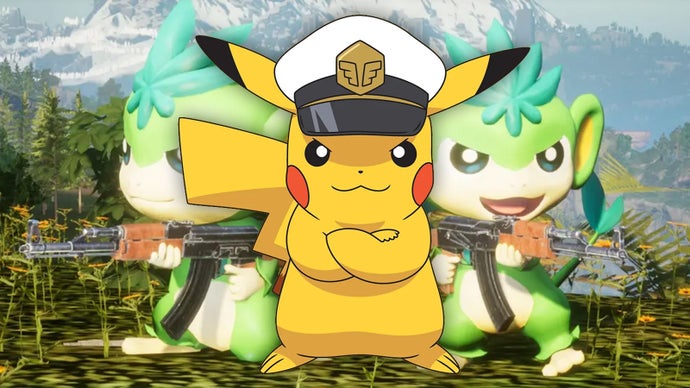
Could Palworld Triumph Over Pokémon? Japan’s Rejection of Nintendo Patent Puts a New Spin on the Lawsuit
The gaming world is abuzz with the unfolding legal drama between Nintendo, the undisputed titan of monster-catching franchises, and Pocketpair, the creators of the rapidly popular Palworld. At the heart of this high-stakes legal battle lies a fundamental question: can a game built on mechanics eerily reminiscent of the beloved Pokémon series withstand the legal might of its inspiration? While Nintendo’s lawsuit, filed in Japan, casts a long shadow over Palworld’s future, recent developments concerning Nintendo’s own attempts to patent similar gameplay elements in Japan have introduced a fascinating new layer of complexity. We will delve into the intricacies of this legal entanglement, exploring how Japan’s rejection of Nintendo’s patent applications could, against all initial expectations, potentially tip the scales in favor of Palworld.
Understanding the Core of the Controversy: Palworld’s Pokémon Parallels
The success of Palworld has been meteoric, but it has also been inextricably linked to its striking similarities to the Pokémon franchise. Players have observed that the core gameplay loop – capturing creatures, battling them, and utilizing their unique abilities – shares a significant DNA with Nintendo’s decades-old phenomenon. This resemblance extends to the visual design of many of the Pals, the act of throwing a “Pal Sphere” to capture creatures, and even the overarching theme of collecting and training a diverse roster of companions. It is this very similarity that has prompted Nintendo to pursue legal action, alleging patent infringement and unfair competition.
Nintendo’s legal strategy is likely rooted in the belief that Palworld’s gameplay mechanics, particularly those related to creature capture and progression, are too close to their own intellectual property. While explicit character designs and specific creature names are typically protected by copyright, the underlying gameplay mechanics can also be subject to patent protection if they are novel and non-obvious. The company has a long history of vigorously defending its intellectual property, and the immense commercial success of Palworld likely triggered an immediate and robust legal response.
However, the legal landscape surrounding video game mechanics is notoriously complex. Unlike a direct copy of a character’s appearance, the patenting of abstract gameplay concepts presents unique challenges. The question often boils down to whether the mechanics are truly novel or if they represent a natural evolution of established genre conventions. In the case of Pokémon, the franchise itself built upon earlier monster-collecting concepts, creating a genre that Palworld now appears to be drawing heavily from.
Nintendo’s Patenting Efforts in Japan: A Glimpse Behind the Curtain
The crucial turning point in this narrative is Nintendo’s recent experience with the Japanese Patent Office. Reports indicate that Nintendo had previously sought to patent a variety of gameplay mechanics closely associated with the Pokémon series, including elements related to the capture and throwing of creatures. This proactive approach by Nintendo suggests a long-term strategy to solidify its intellectual property rights in the very area where Palworld now operates.
However, and this is where the story takes a significant turn, these patent applications have reportedly been rejected by the Japanese Patent Office. The reasons for such rejections are multifaceted and can include:
- Lack of Novelty: The patent examiner might have determined that the claimed mechanics were not sufficiently novel. This means that similar concepts or functionalities may have already existed in prior art – existing technologies, patents, or publicly known information – before Nintendo’s application. In the context of monster-collecting games, the idea of capturing creatures through a device or engaging them in combat is a well-established trope.
- Obviousness: Even if an invention is technically new, it might be deemed unpatentable if it would have been obvious to a person skilled in the relevant field. If the mechanics Nintendo sought to patent are seen as a logical and straightforward extension of existing game design principles within the genre, they could be deemed obvious.
- Functional Equivalence: The patent office might have concluded that the mechanics were too functional and abstract to warrant patent protection. Patents are generally granted for inventions that offer a concrete solution to a technical problem, rather than for broad gameplay concepts that can be implemented in numerous ways.
The rejection of these patent applications by the Japanese Patent Office is not a mere procedural hiccup; it carries significant weight in the ongoing legal dispute. It suggests that, at least in the eyes of a national patent authority, the core mechanics that Palworld employs may not be as uniquely proprietary to Nintendo as they might have initially believed or intended.
The Impact of Patent Rejection on the Palworld Lawsuit
The implications of Japan’s rejection of Nintendo’s patent applications for the Palworld lawsuit are profound and potentially game-changing. Here’s how:
- Weakening Nintendo’s Argument: Nintendo’s lawsuit likely hinges on the argument that Palworld is infringing upon their protected intellectual property, which could include patented gameplay mechanics. If the very mechanics they sought to patent have been deemed unpatentable by a national patent office, it significantly weakens their claim that these mechanics are exclusively theirs and protected by law. It implies that these elements are either part of the public domain or are not inventive enough to warrant patent protection.
- Establishing Precedent for Genre Evolution: The rejection can be interpreted as a validation of the idea that gameplay mechanics, particularly within established genres, are subject to evolution and inspiration. It signals that game developers are not necessarily infringing on patents by building upon existing, widely recognized gameplay loops, as long as they don’t directly copy specific implementations or protected aspects. This could set a precedent for future lawsuits and encourage innovation within established genres.
- Shifting the Burden of Proof: While copyright and patent law are distinct, the patent rejection can indirectly influence the perception of infringement. If Nintendo cannot even secure a patent for these mechanics, it becomes harder for them to argue that Palworld’s implementation constitutes an unauthorized appropriation of something they exclusively own and have the right to control.
- Focus on Copyright and Trademark: With the patent claims potentially weakened, Nintendo may need to rely more heavily on copyright and trademark law. This would involve proving that Palworld has directly copied specific copyrighted assets (like character models or animations that are not merely “inspired”) or has infringed on their trademarks (e.g., confusingly similar branding). However, even with copyright, the line between inspiration and infringement can be nuanced, especially when dealing with elements that are part of a genre’s established language.
- Potential for a Dismissal or Favorable Settlement: In the worst-case scenario for Nintendo, the patent rejections could lead to a motion to dismiss parts of their lawsuit. Even if not a full dismissal, it significantly strengthens Palworld’s legal defense and could lead to a more favorable settlement for Pocketpair, potentially involving licensing agreements or a reduced scope of damages.
It is important to note that the rejection of a patent application does not automatically mean that the technology or concept is free for anyone to use without consequence. However, in the context of a legal dispute over alleged infringement, it provides a very strong counter-argument.
The Nuances of Japanese Patent Law and Gaming Intellectual Property
Understanding the specific landscape of Japanese patent law is crucial to fully appreciating the implications of these rejections. Japan, like many other countries, has specific criteria for granting patents, focusing on novelty, inventive step (non-obviousness), and industrial applicability.
- Novelty: An invention must be new. It cannot have been publicly disclosed anywhere in the world before the filing date of the patent application.
- Inventive Step (Non-obviousness): The invention must not be obvious to a person having ordinary skill in the art to which the invention pertains. This is often a subjective assessment, but in the gaming context, it means that a mechanic that is a logical extension of existing game design might not be considered inventive.
- Industrial Applicability: The invention must be capable of being made or used in some kind of industry. This is generally not an issue for game mechanics.
The Japanese Patent Office, in its examination process, would have reviewed prior art – existing patents, publications, and publicly available games – to determine if Nintendo’s claimed mechanics met these criteria. The fact that they were rejected suggests that the office found existing precedents or that the mechanics were not sufficiently inventive.
Furthermore, the patenting of abstract ideas and gameplay mechanics is generally more challenging than patenting tangible inventions. While specific implementations and unique algorithms can be patented, broad concepts that form the foundation of a genre are often considered to be in the public domain or at least not patentable. This is why the gaming industry often relies more heavily on copyright protection for specific creative works (like character designs, music, and storylines) and trademark protection for branding.
Palworld’s Defense: Building on Established Genre Conventions
From a legal defense perspective, Palworld’s creators can argue that they have not infringed on any protected intellectual property. Their defense would likely focus on several key points:
- Genre Evolution, Not Direct Copying: Palworld can be framed as an evolution of the monster-catching and battling genre, a genre that was largely pioneered and popularized by Nintendo’s Pokémon series. However, the genre has since seen numerous iterations and expansions by other developers. Palworld’s approach, while similar in its core loop, introduces unique elements such as survival mechanics, crafting, and a more mature thematic tone, which can be argued as distinct contributions.
- Lack of Patentable Subject Matter: As discussed, the core mechanics might not be patentable. If Nintendo cannot secure a patent for these mechanics, Palworld cannot be infringing on a patent.
- Independent Creation: While the similarities are evident, if Palworld’s developers can demonstrate that their design process was independent and not a direct, unauthorized replication of specific patented elements or copyrighted works, it bolsters their defense. This is a challenging aspect to prove definitively, but the absence of patent protection for the core mechanics makes it a more viable avenue.
- Fair Use and Inspiration: In some legal jurisdictions, the concept of “fair use” or the right to be inspired by existing works can be invoked. While this is a complex legal doctrine, it highlights the difficulty in preventing games from drawing inspiration from successful predecessors, especially when those inspirations become genre staples.
The critical takeaway here is that the rejection of Nintendo’s patent applications strengthens Palworld’s argument that they are not operating outside the bounds of intellectual property law. It suggests that the gameplay loop they have implemented, while familiar, is not something that Nintendo has exclusive, patent-protected rights over.
Beyond Mechanics: The Role of Copyright and Trademark
While the patent aspect is central to this particular development, it’s crucial to remember that legal battles involving intellectual property often involve multiple layers of protection. Even if patent claims falter, Nintendo can still pursue claims based on:
- Copyright Infringement: This would involve demonstrating that Palworld has copied specific copyrighted elements of Pokémon. This could include character designs that are too similar to be coincidental, distinct animations, musical scores, or even unique narrative elements. The visuals of the Pals, while often described as “Pokémon-like,” will be a key area of scrutiny. If specific Pals too closely mirror existing Pokémon designs, copyright infringement could be a strong claim.
- Trademark Infringement: This relates to the branding and the potential for consumer confusion. If Palworld’s branding, logos, or even certain in-game terms are deemed too similar to Pokémon trademarks, Nintendo could pursue this. However, the name “Palworld” itself is distinct from “Pokémon.”
The current situation, where Nintendo’s patent efforts have been rejected, shifts the focus. It means that Nintendo will need to build a stronger case around copyright and trademark if they wish to succeed in their lawsuit. This may prove to be a more challenging and nuanced legal battle than a direct patent infringement claim.
The Future of Palworld and the Monster-Catching Genre
The legal proceedings are far from over, and the outcome remains uncertain. However, the recent developments surrounding Nintendo’s patent applications have undeniably injected a significant element of intrigue into the lawsuit.
- A More Level Playing Field: The rejection of patents suggests that the barriers to entry for developing games within the monster-catching genre might be less restrictive than previously assumed, provided developers avoid direct replication of copyrighted assets. This could foster more innovation and competition within the genre.
- Precedent for Indie Developers: For independent game developers, this outcome could be a significant victory. It demonstrates that established industry giants may not always have exclusive control over foundational gameplay mechanics, offering a glimmer of hope for smaller studios looking to create games inspired by popular genres.
- Nintendo’s Strategic Reassessment: Nintendo may need to reassess its legal strategy. If patent claims are weakened, they might focus more intensely on copyright and trademark, or they might seek a settlement that addresses their concerns without necessarily forcing Palworld out of the market entirely.
- The Palworld Phenomenon: Regardless of the legal outcome, Palworld’s impact on the gaming landscape is undeniable. It has proven the immense appetite for monster-catching games and has demonstrated that there is room for new interpretations and additions to the genre, even in the shadow of giants like Pokémon.
The battle between Nintendo and Pocketpair is a complex interplay of legal strategy, intellectual property rights, and the ever-evolving nature of video game design. While Nintendo’s legal might is formidable, Japan’s rejection of their patent applications has created an unexpected twist, potentially paving the way for Palworld to not only survive but to thrive, challenging the long-held dominance of the Pokémon franchise in a way that few anticipated. The gaming world will be watching with bated breath as this legal saga unfolds.