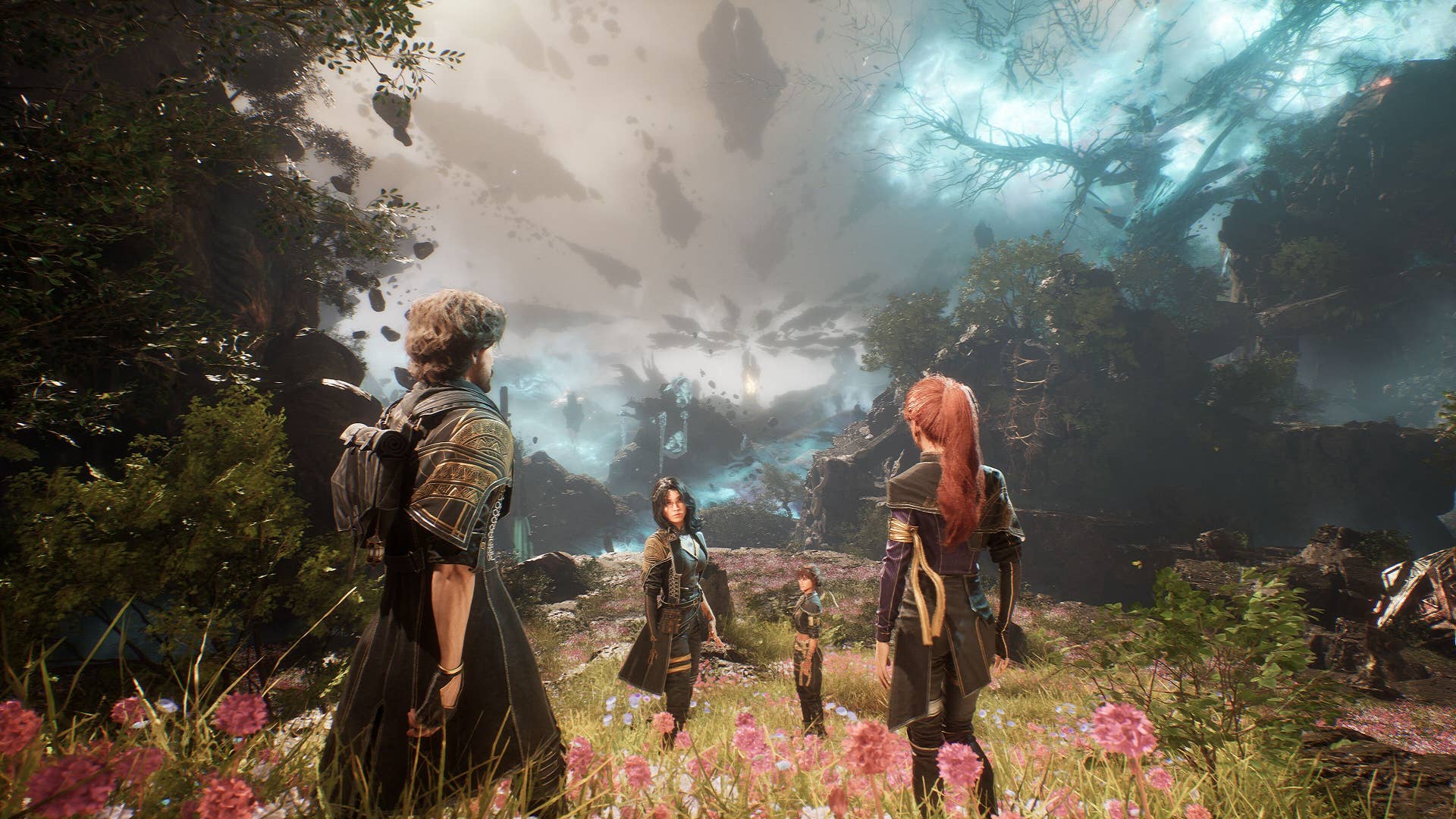
Clair Obscur: Expedition 33 and the Surprising Power of an Outsider’s Perspective in Game Writing
In the ever-evolving landscape of the video game industry, a pervasive notion often takes hold: to truly contribute, one must be a lifelong devotee, someone who lives, breathes, and dreams of interactive entertainment. This deep immersion, while undoubtedly fostering a profound understanding of established tropes and player expectations, doesn’t always guarantee innovation or groundbreaking experiences. Indeed, the very intensity of this insider perspective can sometimes lead to creative stagnation, a rehashing of familiar themes and mechanics without the spark of genuine novelty. Conversely, and perhaps counterintuitively, the infusion of outsider perspectives can inject a vital dynamism into game development, offering fresh interpretations and challenging conventional wisdom. This is precisely the fascinating narrative emerging from the development of Clair Obscur: Expedition 33, a project where the lead writer, remarkably, approached the endeavor without any prior experience in playing video games. This unconventional genesis has ignited discussions about the nature of creative input and the unexpected advantages of a novel viewpoint within a field often characterized by its insular, albeit passionate, community.
Challenging the Gatekeepers: The “Gamer” as a Prerequisite for Game Writing
The gaming community is a vibrant and vocal entity, and with that passion comes a certain expectation regarding the creators who shape their experiences. There exists an unspoken, and at times explicitly stated, belief that individuals aspiring to write for video games must possess an intimate, almost encyclopedic, knowledge of the medium. This often translates to an expectation of extensive gaming pedigrees, a deep familiarity with the history of interactive storytelling, and a keen awareness of the latest trends and player desires. While this deep-seated understanding is invaluable for crafting experiences that resonate with an established audience, it can also inadvertently create a creative echo chamber. When everyone involved in the writing process has walked similar paths, played similar games, and absorbed similar narrative structures, the resulting output risks becoming predictable. The “gamer’s” perspective, while essential for internal checks and balances, can sometimes stifle the very innovation that pushes the medium forward. The industry’s focus on “insider knowledge” can inadvertently alienate potential talent who may possess exceptional storytelling abilities but lack the expected gaming background.
The Film Industry Parallel: A Cautionary Tale of Transferable Skills
The allure of leveraging talent from other established creative industries, such as film, is understandable. Both mediums are deeply rooted in narrative, character development, and world-building. However, the transition from screenwriting to game writing is far from a seamless one-to-one transfer. Video games are not simply interactive films; they are unique platforms that demand a fundamentally different approach to storytelling. The player’s agency, the interactive nature of the medium, and the necessity of mechanics-driven narrative all present challenges that a purely cinematic mindset may not adequately address. We have, in the past, witnessed instances where writers from the film industry have entered game development with the assumption that their existing skillsets would be directly applicable, only to find that the principles of interactive storytelling require a significant recalibration. This can lead to games that feel more like linear experiences with occasional button prompts, rather than truly immersive and engaging interactive narratives. The unique demands of player engagement and the integration of gameplay systems into the narrative fabric are often overlooked in such transitions.
Clair Obscur: Expedition 33 - A Bold Experiment in Unconventional Storytelling
The development of Clair Obscur: Expedition 33 presents a compelling counterpoint to these industry norms. The revelation that the game’s lead writer had no prior experience with video games before embarking on this project is, to say the least, intriguing. It suggests a willingness from the development team to embrace a truly unfiltered perspective, to allow a creative mind to approach the medium without the inherent biases and preconceptions that come with years of gameplay. This is not to say that an outsider’s perspective is inherently superior, but rather that it possesses the unique capacity to question fundamental assumptions and to approach established genres and narrative structures with a fresh, unburdened gaze. For Clair Obscur: Expedition 33, this likely means a narrative that avoids falling into well-trodden genre conventions. It implies a potential for genuinely surprising plot twists, unconventional character motivations, and a world design that doesn’t simply adhere to established fantasy or sci-fi archetypes. This lack of prior gaming experience can be a powerful asset, enabling the writer to conceive of gameplay mechanics and narrative integration in ways that a seasoned developer might not even consider, precisely because they are so accustomed to existing paradigms.
The Impact of a Blank Slate on Narrative Design
When a writer approaches a project without a backlog of gaming experiences, they are not beholden to the expectations of what a “typical” narrative in a particular genre should entail. This allows for the exploration of entirely new narrative avenues. Instead of defaulting to established tropes like the chosen one, the epic quest, or the archetypal villain, a fresh perspective might lead to more nuanced explorations of morality, consequence, and the human condition. The very act of learning about games while simultaneously creating one for them could lead to a unique meta-commentary or a deconstruction of what makes a game engaging. The absence of learned behaviors in game narrative design can be a fertile ground for genuine originality. The writer can ask fundamental questions like “Why do players need to collect items?” or “What purpose does a boss battle serve beyond combat?” and arrive at answers that are not preconditioned by decades of industry practice. This can result in innovative gameplay loops that are intrinsically tied to the narrative, rather than feeling like an additive layer.
Redefining Player Agency and Interaction
The core of video game design often revolves around player agency. However, the interpretation of agency can vary wildly. A writer unburdened by prior gameplay can question the very nature of how players interact with a game world. Instead of relying on established control schemes or typical narrative choices, they might conceive of entirely novel forms of interaction. Perhaps the game’s narrative progresses not through dialogue trees, but through the player’s observation of environmental details, or through the subtle manipulation of AI behaviors. The concept of “choice” itself could be reimagined, moving beyond binary decisions to more complex, emergent consequences. This outsider perspective could lead to a game where player actions have a more profound and less predictable impact on the unfolding story, creating a truly dynamic and personalized narrative experience. The potential for emergent storytelling is significantly amplified when the writer isn’t constrained by established frameworks of how players typically influence a narrative.
World-Building Beyond Established Tropes
The creation of a compelling game world is crucial for immersion. While established genres like fantasy and science fiction offer rich existing lore and familiar aesthetics, they can also become predictable. A writer who hasn’t been steeped in these genres might approach world-building with a fresh set of cultural and philosophical influences. This could lead to worlds that are not simply variations on existing themes, but entirely unique creations. Imagine a fantasy world not based on medieval European archetypes, but drawing inspiration from ancient Mesopotamian mythology, or a sci-fi universe that eschews humanoid aliens for entirely novel forms of sentient life. The architectural design, the social structures, the religious beliefs, and even the laws of physics within the game’s universe could be radically different, offering players a truly alien and thought-provoking experience. This departure from the familiar allows for a deeper exploration of what it means to build a believable and engaging fictional reality, free from the gravitational pull of existing conventions.
The Value of “Naivety” in Creative Endeavors
The term “naivety” is often associated with a lack of experience, and in many contexts, this can be a disadvantage. However, in creative fields, a certain degree of informed naivety can be a powerful catalyst for innovation. It is the willingness to ask “why?” about things that others accept as standard. It is the ability to look at a problem with fresh eyes, unclouded by years of ingrained habits and accepted solutions. For Clair Obscur: Expedition 33, this “naivety” in its lead writer is not a sign of incompetence, but rather a testament to a bold creative approach. It suggests a team that values originality and exploration above strict adherence to industry convention. This approach can lead to moments of unexpected brilliance, where solutions are found that no one within the “experienced” ranks would have conceived. It’s about embracing the unknown and allowing for the possibility of genuine discovery through the exploration of uncharted creative territories. This philosophy can foster an environment where risk-taking is encouraged, leading to more distinctive and memorable game experiences.
Breaking Free from Genre Constraints
The video game industry is heavily segmented into genres, each with its own set of established rules and player expectations. While genres provide a useful framework for development and marketing, they can also be limiting. A writer without prior gaming experience is less likely to be constrained by these genre boundaries. They might naturally blend elements from disparate genres, or even invent entirely new categories of gameplay and narrative. This could lead to games that defy easy categorization, offering unique gameplay loops and narrative structures that surprise and delight players. For example, a narrative that unfolds with the pacing and emotional depth of a literary novel, but incorporates strategic combat mechanics influenced by real-time strategy games, could be a result of this kind of creative cross-pollination. The fear of violating genre conventions is absent, allowing for a more organic and uninhibited approach to game design.
Discovering Novel Gameplay Mechanics
Gameplay mechanics are the lifeblood of any video game. They are the actions the player takes and the systems that govern the game world. Developers often draw inspiration from existing mechanics, refining and combining them to create new experiences. However, a writer who is new to gaming might approach the concept of mechanics from a purely functional or narrative perspective. They might devise actions or systems that are not necessarily “fun” in the traditional sense, but which serve the narrative in unique and profound ways. This could lead to the development of truly novel gameplay mechanics that are deeply integrated with the story, rather than feeling like tacked-on additions. Imagine a game where the player’s ability to communicate with characters is not through dialogue options, but through the subtle manipulation of their emotional states, visualized through intricate visual cues. This kind of thinking, divorced from established control schemes, can lead to groundbreaking interactive systems.
Fostering a Truly Unique Player Experience
Ultimately, the goal of game development is to create an engaging and memorable experience for the player. While adhering to established practices can lead to safe and enjoyable games, it is often the unconventional and the unexpected that truly leaves a lasting impression. Clair Obscur: Expedition 33, by embracing the outsider perspective of its lead writer, is poised to offer players something truly different. It’s an opportunity to experience a narrative that is not pre-programmed with player expectations, but rather one that unfolds with a genuine sense of discovery. This can lead to a deeper emotional connection with the game’s world and characters, as players are not simply following a pre-defined script but are actively engaging with a narrative that feels genuinely fresh and untamed. The pursuit of originality becomes paramount, and the resulting player experience is likely to be one that stands out from the crowd, challenging their understanding of what a video game can be.
The Future of Game Writing: Embracing Diverse Creative Voices
The story of Clair Obscur: Expedition 33 serves as a potent reminder that creative brilliance can emerge from unexpected places. While the deep passion and knowledge of lifelong gamers are undeniably valuable, the industry should not shy away from exploring the potential of individuals with diverse backgrounds and unconventional entry points. The successful integration of an outsider’s perspective, particularly in a role as critical as lead writer, suggests that a more inclusive and open approach to talent acquisition could lead to greater innovation. The video game industry has matured to a point where it can embrace a wider range of creative voices, recognizing that a different lived experience can translate into a richer and more compelling interactive narrative. This doesn’t diminish the importance of experienced game developers, but rather suggests a complementary approach where the insider’s expertise and the outsider’s novel insights can converge to create something truly extraordinary. The future of game writing may well lie in the deliberate cultivation of these diverse perspectives, ensuring that the medium continues to evolve and surprise us. By actively seeking out and nurturing talent from outside the traditional gaming sphere, developers can unlock new frontiers of storytelling and push the boundaries of what interactive entertainment can achieve, offering players experiences that are not only entertaining but also thought-provoking and deeply resonant. The evolution of narrative design within the interactive space is intrinsically linked to the willingness of its creators to step outside their comfort zones and embrace the transformative power of fresh, unvarnished viewpoints.