Grammy Awards 2026: Examining the Nominees and Notable Exclusions in the Best Video Game Soundtrack Category
The annual anticipation surrounding the Grammy Awards nominations has once again ignited passionate discussions within the video game industry and its dedicated fanbase. As the nominees for the 2026 ceremony have been unveiled, a familiar pattern of debate emerges regarding the celebrated, the overlooked, and the outright surprising omissions. This year marks a significant milestone, as it is the fourth occasion that soundtracks from video games and other interactive media are recognized with their own dedicated category, signaling a growing acceptance and appreciation for the artistry involved in game audio. At Gaming News, we delve deep into the announced list, scrutinizing its inclusions and exploring the compelling reasons behind certain notable absences, particularly the highly anticipated Clair Obscur: Expedition 33.
Unveiling the Contenders: The 2026 Grammy Nominees for Best Video Game Soundtrack
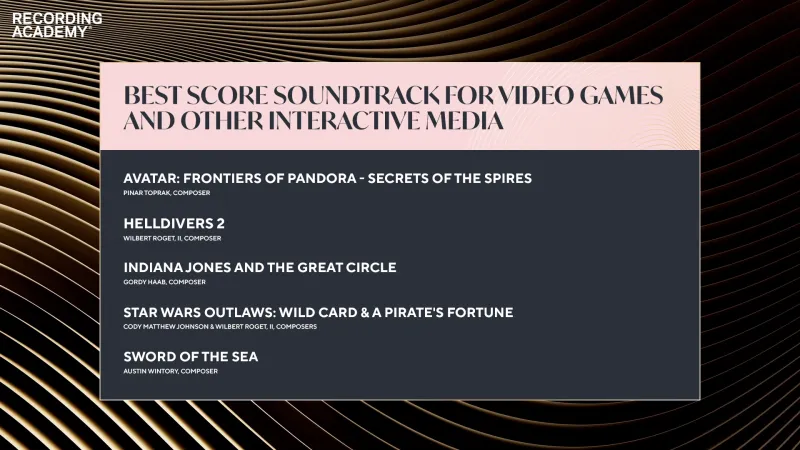
The official list of nominees for the Best Video Game Soundtrack category at the 2026 Grammy Awards presents a diverse selection of works, each representing unique sonic landscapes and compositional approaches. The five distinguished contenders are:
- Avatar: Frontiers of Pandora - Secrets of the Spires, masterfully composed by Pinar Toprak. This entry highlights Toprak’s continued prowess in crafting immersive and expansive orchestral scores, building upon the established sonic identity of the Avatar universe. The attention to detail in this DLC soundtrack underscores the dedication to maintaining a consistent and evocative auditory experience for players, even within a supplementary release.
- Helldivers 2, a powerful score brought to life by Wilbert Roget, II. Roget, II is a seasoned veteran in game music composition, and his work on Helldivers 2 is a testament to his ability to imbue action-packed gameplay with a compelling and thematically rich soundtrack. The music perfectly complements the game’s high stakes and its blend of tactical combat with emergent, often humorous, player interactions.
- Indiana Jones And The Great Circle, featuring the acclaimed work of Gordy Haab. Haab, known for his contributions to other iconic franchises, brings his signature adventurous and cinematic style to the legendary world of Indiana Jones. His score aims to capture the thrilling escapades and sense of discovery that are synonymous with the character, blending orchestral grandeur with period-appropriate motifs.
- Star Wars Outlaws: Wild Card & A Pirate’s Fortune, a dual effort from Cody Matthew Johnson & Wilbert Roget, II. This collaboration brings together two accomplished composers to tackle the vast and beloved Star Wars universe. Their contribution likely navigates the intricate balance of delivering a fresh narrative through sound while honoring the established musical legacy of a franchise steeped in iconic themes and leitmotifs.
- Sword of the Sea, composed by the highly regarded Austin Wintory. Wintory, a celebrated figure in the realm of video game music, consistently delivers emotionally resonant and thematically deep scores. His inclusion in this category is a consistent highlight, and his work on Sword of the Sea is anticipated to be a nuanced and artistically significant contribution, exploring the narrative and emotional core of the game.
Navigating the Nomination Window: Eligibility and Artistic Intent
A closer examination of the 2026 Grammy nomination list reveals intricacies surrounding release dates and eligibility criteria, a common area of discussion in awards season. While the general window for eligibility spans from August 31, 2024, to August 30, 2025, certain entries present a unique case, demonstrating the Recording Academy’s evolving interpretation of these guidelines within the dynamic landscape of interactive media.
The presence of Avatar: Frontiers of Pandora - Secrets of the Spires and Star Wars Outlaws: Wild Card & A Pirate’s Fortune might initially seem to fall outside the strictest interpretation of the release window. However, the crucial factor lies in the eligibility of their Downloadable Content (DLC) packs. Both the base games, Avatar: Frontiers of Pandora and Star Wars Outlaws, were released prior to the current eligibility period and were considered for nominations in previous years. The recent release of their respective DLCs, “Secrets of the Spires” and “Wild Card & A Pirate’s Fortune,” which introduced new musical compositions and expanded existing themes, allows these specific works to be considered for the current Grammy cycle. This approach acknowledges that significant new musical content can be released well after a game’s initial launch, and such expansions deserve recognition.
Helldivers 2, which launched in February 2024, also presents an interesting eligibility scenario. While its initial release predates the main eligibility period, the recent Xbox port in August 2025 could be the determining factor for its inclusion. The Recording Academy often considers the broader availability and reach of a product, and a significant platform expansion can be seen as a reintroduction or extended release of the work to a wider audience. This flexibility allows for a more comprehensive evaluation of a soundtrack’s impact and reception across different player bases.
This practice of adjusting eligibility based on re-releases or significant updates is not unprecedented at the Grammy Awards. A prime example from major categories is Billie Eilish’s “Wildflower.” The song was part of an album released in May 2024, but its subsequent re-release as a single in February 2025 made it eligible for prestigious categories like Record of the Year and Song of the Year at the current awards ceremony. These instances highlight the Recording Academy’s commitment to recognizing artistic merit within the evolving framework of music release strategies, even in the realm of video game soundtracks.
Beyond the List: The Unseen Impact and the Case of Clair Obscur: Expedition 33
While the nominated soundtracks represent significant achievements in game audio, the most fervent discussions often revolve around the artists and works that were notably absent. The impact and cultural resonance of a video game soundtrack extend far beyond its technical composition; they are woven into the fabric of the player experience, influencing emotional engagement, memorability, and community discussion. In this regard, the omission of Clair Obscur: Expedition 33’s soundtrack from the 2026 Grammy nominations has become a focal point of significant debate and disappointment within the gaming community.
The soundtracks for Star Wars Outlaws and Avatar: Frontiers of Pandora, while commendable in their own right, have not garnered the same level of widespread cultural impact or critical acclaim within the gaming sphere as some of their contemporaries. Neither soundtrack received nominations at the most recent The Game Awards for best music, an indicator of their relative standing in the eyes of the gaming press and player base. This perceived disconnect between their inclusion and the absence of other, arguably more impactful, soundtracks raises questions about the criteria being prioritized.
However, the omission that has caused the most considerable stir is that of Clair Obscur: Expedition 33. This particular exclusion is not merely a matter of subjective preference; it has been highlighted by some of the nominees themselves. Austin Wintory, a highly respected composer with a strong track record in video game music and multiple Grammy nominations to his name, publicly voiced his surprise and even offered to trade his nomination spot for that of Clair Obscur: Expedition 33. This strong statement from an insider underscores the perceived significance and artistic merit of the game’s score, suggesting it was a glaring oversight.
The soundtrack for Clair Obscur: Expedition 33 has been lauded for its unique atmospheric qualities, its ability to evoke a distinct emotional landscape, and its innovative approach to musical storytelling that perfectly complements the game’s narrative and aesthetic. Its absence from the nominations list is seen by many as a missed opportunity to recognize a work that has deeply resonated with players and critics alike, pushing the boundaries of what a video game soundtrack can achieve.
A Beacon of Cross-Category Recognition: The 8-Bit Big Band’s Continued Grammy Success
Beyond the dedicated category for Best Video Game Soundtrack, this year’s Grammy nominations also shine a spotlight on the increasing crossover appeal and mainstream recognition of video game music. The 8-Bit Big Band, a celebrated jazz ensemble known for its inventive and high-quality arrangements of classic video game themes, has achieved a remarkable feat, securing nominations in non-gaming categories for the third consecutive year.
This persistent recognition in more established musical arenas signifies a significant cultural shift. It demonstrates that the artistry, complexity, and emotional depth found in video game music are no longer confined to niche discussions but are increasingly appreciated and awarded on a global, mainstream scale. The 8-Bit Big Band’s success serves as a powerful testament to the enduring legacy and artistic vitality of video game melodies.
Their recent album, “Orchestra Emulator,” has earned a nomination for Best Large Jazz Ensemble Album. This nomination acknowledges the band’s sophisticated orchestral arrangements and their ability to reimagine beloved game themes with the grandeur and nuance of a full jazz orchestra. It is a significant achievement that speaks volumes about the quality of their musical interpretation and performance.
Furthermore, the song “Super Mario Praise Break” from the same album has been nominated for Best Arrangement, Instrumental or A Cappella. This specific nomination highlights the band’s exceptional skill in reimagining familiar musical pieces through intricate and captivating instrumental arrangements. It is a testament to their ability to breathe new life into iconic melodies, showcasing both technical mastery and creative vision.
The continued success of the 8-Bit Big Band at the Grammy Awards, especially in these broader musical categories, is not just a victory for the band itself but for the entire video game music community. It validates the artistic merit of game scores and the immense talent of the musicians who bring them to life. It also opens doors for future recognition of video game music in more diverse and prestigious award ceremonies, further cementing its place as a legitimate and vital art form.
The Future of Game Audio at the Grammys: A Step Forward, But Room for Growth
The inclusion of a dedicated category for Best Video Game Soundtrack at the Grammy Awards has undeniably been a positive development, providing a much needed platform for the recognition of this vital art form. The diverse range of nominees this year, from expansive orchestral scores to nuanced thematic compositions, showcases the breadth of talent and creativity present in the industry.
However, the discussions surrounding the nomination list, particularly the perceived oversights like the exclusion of Clair Obscur: Expedition 33, highlight the ongoing journey towards comprehensive and universally acknowledged recognition. The complexities of release windows, the evolving definition of “interactive media,” and the subjective nature of artistic impact all contribute to these spirited debates.
The presence of Austin Wintory among the nominees, a consistent champion of artistic innovation in game music, serves as a reminder of the high caliber of work being produced. His own willingness to advocate for other deserving soundtracks underscores a collegial spirit within the composer community, focused on celebrating excellence across the board.
The broader success of groups like The 8-Bit Big Band in mainstream categories further strengthens the argument for the artistic legitimacy of video game music. Their ability to transcend genre and appeal to a wider audience is a powerful indicator of the universality and lasting impact of these compositions.
As the Grammy Awards continue to evolve, we anticipate that the category for Best Video Game Soundtrack will become an even more prominent and defining aspect of the ceremony. The ongoing dialogue among fans, critics, and artists alike will undoubtedly influence future nominations, pushing for an ever more inclusive and accurate reflection of the exceptional sonic achievements within the world of video games.
The 2026 Grammy Awards ceremony is scheduled to be broadcast on Sunday, February 1st, on CBS and Paramount+. We encourage our readers to tune in and celebrate the incredible talent that shapes the auditory experiences of our favorite interactive worlds.
At Gaming News, we remain committed to bringing you the most in depth analysis and comprehensive coverage of the events that shape the gaming industry, including the recognition and celebration of its most talented artists. We welcome your thoughts and opinions in the comments section below regarding which video game soundtracks you believe were deserving of a nomination this year.