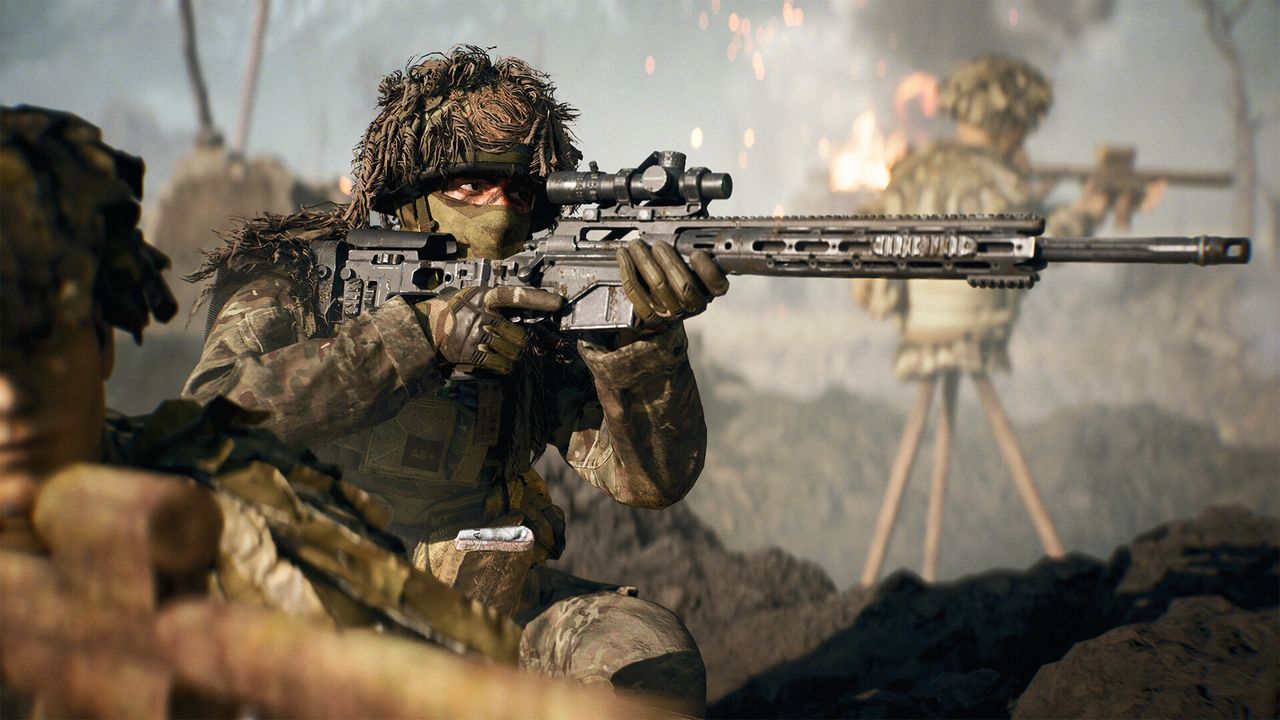
Battlefield 6: Aim Assist Nerf Confirmed, Recoil Reduction Stands – A Deep Dive into Controller Player Experience
The landscape of competitive first-person shooter (FPS) gaming is in constant flux, with developers meticulously tuning mechanics to ensure a balanced and enjoyable experience for a diverse player base. Recently, significant discussions have emerged around the aim assist functionality within the Battlefield franchise, particularly concerning its impact on gameplay. This article delves into the latest confirmations regarding aim assist nerfs in Battlefield 6, the controversial continuation of a 25% recoil reduction, and the broader implications for controller players. We will explore the nuances of these changes, the rationale behind them, and what this means for players aiming to dominate the battlefield.
Understanding the Aim Assist Debate in Battlefield
Aim assist has long been a contentious topic in cross-platform gaming. For players utilizing controllers on PC or consoles, aim assist provides a crucial layer of support, compensating for the inherent precision limitations compared to mouse and keyboard inputs. It typically manifests in several forms, including:
- Slowdown: When the player’s reticle passes over a target, the aim assist mechanism slightly slows down the aiming speed, making it easier to track moving enemies.
- Snapping/Rotation: In some implementations, aim assist can subtly “snap” the reticle towards a nearby target or provide a slight rotational pull to assist in tracking.
- Magnetism: A more aggressive form where the reticle is actively pulled towards a target within a certain proximity.
While essential for controller players to remain competitive against their mouse and keyboard counterparts, aim assist can also become a point of frustration. When overly potent, it can feel as though the game is playing itself, diminishing the skill ceiling for those who rely on it. Conversely, an insufficient amount of aim assist can render controller players at a severe disadvantage, leading to a less engaging experience.
The core of the current debate, as highlighted by recent developer confirmations for Battlefield 6, centers on the perception that aim assist has become too powerful, particularly in scenarios involving multiple enemies. The sentiment that “the stickiness straight up kills you if there’s multiple enemies” encapsulates a common player complaint: that an overzealous aim assist can lead to erratic reticle movement when attempting to switch between targets, inadvertently hindering the player’s ability to react effectively.
The Confirmed Aim Assist Nerf: What it Means for Battlefield 6
The direct confirmation from developers that aim assist is indeed receiving a nerf in Battlefield 6 is a significant development. This signals an acknowledgement of player feedback and a commitment to refining the game’s core mechanics for a more balanced ecosystem. While the specifics of the nerf have not been exhaustively detailed, we can infer several potential adjustments based on common industry practices and the stated player concerns:
- Reduced Stickiness/Magnetism: The most likely adjustment will involve dialing back the intensity of the “stickiness” or magnetic pull of the aim assist. This means the reticle will likely deviate from a target more readily when the player attempts to manually adjust their aim or when multiple targets are present. The goal here is to reduce the feeling of being “dragged” towards targets and to give players more direct control over their aim.
- Shorter Effective Range: It’s possible that the effective range at which aim assist engages will be reduced. This would mean that players need to be closer to their targets for the aim assist to provide significant assistance, thereby rewarding precise aiming at longer distances.
- Less Aggressive Slowdown: The degree of aim slowdown when passing over a target might be subtly reduced. This would require players to exert more manual control to keep their reticle on a moving enemy, fostering a more skill-based tracking experience.
- Improved Target Prioritization (or Lack Thereof): The problematic behavior of aim assist “sticking” to the wrong target when multiple enemies are in close proximity suggests that the current prioritization system may be too simplistic or aggressive. A nerf could involve making the aim assist less likely to aggressively lock onto a secondary target, allowing players to focus their fire more deliberately. Alternatively, it could mean a less helpful assist that requires more manual intervention in these chaotic situations.
The primary objective of this nerf is to empower controller players by reducing the instances where aim assist actively hinders rather than helps. The aim is to create a system that assists without dictating, providing a subtle but effective layer of support that complements player skill rather than replacing it. This nuanced approach is crucial for fostering a competitive environment where player proficiency is the true determinant of success.
The Persistent 25% Recoil Reduction: A Strategic Decision?
While the aim assist nerf addresses one side of the controller player experience, the decision to keep the 25% recoil reduction for now presents a contrasting element. Recoil reduction mechanics are designed to make firearms easier to control by reducing the upward or sideways kick of a weapon after firing. This directly impacts a player’s ability to maintain accuracy during sustained fire.
The presence of a 25% recoil reduction specifically for controller players (or potentially across the board for all inputs, though this is often player-specific) has been a subject of considerable debate. On one hand, it offers a tangible benefit that helps controller players compensate for the inherent difficulty of managing recoil with analog sticks compared to a mouse. This can lead to more consistent accuracy and a more satisfying shooting experience for those using a gamepad.
However, the concern often raised is that such a significant recoil reduction can create an artificial advantage, allowing controller players to engage in sustained fire with exceptional accuracy, potentially at the expense of the game’s intended weapon balance and skill expression. This is particularly true when combined with a strong aim assist, where the ease of target acquisition and tracking, coupled with reduced recoil, can make some weapons feel overpowered.
The developer’s statement that “the 25% recoil reduction is staying for now” suggests a strategic, perhaps experimental, approach. It implies that this particular mechanic is being monitored closely and its continued presence may depend on its interaction with the nerfed aim assist and the overall gameplay balance. Several factors could be influencing this decision:
- Maintaining a Baseline for Controller Players: The developers might believe that removing the recoil reduction entirely, alongside the aim assist nerf, would make controller players too disadvantaged. The recoil reduction could be seen as a necessary compensatory measure to keep them viable.
- Observing the Impact of Aim Assist Nerf: By keeping the recoil reduction in place, developers can isolate the effects of the aim assist nerf. They can then assess whether the aim assist changes are sufficient to address the balance issues on their own, or if further adjustments to recoil reduction will be necessary later.
- Weapon Balance Considerations: The effectiveness of certain weapons is heavily influenced by their recoil. The 25% recoil reduction might be tailored to specific weapon archetypes to ensure they remain usable for controller players without becoming universally dominant.
- Player Feedback and Data Analysis: Developers likely gather extensive data on player performance and weapon usage. The decision to keep the recoil reduction could be based on this data, indicating that it is not currently creating insurmountable balance issues when viewed in conjunction with other mechanics.
The phrasing “for now” is particularly telling. It signals an open-ended evaluation period. We can expect continued scrutiny of weapon performance, player accuracy metrics, and player feedback to determine the long-term fate of the 25% recoil reduction.
The “Stickiness Kills You” Phenomenon: Deconstructing the Problem
The core complaint, “The stickiness straight up kills you if there’s multiple enemies,” highlights a specific failure mode of aim assist systems. In fast-paced combat scenarios where multiple threats emerge simultaneously, the ideal aim assist would subtly assist in transitioning between targets or would disengage gracefully when manual input becomes paramount. However, when aim assist is too aggressive, it can create a detrimental “lock-on” effect.
Imagine a player engaging an enemy. Their aim assist is helping them track. Suddenly, a second enemy appears to the left. If the aim assist is overly “sticky,” it might resist the player’s attempt to quickly flick their reticle to the new threat. The reticle might briefly lag or even attempt to pull back towards the original target, causing the player to miss their shots on the new enemy or even become disoriented.
This situation is compounded by the fact that in Battlefield, players often find themselves in situations with multiple angles of attack. A well-placed enemy can appear from anywhere, and swift target acquisition is crucial for survival. When aim assist actively works against this rapid switching, it transforms from a helpful tool into a significant hindrance, directly contributing to player deaths.
The nerf to aim assist is intended to directly combat this. By reducing the “stickiness,” the system should allow for more fluid and immediate reticle adjustments. This will require players to engage their manual aim more actively in these complex engagements, but it should also grant them the control necessary to survive and thrive.
Empowering Controller Players: The Path Forward
The recent confirmations and discussions surrounding aim assist and recoil reduction are part of a broader effort to empower controller players in Battlefield 6. The goal is not to penalize controller players, but rather to create a more balanced and skill-expressive experience for everyone.
For controller players, this means a future where:
- Skillful Aim is Rewarded: The nerfed aim assist will place a greater emphasis on player skill in acquiring and tracking targets. While assistance will still be present, it will require more deliberate player input to maintain precise aim, especially in chaotic situations.
- Reduced Frustration in Close Encounters: The problematic “stickiness” that hinders target switching in multi-enemy scenarios should be significantly mitigated. This will lead to fewer deaths caused by the aim assist itself and more deaths attributable to genuine engagement failures.
- A More Predictable Experience: With a less aggressive aim assist, controller players can expect a more predictable aiming experience. They will have a clearer understanding of how their inputs translate to on-screen reticle movement, fostering greater confidence and mastery.
- Continued Viability of Controller Input: The 25% recoil reduction (for now) serves as a buffer, ensuring that controller players are not left at a severe disadvantage due to the aim assist changes. This allows developers to fine-tune the balance incrementally.
Ultimately, the success of these adjustments will hinge on the execution. Developers must strike a delicate balance, providing enough assistance to keep controller players competitive without creating an overly automated experience. The focus should be on augmenting player agency, not supplanting it.
Implications for Weapon Balance and Player Strategy
The changes to aim assist and the ongoing consideration of recoil reduction will inevitably have a ripple effect on weapon balance and player strategy within Battlefield 6.
- Rise of Skill-Based Weapons: With a less forgiving aim assist, weapons that demand precise aiming and recoil control will likely see a resurgence in popularity. Players who can master these mechanics will be able to leverage their skills more effectively.
- Reduced Dominance of Certain Archetypes: Historically, certain weapon archetypes have benefited disproportionately from strong aim assist and forgiving recoil. The nerf to aim assist could potentially level the playing field, making a wider variety of weapons viable for both controller and mouse and keyboard players.
- Increased Importance of Movement and Positioning: As direct gunfights become more reliant on individual skill, the importance of intelligent movement, flanking, and tactical positioning will be amplified. Players will need to be more strategic about how they engage, reducing the reliance on purely mechanical aim.
- Adaptation for Controller Players: Controller players will need to adapt to the new aim assist parameters. This may involve dedicating more time to practice, focusing on developing manual aiming skills, and understanding how the nerfed aim assist interacts with different weapon types.
- Data-Driven Refinements: The developer’s cautious approach to the 25% recoil reduction indicates a commitment to ongoing monitoring. This suggests that future balance adjustments will be informed by extensive data, ensuring that the game remains fair and competitive for all players.
The future of Battlefield 6 promises a more refined and potentially more skill-based experience. The confirmed aim assist nerf signals a positive step towards addressing valid player concerns, while the continued presence of the 25% recoil reduction indicates a measured approach to ensuring controller player viability. As the game evolves, these adjustments will undoubtedly shape the way players approach combat, fostering a more engaging and rewarding Battlefield for all. The commitment to listening to player feedback and iteratively refining mechanics is a cornerstone of modern game development, and Battlefield 6 appears poised to benefit from this philosophy. This balanced approach, focused on empowering player skill while providing appropriate assistance, is the hallmark of a truly competitive and enjoyable gaming experience.