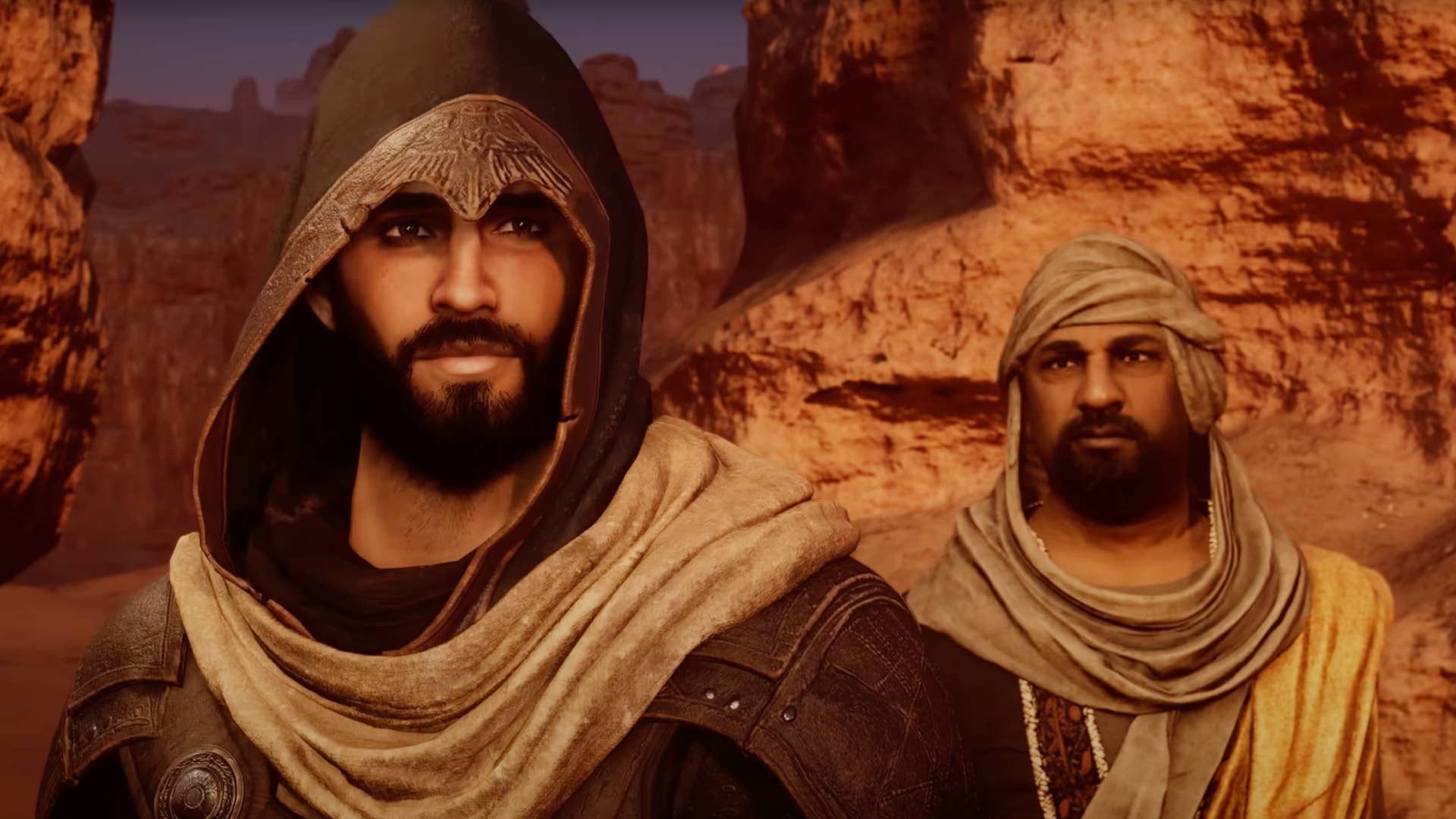
Assassin’s Creed Mirage: Valley of Memory DLC Arrives November 18th Amidst Savvy Games Group Partnership Rumors
The highly anticipated Assassin’s Creed Mirage Valley of Memory DLC is set to launch on November 18th, offering players a brand-new historical playground to explore. This significant content update, which will be available to all players free of charge, promises to delve deeper into the rich tapestry of Basim Ibn Ishaq’s journey. While Ubisoft’s official announcements have been somewhat understated regarding the specific origins and inspirations behind this latest expansion, strong industry whispers and an examination of the development landscape point towards a notable collaboration. Specifically, speculation abounds regarding a partnership with the Saudi-backed Savvy Games Group, a prominent entity in the global gaming investment sphere. This potential alliance, if confirmed, would mark a significant moment in the ongoing relationship between major Western game developers and burgeoning Middle Eastern investment firms, bringing a unique cultural and geographical focus to the beloved Assassin’s Creed franchise.
The Valley of Memory DLC is not merely an incremental addition; it represents a substantial narrative and geographical expansion. Players will be transported to the evocative setting of 9th century AlUla, a location of immense historical and archaeological significance. AlUla, an ancient oasis city and governorate nestled within modern-day Saudi Arabia, boasts a legacy stretching back millennia, serving as a vital crossroads for ancient civilizations and trade routes. This historical backdrop is a perfect canvas for the Assassin’s Creed universe, with its inherent emphasis on uncovering forgotten histories and engaging with pivotal moments in human civilization. The choice of this specific region underscores a deliberate effort to showcase a lesser-explored yet profoundly influential area of the ancient world within the game’s narrative framework, promising an experience that is both familiar in its core gameplay loops and refreshingly novel in its setting.
Unveiling the Valley of Memory: A Journey to 9th Century AlUla
The narrative thrust of the Valley of Memory DLC is intrinsically linked to its meticulously crafted environment. Set in 9th century AlUla, players will step into a world brimming with untold stories and architectural marvels that have stood the test of time. This era was a period of significant cultural exchange and development in the Arabian Peninsula, a region that played a crucial role in shaping global trade, science, and philosophy. The game developers have reportedly gone to great lengths to ensure the historical fidelity and atmospheric authenticity of this setting. From the intricate details of ancient Nabataean architecture, such as Hegra (also known as Mada’in Saleh), to the bustling marketplaces and serene desert landscapes, every element is designed to immerse players in the lived experience of that distant past.
The choice of AlUla as the primary location for this DLC is particularly noteworthy. Historically, AlUla was a thriving hub along the Incense Route, connecting Arabia, Mesopotamia, and the Mediterranean. Its strategic position facilitated the exchange of not only goods but also ideas, technologies, and cultures. This rich historical tapestry provides fertile ground for the narrative themes that are central to the Assassin’s Creed saga: the eternal conflict between order and chaos, the pursuit of hidden knowledge, and the struggle for freedom against oppressive forces. The Valley of Memory is poised to leverage these historical underpinnings to create a compelling storyline that resonates with the core tenets of the franchise. Players can anticipate encountering unique challenges, uncovering lost artifacts, and interacting with historical figures or fictional characters that are deeply rooted in the context of 9th century AlUla. The visual design of the DLC is expected to be a standout feature, with developers aiming to capture the stark beauty of the desert, the grandeur of ancient structures, and the vibrant life of an early Islamic city.
The Savvy Games Group Connection: A Strategic Partnership?
The release of the Assassin’s Creed Mirage Valley of Memory DLC is accompanied by considerable industry buzz surrounding a potential partnership between Ubisoft, the game’s publisher, and the Savvy Games Group. While official statements from Ubisoft have deliberately omitted specific geographical mentions in their initial announcements regarding the DLC’s setting, the pervasive nature of these discussions cannot be ignored. Savvy Games Group, a substantial investment entity backed by Saudi Arabia’s Public Investment Fund (PIF), has been aggressively expanding its footprint in the global gaming industry, acquiring stakes in major studios and announcing ambitious plans to foster game development within the region.
This alleged collaboration is more than just a financial transaction; it suggests a strategic alignment aimed at promoting Saudi Arabia’s burgeoning role as a significant player in the entertainment sector. The inclusion of a historically and geographically relevant location like AlUla within a globally recognized franchise like Assassin’s Creed could be interpreted as a deliberate effort to highlight Saudi Arabia’s rich cultural heritage and its commitment to fostering creative industries. For Ubisoft, a partnership with Savvy Games Group could provide substantial financial backing and access to new markets, while for Savvy Games Group, it offers a high-profile avenue to showcase their investment capabilities and their interest in contributing to the development of globally appealing content. The Valley of Memory DLC, therefore, could be seen as a tangible outcome of this evolving relationship, a testament to the growing influence of Middle Eastern investment in the video game landscape. The fact that this particular DLC is offered free of charge to players could also be a strategic move to ensure maximum adoption and engagement, thereby amplifying the reach and impact of the collaborative effort.
Deep Dive into the Historical Setting: 9th Century AlUla
To truly appreciate the Valley of Memory DLC, one must understand the historical significance of its chosen locale: 9th century AlUla. This period falls within the early Islamic era, a time of rapid expansion and consolidation for the burgeoning caliphates. AlUla, with its strategic location, would have been a vital outpost, connecting the Arabian Peninsula to wider networks of trade and administration. The city itself, known for its fertile oases, would have been a welcome respite for travelers and merchants traversing the often harsh desert terrains.
The architectural legacy of AlUla is most famously represented by Hegra, a UNESCO World Heritage site. Hegra is comprised of over a hundred remarkably well-preserved monumental tombs carved into sandstone outcrops by the ancient Nabataeans, who also built Petra in modern-day Jordan. While the Nabataean civilization predates the 9th century, their structures would have still been prominent and awe-inspiring features of the landscape, likely incorporated into the local lore and even potentially repurposed or revered by later inhabitants. The Valley of Memory could feature elements that explore the layered history of AlUla, perhaps showcasing interactions between contemporary Bedouin communities, settled city dwellers, and the enduring presence of these ancient monuments.
Beyond Hegra, AlUla’s historical importance lies in its role as a crossroads. During the 9th century, the Abbasid Caliphate was a dominant force, and its influence would have extended across the Arabian Peninsula. Trade routes were crucial for the caliphate’s prosperity, and settlements like AlUla served as vital nodes in these networks. This would have meant a diverse population, with merchants, scholars, pilgrims, and soldiers passing through. The Assassin’s Creed Mirage DLC has the potential to bring this vibrant, multicultural environment to life, showcasing the daily lives, beliefs, and conflicts of the people who inhabited this region during this pivotal era. Players might encounter distinct architectural styles, religious practices, and social customs that reflect the unique blend of Arabian, Mesopotamian, and potentially even influences from further afield. The very name, Valley of Memory, hints at a narrative that delves into the past, unearthing forgotten secrets and perhaps even confronting historical echoes that continue to shape the present.
Gameplay Implications and Player Experience in the DLC
The Valley of Memory DLC promises to enrich the Assassin’s Creed Mirage experience with new gameplay mechanics and narrative threads that are deeply intertwined with its historical setting. As a free content update, it aims to provide existing players with a compelling reason to return to Basim’s world, offering fresh challenges and a deeper exploration of the game’s core themes. Given the focus on AlUla and its historical context, we can anticipate gameplay elements that leverage the unique geography and cultural nuances of the region.
One of the most exciting prospects is the potential for new environmental traversal and stealth opportunities. The desert landscapes, ancient ruins, and labyrinthine city streets of 9th century AlUla offer a wealth of possibilities for parkour, infiltration, and evasion. Players might find themselves navigating treacherous canyons, scaling weathered sandstone structures, or utilizing hidden passages within ancient tombs. The atmospheric conditions of the desert could also play a role, perhaps introducing dynamic weather effects like sandstorms that can both aid and hinder stealth operations.
The narrative of the Valley of Memory DLC is expected to delve into aspects of history that are less commonly explored in mainstream media. The emphasis on AlUla suggests a focus on the cultural and intellectual currents of the early Islamic period, a time when advancements in science, mathematics, and philosophy were flourishing. It’s possible that players will engage with puzzles or quests that require an understanding of ancient knowledge, deciphering inscriptions, or interacting with scholars and artisans. Furthermore, the core tenets of the Assassin’s Creed lore—the conflict between the Assassins and the Templars—will undoubtedly be present, likely manifesting in new factions, hidden agendas, and historical conspiracies rooted in the specific context of 9th century AlUla.
The free nature of this DLC is a significant factor in its potential impact. By removing a financial barrier, Ubisoft ensures that a wider audience can experience this new content, fostering community engagement and allowing for a broader discussion of the game’s themes and historical interpretations. This move also positions the Valley of Memory DLC as a substantial value-add for players who have already invested in Assassin’s Creed Mirage, reinforcing the longevity and replayability of the game. The anticipation surrounding this release, fueled by the intrigue of its setting and the rumored partnership, suggests that it could be a landmark addition to the Assassin’s Creed canon.
Navigating the Rumors: Savvy Games Group and Cultural Representation
The discussion surrounding the Assassin’s Creed Mirage Valley of Memory DLC and its alleged ties to the Saudi-backed Savvy Games Group brings to the forefront important conversations about cultural representation and the influence of international investment in the gaming industry. While Ubisoft has not officially confirmed the extent of their collaboration with Savvy Games Group, the timing and the specific choice of setting for this free DLC have led many to draw connections.
Savvy Games Group’s stated mission is to invest in and foster the growth of the gaming sector, both globally and within Saudi Arabia. Their significant financial backing has already led to substantial acquisitions and partnerships within the industry. The development and release of a free DLC for a major title like Assassin’s Creed, set in a historically significant Saudi Arabian locale like AlUla, can be viewed as a strategic move to elevate Saudi Arabia’s profile within the global gaming community. It serves as a powerful demonstration of the country’s commitment to celebrating and showcasing its rich cultural heritage on an international stage.
For players, the implications are multifaceted. On one hand, the Valley of Memory DLC offers a unique opportunity to explore a fascinating and often overlooked period of history in a critically acclaimed game. The detailed representation of 9th century AlUla has the potential to be educational and enriching, shedding light on a civilization that played a crucial role in world history. On the other hand, the narrative surrounding the funding and development of such content inevitably sparks debate. Questions may arise about creative control, the potential for subtle messaging, and the broader implications of geopolitical interests influencing artistic expression.
However, it is important to approach these discussions with a balanced perspective. The gaming industry has always been influenced by a complex interplay of creative vision, technological advancement, and financial investment. The partnership, if it exists as widely speculated, represents a significant evolution in this dynamic, with Middle Eastern entities playing an increasingly prominent role. The Assassin’s Creed Mirage Valley of Memory DLC, releasing on November 18th, stands as a focal point for these conversations, promising a rich gaming experience while also serving as a cultural touchstone in the ongoing global dialogue about gaming, heritage, and investment. The success of this DLC, both critically and in terms of player reception, will undoubtedly shape future collaborations and the direction of gaming development in the years to come.
The Significance of Free DLC in the Assassin’s Creed Ecosystem
Ubisoft’s decision to offer the Assassin’s Creed Mirage Valley of Memory DLC as a completely free download for all players is a strategic move that carries significant weight within the context of the Assassin’s Creed franchise and the broader gaming market. In an era where many post-launch content additions are monetized through season passes, individual purchases, or microtransactions, a free, substantial DLC offering is a refreshing approach that prioritizes player engagement and goodwill.
This approach signals a commitment to extending the lifespan and appeal of Assassin’s Creed Mirage beyond its initial release window. By providing new content without an additional cost, Ubisoft is not only rewarding existing players for their early support but also creating a powerful incentive for lapsed players to return to the game. This can lead to a resurgence in player activity, renewed community discussions, and an overall positive perception of the game’s value proposition. The Valley of Memory DLC, with its unique setting in 9th century AlUla and its potential ties to the Savvy Games Group, is positioned to be a significant draw, offering a fresh narrative and expansive environment that will captivate both dedicated fans and curious newcomers.
Furthermore, the free nature of this DLC allows for a more unified player base. When significant story expansions or new areas are locked behind paywalls, it can create a divide within the community, with some players experiencing content that others cannot. By making the Valley of Memory accessible to everyone, Ubisoft ensures that discussions and shared experiences surrounding this new content can flourish organically. This can lead to a more vibrant online community, with players collaborating on strategies, sharing discoveries, and engaging in discussions about the historical and narrative elements of the DLC. The November 18th release date for this highly anticipated content adds another layer of excitement, allowing players to mark their calendars and anticipate this substantial addition to Basim’s adventures. The comprehensive nature of this DLC, coupled with its free accessibility, underscores a growing trend towards player-centric content delivery, aiming to foster long-term player loyalty and satisfaction.
Assassin’s Creed Mirage: A Deep Dive into Basim’s Journey in 9th Century Baghdad
Before diving deeper into the Valley of Memory DLC, it’s crucial to contextualize it within the primary experience of Assassin’s Creed Mirage. Launched in October 2023, Assassin’s Creed Mirage marked a significant return to the series’ roots, placing a renewed emphasis on stealth, parkour, and focused narrative gameplay, reminiscent of the earlier titles in the franchise. Set in 9th century Baghdad, the game follows the transformation of Basim Ibn Ishaq, a skilled street thief, into a Master Assassin of the Hidden Ones.
Baghdad during this era was the heart of the Abbasid Caliphate, a bustling metropolis renowned for its intellectual and cultural achievements, often referred to as the “Golden Age of Islam.” Players navigate the intricate alleyways, grand palaces, and vibrant marketplaces of this historic city, embodying Basim’s journey of self-discovery and his quest for vengeance against the Order of the Ancients. The game meticulously recreates the architectural styles, social dynamics, and political intrigue of this period, offering an immersive experience that balances historical accuracy with engaging gameplay mechanics.
Basim’s character arc in Assassin’s Creed Mirage is one of profound development. Initially driven by personal trauma and a desire for retribution, he gradually learns the tenets of the Hidden Ones, embracing their philosophy of protecting the innocent and combating tyranny from the shadows. His journey is interwoven with the intricate lore of the Assassin Brotherhood and the Pieces of Eden, introducing players to a rich tapestry of ancient conflicts and hidden knowledge. The gameplay mechanics are designed to complement this narrative, with a strong focus on stealth takedowns, environmental interaction, and a streamlined combat system that rewards tactical precision. The parkour system is particularly noteworthy, allowing for fluid and dynamic traversal across the urban landscape, harkening back to the series’ origins. The narrative is propelled by a series of assassinations and investigations, leading Basim to uncover a conspiracy that reaches the highest echelons of power in Baghdad. This foundation of grounded historical fiction and focused gameplay is what the Valley of Memory DLC will build upon, expanding the player’s interaction with the world and the overarching narrative of Basim and his destiny.
The Impact of AlUla as a New Frontier for Assassin’s Creed
The introduction of 9th century AlUla as the primary setting for the Assassin’s Creed Mirage Valley of Memory DLC represents a bold and exciting expansion for the franchise. For years, the Assassin’s Creed series has explored a diverse array of historically significant locations, from the bustling streets of Renaissance Florence to the ancient sands of Egypt and the frozen landscapes of Viking Age Norway. However, the Arabian Peninsula, despite its profound historical impact on global civilization, has seen relatively less direct exploration within the main canon.
AlUla, with its unique blend of ancient wonders and strategic importance during the early Islamic period, offers a distinct topographical and cultural landscape that can provide a fresh gameplay experience. The stark beauty of the desert, punctuated by monumental Nabataean tombs and the vestiges of ancient trade routes, presents a visually striking environment. This geographical distinctiveness can translate into new traversal challenges and opportunities for stealth. Imagine traversing vast desert expanses, utilizing ancient ruins for cover, and navigating the intricate water systems of an oasis city that sustained life in an arid region.
Culturally, the 9th century was a period of immense intellectual and economic flourishing in the region. AlUla, as a key stop along major trade arteries, would have been a melting pot of cultures, ideas, and peoples. This offers fertile ground for narrative development, allowing players to encounter diverse characters, engage with local customs, and uncover historical secrets tied to the region’s rich past. The Valley of Memory DLC can delve into the layered history of AlUla, exploring the legacies of civilizations that have left their mark on the landscape, from the Nabataeans to the Arab traders and beyond. This emphasis on a less commonly explored historical setting not only enriches the Assassin’s Creed universe but also provides an educational element, inviting players to learn about a pivotal period and region in human history. The reported partnership with entities like the Saudi-backed Savvy Games Group further underscores the intentionality behind selecting AlUla, aiming to bring a significant cultural landmark to the forefront of global gaming attention. The November 18th release date signifies a culmination of this effort, promising a memorable addition to the Assassin’s Creed saga.
Anticipating the Narrative Threads in Valley of Memory
The title itself, Valley of Memory, strongly suggests a narrative focus that delves into the past, perhaps unearthing forgotten secrets, confronting ancestral legacies, or exploring pivotal historical events that have shaped the present. Given Basim’s journey in Assassin’s Creed Mirage involves uncovering his own hidden past and understanding his connection to the Assassin order’s ancient history, the Valley of Memory DLC is perfectly positioned to expand upon these themes.
Players might be transported to a specific time within AlUla’s history, either through visions, temporal anomalies, or by uncovering artifacts that unlock the past. The narrative could explore the founding of AlUla, the rise and fall of civilizations that inhabited it, or perhaps even delve into conflicts that occurred in the region and had wider ramifications for the Assassin-Templar war. The rich history of the Nabataeans, known for their engineering prowess and their eventual decline, provides ample material for a compelling storyline. Alternatively, the narrative could focus on the 9th century context, exploring the interactions between nomadic tribes, settled communities, and the encroaching influence of the caliphates.
The rumored involvement of the Savvy Games Group might also subtly influence the narrative’s focus. A potential emphasis on Saudi Arabian heritage and historical pride could lead to storylines that highlight the region’s significant contributions to early Islamic civilization, its role in global trade, and the enduring legacy of its ancient peoples. This could involve uncovering lost knowledge, celebrating historical figures, or even exploring the origins of certain Assassin or Templar branches within the Arabian Peninsula. The free release of this DLC on November 18th implies Ubisoft’s intention to make these narrative threads widely accessible, fostering community engagement and discussion around the historical and lore-based revelations that the Valley of Memory is poised to deliver. Players can anticipate a narrative that is both self-contained within the context of AlUla’s history and interconnected with the larger tapestry of the Assassin’s Creed universe, further enriching Basim’s story and the ongoing saga of the Hidden Ones.