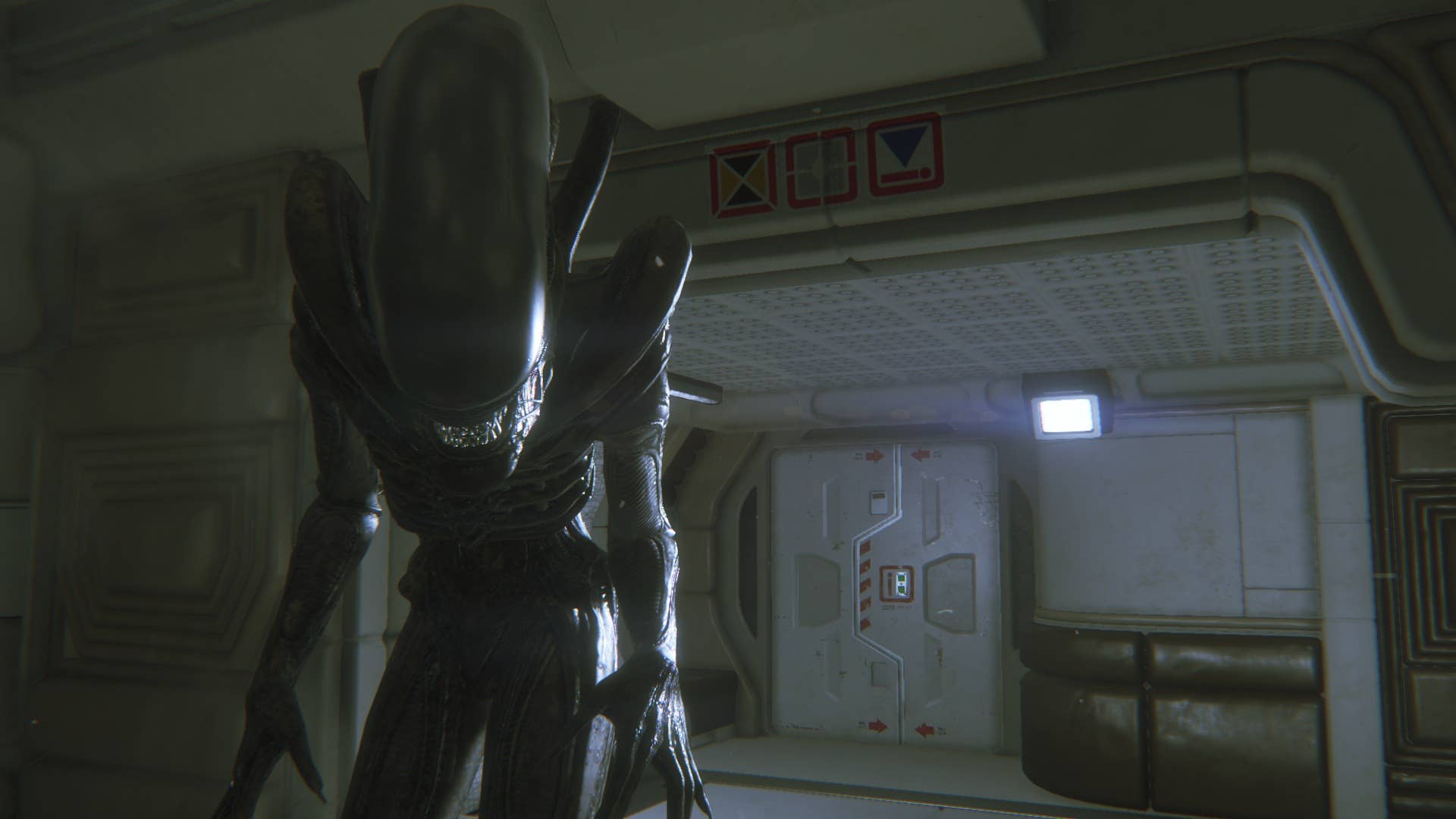
Alien: Isolation’s Lengthy Runtime: The Clever Xenomorph’s Role in Extended Playtime
When Sega and Creative Assembly’s Alien: Isolation made its debut in 2014, it was met with a mixture of critical acclaim and surprise regarding its substantial playtime. Many players and reviewers alike noted that the game offered a significantly longer experience than typically expected from the survival horror genre. While the exact duration varied based on player approach and exploration habits, estimates for a full playthrough often hovered around the 35-40 hour mark, with the main campaign achievable in approximately 20 hours. This extended length, particularly for a title designed to evoke tension and dread, sparked considerable discussion. Now, over a decade later, insights from a former Creative Assembly writer shed light on a key factor that contributed to this impressive scope: the ingenious and evolving behavior of the Xenomorph itself.
The Unexpected Scope of a Survival Horror Masterpiece
The initial impressions of Alien: Isolation’s length were striking. For a genre often characterized by its focused, intense, and relatively concise experiences, a game pushing towards the duration of a sprawling role-playing epic like Final Fantasy presented a unique proposition. This wasn’t a criticism levied lightly; rather, it was an observation born from the genre’s conventions. Horror games traditionally thrive on a sustained sense of dread, built through carefully orchestrated encounters and environmental storytelling. Extending this experience for tens of hours risked diluting the very tension that makes them effective.
However, Alien: Isolation managed to largely sidestep this pitfall, maintaining a high level of suspense and immersion throughout its considerable runtime. The game’s deliberate pacing, coupled with its intricate level design and the unpredictable nature of its primary antagonist, contributed to a sense of prolonged, yet often captivating, dread. Players found themselves meticulously navigating the decaying corridors of Sevastopol Station, not just to progress the narrative, but to survive the relentless pursuit of the iconic extraterrestrial creature.
Dion Lay’s Revelation: The Xenomorph as a Length Multiplier
Recent commentary from Dion Lay, a writer who contributed to Alien: Isolation at Creative Assembly, offers a compelling explanation for the game’s extended playtime. Lay’s insights reveal that a significant portion of the game’s duration was not a matter of deliberate padding, but rather an organic consequence of the Xenomorph’s sophisticated and adaptive AI. As development progressed, the creature’s capabilities and its implementation within the game’s intricate environments became increasingly complex and challenging.
This complexity meant that areas originally designed for shorter, more predictable encounters evolved into extended cat-and-mouse sequences. The Xenomorph’s AI, designed to learn and react to player tactics, ensured that each encounter was a fresh and often terrifying ordeal. This unpredictability meant that players couldn’t simply memorize patterns or exploit loopholes. Instead, they had to constantly adapt their strategies, observe their surroundings, and employ a more cautious and deliberate approach to survival. This inherent difficulty and the need for constant vigilance naturally stretched out the time required to navigate and complete various sections of the game.
The Dynamic Nature of Xenomorph AI
The core of Alien: Isolation’s success, and a primary driver of its length, lies in the groundbreaking AI of the Xenomorph. Unlike many AI-driven enemies in games that follow predictable patrol routes or attack patterns, the creature in Isolation was designed to be a truly emergent threat. Its behavior was not scripted in a rigid sense; instead, it was governed by a set of complex algorithms that allowed it to react dynamically to sound, sight, and even the player’s past actions.
This meant the Xenomorph could actively hunt Amanda Ripley, not just by following predefined paths, but by genuinely searching, listening, and observing. If a player made too much noise, the Xenomorph would investigate. If it sensed Ripley nearby, it would creep, stalk, and employ a variety of predatory tactics. This constant, intelligent pursuit meant that players could rarely afford to rush through areas. They had to move with extreme caution, utilizing every available tool and environmental element to evade detection. Hiding in lockers, ducking under tables, using distractions – these actions became essential survival mechanics, and each successful evasion or tense moment of near-discovery contributed to the game’s overall runtime.
Environmental Interaction and Evolving Threats
The station of Sevastopol is not just a backdrop; it’s a character in itself, and the Xenomorph interacted with it in ways that amplified the challenge. The creature could traverse vents, drop from ceilings, and use the station’s complex architecture to its advantage. As the game progressed and players delved deeper into its secrets, the Xenomorph would often adapt its hunting grounds and strategies. This meant that what might have been a relatively safe corridor in one chapter could become a death trap in the next.
This evolving threat meant that players couldn’t rely on established safe zones for too long. The constant need to assess new threats, re-evaluate routes, and employ new evasion techniques inherently extended the time spent in each area. The game’s design encouraged a meticulous approach to exploration, where every corner could hide danger, and every decision carried significant weight. This deep level of immersion and the ever-present threat of the Xenomorph transformed simple traversal into a tense, strategic undertaking, naturally increasing the play hours.
Reconciling Horror and Longevity: A Balancing Act
The fact that Alien: Isolation managed to maintain its horror impact over such an extended period is a testament to its exceptional design. While the Xenomorph’s cleverness is cited as a key factor in the game’s length, it’s crucial to understand how this translated into a compelling horror experience rather than tedious repetition.
The Power of Unpredictability and Psychological Dread
Unlike traditional horror games that might rely on jump scares or scripted monster appearances, Alien: Isolation leaned heavily into psychological dread. The Xenomorph was often an unseen presence, its metallic footsteps echoing through vents, its guttural growls a constant reminder of its proximity. This uncertainty, the constant anticipation of its arrival, was a potent source of fear. The longer the game, the more opportunities there were for these moments of escalating tension.
The Xenomorph’s AI was instrumental in creating this unpredictability. It wasn’t just about when the creature would appear, but how and where. This meant players were perpetually on edge, their senses heightened. Even when the Xenomorph wasn’t directly on screen, the knowledge that it was somewhere within the environment, actively hunting, was enough to maintain a state of heightened anxiety. This sustained psychological pressure is what allowed the game to remain frightening for its entire duration, preventing the length from becoming a detriment to the horror.
Resource Management and Strategic Evasion
The extended playtime of Alien: Isolation was also facilitated by its emphasis on resource management and strategic evasion. Players were given a limited array of tools and resources, such as noisemakers, flares, and crafting materials, to aid in their survival. These items were not plentiful, and their use had to be carefully considered. Deciding when to create a diversion, when to use a flare to momentarily blind the creature, or when to craft a vital tool became a core part of the gameplay loop.
The Xenomorph’s intelligence meant that players couldn’t simply rely on brute force or overwhelming firepower – concepts that are antithetical to the game’s core tenets. Instead, survival depended on wit, observation, and the judicious use of scarce resources. The longer players had to navigate the station, the more they were forced to engage with this delicate balance of resource scarcity and strategic decision-making, further extending the gameplay experience in a meaningful way. Each encounter became a puzzle, and the solutions required time, patience, and a deep understanding of the Xenomorph’s capabilities.
Atmospheric Immersion and Environmental Storytelling
Beyond the immediate threat of the Xenomorph, Alien: Isolation succeeded in creating a deeply immersive world that players were compelled to explore. The meticulous recreation of the Alien universe, from the retro-futuristic aesthetics of Sevastopol Station to the authentic sound design, pulled players into its narrative. The game was rich with environmental storytelling, offering audio logs, scattered documents, and visual cues that fleshed out the backstory and the fate of the station’s inhabitants.
The extended runtime allowed for a more thorough exploration of this meticulously crafted world. Players had the opportunity to uncover all the narrative threads, appreciate the intricate level design, and truly soak in the oppressive atmosphere. This depth of world-building, combined with the persistent threat of the Xenomorph, made the journey through Sevastopol Station a longer, but ultimately more rewarding and memorable, experience. The game wasn’t just about surviving; it was about experiencing a fully realized slice of the Alien universe, and that ambition naturally necessitated a longer, more comprehensive adventure.
Lessons Learned: The Xenomorph’s Enduring Legacy on Game Design
The revelation that the Xenomorph’s evolving sophistication was a primary driver of Alien: Isolation’s substantial runtime offers a fascinating glimpse into the development process. It underscores a philosophy of game design that prioritizes emergent gameplay and intelligent AI over arbitrary length constraints. This approach allowed Creative Assembly to craft an experience that felt organic and constantly engaging, even as it pushed the boundaries of the survival horror genre’s typical playtime.
The Xenomorph in Alien: Isolation stands as a benchmark for enemy AI in horror games. Its ability to learn, adapt, and relentlessly pursue the player created a level of tension and immersion rarely achieved. This intelligence wasn’t just a gameplay mechanic; it was the narrative engine of the game, driving the player’s every move and decision. The longer encounters it facilitated allowed players to truly grapple with the fear and the challenge, fostering a deeper connection with the game world and its inhabitants.
Ultimately, the success of Alien: Isolation lies in its ability to transform what could have been a perceived flaw – its length – into a defining characteristic. The cleverness of the Xenomorph didn’t just make the game longer; it made it a more compelling, more terrifying, and more memorable journey into the heart of the Alien universe. The game’s runtime, far from being a burden, became an integral part of its masterclass in survival horror, proving that with the right design, an extended experience can be just as, if not more, impactful. The legacy of this intelligent and terrifying creature continues to influence how we think about AI-driven threats and the potential for expansive, yet tightly controlled, horror experiences in the gaming landscape.