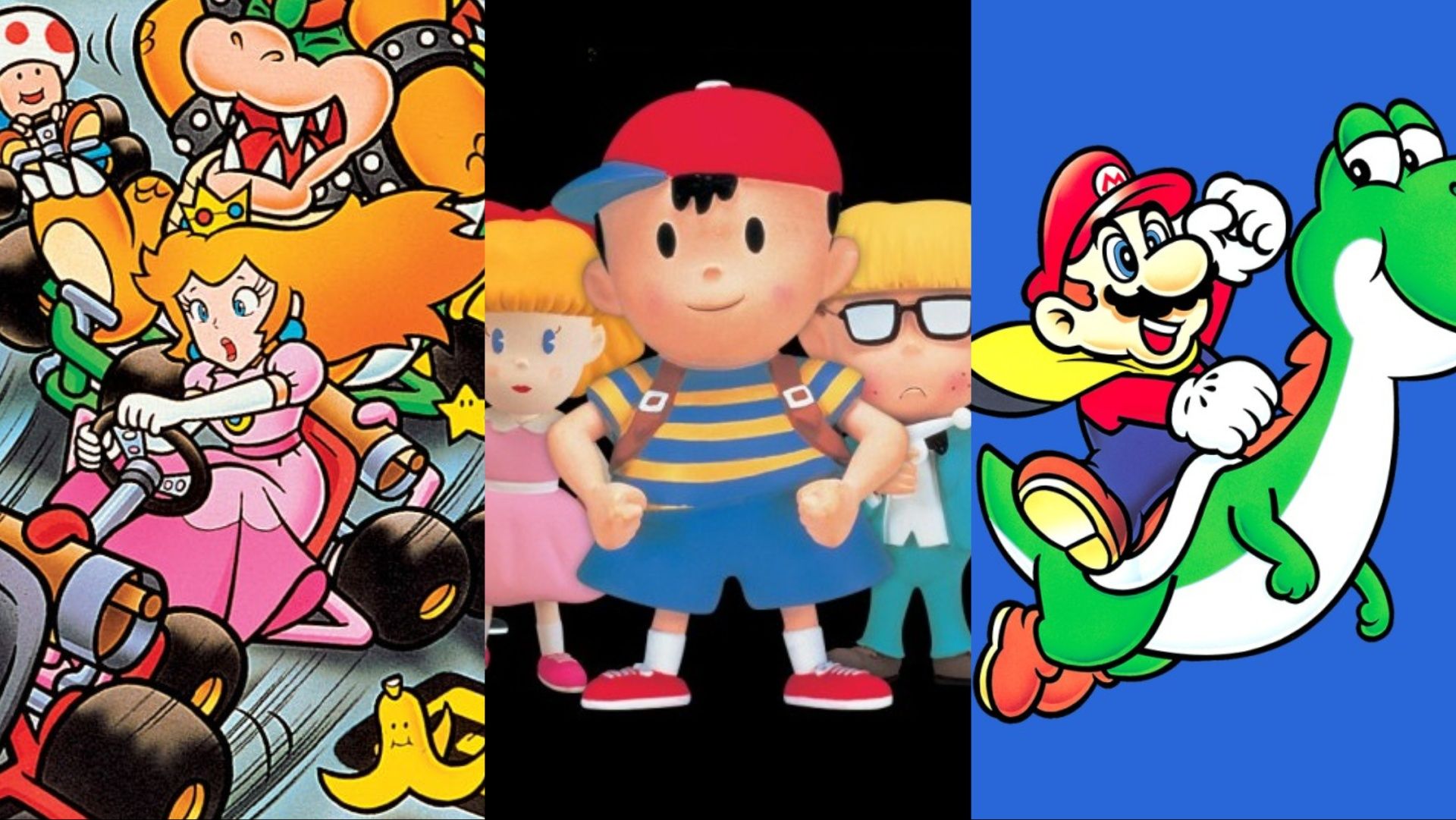
10 Minor Issues That Mar Near-Perfect SNES Masterpieces
The Super Nintendo Entertainment System (SNES) stands as a colossus in the annals of video game history, a console celebrated for its revolutionary graphics, unparalleled sound design, and a software library brimming with iconic titles. For many of us at Gaming News, the SNES represents a golden age, a time when game developers pushed the boundaries of what was thought possible on home consoles. We’ve spent countless hours immersed in its diverse worlds, from the sweeping landscapes of Hyrule to the intricate dungeons of Zebes. Yet, even within this pantheon of gaming perfection, a select few titles, despite their overwhelming brilliance, are subtly marred by minor imperfections. These are not fatal flaws that sink a game, but rather small stumbles that prevent an otherwise flawless experience from reaching its absolute zenith.
These blemishes, often born from the technical limitations of the era or occasionally from an inexplicable design choice, can range from slightly awkward controls to frustratingly infrequent save points, or even minor graphical hiccups that momentarily pull you out of an otherwise immersive world. They are the tiny specks of dust on a perfectly polished gem, the almost imperceptible off-key note in a magnificent symphony. In this exhaustive exploration, we delve into ten such instances, examining the minor issues that subtly diminish the near-perfect radiance of some of the SNES’s most beloved games, and why, despite these imperfections, they remain etched in our memories as timeless classics.
The Unforeseen Obstacles in otherwise Immaculate Gameplay
It is a testament to the sheer quality of these games that their minor imperfections are so readily discussed and remembered. These are titles that have been played, dissected, and adored by millions, and it is precisely because of their overwhelming strengths that these diminutive weaknesses become so apparent. We are not talking about game-breaking bugs or fundamental design failures, but rather the subtle friction points that, with a touch more polish, could have elevated these games from merely great to absolutely transcendent.
#### Super Mario RPG: Legend of the Seven Stars and the Case of the Unintuitive Menu Navigation
Super Mario RPG: Legend of the Seven Stars is a monumental achievement, a brilliant fusion of Nintendo’s beloved platforming with the rich storytelling and turn-based combat of role-playing games. The game’s charm is undeniable, from its vibrant visuals and memorable characters like Geno and Bowser joining Mario’s party, to its innovative timed button presses that add a layer of real-time engagement to every battle. However, for all its groundbreaking success, the game’s menu system can feel surprisingly cumbersome.
Navigating through your inventory, equipping accessories, and managing your party’s abilities, while functional, is not as streamlined as one might expect from such a polished title. The process of equipping items, in particular, can become a repetitive chore, especially when you’re frequently swapping gear to adapt to different enemy resistances or capitalize on status effects. The sheer volume of items and accessories, while a positive in terms of player choice, contributes to this slight inefficiency. A more intuitive UI, perhaps with better sorting options or a quicker way to compare stats, would have been a welcome enhancement. This is a minor quibble in an otherwise masterfully crafted RPG experience, but it’s a point of friction that subtly disrupts the otherwise seamless flow of adventure. The delightful world and engaging story often make players overlook this, but a keen eye for detail will certainly notice the slight clunkiness in managing your digital possessions.
#### The Legend of Zelda: A Link to the Past and the Infrequent and Cumbersome Dungeon Saves
The Legend of Zelda: A Link to the Past is, by almost universal acclaim, one of the greatest video games ever made. Its sprawling world, ingenious dungeon design, compelling narrative, and tight, responsive controls have cemented its status as a masterpiece of adventure gaming. The sheer scope of Hyrule and the Dark World, coupled with the intricate puzzles and challenging boss battles, provides an experience that is both epic and deeply engaging. However, a point of contention for many players, including ourselves, is the game’s infrequent and rather restrictive save system within dungeons.
While the game allows you to save your progress at any time outside of a dungeon, once you descend into the labyrinthine depths of a Link to the Past’s dungeons, the ability to save becomes significantly limited. Typically, you must find a specific save point within the dungeon, which can be quite far apart, especially in the game’s later, more complex environments. This means that after making significant progress, solving intricate puzzles, and overcoming challenging enemies, a single mistake or a prolonged play session without reaching a save point could result in losing a considerable amount of progress. This design choice, while perhaps intended to heighten the sense of peril and commitment, can often lead to frustration and a feeling of being punished for exploration. The thrill of discovery and puzzle-solving is occasionally overshadowed by the anxiety of losing valuable headway, a small but persistent thorn in the side of an otherwise perfectly paced adventure. A more generous save system, perhaps with autosave checkpoints or the ability to save at dungeon entrances, would have alleviated this minor but significant frustration.
#### Chrono Trigger and the Not-So-Seamless New Game Plus Transition
Chrono Trigger is a legendary JRPG, a title that redefined the genre with its innovative story-telling, memorable characters, dynamic combat system, and the groundbreaking inclusion of multiple endings. Developed by a “dream team” of game creators, its time-traveling narrative is both intricate and emotionally resonant, and the active time battle system, with its emphasis on character synergy and environmental attacks, remains a joy to experience. Despite its overwhelming quality, one aspect that can feel slightly less polished is the transition into New Game Plus.
While the concept of carrying over your character levels and some equipment into a subsequent playthrough is a fantastic way to encourage replayability and explore the game’s many secrets and endings, the actual implementation can feel a little abrupt. Upon starting a New Game Plus, players are often immediately thrust back into the early stages of the game with their overpowered characters, which can diminish the initial sense of challenge and discovery for that particular playthrough. While this is inherent to the New Game Plus mechanic in many games, Chrono Trigger’s execution, specifically the lack of a more gradual reintroduction of difficulty or a slightly different starting scenario that acknowledges your continued journey, can feel like a missed opportunity for an even more seamless and rewarding replay experience. Nevertheless, the richness of the narrative and the sheer fun of the gameplay more than compensate for this minor point of friction.
#### Super Metroid and the Mildly Frustrating Wall Jumps in Tight Corridors
Super Metroid is a masterclass in atmosphere, exploration, and gameplay design. It is a game that has profoundly influenced the “Metroidvania” genre, and its sense of isolation, discovery, and gradual empowerment remains unparalleled for many players. The intricate world design of Planet Zebes, the power-ups that unlock new areas and abilities, and the enigmatic lore all combine to create an unforgettable experience. However, even in this near-flawless title, there are moments that can test a player’s patience, most notably with the sometimes-finicky wall-jump mechanics in confined spaces.
While the wall jump is a crucial ability for navigating Samus Aran’s environment, particularly for reaching higher platforms or escaping dangerous situations, its execution in narrow vertical shafts or tight corridors can occasionally feel inconsistent. There are instances where the precise timing or positioning required for a successful wall jump feels frustratingly strict, leading to repeated attempts and minor setbacks. This is particularly noticeable when attempting to ascend quickly or when under pressure from enemies. For a game that otherwise boasts remarkably precise and responsive controls, these occasional hiccups in such a fundamental traversal mechanic can be a small but noticeable point of irritation. The overall sense of immersion and exploration is so strong that these moments are usually overcome, but they do represent a slight imperfection in an otherwise exquisite control scheme.
#### Final Fantasy VI and the Perilous Reliance on Random Encounters for Certain Grinding
Final Fantasy VI (known as Final Fantasy III in its original North American release) is a sweeping epic, a narrative powerhouse with a vast cast of compelling characters, a truly memorable villain in Kefka, and a rich, expansive world that felt revolutionary for its time. Its storytelling depth, emotional resonance, and the sheer freedom of its non-linear character progression make it a standout title in the golden age of JRPGs. Yet, for all its brilliance, the game’s reliance on random encounters for specific character and Espers grinding can, at times, feel like a somewhat outdated and occasionally tedious mechanic.
While random encounters were a staple of the genre, Final Fantasy VI’s progression system, particularly for leveling up Espers and learning magic, often necessitates spending considerable time in areas with frequent enemy spawns. This means that players seeking to fully optimize their characters or unlock all the powerful spells might find themselves engaging in extended periods of what feels like repetitive grinding, waiting for battles to occur. This can momentarily detract from the game’s otherwise captivating narrative and exploration. A slightly more active approach to grinding, perhaps through optional challenge areas or more visible enemy encounters, could have streamlined this process and maintained a higher level of player engagement. Nevertheless, the unparalleled storytelling and the depth of its character arcs make this a minor hurdle to overcome for players eager to experience its full narrative scope.
The Subtle Detractors from Complete Immersion
Beyond gameplay mechanics, certain design choices or limitations can also create small points of dissonance, pulling the player momentarily out of the meticulously crafted worlds that the SNES was so adept at creating. These are often the kind of issues that are only noticeable once a game has achieved a certain level of overall excellence.
#### Donkey Kong Country 2: Diddy’s Kong Quest and the Slightly Overly Punishing Animal Buddy System
Donkey Kong Country 2: Diddy’s Kong Quest is an unquestionable masterpiece of platforming, refining and improving upon its already excellent predecessor with stunning graphics, incredible soundtrack, and tight, challenging gameplay. The introduction of Dixie Kong alongside Diddy Kong brought new gameplay mechanics and a fresh dynamic to the platforming challenges. The game’s inventive level design, demanding precision, and rewarding secrets are all hallmarks of its quality. However, one aspect that can occasionally lead to frustration is the punishing nature of losing your Animal Buddy.
Animal Buddies, such as Squawks the Parrot or Enguarde the Swordfish, are crucial for overcoming specific obstacles and often provide unique traversal abilities that make certain sections of levels significantly easier or even possible. When Diddy or Dixie lose their Animal Buddy, which can happen with a single hit, the player is often forced to backtrack to find another, or in some cases, completely restart the level if they haven’t found a replacement. This can be particularly irksome in longer, more challenging levels where the Animal Buddy is essential for progression. The tight controls and challenging platforming are part of the game’s appeal, but the sudden removal of a vital tool due to a single mistake can feel disproportionately punishing, momentarily disrupting the otherwise exhilarating flow of the game.
#### Super Mario World 2: Yoshi’s Island and the Constant “Baby Mario” Cry
Super Mario World 2: Yoshi’s Island is a visual and gameplay marvel, renowned for its unique hand-drawn art style, innovative gameplay mechanics, and incredibly charming presentation. The game brilliantly shifted the focus to Yoshi, giving players a new protagonist with a distinct set of abilities, while Mario served as a vulnerable passenger who would cry if Yoshi took a hit. The vibrant world, inventive level design, and delightful soundtrack make it a truly special experience. However, for all its brilliance, one recurring element that can become mildly irritating over extended play sessions is the persistent and high-pitched crying of Baby Mario.
When Yoshi takes a hit, Baby Mario is ejected from his saddle and floats away, triggering a frantic chase sequence to retrieve him before he drifts too far. While this mechanic is central to the game’s challenge and introduces a unique risk element, the constant, piercing cry that accompanies this event can become somewhat grating. In particularly challenging levels with numerous enemies and tricky platforming, the player is subjected to this sound repeatedly, which, for some, can detract from the overall immersion and charm. It’s a small sonic irritant in an otherwise audio-visual feast, a minor annoyance that highlights how even the most beloved games can have elements that, with prolonged exposure, become a touch tiresome.
#### EarthBound and the Slightly Unwieldy Inventory Management System
EarthBound is a cult classic, a game that stands out for its quirky humor, modern-day setting, unconventional narrative, and unique blend of RPG mechanics with a surreal, offbeat charm. The game’s protagonists, Ness and his friends, embark on a journey filled with memorable characters, bizarre enemies, and an infectious sense of adventure. Its idiosyncratic world and refreshingly different approach to the RPG genre have garnered it a devoted following. Despite its many strengths, one area that can feel somewhat less refined than others is the inventory management system.
With a limited number of slots for each character, players are often forced to make difficult decisions about what items to carry, leading to frequent trips back to storage or the need to discard valuable items to make space for new ones. The lack of a more robust storage solution, such as a central bank or a more generous personal inventory, can lead to moments of tedium, especially when trying to juggle healing items, key quest items, and equipment. While this is a common issue in many older RPGs, EarthBound’s otherwise innovative and charming presentation makes this particular design choice stand out as a slight impediment to the seamless flow of exploration and combat. It’s a small friction point that, if addressed, could have made an already exceptional game even more accessible and enjoyable.
#### Super Mario Kart and the Somewhat Random Nature of Item Distribution
Super Mario Kart is a definitive kart racer, a game that revolutionized the genre and remains a cornerstone of multiplayer fun on the SNES. Its iconic characters, memorable tracks, and intuitive gameplay have ensured its enduring popularity. The introduction of item boxes, which provide racers with various offensive and defensive power-ups, is central to its chaotic and exhilarating racing experience. However, the somewhat random nature of item distribution, particularly the reliance on luck in obtaining the most advantageous items, can occasionally lead to frustrating outcomes.
While skill is undoubtedly a factor in winning races, the distribution of items can sometimes feel heavily weighted towards luck, especially in later cups or on more challenging difficulty settings. Receiving a low-tier item like a banana peel when an opponent is directly behind you, or conversely, being bombarded with lesser items while your rivals are equipped with devastating power-ups like lightning bolts or shells, can feel like a significant disadvantage that overshadows genuine racing prowess. This element of unpredictability, while adding to the game’s chaotic fun, can sometimes feel less like a strategic element and more like a randomizer that dictates the outcome of a race, leading to moments of frustration for players who feel their skill is not being adequately rewarded. Nevertheless, the sheer joy and competitive spirit that Super Mario Kart ignites make this a minor complaint in the face of its overwhelming fun.
Conclusion: The Enduring Legacy of Near-Perfect SNES Games
It is a testament to the profound quality and lasting appeal of these SNES titles that we can dedicate so much time to dissecting their minor imperfections. These are not games that are fundamentally flawed, but rather monuments of game design that, through sheer brilliance, invite such close scrutiny. The issues we’ve highlighted – from awkward menu navigation and punishing save systems to finicky controls and randomized item drops – are the microscopic grains of sand in otherwise perfectly formed hourglasses.
These are the minor issues that ruin near-perfect SNES games not by sinking them, but by preventing them from achieving an absolute, unblemished state of perfection. They are the points where a developer’s vision might have been constrained by hardware, or where a design choice, while perhaps logical at the time, feels less than ideal in retrospect. Yet, even with these diminutive detractors, the overwhelming strengths of these SNES masterpieces – their innovative gameplay, captivating stories, breathtaking visuals, and unforgettable soundtracks – far outweigh any minor inconveniences. They remain pillars of gaming history, continuing to be celebrated, replayed, and cherished by generations of gamers, proving that even with a few tiny imperfections, true greatness shines through.
At Gaming News, we believe in celebrating the entirety of the gaming experience, the triumphs and the minuscule stumbles alike. These SNES games, with all their near-perfection and their subtle flaws, represent the pinnacle of what the 16-bit era had to offer, and their legacy is all the richer for the intricate details we can still discuss and appreciate today.